- Leather alternatives could play a large role on lowering CO2
- Plant-based materials are being investigated
- The leather industry is pushing back
Leather alternatives could have a lower environmental impact than traditional leather made from animal hides, but may still require some development work, according to a new report from research firm IDTechEx.
Plant-based material and mycelium (mushroom) material are the leather alternatives attracting the most interest, according to the report. Either could be more sustainable than animal-based leather, the production of which is associated with greenhouse gas emissions, deforestation, and land monopolization from raising cattle, the report noted.
Plant-based leather could be made from a number of sources, including apple skins, pineapple leaves, cacti, grapes, and bamboo, adding that the challenge in making it a viable alternative to animal hides is in reducing plastic content and ensuring sufficient durability.
Mercedes Vision EQXX EV concept
Another alternative is mycelial leather made from the thread-like roots of fungi, which can be woven together into a mat-like format that can be cut and shaped, according to the report. Potential advantages include low water and energy usage, and the ability to both grow the feedstock and produce the leather within the same environment.
Automakers are already experimenting with shrooms. The Mercedes-Benz Vision EQXX and Cadillac Sollei EV concepts both used mycelium in their upholstery. But neither was intended as a production vehicle.
Microbial and lab-grown material, made from the fermentation of microorganisms and biopsies of animal skin cells, are another possibility, according to the report. This is still in the very early stages of development, however, and currently requires use of some plastic in the final product, the report notes. The use of animal skin cells also means the resulting leather isn’t vegan, although it would still be a major improvement over traditional leather in terms of emissions reductions.
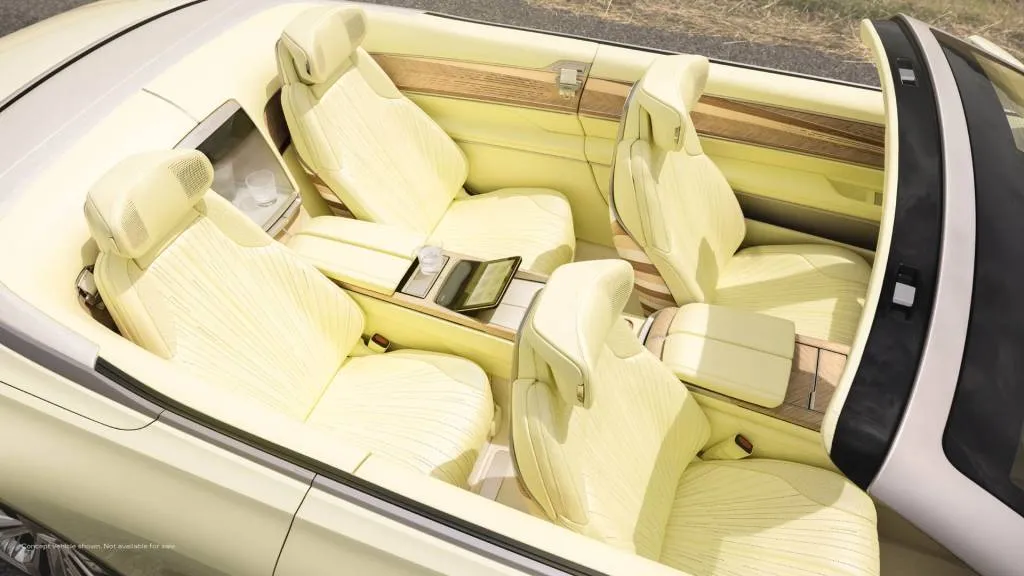
Cadillac Sollei concept
As automakers continue to reduce emissions from vehicle powertrains, more attention is being paid to use of sustainable materials to further reduce the carbon footprint of new cars. Volkswagen is working on synthetic leather made from hemp, and NASCAR even commissioned flax-based bodywork for its electric race car prototype.
The leather industry is pushing back, though. A trade group has argued that choosing leather lowers EVs’ carbon footprint because cattle are already being raised as a food source, so the use of hides for leather is effectively upcycling material that would otherwise be wasted. But that’s as much an argument against eating meat as it is against using synthetic leather.