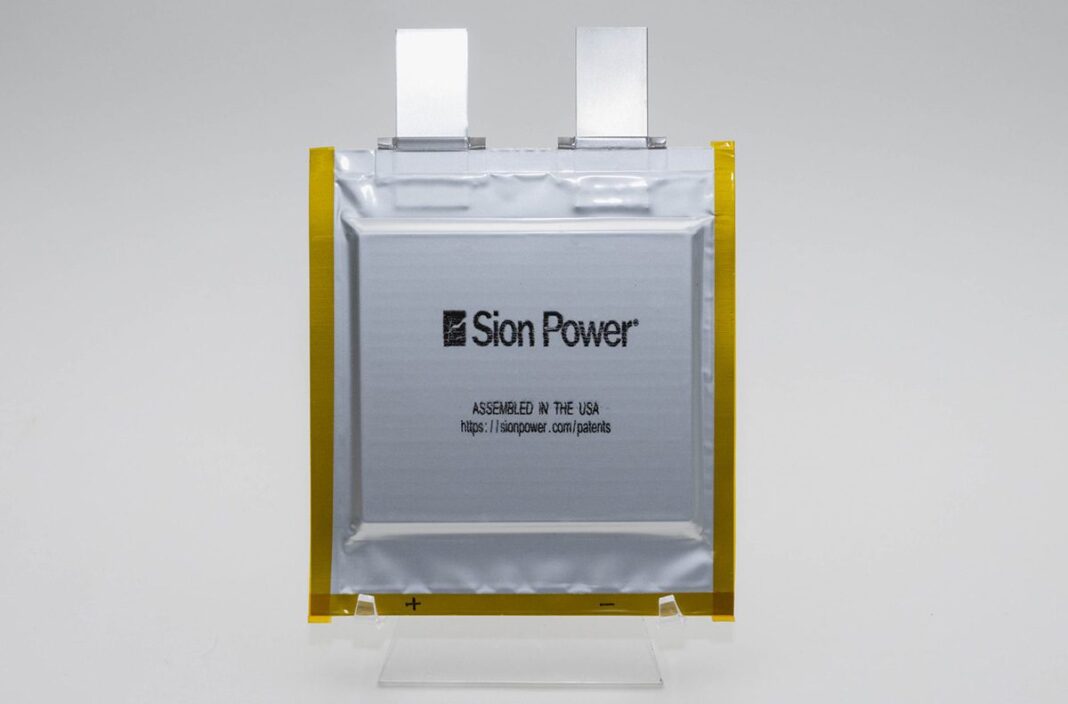

Sion Power is expanding its Licerion® lithium-metal battery program to supply cells and battery systems for US defense and aerospace. The cells are engineered to exceed 500 Wh/kg, up to 200 Wh/kg more than current advanced lithium-ion technology, even with silicon anode enhancements.
The platform covers both primary (single-discharge) and secondary (rechargeable) configurations. Target applications include long-endurance UAS, tactical and counter-UAS drones, missile and loitering munition platforms, autonomous maritime and ground vehicles and space systems. Sion Power operates a 110,000 sq ft cell manufacturing facility in Tucson, Arizona, and says it can demonstrate cells and integrated battery systems today, and expects initial product shipments in late 2026.
Lithium-metal anodes store substantially more energy per kilogram than graphite because lithium metal is lighter and more electrochemically active. For weight-constrained platforms, closing the gap from 300-350 Wh/kg for advanced Li-ion to 500+ Wh/kg translates directly into longer endurance and expanded payload capacity. Sion Power’s expansion also responds to US policy momentum—NDAA provisions support domestic battery supply chains and highlight demand for American-manufactured advanced cells.
“Our lithium-metal technology provides the step-change in energy density required to support longer-range missions, increased flight duration and higher payload capability while maintaining a U.S.-based manufacturing capability aligned with national security priorities,” said Pamela Fletcher, CEO of Sion Power.
“By combining high-energy lithium-metal chemistry with advanced battery pack engineering, Sion Power enables defense integrators to unlock two to three times increases in mission endurance, significantly extended operational range and dramatically higher payload capacity compared with conventional lithium-ion and lithium-polymer batteries used in today’s unmanned systems,” said Tracy Kelley, chief science officer at Sion Power.
Source: Sion Power