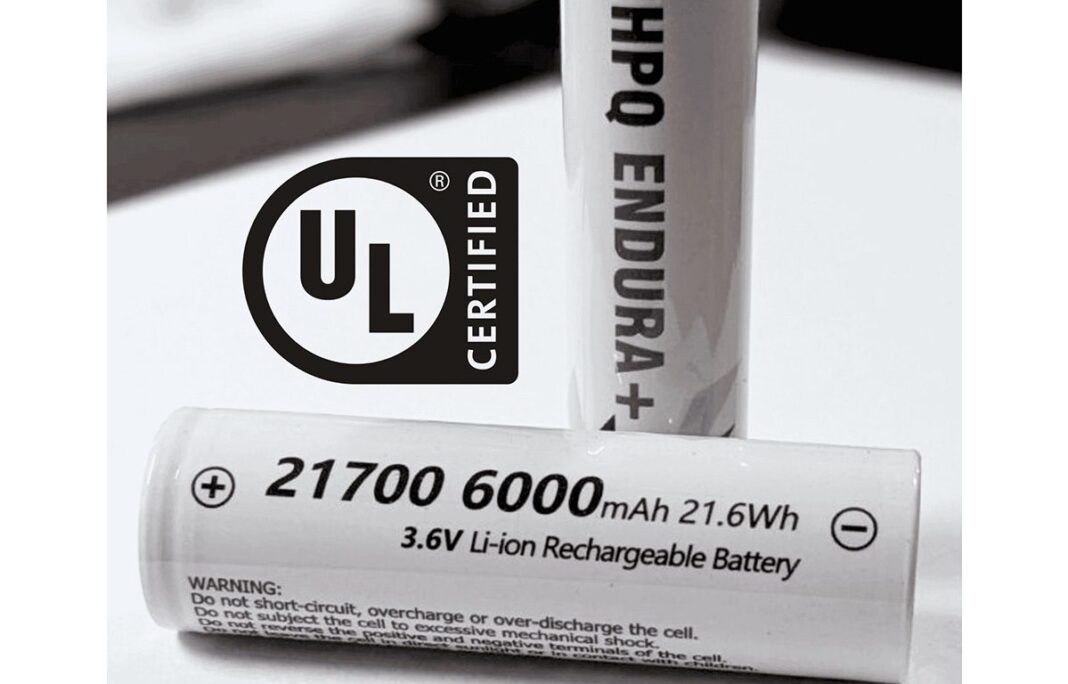

Battery technology developer HPQ Silicon has announced that 21700 cylindrical cells manufactured using Novacium SAS’s GEN4 silicon-based anode material have surpassed 7,000 mAh of discharge capacity.
The cells reached 7,030 mAh, which HPQ said could represent one of the highest capacities reported to date in an industrial 21700 format, based on publicly available data.
Commercially available 21700 graphite cells typically deliver between 4,800-5,000 mAh. The previous Novacium GEN4 record stood at 6,696 mAh under standard conditions of 0.1 C, 4.2-2.5 V and 25° C.
The result was achieved under a modified deep-discharge cycling protocol, at a lower voltage cutoff of 0.55 V, compared to the industry-standard 2.5 V. That indicates the potential to extend the operating voltage range of GEN4 lithium-ion cells beyond conventional limits, the company said.
A discharge to 0.55 V would typically result in irreversible degradation in conventional graphite or silicon-based cells, but the GEN4 material completed 70 full cycles under this protocol and had less than 2% capacity degradation.
Potential applications may include high-energy-density use cases, where capacity per unit volume is a critical constraint, HPQ said.
HPQ holds exclusive North American rights to commercialize Novacium’s GEN3 and GEN4 silicon-based battery materials under the HPQ ENDURA+ brand.
“Breaking the 7,000 mAh barrier in a 21700 cell is a milestone that, to the company’s knowledge, has not been widely reported in publicly available data for an industrial-format cell under comparable conditions,” said Bernard Tourillon, President and CEO of HPQ Silicon.
“What is equally important is that we achieved this while maintaining initial cycle stability over the test period, thereby indicating that our material can operate under extended conditions that, according to published literature, typically result in severe degradation or loss of functionality in conventional graphite-based lithium-ion cells,” Tourillon added.
Source: HPQ Silicon