Friday, December 19, 2025
9 C
London
Home Blog Page 76

Green Car Reports Best Car To Buy 2025 finalist

0


  • Equinox EV has $34,995 base price and $7,500 EV tax credit eligibility
  • 319-mile EPA range, but no efficiency or charging standout
  • Although it’s Chevy’s current entry EV, it’s family-sized
  • Well-equipped except for lack of smartphone connectivity

The Chevrolet Equinox EV is one of our Best Car To Buy 2025 finalists, and it shows how families on a budget can trade in their gasoline vehicle for a fully electric one that probably offers many of the same features and comfort, for a bottom line that’s no more than the equivalent gasoline model. 

While some Equinox EVs were delivered for a brief 2024 model year, for the purposes of this award we’re focusing on 2025—because that’s when the lower-priced Equinox EV LT version arrives, with a price tag starting at just $34,995 including destination. That includes the 85-kwh battery pack and an EPA-rated 319 miles.

For now the 2025 Chevy Equinox EV is an absolute steal, as those base Equinox EV models, like the whole lineup, qualify for the full $7,500 EV tax credit. That brings the effective price to just $27,495 for the LT. 

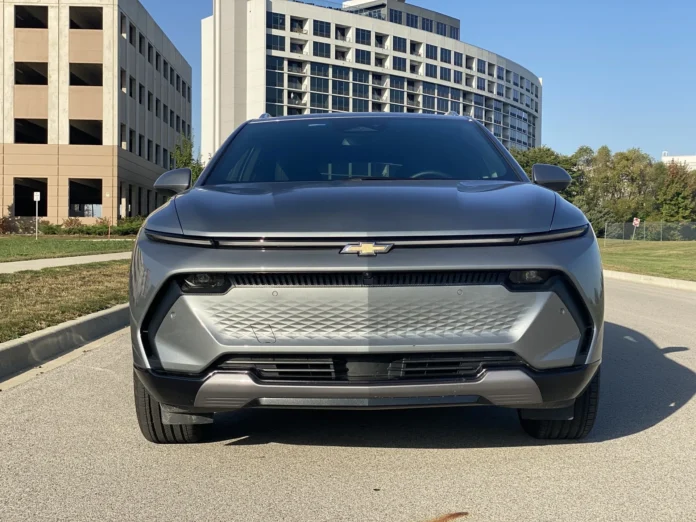
2025 Chevrolet Equinox EV

You get a lot of car for the money—not just a lot of electric car for the money. All versions include a full set of active safety features, automatic climate control, wifi hotspot capability, adaptive cruise control, six-speaker audio, and a huge 17.7-inch touchscreen infotainment system that does pretty much everything you might want except play well with your phone through Apple CarPlay or Android Auto. 

Opt for the Comfort Package for $2,000 extra and you get heated seats, a heated steering wheel and a power driver seat, plus an HD surround-view camera system, rear pedestrian warnings, and more. A dual-pane panoramic sunroof costs $1,500 extra. And GM’s Super Cruise (for three years) plus an enhanced automatic parking assist feature come together in a $3,355 package. 

Base LT front-wheel-drive versions of the Equinox EV make 220 hp and 243 lb-ft of torque. They’re the $34,995 bargain here, while dual-motor all-wheel-drive versions are more powerful and quite a bit more expensive, making 300 hp and 355 lb-ft and starting at $40,295. 

2025 Chevrolet Equinox EV

2025 Chevrolet Equinox EV

2025 Chevrolet Equinox EV

2025 Chevrolet Equinox EV

2025 Chevrolet Equinox EV

2025 Chevrolet Equinox EV

2025 Chevrolet Equinox EV

2025 Chevrolet Equinox EV

Chevy is marketing the Equinox EV as an SUV but really, it’s a station wagon. At 190.6 inches long, the Equinox EV is almost exactly the same length (and shape, except for the longer wheelbase of a modern EV) as a 1980s-era Chevy Celebrity wagon—albeit with a higher seating position. 

For reasons we don’t completely understand—even comparing them back-to-back, as we did at Best Car To Buy testing in Georgia in October—the Equinox EV has easier ingress and egress than its Chevrolet Blazer EV cousin, and what amounts to better backseat space for most situations. Flip down the Equinox EV rear seatbacks and you can expand the 26.4 cubic feet to 57 cubic feet. 

GM has to watch the pennies somewhere to make this all work. In that in-person testing, our cohort included a range of different EVs and it did become apparent that this isn’t quite as focused toward tuning out road noise. And interior trims and the general cabin ambiance leave a lot to be desired—unless you feel a certain nostalgia for surfaces and switchgear that you might have thought GM left in the early days of the millennium. 

2025 Chevrolet Equinox EV

2025 Chevrolet Equinox EV

It’s also worth pointing out that Equinox EV isn’t a charging or efficiency standout. For instance, the Lucid Air Pure goes more than 100 miles farther on a charge with slightly less battery. The Chevy’s 10-80% charge in a bit over 30 minutes is certainly good enough for a road trip, though—and plenty of fancy lunches while you’re waiting with the money you’re saving. And it’s compatible with GM’s suite of energy products, should you care to use that big battery to back up the home. 
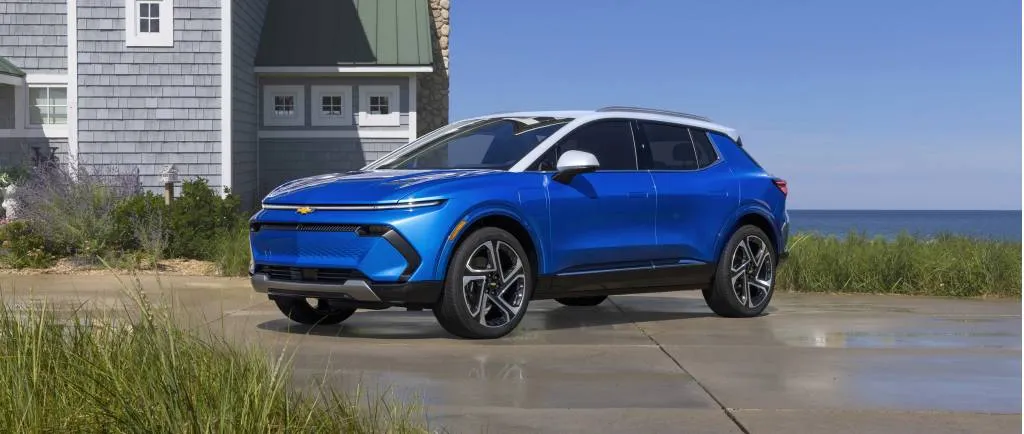
2025 Chevrolet Equinox EV

2025 Chevrolet Equinox EV

So to sum, we certainly need more of this. The Equinox EV offers up the electric-car bargain that’s in short supply. And it delivers on some of GM’s earlier Ultium buzz, even if the strategy has been reeled back a bit. 

Will the Chevy Equinox EV’s set of credentials top those of the other four Best Car To Buy 2025 Finalists? Check back Jan. 6.
Source link

Standalone Mercedes-Benz AMG electric SUV breaks cover

0


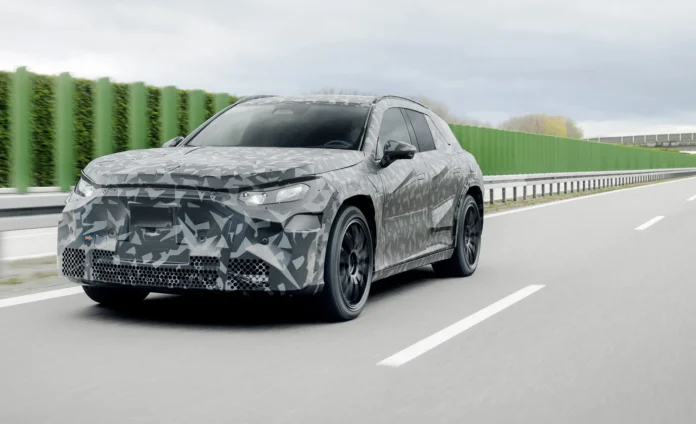
Mercedes-Benz on Thursday teased a camouflaged prototype of the dedicated electric SUV for its AMG performance division.

AMG primarily makes sportier versions of existing Mercedes models, and has already done so with some of the automaker’s electric vehicles. And it’s launched standalone models like the current GT coupe (in two- and four-door forms), SL Roadster, and the discontinued SLS AMG sports car. But this will be the first SUV designed as an AMG model from the ground up, and one of two planned EVs based on the new AMG.EA platform.

Teaser for standalone electric SUV from Mercedes-Benz AMG

The prototypes show that the sleek silhouette shown in a sketch when the AMG electric SUV was announced last month was not exaggerated. Despite this being an EV, with different cooling requirements than combustion cars, AMG also appears to have installed a large grille up front, with a hood and headlights arcing around it.

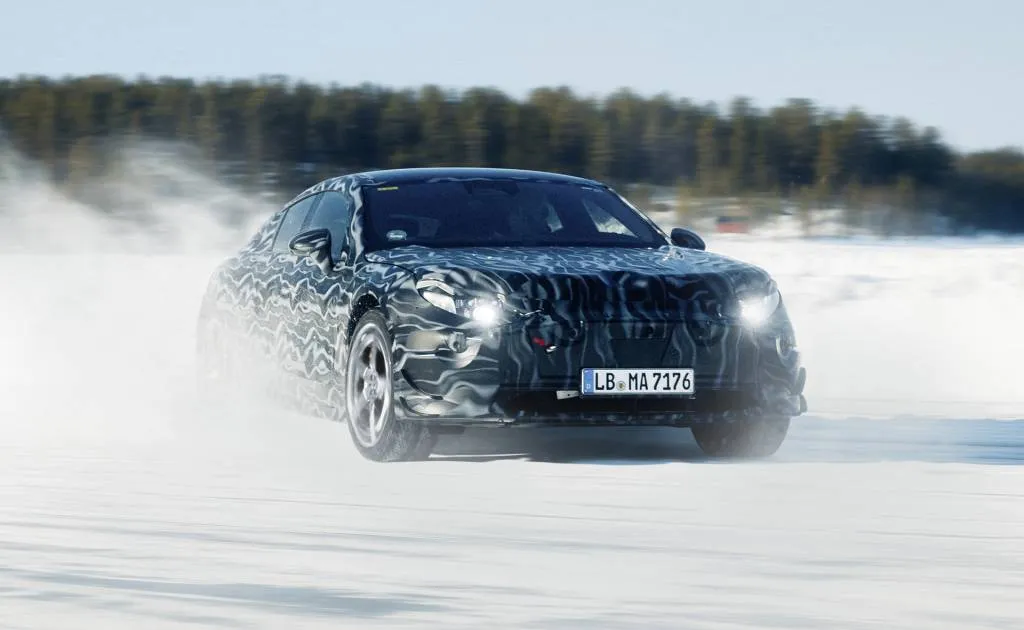
Mercedes confirmed that the SUV will start testing on schedule. It’s currently heading up to the Arctic Circle for cold-weather testing at the some location where the first AMG.EA-based electric vehicle was sent for testing this past spring. That other model is a fastback sedan that may replace the current AMG GT 4-Door Coupe, and is scheduled to arrive in showrooms next year. Expect the SUV to follow sometime after that.

Prototype for first EV fully developed by Mercedes-Benz AMG

Prototype for first EV fully developed by Mercedes-Benz AMG

Both models will likely use axial-flux motors from British firm Yasa, which Mercedes acquired in 2021. Mercedes also mentioned a “new high-performance battery concept,” without giving further details. The automaker could be hinting at its tech that will enable EV batteries with mixed cell types.

In addition to the two confirmed AMG.EA models, a report earlier this year suggested AMG was mulling an electric supercar based on the Vision One-Eleven concept unveiled in 2023. An AMG version of the 2026 Mercedes-Benz CLA EV is also expected.


Source link

Electric BMW M3 teased, likely has 4-motor powertrain

0


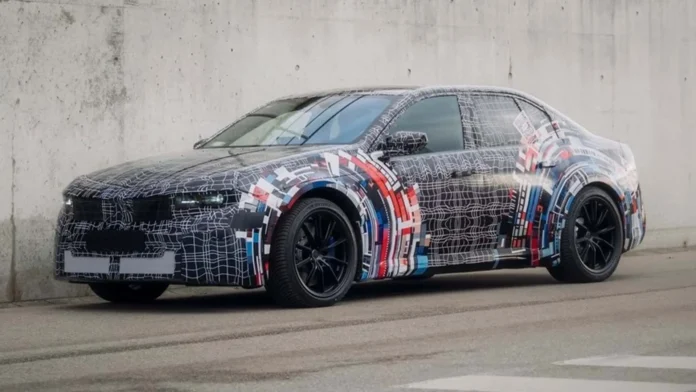
 BMW M on Wednesday released images of a prototype of what is probably its upcoming electric M3 sports sedan.

Posted to the performance division’s official Instagram page, the photos show a camouflaged sedan with the same exaggerated wheel arches as the prototype BMW M has been using to test a four-motor layout for future performance EVs. It would make sense for a quad-motor powertrain to debut in a car wearing the M3 badge, one of the most hallowed in BMW lore.

Prototype for electric BMW M3 based on Neue Klasse platform

The electric BMW M3 was confirmed by M division boss Frank van Meel in an interview earlier this year, with the executive boasting that it “will beat everything you have ever seen.”

One of several electric M models understood to be in development, the M3 will be part of BMW’s Neue Klasse family of next-generation EVs. These will introduce updates like cylindrical battery cells and an 800-volt electrical architecture that BMW has said will deliver a 30% boost in charging speed and up to 30% better driving range compared to its current EVs.

Prototype for electric BMW M3 based on Neue Klasse platform

Prototype for electric BMW M3 based on Neue Klasse platform

The electric M3 could also feature simulated gear shifts and artificial engine sounds synced to a driver’s inputs, similar to the Hyundai Ioniq 5 N. In a separate interview, van Meel said BMW was working on this feature, adding that he thought Hyundai’s approach made sense. 

Performance models like the M3 will likely arrive later in the Neue Klasse rollout. Pre-production of the initial Neue Klasse SUV started at BMW’s assembly plant in Debrecen, Hungary, last week, with production of customer cars expected in late 2025. BMW then plans to ramp-up production at its main plant in Munich, Germany, followed by Mexican production in 2027.


Source link

Mercedes-Benz electric van concept coming in spring 2025

0


Mercedes-Benz will preview its Van.EA electric van architecture with a concept vehicle this spring.

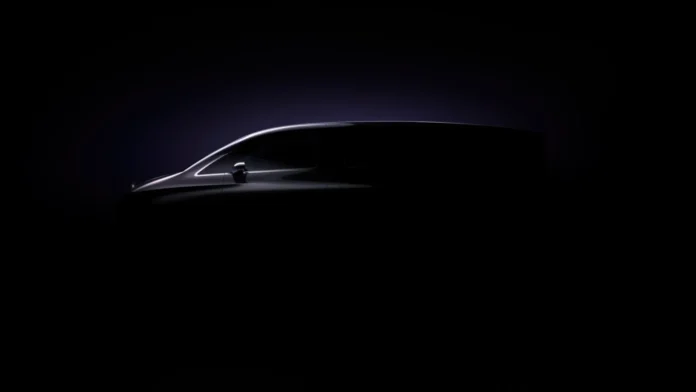
The automaker confirmed plans for the van concept Friday, releasing a teaser image indicating that, despite its dedicated EV platform, the concept and the next-generation electric vans it heralds will look like exactly what they are.

Van.EA will be the first EV-specific architecture for Mercedes vans, although the automaker currently sells the eSprinter, as well as a handful of smaller Europe-only models, based on combustion-vehicle architectures.

Mercedes-Benz Van.EA prototypes via Mercedes-Benz

Mercedes showed photos of camouflaged prototypes out testing in October ahead of a 2026 production launch. Mercedes intends for every new electric van it introduces after that point to use the Van.EA platform, which is designed around a shared set of components and modules to accommodate midsize and large vans.

Those modules will include three main sections, with front and rear sections able to house electric motors. Single-motor models will be front-wheel drive, but dual-motor all-wheel drive will also be available.

Mercedes-Benz Van.EA prototypes via Mercedes-Benz

Mercedes-Benz Van.EA prototypes via Mercedes-Benz

Mercedes is also planning for a variety of applications, from work vehicles like cargo vans to a U.S.-bound electric luxury van. Mercedes has also discussed the potential for electric RV conversions, addressing what is already a lucrative market for the automaker’s gasoline and diesel vans.

Van.EA is one of several new EV architectures Mercedes plans to introduce over the next few years, alongside the MMA platform for compact cars like the 2026 Mercedes CLA, and the AMG.EA platform to be used by EVs from the automaker’s AMG performance division, including a fastback sedan and an electric SUV.


Source link

Only 1% of EV buyers would go back to gas-powered cars

0


Once someone buys an electric vehicle, they tend to stick with it, according to a new survey from the Global EV Alliance, which represents EV driver associations in 38 countries.

The survey found that 92% of current owners plan to buy another EV as their next car. Just 1% said they would opt for a gasoline or diesel car if they had to replace their EV tomorrow, while 4% said they would consider a plug-in hybrid as a replacement for their EV.

PHEVs include a gasoline engine, but after already owning a fully electric model drivers might tend toward seeing it as a backup source.

2024 Tesla Model Y. – Courtesy of Tesla, Inc.

The survey is based on 23,000 responses from 18 countries gathered between Aug. 27 and Nov. 20, 2024. Those results were weighted based on each country’s share of the total EV fleet. For example, U.S. results were weighted up, and Sweden’s weighted down, to reflect the relative size of each country’s share of the EV fleet, the Global EV Alliance explained in a press release.

Low operating costs were the main reason for owners’ loyalty to EVs, with 45% of respondents listing this as their main reason for intending to buy another EV. Other important factors included the lower climate impact of EVs (40%), and that EVs are “good for the local environment and make less noise” (32%).

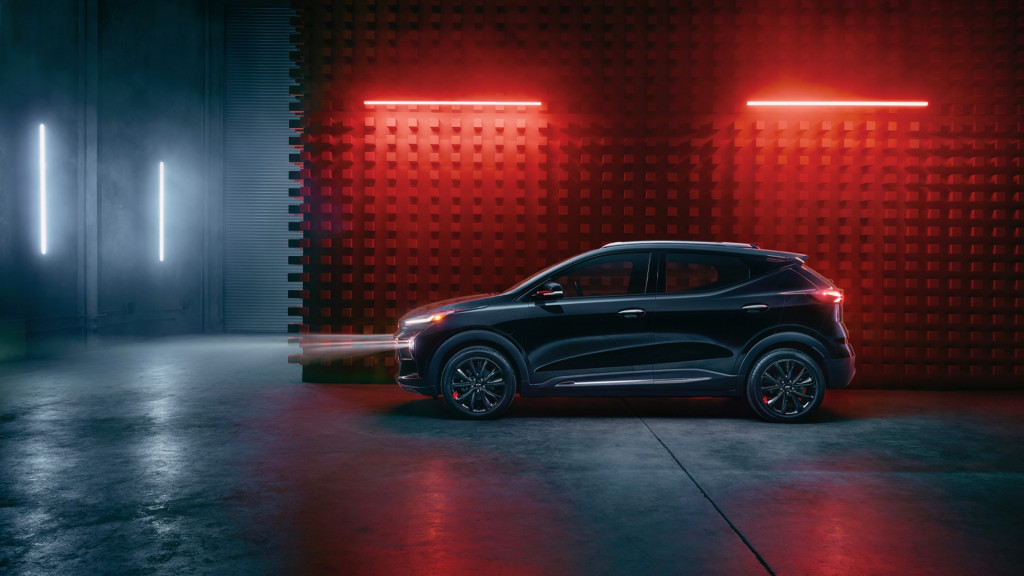
2023 Chevrolet Bolt EUV Redline Edition

2023 Chevrolet Bolt EUV Redline Edition

Those results appear encouraging for EV adoption, but with surveys like this there is still much that is up for interpretation, including the phrasing of questions when asking consumers what they plan on buying after their first EV—and whether it truly replaces an EV or another vehicle in the household.

A 2023 study from S&P Global Mobility found that, Tesla aside, nearly half of EV-owning households still purchased an internal-combustion vehicle the next time around, in part due to lack of suitable EV options from non-Tesla brands. And the Department of Energy earlier this year noted that U.S. EVs are driven fewer miles than internal-combustion vehicles, meaning they might not always be serving as like-for-like replacements.


Source link

Range-boosting solid-state EV cells get right-sized for production

0


Massachusetts-based Factorial has introduced a process for manufacturing solid-state battery cells, in the size range that electric vehicles can use, that is also close to what can be used for mass production.

The company has been providing test cells to automakers, but on Thursday announced that it had scaled sample cells to an “automotive-relevant” 40-amp-hour capacity and was using a dry-coating process that it claims maximizes energy density while minimizing operating costs and the environmental impact of battery production.

Factorial solid-state cells

The dry coating process eliminates all hazardous solvents, Factorial said in a press release. The coating process is also less energy-intensive than conventional manufacturing processes, Factorial claims, while the solid-state chemistry eliminates the need for a formation process used with liquid-electrolyte chemistries for a further reduction in energy use.

Factorial noted that it used customized equipment at its Massachusetts development center to establish the dry coating process, but that provides a template for manufacturing at proper battery factories, like the one Factorial announced in 2023. And in terms of durability, Factorial claims smaller prototype cells have already reached over 2,000 charge and discharge cycles.

Rendering of Dodge Charger Daytona test bed for Factorial solid-state battery cells

Rendering of Dodge Charger Daytona test bed for Factorial solid-state battery cells

Factorial counts Hyundai, Mercedes-Benz, and Stellantis among its investors. Earlier this year it announced that cells developed in collaboration with Mercedes could boost range by up to 80% through greater energy density. More recently, Factorial confirmed that Stellantis will test its solid-state cells in a fleet of Dodge Charger Daytona EVs starting in 2026.

Other automakers have shown interest in solid-state batteries. Toyota announced earlier this year that it planned to begin manufacturing them in 2026 or soon after, albeit likely in low volumes. But Factorial appears to be making progress toward manufacturing solid-state batteries in commercially relevant volumes.


Source link

2026 Mercedes-Benz CLA EV rethinks regen braking

0


  • The 2026 Mercedes CLA EV gets true one-pedal driving

  • Mercedes put a focus on efficiency and energy recuperation with the CLA EV

  • Mercedes hasn’t said how much the 2026 CLA EV will cost; it debuts in 2025

Up until now, many automakers have chosen to dial back regenerative braking in EVs because of concerns over stability on slick roads. 

Mercedes-Benz is breaking from that thinking in its future EVs, starting with the next-generation system that will debut in future EVs starting with the CLA EV. 

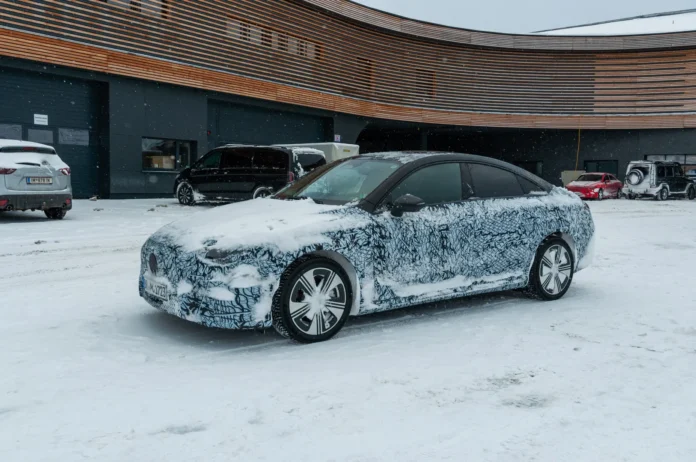
During a brief ride in a 2026 Mercedes-Benz CLA EV prototype in the Austrian Alps, Timo Stegmaier, senior manager of electric drive systems for Mercedes, and Tom Steller, a spokesperson for the automaker, demonstrated the next-gen EV’s braking and propulsion systems in near-whiteout blizzard conditions. 

Here’s what I learned.

2026 Mercedes-Benz CLA EV prototype

2026 Mercedes-Benz CLA EV focuses on one-pedal driving

The Mercedes team emphasized that it’s heard feedback from customers and media alike, loud and clear, regarding the EQE and EQS EV’s braking systems and their moving friction point and unpredictably varied pedal feel. 

They started out as some of the worst brakes on the market and have, through software updates, become…acceptable. That won’t be the case with the CLA EV, I was told. In November Mercedes engineers confirmed to Green Car Reports the brake pedal in the CLA EV will never move unless the driver touches it.

The CLA EV will have three regenerative braking modes including D-, D, and D+. A fourth bonus mode will be D Auto. Full one-pedal max regen kicks in with D- mode, which we used the entire prototype drive, and the others subsequently lessen the regen. 

D Auto mode automatically adjusts the regenerative braking system for the conditions. In the 2025 Mercedes-Benz E 53 Hybrid, for instance, it’s tied into the adaptive cruise control and safety systems to be fully variable. It’s not consistent or predictable. But it’s unclear as of yet how D Auto works in the CLA EV.

2026 Mercedes-Benz CLA EV prototype

2026 Mercedes-Benz CLA EV prototype

The mountain roads were covered in blowing snow over black ice. No matter how quickly Stegmaier selected the most aggressive brake regen with D-, and let off the accelerator, but the Michelin Alpin 5 winter tires never seemed to break traction. The regenerative braking system used the next-gen MMA electric architecture’s PCUs and ECUs to react instantaneously and adjust accordingly. The car pointed straight under braking and mid-turn didn’t change composure. Very impressive. Some humans aren’t this smooth in these conditions.

For reference, Snow or Winter or Slippery Conditions drive modes in almost all EVs on sale today typically reduce or disable regenerative braking. This is to ensure the tires don’t break traction and the car remains stable on slippery surfaces. 

A Mercedes spokesperson told GCR that Stegmaier’s recommendation to use max recuperation in slippery conditions is specific to the CLA EV because of its use of next-gen sensors. The system in the CLA is designed to automatically adjust to road conditions, optimizing safety and efficiency instantaneously. From what I observed it did just that. 

The EQE and EQS lineup use different platforms, electrical architectures, and sensor packages along with control systems and software. These current EVs manage traction and braking behaviour differently, and aren’t as focused on maximizing recuperation or efficiency in real time.

The CLA’s capable of 200 kw of recuperation before engaging the friction brakes. Stegmaier told me that the CLA EV prototype never used the friction brakes during our drive. Impressive.

That energy goes back into the 85.0-kwh (usable) battery pack through an 800-volt electrical architecture. Mercedes said fast-charging will top out at 320 kw and the CLA EV will be capable of adding 186 miles of range in 10 minutes. That’s starting out at a 10% state of charge, and translates to approximately 36 kwh of energy. Charging from 10-80% will take less than 22 minutes. There will also be an 11.0-kwh onboard charger for Level 2 AC charging.

2026 Mercedes-Benz CLA EV prototype

2026 Mercedes-Benz CLA EV prototype

2026 CLA EV feels quick, comfortable, and planted

When Stegmaier put the accelerator to the floor the tires didn’t spin. The CLA EV prototype simply shot forward, but given the conditions the engineer didn’t keep the pedal buried long. The car remained pointing forward despite the slippery surface, I didn’t see the steering wheel tug in either direction, and seemingly, the electronics adjusted power in real time for the conditions.

The dual-motor prototype has Mercedes’ new EDU 2.0 (Electronic Drive Unit 2.0) hardware under its metal skin, including silicon-carbide inverters. The rear motor is a 268-hp synchronous motor (PSM) paired with a 107-hp motor up front. I couldn’t perceive if the front motor was on or off, but given the conditions it’s hard to imagine it wasn’t engaged most of the time.

Mercedes hasn’t talked about performance, but a 0-60 mph time in the low 4-second range seems about right. Single-motor models will surely be slower and hotter AMG models surely quicker.

Except for the single switchback corner Stegmaier purposely hung the tail out during, it felt from the passenger seat that torque was kept under control partly by soft inputs from the driver. 

The new in-house-designed 2-speed automatic transmission may have shifted into second gear to soften torque delivery. The unit is capable of staying in first gear up to 68 mph, but it’s variable based on conditions and needs. It was smooth and with the blizzard there was a lot to take in quickly.

The prototype rode on a conventional (non-active) suspension, which was comfortable, compliant, and controlled. Stegmaier wouldn’t talk details and didn’t mention whether higher trims or AMG models would offer adaptive dampers, but the prototype I rode in was as comfortable, if not more so, as the larger C300 I had just piloted.

2026 Mercedes-Benz CLA EV prototype

2026 Mercedes-Benz CLA EV prototype

2026 Mercedes-Benz EV charts its own course

The exterior of the CLA EV was completely covered in camo, but it clearly looked like the concept that previewed the next-gen EV In 2023. Right down to stars in the LED head and taillights.

Inside the dashboard and door panels were covered in black cloth. Kindly, Mercedes asked me to not comment on what little I saw or touched. But I can say the dashboard seems to be completely different than today’s EQE and EQS lineup. The high-mounted yacht-like setup is gone. The dashboard seems to be short and tight up against the cowl. It reminded me of the Mercedes 190E and W126 S-Class from the ‘80s and ‘90s, or even the G-Class of today.

Mercedes didn’t let me behind the wheel of the CLA, and my time both in and around it was brief. Still, what I saw, experienced, and felt proved Mercedes has listened to feedback about its current EVs, is focused on efficiency, and aims to make the 2026 CLA EV the starting point for its next-gen electric cars. 

Mercedes-Benz paid for travel, lodging, and was shocked I wasn’t cold during a blizzard to bring you this first-hand review.


Source link

RollAway aims to be Cruise America for EV era

0


While many Americans aspire to own an RV, renting from companies like Cruise America is also a popular option. Now a Silicon Valley startup aims to offer an electric alternative.

RollAway broke cover in 2023, announcing plans to rent out a fleet of electric RVs based on General Motors BrightDrop vans. It’s now accepting online reservations as of this week, Electrek reported, although the website notes that rentals appear to already be almost entirely booked up through fall 2025.

RollAway electric RV rentals

Reservation holders will get the key fob to an electric RV with what RollAway estimates is 270 miles of range, more than the 250 miles the startup originally quoted in 2023. The conversion incorporates a roll-open rear door that creates a large picture window when opened, and RollAway plans to offer hotel-like add-ons like a virtual concierge, breakfast packages, and toiletries and spare bedding to order.

While the rental angle is new—and taps into a large potential market—RollAway isn’t the first company to use GM’s BrightDrop vans for RV conversions. Detroit-based startup Grounded announced its own, less luxurious BrightDrop RV in 2023.

RollAway electric RV rentals

RollAway electric RV rentals

Mercedes-Benz vans have long been popular RV candidates, and the automaker aims to keep that momentum going with its next-generation electric vans debuting in 2026.

Conversions of commercial vans still result in vehicles smaller than traditional motorhomes, and fully-electric versions of those behemoths may be a bit further out, mainly due to charging infrastructure that isn’t scaled to these larger vehicles. In the meantime, plug-in hybrid RVs like the demonstrator shown by Airstream owner Thor Industries earlier this year could provide an electric motorhome alternative while addressing the charging conundrum.


Source link

VW working on synthetic leather made from hemp

0


Volkswagen is working with German startup Revoltech on a hemp-based substitute for leather upholstery to help further lower the environmental impact of its vehicles.

The new material could see use in VW models by 2028, the automaker said. VW claims the hemp-based material can be produced at existing factories, and can be recycled or composted at the end of its useful life.

Volkswagen tests hemp-based synthetic leather

The material is made from residue of hemp cultivated for the food industry that would otherwise have no practical use, according to VW, which also claims the material is vegan and oil-free, unlike the synthetic leather upholstery some automakers put forth as a vegan alternative to animal hides.

“In our search for new materials, we are very open to new ideas from many different industries,” Kai Grünitz, head of the VW brand’s Technical Development unit, said in a statement.

Volkswagen tests hemp-based synthetic leather

Volkswagen tests hemp-based synthetic leather

Automakers have started moving away from leather for reasons of sustainability. Volvo plans to go leather-free in all of its EVs by 2030, while Kia plans to phase out leather in the future as well. Beyond leather, Polestar has experimented with various natural and recycled materials to address the environmental impact of manufacturing, which becomes a much bigger consideration in EVs that produce zero “tailpipe” emissions.

The leather industry is pushing back against claims that alternatives are more sustainable, though. In January the trade group One 4 Leather issued a statement claiming leather had a lower carbon footprint than the synthetic upholstery being proposed for EVs. Its argument was that cattle are already being raised for milk and meat, so use of hides is effectively upcycling material that would otherwise be wasted. That seems like more of an argument for eating less beef and drinking less milk than continuing to cover car interiors in cow hides, though.


Source link

Volvo won’t be all-electric by 2030, 90% of cars to have a plug

0


Like other automakers, Volvo’s walking back its plan to only sell electric cars by 2030.

On Wednesday, in Sweden at the debut of the 2025.5 XC90, the automaker revised its electrification ambitions. By 2030 Volvo now aims for 90-100% of its sales to be electrified. The automaker clarified that meant having a plug and not just a mild-hybrid system.

The remaining portion of up to 10% of sales allows the automaker wiggle room for “a limited number of mild hybrids to be sold, if needed,” according to Volvo.

By 2025 Volvo expects 50-60% of its sales to be electrified.

Volvo said it has five electric cars in development today, in addition to the electric and plug-in hybrid models on sale today.

The automaker is in the midst of launching the EX90 in the U.S., just revealed the 2025.5 XC90 plug-in hybrid, and teased the electric ES90 sedan.

Development of plug-in hybrid and mild hybrid vehicles will continue at Volvo, but the automaker didn’t provide numbers as to how many models are under development.

In July, a Volvo dealer who asked not to be identified told Automotive News Europe, “We will have to (sell plug-in hybrids), or we die.”

A recent Bloomberg report estimated that plug-in hybrids will peak at 10% of global new-car sales in 2030.

Volvo noted slow development of charging infrastructure as a key reason for the strategy shift. Withdrawl of government incentives in some markets was identified as another issue, and Volvo said there’s a need for “stronger and more stable government policies to support the transition to electrification.”

The automaker said it aims to achieve net zero greenhouse gas emissions by 2040.


Source link