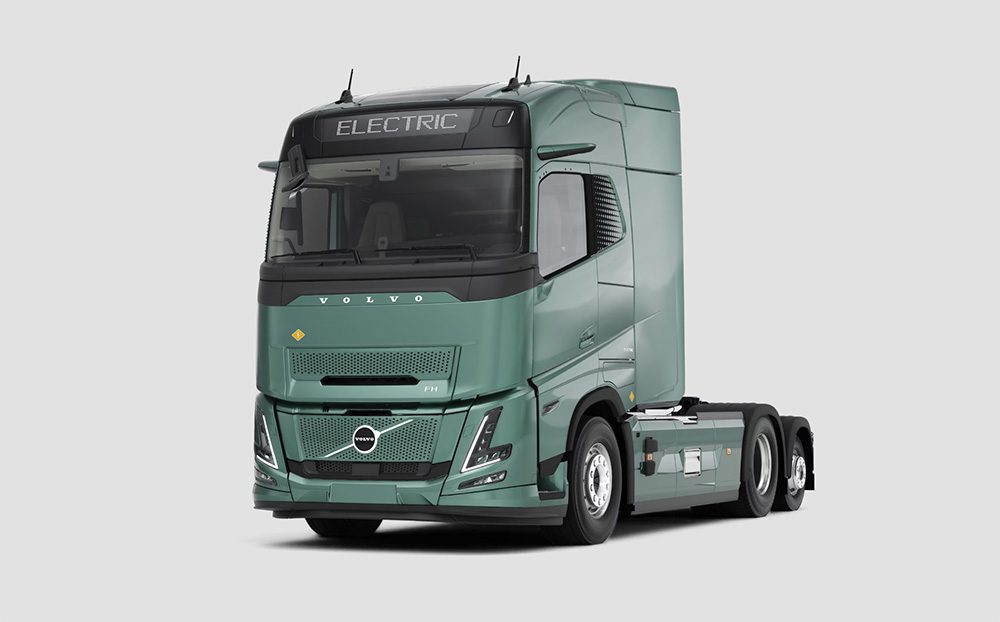

Volvo Trucks has launched several new or updated electric truck models, aimed at several different use cases.
The new FH Aero Electric with extended range is designed for long-haul and intercity transport. It features a rear compact e-axle that integrates two electric motors and a six-speed gearbox and delivers up to 460 kW (623 hp) of power. It supports 700 kW charging speeds on MCS or 350 kW on CCS. Volvo estimates that charging the 8 battery packs from 20% to 80% using MCS should take approximately 50 minutes—within the legislated rest period for truck drivers in the EU.
Total capacity is up to 48 tonnes GCW (Gross Combination Weight), and payload is up to 28 tonnes. The flexible battery configuration allows operators to optimize the balance between range and payload. An electric power take-off for refrigerated units eliminates the need for a separate diesel generator.
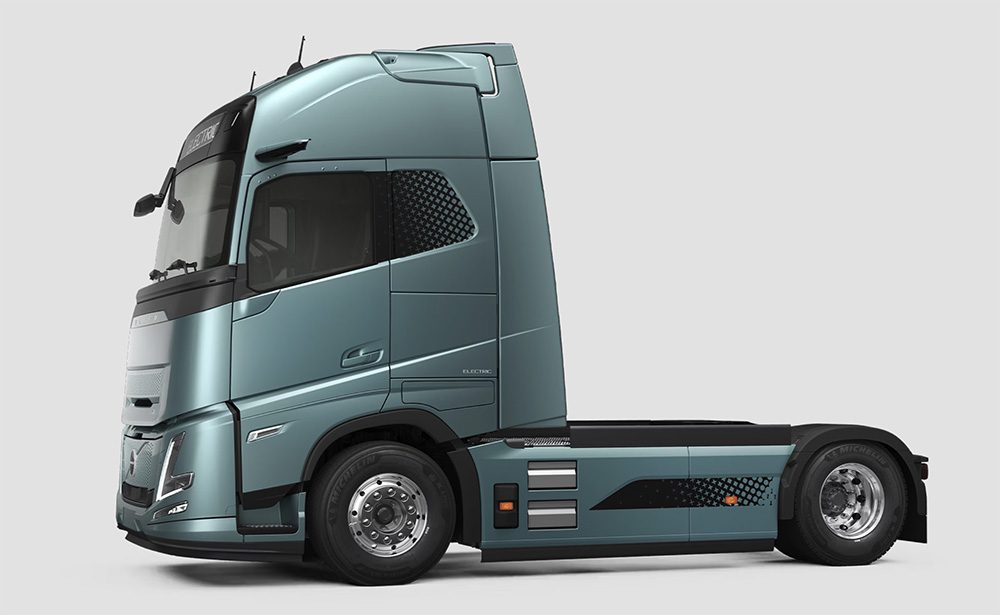
The next-gen FH, FM and FMX Electric models are designed for on-road construction, regional distribution, urban logistics, utilities, refuse and special heavy applications. A new dual-motor drivetrain with an eight-speed gearbox is designed to maximize electric torque, and delivers up to 540 kW (731 hp) of power. Range is up to 470 km, and charging speed is up to 350 kW on CCS.
Total capacity is up to 65 tonnes GCW, and payload is up to 23.8 tonnes (4×2 tractor). These trucks are available with twin-drive axles and low gearing for maximum flexibility. Multiple power take-off configurations are available, including split motors or dual-motor output for cranes, hook lifts or tipper bodies. Truck and body can be operated simultaneously.
“We’re really sharpening our offering here. We are broadening it and making electric solutions possible for an even wider range of transport assignments,” says Roger Alm, President of Volvo Trucks. “This means we can fully match the business needs of our customers. It has never been easier to replace diesel trucks with electric ones.”
“The next-generation FH, FM and FMX Electric are packed with new, smart functions—they offer great driver comfort and make [electric] transport available for a wide range of transport assignments,” says Roger Alm.
Even as Volvo announces new electric trucks, which it says “will be rolled out step-by-step to [unspecified] markets starting in 2026,” the company continues lobbying to weaken emissions standards in the US and Europe, and investing money in hydrogen fuel cells, a technology that many scientists and engineers consider to be mainly a vehicle for prolonging the use of fossil fuels while harvesting government subsidies.
Source: Volvo Trucks