
Lots of things go better in the open air: picnics, concerts, sports. But battery farms?
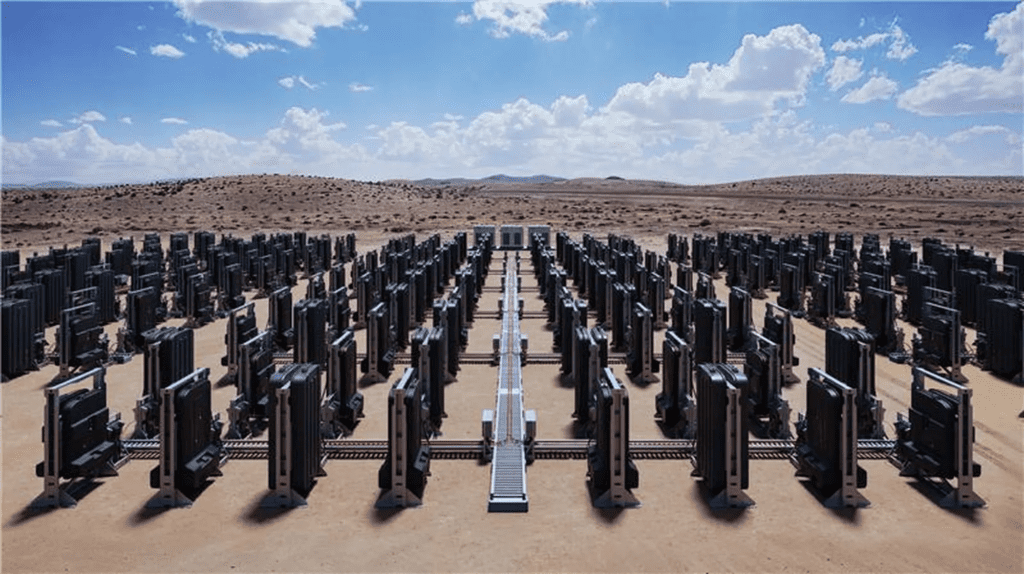
At a pilot program near Reno, battery recycling pioneer Redwood Materials has mounted rows of second-life battery packs in the open air on above-ground cable trays.
Spreading packs out in the open air helps avoid the need for active refrigeration, and eliminating moving parts like fans and filters minimizes potential malfunctions. Keeping the wiring above ground and limiting the size of each modular component minimizes the need for large equipment.
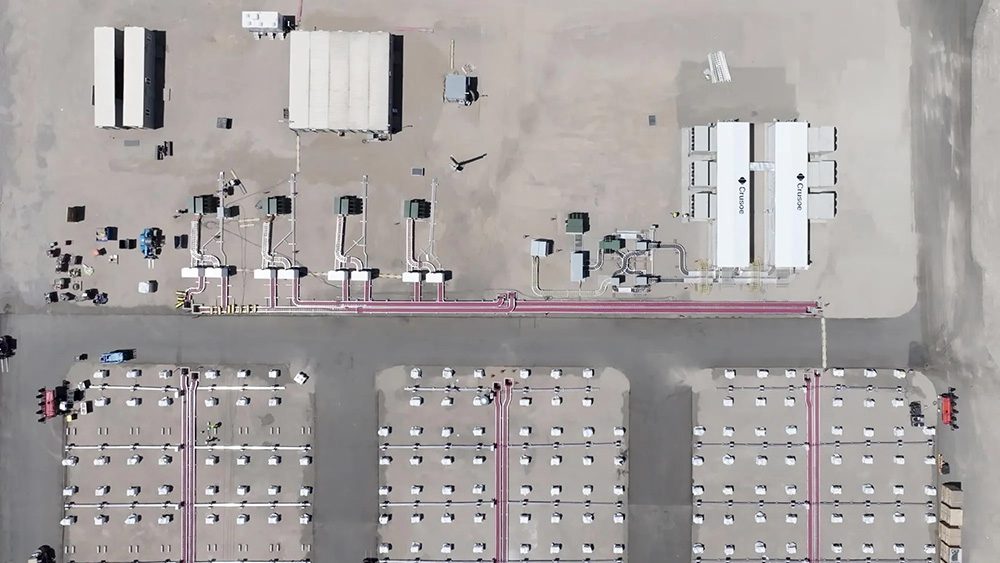
This innovative battery-farm design is part of a pilot program to power four data centers, operated by Crusoe. Redwood installed a 20 MW solar system and 12 MWh of repurposed batteries. Following the successful pilot, Crusoe agreed to the installation of similar systems at 20 more data centers.
Redwood runs the battery packs at only a fraction of their original power capabilities—this development decision sacrifices maximum output in favor of safety, longevity and easier thermal management—it’s one of the keys to avoiding having to run an active refrigeration system, even in hot Nevada summers.
Redwood has developed a proprietary pack management technology that lets it communicate with and control batteries of different voltages, protocols, and states of health. The pack manager is a universal adapter for EV batteries, performing power conversion into a unified DC stream that can work with any standard inverter. The site controller aggregates many packs into one coherent storage system, balances state of charge across packs, and intentionally “unbalances” some based on their health—older packs are cycled more gently, while fresher packs get worked harder. The battery algorithms team is continually updating models to track the health of each pack from receipt through its repurposed life, and eventually to recycling.
Source: Latitude Mediavia CleanTechnica