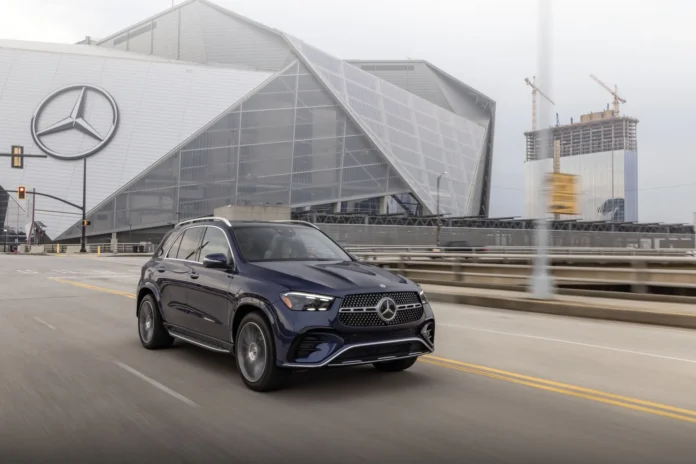
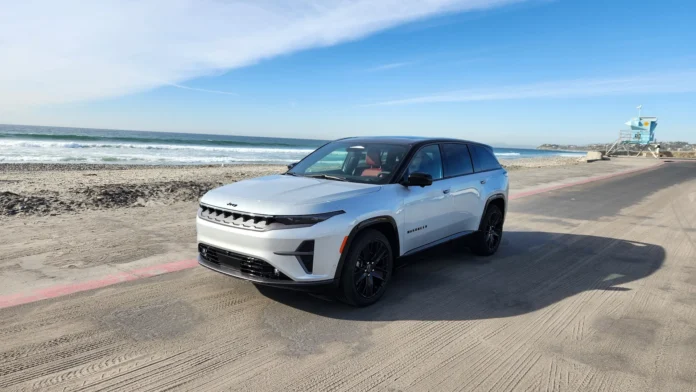
Tuesday, April 21, 2026
12.3 C
London
Home Blog Page 101

Volkswagen ID.7 canceled for US due to “challenging EV climate”

0


The Volkswagen ID.7 electric hatchback is no longer coming to the U.S., leaving the VW brand with just electric two vehicles in its U.S. lineup for now.

The ID.7’s cancellation was first reported by The Car Guide, and then confirmed to Green Car Reports by VW spokesperson Mark Gillies.

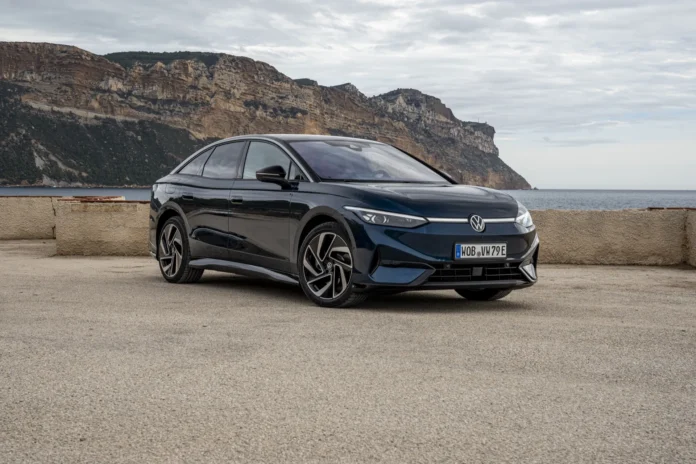
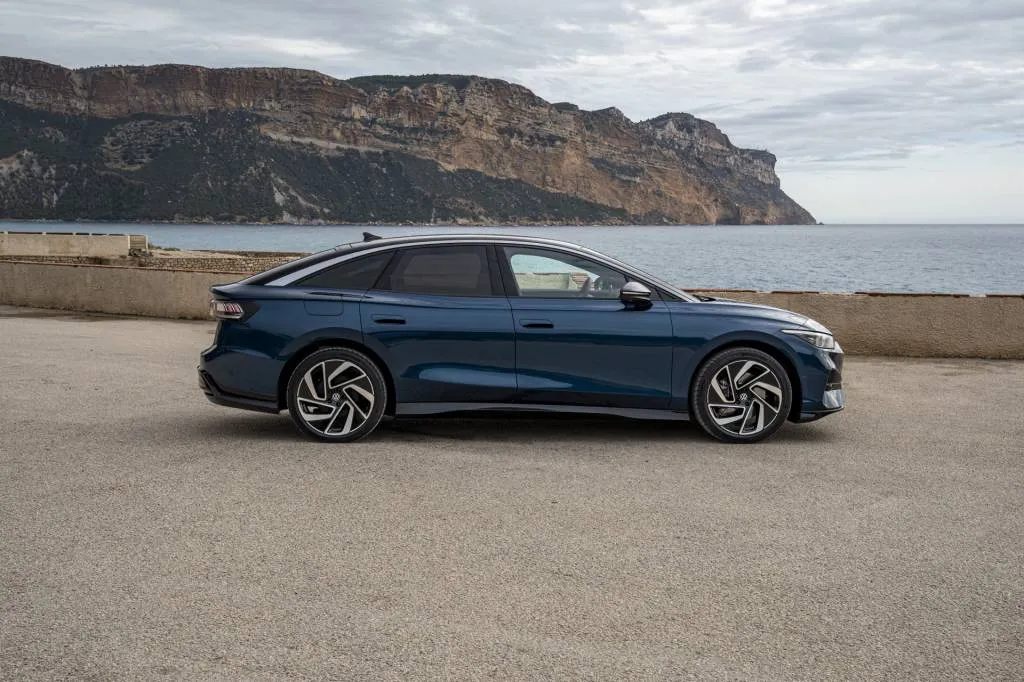
2025 Volkswagen ID.7

2025 Volkswagen ID.7

“Due to the ongoing challenging EV climate, Volkswagen has decided to no longer offer the ID.7 to the North American market,” Gillies said. “Despite this, electric vehicles continue to be a core part of Volkswagen’s long-term product strategy, and new electric models will continue to be introduced for this market.”

The ID.7 has been on sale in Europe since late 2023, and was originally due to arrive in the U.S. in late 2024 as a 2025 model, but VW announced a delay in May, citing changing market demands and stronger-than-anticipated demand for its Tourer wagon variant in Europe. The ID.7 Tourer was never planned for the U.S., but fulfilling demand for it in Europe likely meant sacrificing production capacity earmarked for U.S.-market hatchbacks.

2025 Volkswagen ID.7

2025 Volkswagen ID.7

In a 2023 preview drive of the 2025 VW ID.7, Green Car Reports found that the electric hatchback handled well and had loads of passenger space, in an aerodynamically savvy package that aimed to maximize range. But VW never planned to bring the longest-range version of the ID.7, with its largest and fastest-charging battery configuration, to the U.S.

Cancellation of the ID.7 leaves the ID.4 crossover and the recently introduced ID.Buzz—which we recently named Green Car Reports Best Car To Buy 2025—as the only EVs in VW’s U.S. lineup, with no clear indication of what arrives next. The ID.4 has been around since the 2021 model year, but it did get substantial updates for 2024. Sales through January 2025 were strong, Gillies noted.


Source link

2026 BMW iX gains entry-level model, refinements throughout

0


  • Every BMW iX has more range for 2026
  • The iX gets a price cut with an expanded lineup; it now starts at $76,325
  • The updated iX will arrive in the second quarter

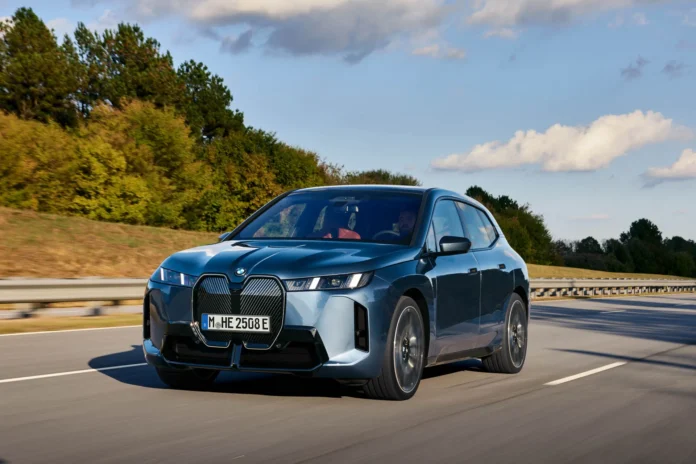
The 2026 BMW iX electric crossover gets refreshed styling, improvements to range and power, and an effective price cut thanks to a new entry-level grade.

The new iX xDrive45 grade starts at $76,325 (including a $1,175 destination charge). That’s $11,920 less than the xDrive50 grade that was the less-expensive of the two iX grades available for the 2025 model year. The xDrive45 still has standard dual-motor all-wheel drive like other iX models, with an output of 402 hp and 516 lb-ft of torque that will get it from 0-60 mph in a BMW-estimated 4.9 seconds.

2025 BMW iX

2025 BMW iX

At 312 miles, this version has slightly more range than the 309-mile maximum of the 2025 BMW iX. That’s also achieved with a bit less battery capacity than the other grades, at 100.1 kwh (usable). The iX xDrive60 extracts 340 miles from a 113.4-kwh pack, while the range-topping iX M70 xDrive gets an estimated 302 miles from 112.8 kwh.

The middle-child xDrive60 starts at $89,675 with destination. It’s rated at 536 hp and 564 lb-ft, giving it 20 more horsepower than the equivalent 2025 iX xDrive50, but the same amount of torque. The BMW-estimated 0-60 mph time is unchanged as well, at 4.4 seconds.

Priced at $112,675 with destination, the M70 xDrive replaces the M60 as the sportiest iX. Output increases from the M60’s 610 hp and 749 lb-ft to 650 hp and 811 lb-ft with launch control. The M70 also isn’t any quicker than its predecessor, but its estimated 0-60 mph time of 3.6 seconds is probably as quick as a big luxury crossover needs to be. It also tops out at 155 mph with proper tires, while the other two models are limited to 124 mph.

Range boosts come courtesy of new inverters with silicon-carbide semiconductor components, as well as a new battery management system, that improve overall powertrain efficiency, as well as new cell chemistry that provides greater energy density, BMW claims. All iX models also come standard with a heat pump to maximize efficiency in cold weather.

All models have a maximum Level 2 AC charging rate of 11 kw. The base xDrive45 can DC fast-charge at 175 kw; that increases to 195 kw for the other two models, with all versions expected to keep their CCS ports. BMW is expected to offer Tesla Supercharger access later this year using adapters, but it’s unclear when the automaker will start building cars with Tesla-style NACS ports.

2025 BMW iX

2025 BMW iX

The iX debuted for the 2022 model year with controversial styling that’s been pulled back a bit with this refresh. The more prominent wheel arches and squared-off front fascia bring the iX closer to traditional SUVs in appearance. Inside, the massive curved dashboard display remains, but the latest operating system allows for more functions, including gaming and video streaming.

The 2026 BMW iX begins production in March in Dingolfing, Germany, with U.S. deliveries scheduled for the second quarter. The updated iX will serve as a bridge between current BMW EVs derived from internal-combustion platforms and the next-generation Neue Klasse models that will debut a new architecture developed for EVs from the start.


Source link

Polestar 6 convertible pushed back to after Polestar 7

0


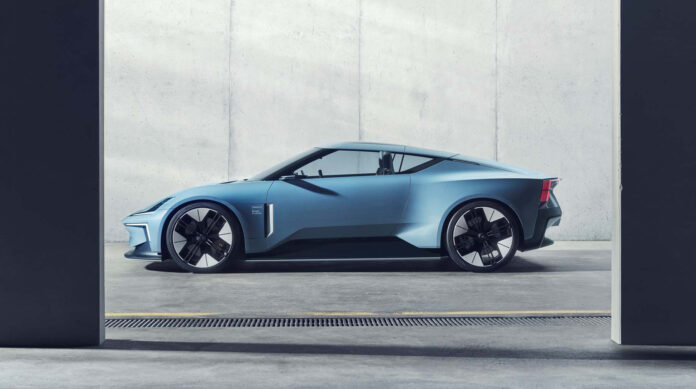
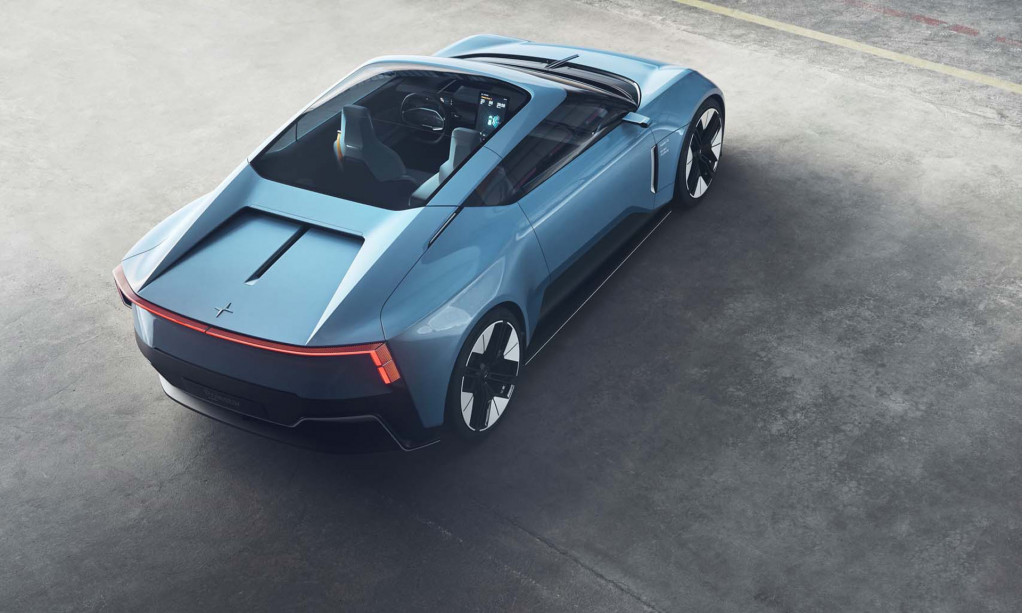
The Polestar 6 electric sports car will arrive after the recently confirmed Polestar 7 SUV, meaning it will likely miss the original 2026 launch window.

The news was first reported by Australia’s CarExpert and subsequently confirmed to Green Car Reports by Polestar spokesperson Mike Ofiara.

Polestar O2 concept

Polestar O2 concept

“The highly anticipated Polestar 6 will arrive at a later stage,” Ofiara said. Polestar’s immediate priority is to follow through on the rollout of the 3 and 4 SUVs, followed by the launch of the Polestar 5 fastback later this year, then the 7 SUV, and finally the 6, he said. Exact timing for the Polestar 7 still hasn’t been confirmed.

Polestar first previewed the 6 in March 2022 with the O2 concept car. It confirmed production plans for 2026 a few months later as well as opening reservations at that time. The 2026 target was still in effect last July when, when Polestar showed the Concept BST at the 2024 Goodwood Festival of Speed, hinting at a spicier version of the convertible sports car.

Polestar O2 concept

Polestar O2 concept

The Polestar 7 that’s now taking priority is likely to be a higher-volume model than the niche Polestar 6. The compact SUV will be manufactured in Europe, allowing it to avoid steep tariffs currently placed on Polestar’s Chinese-made vehicles. It will introduce a new architecture to be used on all subsequent Polestar models other than the 6, which is expected to use a shortened version of the Polestar 5’s bonded aluminum platform.

While there still aren’t many details, the Polestar 7 has been hinted at as far back as 2022. It was previously rumored to replace the Polestar 2 as the brand’s entry-level model, but more recent reporting indicates Polestar is planning a direct successor to that model later in the decade. The next-generation Polestar 2 will likely use the same architecture as the 7, and could be produced in Europe as well.


Source link

BP opens first 400-kw TA travel center location, along I-95

0


BP on Monday unveiled the first of more than 40 planned electric-vehicle charging hubs to be co-located with TravelCenters of America (TA) highway rest stops.

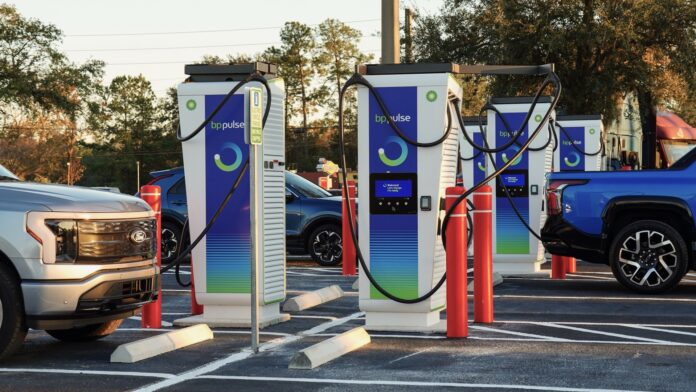
Located in Jacksonville, Florida, along the busy I-95 corridor, the first site features six CCS DC fast-chargers, configured into 12 “bays ” that each offer a connector.

BP Pulse EV fast-chargers at TravelCenters of America

BP Pulse EV fast-chargers at TravelCenters of America

BP, which acquired TA in 2023, currently has 31 U.S. charging locations operated by its BP Pulse division, with over 100 sites planned nationwide including the TA sites. BP also last summer announced that it would build what it called the first publicly accessible truck fast-charging station, also in conjunction with TravelCenters of America. 

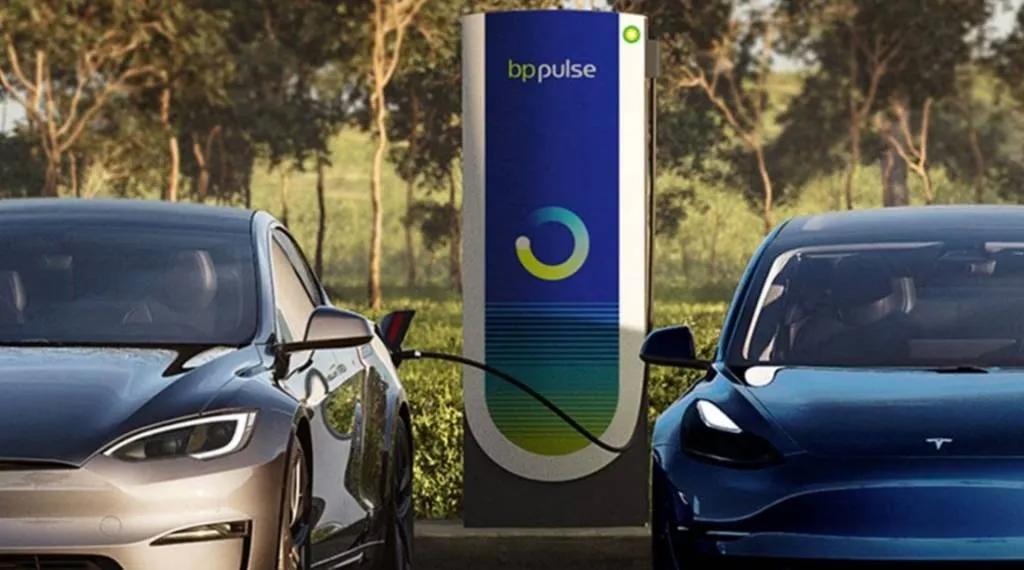
The new TA travel center location will offer 400-kw connectors, and BP told Green Car Reports that it’s planning to build up that capability at its other sites as well. While it’s only using CCS connectors at the moment, BP has also placed a large order for Tesla fast-chargers.

BP to purchase Tesla chargers

BP to purchase Tesla chargers

BP said in 2022 that its fast-chargers were almost as profitable as gas pumps; and at that time it saw its entire charging operation as being profitable by 2025. Before it was acquired by the oil company, TA was set to partner up with Electrify America, announcing plans in early 2023 for about 1,000 individual chargers at 200 different sites, set to be installed over five years, but this new arrangement with BP Pulse supersedes that.

TA isn’t the only chain of traditional travel centers investing in EV chargers. Love’s announced in 2024 that all of its future travel stops will have EV chargers as well.

Recent studies have suggested that Americans don’t need or expect EVs to charge as quickly as gas vehicles can fuel up. But they do want amenities; so this could be one of the templates that works well in the near future. 


Source link

2025 Lucid Gravity has Tesla NACS port, gets Supercharger access Jan. 31

0


Lucid is ready to roll out Tesla Supercharger access for its 2025 Gravity electric SUV.

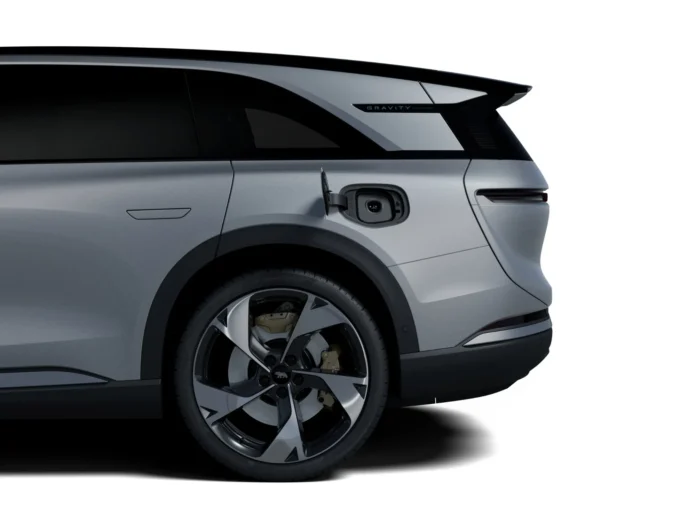
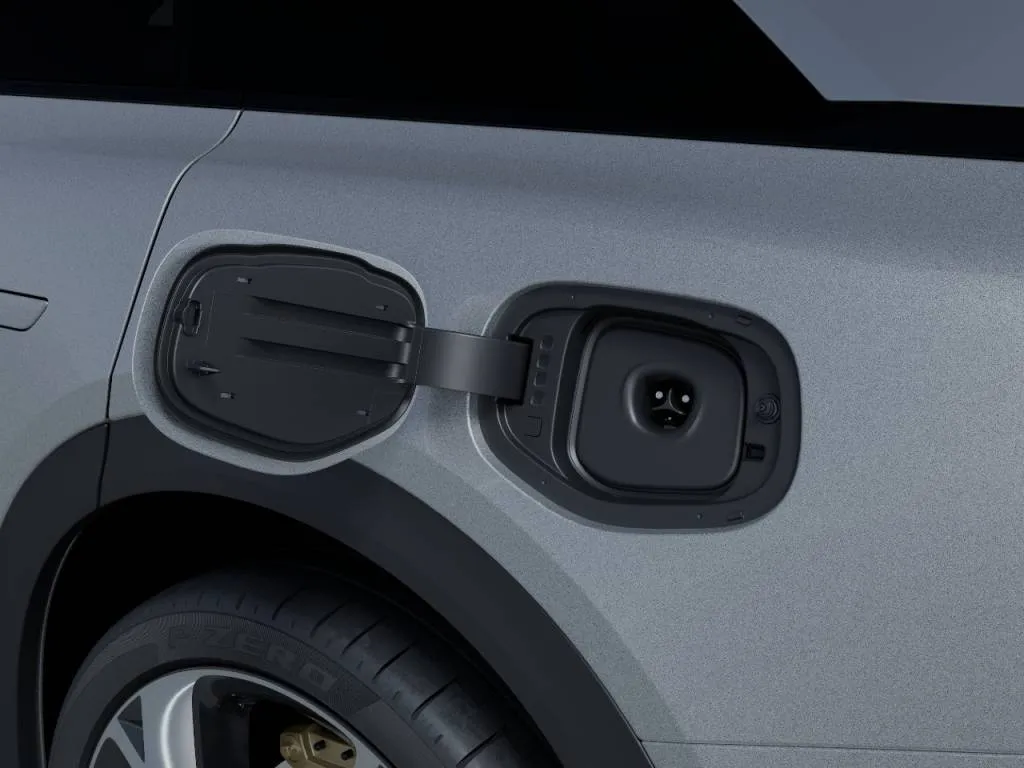
Lucid committed to adopt the Tesla-developed NACS charge port in November 2023, and said in September 2024 that the Gravity would get a NACS port sometime this year, shortly after the start of production. The automaker on Tuesday confirmed that every Gravity built for the U.S. market has a NACS port, with Supercharger access to go live Jan. 31.

The Gravity’s NACS port is located in the same spot as on a Tesla—the rear driver’s side of the vehicle—to facilitate easy use of V3 and V4 Supercharger stations. That’s a completely different location than the front left fender, where it had located the charge port in prototypes.

Lucid Gravity with Tesla NACS charge port

Lucid Gravity with Tesla NACS charge port

2025 Lucid Gravity Grand Touring

2025 Lucid Gravity Grand Touring

Lucid expects a sustained charging power level of 225 kw on 500-volt DC fast chargers like the V3 Superchargers and up to 400 kw with the 1,000-volt output of V4 Superchargers.

At peak charging rates, Lucid estimates that 200 miles of range can be added in less than 12 minutes at a peak 400 kw—a significant improvement over the 15 minutes it had previously claimed with a 350-kw connector.

Lucid also confirmed a 123-kwh battery capacity, with cells supplied by Panasonic but with what Lucid claims are chemistry updates compared to cells used in the automaker’s Air sedan, returning an estimated 450 miles of range.

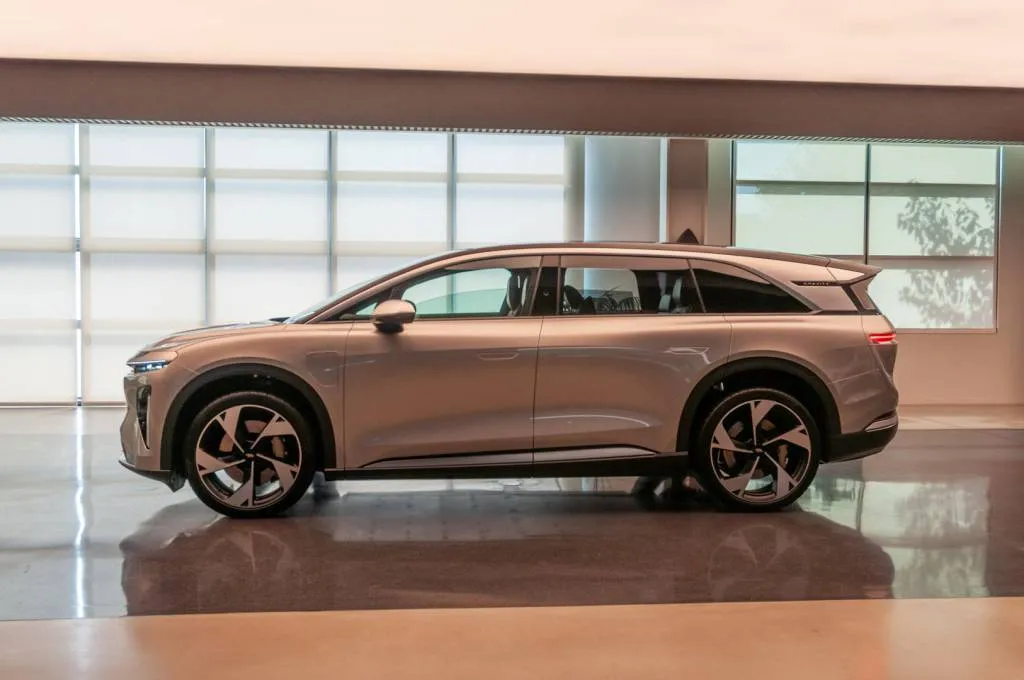
Lucid Gravity

Lucid Gravity

Lucid Gravity

Lucid Gravity

Lucid Gravity

Lucid Gravity

A CCS1 adapter is included with NACS-equipped Gravity models, matching the 400-kw peak of the NACS port sans adapter, Lucid claims. Models equipped with the NACS port will also still be capable of bidirectional charging at up to 19.2 kw, according to Lucid.

Bidirectional charging includes the ability to charge other EVs, dubbed RangeXchange, a feature that debuted on the Lucid Air sedan in 2023. Lucid said it will add Supercharger access for the Air in the second quarter of this year, with more details to follow.

The 2025 Lucid Gravity arrives in Grand Touring form with a $94,900 base price before destination. A $79,900 Touring grade is due to arrive for the 2026 model year. First impressions, in the form of a prototype test drive and a review of a close-to-production Gravity, have been encouraging.


Source link

Will Trump’s LNG push help prime a hydrogen economy?

0


The Trump Administration is looking for new markets for exported liquefied natural gas (LNG), a push that could further prime the hydrogen economy the Biden Administration began laying out.

The day he took office, Trump issued an executive order that, among other provisions, called on the Department of Energy (DOE) to end a pause on considering pending applications for export of LNG to countries with which the U.S. does not have a free-trade agreements, and on the Maritime Administration (MARAD) to reevaluate environmental impact statements for deepwater port projects related to LNG export.

This and other fossil-fuel-related measures in the executive order to aim to counteract the Biden Administration’s emphasis on electric vehicles and renewable energy. The Trump Administration claims it’s taking aim at “unfair subsidies and other ill-conceived government-imposed market distortions that favor EVs over other technologies” and “effectively mandate their purchase” by “rendering other types of vehicles unaffordable.”

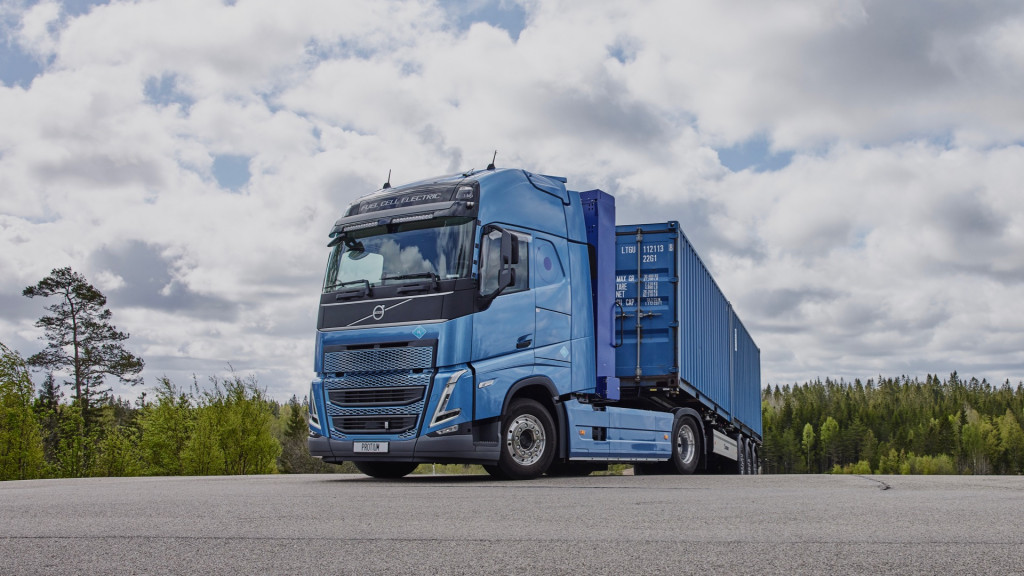
Volvo FH hydrogen fuel-cell semi truck

Volvo FH hydrogen fuel-cell semi truck

When it comes to LNG, contriving a larger export market for the fuel, which is typically used in larger vehicles like semi trucks, could help build out infrastructure and thus spur domestic adoption. But this may be more bluster than an about-face. Under the Biden Administration, North American LNG export capacity was on track to more than double by 2028, according to the Energy Information Administration (EIA).

Although it isn’t one of the stated goals in the executive order, establishing a supply chain for LNG could also help to finally create one for hydrogen. That effort already got a big boost under the Biden Administration in the form of an $8 billion project to create regional hydrogen hubs for production and distribution.

Kenworth-Toyota hydrogen fuel-cell semi prototype. - May 2024

Kenworth-Toyota hydrogen fuel-cell semi prototype. – May 2024

Under Trump, it’s expected that any U.S. hydrogen production will rely more on natural gas and carbon capture—higher-emission methods all termed “blue” hydrogen—rather than “green” hydrogen that comes with the lowest environmental impact.

Green hydrogen, which generally relies on electrolysis powered by renewable energy, is eligible for tax credits outlined in 2023 after scrutiny from lawmakers to confirm that only the lowest-emission hydrogen production methods would qualify. Those credits may not go away entirely, but they face an uncertain future under Trump.


Source link

Cummins redesigned the turbo for hydrogen combustion engines

0


Hydrogen combustion engines lean on existing internal-combustion technology, but they still require some technical tweaks for maximum efficiency.

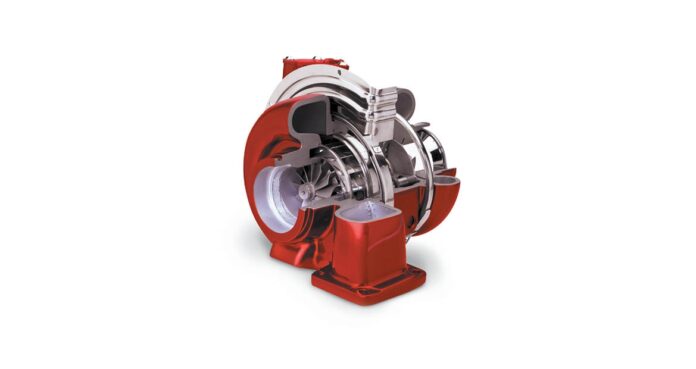
Engine maker Cummins recently unveiled a turbocharger designed for hydrogen engines, which burn gaseous hydrogen instead of gasoline or diesel. Called the CCS H2 ICE, the turbo helps compensate for the lower energy density and higher airflow needs of hydrogen compared to fossil fuels, according to a Cummins press release.

Hydrogen burns cleaner then gasoline or diesel, but it still produces some harmful criteria pollutants—like nitrogen oxide (NOx), which Cummins is familiar with. In 2024 the company agreed to pay a nearly $1.7 billion fine to settle a federal case in which it was accused of emissions cheating with diesel engines in Ram pickup trucks.

2025 Ram Heavy Duty

2025 Ram Heavy Duty

A higher-airflow lean burn is critical to minimizing NOx emissions in hydrogen combustion engines, according to Cummins, as is reducing turbo lag. The latter is caused when the turbo takes too long to build up boost, leaving to a delay between accelerator press and power delivery.

More precise control of the turbocharger can help deliver on these requirements. Several options exist for this, but for the CCS H2 ICE, Cummins chose a variable-geometry design with adjustable nozzles that can change airflow through the turbo on demand.

Peterbilt semi truck prototype with Cummins hydrogen combustion engine

Peterbilt semi truck prototype with Cummins hydrogen combustion engine

Cummins gave indications it was going strong on EVs at one point, but it’s pulled back from what was hinted in those earlier concepts in recent years. It’s been emphasizing hydrogen combustion instead, showing a prototype hydrogen combustion engine in a Peterbilt semi truck in 2023.

While this new project is positioned to emphasize European fleets first, it could also be applied in U.S. trucks—with the supporting infrastructure, of course.

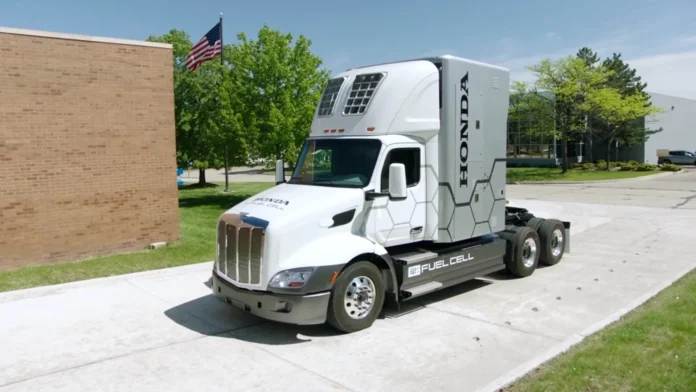
Cummins isn’t the only company investing in hydrogen internal combustion. Bosch has also made it a part of its hydrogen investments, alongside fuel cells. Toyota is looking at both hydrogen technologies was well, conducting hydrogen-combustion demonstration projects while continuing to develop a fuel-cell powertrain backed by large batteries for semi trucks and—the automaker has teased—possibly heavy-duty pickups as well.


Source link

Kia Sorento hybrids recalled because lighting may fail

0


Kia is recalling 10,687 Sorento hybrid and plug-in hybrid midsize crossover SUVs because a software issue could cause their headlights and taillights to go dark.

In the affected vehicles, a software logic error with the body domain control unit could cause momentary lighting failure under certain circumstances, according to the NHTSA. Even a momentary loss of headlights and taillights could reduce visibility for the driver, as well as make the vehicle less visible to other road users, increasing the risk of a crash.

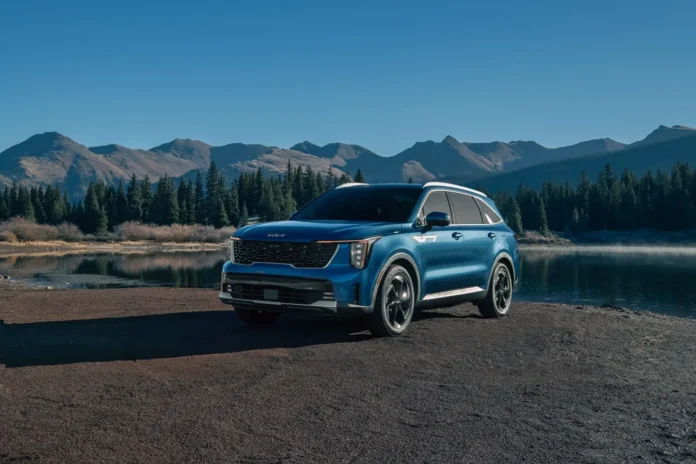
2025 Kia Sorento Hybrid

2025 Kia Sorento Hybrid

The recall includes 8,937 Sorento Hybrid and 1,750 Sorento PHEV crossovers—all 2025 models—as well as a much larger population of non-hybrid 2024 and 2025 Sorento models. These are refreshed versions with, among other things, new headlights and taillights. But Kia has determined that the fault lies with control-unit software rather than the lighting units themselves.

Hybrid and plug-in hybrid models were refreshed one model year after non-hybrids, which is why the recall applies to only 2025-model-year hybrids and plug-in hybrids. No mechanical changes were made, although the Sorento Hybrid saw a 1-mpg dip in EPA fuel economy to 36 mpg combined. EPA electric range for the plug-in hybrid still hasn’t been confirmed, but it’s expected to be close to the 2024 model’s 32 miles.

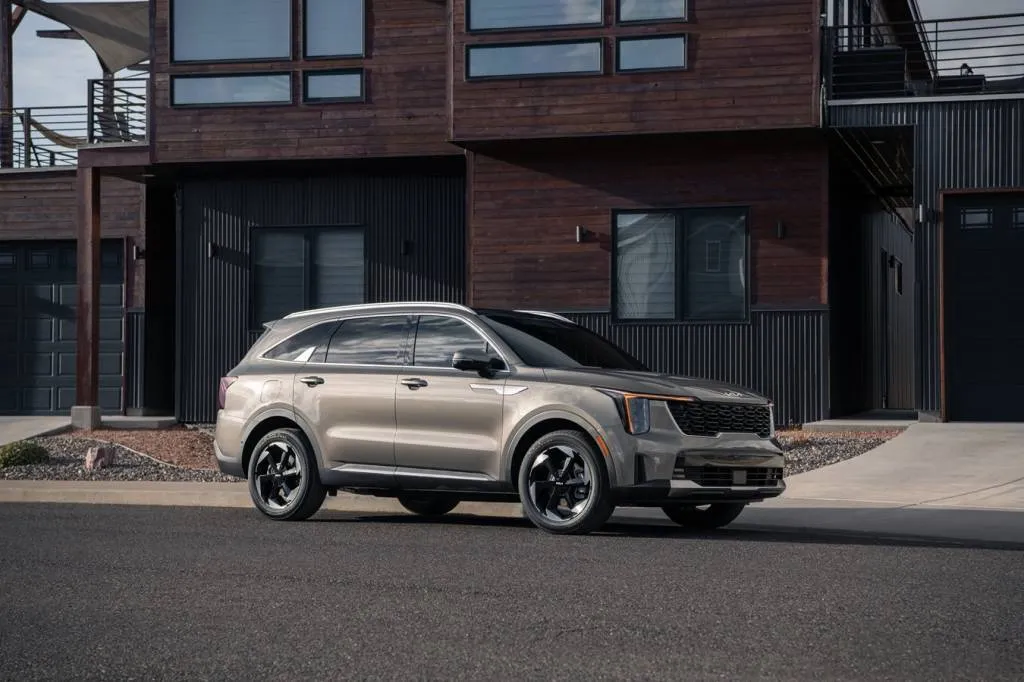
2025 Kia Sorento plug-in hybrid

2025 Kia Sorento plug-in hybrid

The Sorento Hybrid kept the same base price as before, but several price hikes and the loss of federal EV tax credit qualification mean the Sorento PHEV effectively costs $10,000 more than it did three years ago. The 2025 model was also promptly recalled for a fuel-leak issue.

As with that recall, Kia told the NHTSA that it is unaware of any crashes, injuries, or fatalities related to the lighting issue. The remedy here is a software update, which must be performed at a dealership, but will be done free of charge. Kia expects to mail owner notification letters Feb. 21. Owners can also contact the automaker’s customer service department at 1-800-333-4542 for more information and reference recall number SC331.


Source link

2025 Mercedes-Benz GLE PHEV continues with 50 miles of electric range

0


The 2025 Mercedes-Benz GLE 450e plug-in hybrid carries over into its second model year unchanged.

Introduced for the 2024 model year, this plug-in hybrid version of the GLE-Class midsize SUV is available in a single grade for 2025, with a $72,500 base price (including a $1,150 destination charge) that puts it roughly in the middle of the overall GLE lineup. The plug-in hybrid model remains unique to the standard GLE SUV; it isn’t available in the Coupe body style.

2025 Mercedes-Benz GLE-Class (GLE 450)

2025 Mercedes-Benz GLE-Class (GLE 450)

For this plug-in hybrid, Mercedes teamed a 2.0-liter turbo-4 and 9-speed automatic transmission with a single electric motor, for a total system output of 381 hp and 479 lb-ft of torque, which is sent to all four wheels. A 23.3-kwh battery pack provides 50 miles of EPA electric range.

In a test drive of the GLE 450e on roads around the Mercedes-Benz factory in Tuscaloosa, Alabama, we found that this SUV does hybrid the right way. Not only does it provide ample electric range on paper, but a reasonably powerful electric motor (it’s rated at 134 hp and 325 lb-ft of torque) makes it easier to stay in all-electric mode.

2025 Mercedes-Benz GLE-Class (GLE 450)

2025 Mercedes-Benz GLE-Class (GLE 450)

Mercedes is expected to add a second GLE plug-in hybrid to its U.S. lineup in 2026, but this one will be more focused on performance. The AMG GLE 53 Hybrid will combine a turbocharged 3.0-liter inline-6 with a torquier electric motor for an estimated 536 hp and 553 lb-ft of torque, getting it from 0-60 mph in 4.6 seconds. A similar powertrain is used in the 2025 Mercedes-AMG E 53 Hybrid sedan.

Mercedes remains committed to plug-in hybrid powertrains for its AMG performance models, and continues to offer a plug-in hybrid version of the smaller GLC SUV alongside the GLE for 2025. But it’s reportedly nixed extended-range EVs using smaller combustion engines as generators supplying power to the battery pack, considering them a “transitional technology.”


Source link

2024 Jeep Wagoneer S electric SUV finally arrives

0


  • Jeep’s first U.S.-market battery-electric vehicle carries a 303-mile range rating and a $71,995 sticker price
  • It’s the quickest Jeep in history—better than a Hemi Hellcat
  • It’s a Model Y and Lyriq rival for sure—but is it a Jeep?

The 2024 Jeep Wagoneer S is now arriving at dealerships—and it’s about time, if not overdue. The large five-seat electric crossover SUV sits squarely in the premium end of the EV market, and the Launch Edition we tested stickers at $72,000 including the mandatory destination fee. One of two versions is EPA-rated at a combined 303 miles of range; that was the one we drove.

Only about 4,000 model-year 2024 versions were built, all with the high-spec Launch Edition trim. Details on the 2025 Wagoneer S lineup will come “very soon,” execs said, likely at February’s Chicago auto show. They may include both an offroad-focused Trailhawk model and less expensive versions, 

Overall, we found the electric Wagoneer to be a competent, pleasant, relatively quick SUV. If we came away with a question, it was over the car’s fundamental identity: What exactly makes this a Jeep? 
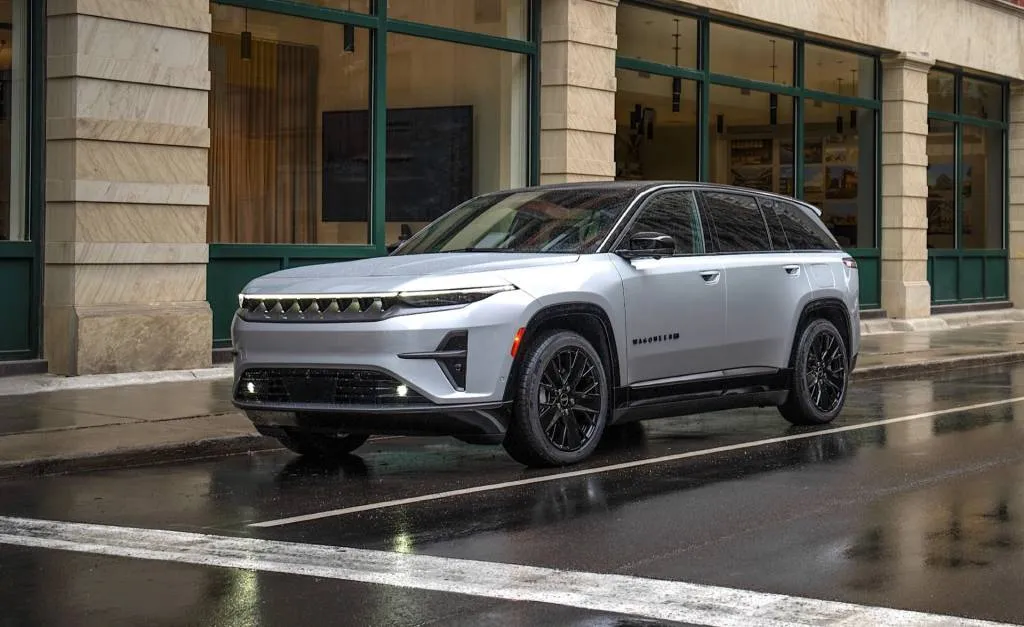
2024 Jeep Wagoneer S

2024 Jeep Wagoneer S

About time, if not overdue

Stellantis, the smallest of Detroit’s resident automakers, has never had a volume electric vehicle to sell. (Two generations of the undeniably “cute” but low-range, subcompact Fiat 500e just don’t cut it.) Now it does.

The electric Wagoneer S is one of two EVs from the former Chrysler that launch within weeks of each other. The second is the polarizing Dodge Charger Daytona, the electric performance car with the audio-enhanced vroom-vroom noises. It’s meant to introduce EV performance to the Hemi crowd—which may well prove to be a tall order.

As a premium electric five-seat SUV, the Wagoneer S should be an easier sell. It sits in a segment that already includes the domestic Cadillac Lyriq and Tesla Model Y, plus imports including the Audi Q6 e-tron, BMW iX, and Mercedes-Benz EQE SUV, with more on the way.

In late January, we drove a Wagoneer S roughly 100 miles in and around the San Diego suburb of Carlsbad, California—with temperate weather and the state’s strong adoption of EVs making it the ideal environment in which to test a new electric vehicle.
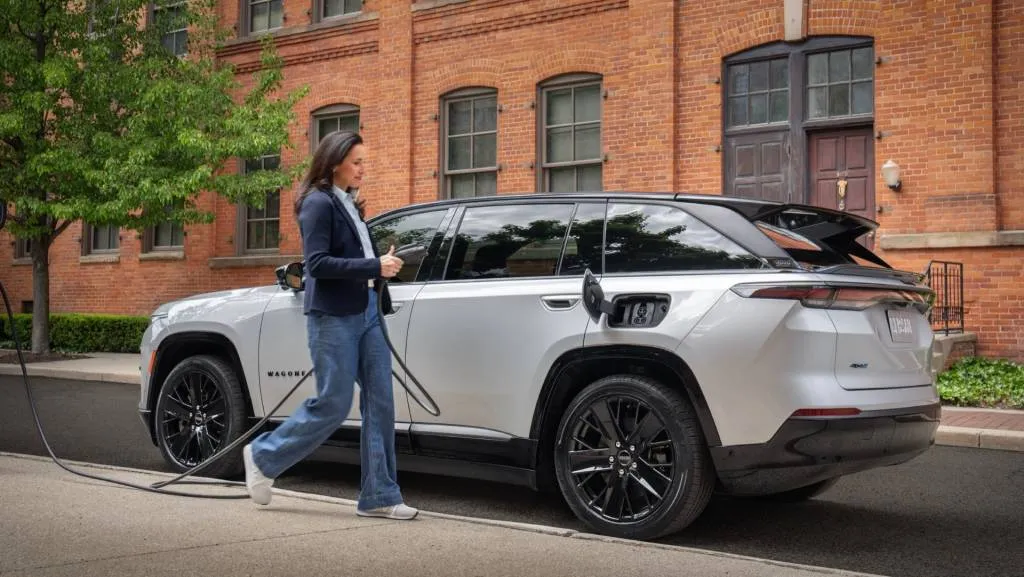
2024 Jeep Wagoneer S

2024 Jeep Wagoneer S

2024 Wagoneer S: An anodyne EV SUV shape

From the front, the traditional Jeep seven-slot grille has morphed into seven fins on a blanking plate with LED accent lights that illuminate the design. It is, designers said, a “confident face” despite the significant bevel from the hood surface down to those fins. The side profile is adequately Jeepish, and it has the characteristic metal lettering spelling out the model name standing proud on the lower front doors.

It’s at the rear where the Jeep identity gets lost. There’s a “4xe” badge, just like all those plug-in hybrids Jeep has sold, and narrow, full-width LED taillights. The very steeply raked rear window is cleverly disguised by a large basket-handle roof spoiler whose vertical side supports give the Wagoneer S a square, SUV side profile. You only see the massive gap between that raked rear glass and the spoiler from certain angles. It’s all about aerodynamics: the quoted drag coefficient of 0.29 makes the Wagoneer S the slipperiest Jeep ever sold.

But we saw nothing at the rear that definitely said Jeep. In fact, coming up to a black SUV ahead at a stoplight, we pegged it as either a Kia or the new Honda Prologue—until we realized it was another Wagoneer S. That’s not great brand ID. The Launch Editions feature a standard glass roof, all-black paint and trim above the beltline, and black alloy 20-inch wheels. 

Inside, it’s the same story. The materials, contrast stitching, and multiple displays say “premium SUV,” but it’s not clear to us they really say “Jeep.” Buyers will be the judge of that. One small touch of butch was a starburst pattern on the matte black plastic that now seems to be supplanting the hackneyed shiny piano-black trim in car interiors.

Those displays include a 12.3-inch instrument cluster, a 12.3-inch center touchscreen display, a 10-inch head-up display for the driver, a 10.3-inch touchscreen at the right of the dash for the front passenger, and a final 10.3-inch display for the HVAC controls. The control and infotainment software worked fine, though it seemed slow to load once in a while.

En route, it was nice to be able to re-aim the vents (we’re lookin’ at you, Rivian), though some of the controls (e.g. window switches, lock buttons) seemed oddly small for a Jeep. Parts bin, perhaps? We liked the optional red upholstery, which along with the glass roof brightened the interior considerably.

2024 Jeep Wagoneer S

2024 Jeep Wagoneer S

2024 Jeep Wagoneer S

2024 Jeep Wagoneer S

2024 Jeep Wagoneer S

2024 Jeep Wagoneer S

2024 Jeep Wagoneer S

2024 Jeep Wagoneer S

Quickest, most wind-cheating Jeep ever

Superlatives always excite car marketers, so right up front we learned the Wagoneer S is not just the most aerodynamic but also the quickest Jeep ever, with its pair of 250-kw (335-hp) motors delivering a 0-to-60-mph acceleration time of 3.4 seconds. That’s one-tenth of a second faster than the Jeep Grand Cherokee Trackhawk, with its supercharged 6.2-liter V-8 engine producing 707 horsepower.

The 100.5-kwh (gross capacity) battery uses nickel-manganese-cobalt cells imported by Samsung SDI until a new Stellantis-Samsung joint-venture cell plant in Kokomo, Indiana, comes online early in 2027. The Wagoneer S pack uses 400-volt architecture and doesn’t have the ability to charge at 800 volts as do most Hyundai and Kia EVs. Level 2 charging time from 5-80% is quoted at almost seven hours, and Jeep says the Wagoneer S can fast-charge from 20-80% in 23 minutes (under ideal circumstances, of course).

The headline range rating for the Wagoneer S is 303 miles, and our test vehicle rode on the Falken tires that gave that higher 303-mile rating. We didn’t drive a Wagoneer S on the Pirellis that, as the EPA site shows, busts the rating down more than 10 percent—to 270 miles. The test car, however, started off showing just 258 miles at 95% battery capacity. It likely reflected aggressive driving by Jeep before we got it, as the range algorithm calculates on the last 50 miles of driving. Our drive wasn’t long enough to conclude much on efficiency; we’d guess 2.5 mi/kwh.

2024 Jeep Wagoneer S

2024 Jeep Wagoneer S

Predictably heavy, suitably quick

Behind the wheel and on the road, a curb weight approaching 3 tons (5,667 pounds) was evident, but we found the power generous and fully suitable for short bursts of fast acceleration on, say, uphill on-ramps. The Wagoneer S is predominantly rear-wheel drive, with the “Automatic” driving mode biased 40:60 front to rear. The “Sport” mode ups that to 20:80 to the rear. 

We started our drive in “Eco” mode, which is 100% rear-wheel drive unless the front motor is required to maintain traction. Eco required more pedal effort to keep up with traffic, but likely would be suitable for many drivers. The low-speed pedestrian alert noise, by the way, is a pleasantly meditative hum.

Jeep’s regenerative braking wasn’t entirely to our liking: it was almost unnoticeable in the lower setting, but too abrupt in the high setting. For the record, maximum regen produces 0.2 to 0.3g, while the minimum is only 0.04 to 0.08g—a pretty wide range. Perhaps Jeep’s drivetrain-software engineers can drive a selection of EVs from more experienced makers to feel how they round the edges of their algorithms.

While not the most capacious five-seat utility vehicle on the market, the electric Wagoneer S had suitable space for four adults to travel in comfort and five if required. Even the front seats had a slightly knees-up position at its lowest setting, reflecting the thick battery under the floor and a roofline lowered to reduce drag. 

It’s worth noting that both our test cars had slight judders during specific low-speed maneuvers. The first one was diagnosed as a malfunctioning front-axle disconnect, and we swapped into a second car halfway through. That one behaved flawlessly until the very end, when reversing produced a minor judder. We didn’t hear the resolution on that one.

2024 Jeep Wagoneer S

2024 Jeep Wagoneer S

Targeting whom, exactly?

Jeep’s new leader, senior vice president Bob Broderdorf, said the brand will target three groups of potential buyers for the Wagoneer S. First are owners of 4xe plug-in hybrid versions of the Wrangler (since 2021) and the Grand Cherokee (since 2022). That’s plausible, except (a) plug-in hybrids are hard to explain to shoppers; and (b) it’s entirely unclear whether many, some, or even any of those owners ever plug in their PHEVs—because Jeep refuses to release data on their plugging-in behavior. Count that group a “maybe.”

The second group is diehards in “the Jeep space,” the true 4×4 crowd who prize Jeeps for their go-anywhere, climb-anything qualities. Think “Trail Rated,” breakover angles, Rubicon Trail, etc. Will the Wagoneer S do off-roading? It didn’t come up in the media briefing—and its 6.4 inches of ground clearance will keep it away from the kinds of rock-climbing the Jeep Grand Cherokee Trailhawk 4xe (at 10.9 inches) can do. Sure, Jeep aired a Wagoneer S ad with the line, “Beautiful things can still get dirty”—but there, “dirty” seems to mean damp and a bit muddy.

To win over Jeep-space buyers, execs strongly hinted they will add a production version of the Wagoneer S Trailhawk Concept it unveiled the same day as the production car. The Trailhawk rides on rugged 31.5-inch all-terrain tires, features a higher ground clearance, and adds a driver-selectable electronic rear-axle locker and a new Rock driving mode.

Finally, Jeep intends to target buyers of domestic EVs in the same segment. Its Wagoneer full-size SUV (the gasoline one) has drawn buyers from Ford and GM competitors, so Jeep feels it can poach some Chevrolet Blazer EV or Cadillac Lyriq or perhaps Tesla Model Y or Rivian R1S owners. Those now driving Audi, BMW, or Mercedes-Benz competitors? We’re not so sure.

2024 Jeep Wagoneer S

2024 Jeep Wagoneer S

Luxury + Jeep … all-electric, or ‘multi-energy’?

Jeep execs hinted the Trailhawk would show up as part of the Wagoneer S range in due course, along with less pricey versions (very likely a single-motor, rear-wheel-drive version with a higher range rating). Presuming a Trailhawk appears, we’ll wait to see what its off-road capabilities are and how the extra gear and ride height affect rated range.

The electric Wagoneer S is built on the STLA Large unibody “multi-energy” platform that also underpins the electric Charger Daytona. We already know the Charger will be offered with a gasoline inline-6 powertrain along with its battery-electric Daytona version. 

Jeep execs declined to speak about any future versions of the Wagoneer S—but whether or not the company sells suitable numbers of the electric Wagoneer S, a plug-in hybrid gasoline version appears likely in the lineup within a few years.

Meanwhile, Jeep finally has a respectable, 303-mile battery-electric SUV entry. Now all it has to do is sell it.

Stellantis provided airfare, lodging, and meals to enable Green Car Reports to bring you this first-person drive report.

Source link