Saturday, April 25, 2026
21 C
London
Home Blog Page 42

Charged EVs | AYK Energy signs chemical tanker electrification deal with Spanish ship owner Mureloil

0


Marine battery manufacturer AYK Energy has signed a second deal with Spanish ship owner Mureloil to supply diesel electric hybrid systems.

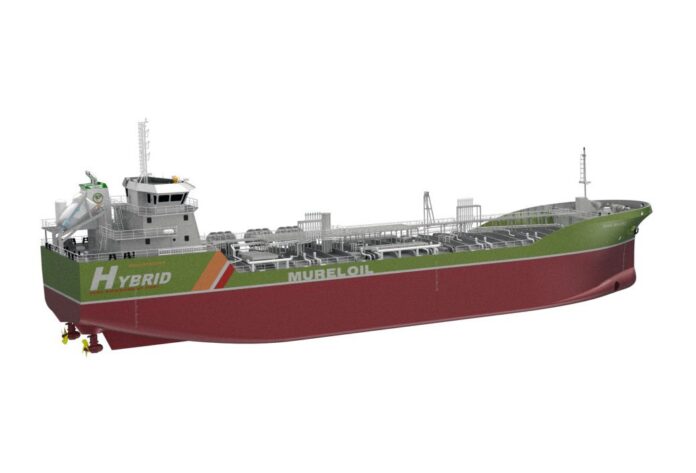
AYK will deliver the same 4.2 MWh Aries+ battery system to Mureloil’s 8000 DWT product tanker Bahía Beatriz as its sister vessel the Bahía Candela, also a 8000 DWT tanker.

Bahía Beatriz is currently under construction at the Astilleros de Murueta shipyard, outside Bilbao. AYK’s Spanish agent VULKAN will help install the battery system. The two vessels can operate on full electric power during port operations. 

The battery system will use lithium iron phosphate (LFP) technology, which AYK said can outperform nickel manganese cobalt (NMC) batteries.

“NMC has been the most commonly used battery chemistry because of its supposed greater density, but its chemistry is known to be much more dangerous than LFP,” said AYK Energy founder Chris Kruger. “AYK is showing that LFP can outperform NMC and deliver greater energy density, higher safety and better value.”

The vessels will double Mureloil’s capacity to transport biofuels and methanol, strengthening the shipping line’s presence in the sustainable marine fuels sector.

Demand for battery power is further being fueled by mounting regulatory pressure on ship owners, who face greater scrutiny and penalties under new laws like FuelEU and the EU Emissions Trading System.

“The regulatory squeeze is real,” Kruger said. “With the new sustainability reporting requirements, ship operators know they need affordable carbon cutting solutions like marine batteries that deliver.”

In June 2025, AYK’s latest range of marine batteries, including Pisces, Pisces +, OrionAN, OrionAN+ as well as aluminum versions of AYK legacy modules, received type approval from the classification society DNV.

The contract with Mureloil follows a deal to supply Spanish ferry operator Baleària with two electric catamaran ferries to operate between Tarifa in the south of Spain and Tangier, Morocco.

“The time for marine batteries has come,” Kruger said. “Although these vessels are hybrid diesel electric we are now seeing that the technology is there to go fully electric not just on ferries, OSVs and workboats but also tankers like these. But seeing batteries on tankers is a significant moment for electric power. The energy density of batteries is increasing, the price is reducing and the payback period is quicker.”

Source: AYK Energy


Source link

Charged EVs | Research from ANL and UChicago PME looks to resolve battery degradation by mitigating nanoscopic strains

0


New research from Argonne National Laboratory and the University of Chicago Pritzker School of Molecular Engineering (UChicago PME) claims to have solved a battery mystery that has led to capacity degradation, shortened lifespan and, in some cases, fire.

In a paper published in Nature Nanotechnology, researchers uncovered some of the root causes and ways to mitigate the nanoscopic strains that can lead to cracking in nickel-rich lithium-ion batteries.

Because of the long-standing cracking issues in lithium-ion batteries that use polycrystalline nickel-rich materials (PC-NMC) in their cathodes, researchers over the last few years have turned toward single-crystal Ni-rich layered oxides (SC-NMC). But they have not always shown similar or better performance than older battery chemistries.

The new research, conducted by first author Jing Wang during her PhD period at UChicago PME through the GRC program, jointly supervised by Prof. Shirley Meng’s Laboratory for Energy Storage and Conversion and Amine’s Advanced Battery Technology team, revealed the underlying issue. Assumptions drawn from polycrystalline cathodes were being incorrectly applied to single-crystal materials.

“When people try to transition to single-crystal cathodes, they have been following similar design principles as the polycrystal ones,” said Wang, now a postdoctoral researcher working with UChicago and Argonne. “Our work identifies that the major degradation mechanism of the single-crystal particles is different from the polycrystal ones, which leads to the different composition requirements.”

As a battery containing a polycrystal cathode charges and discharges, the tiny, stacked primary particles swell and shrink. This repeated expansion and contraction can widen the grain boundaries that separate the polycrystals.

“Typically, it will suffer about five to 10% volume expansion or shrinkages,” Wang said. “Once an expansion or shrinkage exceeds the elastic limits, it will lead to the particle cracking.”

The day-to-day effect is capacity degradation. And if the cracks widen too much, electrolyte can get in, which can lead to unwanted side reactions and oxygen release that can raise safety concerns, including the risk of thermal runaway.

The study also challenged the materials used, redefining the roles of cobalt and manganese in batteries’ mechanical failure.

“Not only are new design strategies needed, different materials will also be required to help single-crystal cathode batteries reach their full potential,” said Meng, who is also the director of the Energy Storage Research Alliance (ESRA) based at Argonne. “By better understanding how different types of cathode materials degrade, we can help design a suite of high-functioning cathode materials for the world’s energy needs.”

Polycrystal cathodes are a balancing act of nickel, manganese and cobalt. Cobalt causes cracking but is needed to mitigate a separate problem called Li/Ni disorder.

By building and testing one nickel-cobalt battery and one nickel-manganese battery, the researchers found that, for single-crystal cathodes, the opposite was true. Manganese was more mechanically detrimental than cobalt and cobalt helped batteries last longer.

Cobalt, however, is more expensive than nickel or manganese. Wang said the team’s next step to turning this lab innovation into a real-world product is finding less-expensive materials that replicate cobalt’s good results.

Source: University of Chicago Pritzker School of Molecular Engineering


Source link

Charged EVs | Samsung SDI shifts some US production lines from EVs to LFP ESS batteries

0


South Korean battery maker Samsung SDI has signed a three-year contract through its US subsidiary to start supplying prismatic lithium iron phosphate (LFP) batteries for energy storage systems (ESS) in North America from 2027.

The contract is valued at more than 2 trillion South Korean won ($1.35 billion). Michigan-based Samsung SDI America will manufacture the batteries at its Indiana facility. The manufacturer has been shifting some of its production lines for EVs to lines for ESS batteries to meet local demand.

Samsung SDI’s prismatic cells are equipped with anti-thermal propagation technology to prevent heat from spreading to adjacent cells by placing thermal insulation materials between cells and measuring the temperature of a specific cell. The cells are packed in a 20 ft container, Samsung Battery Box (SBB) 2.0, an all-in-one ESS that incorporates a number of battery racks in a single container, which the company said provides greater portability and user convenience for installation.

Samsung SDI launched the first edition of SBB with its flagship nickel cobalt aluminum (NCA) cells in 2023.

By expanding its portfolio into LFP technology, Samsung SDI said it aims to strengthen its technical differentiation and accelerate the international expansion of its prismatic batteries for ESS.

The company said it has overcome the lower energy density disadvantage of LFP while maximizing safety and price competitiveness by using different anode materials and electrode processes.

Samsung SDI said its prismatic LFP cells are more resistant to external shocks than ESS using other types of LFP cells because they feature an aluminum casing that incorporates safety design features like vents and fuses.

In addition to the latest contract, the company is in discussions with multiple customers for the supply of LFP and NCA batteries, suggesting more contracts to come in the near future.

“It is a significant opportunity for Samsung SDI to expand into the US ESS market with the first long-term contract for LFP supply,” the company said. “Through the first supply of SBB 2.0 for ESS installation in the US, Samsung SDI will start providing US customers with ESS batteries to meet their needs not only for high-performance but also for enhanced safety and price competitiveness, enabling them to stabilize power supplies in the era of renewable energy and AI.”

Source: Samsung SDI


Source link

Charged EVs | Webinar:  Advancements in electrified mobile hydraulic systems – A panel discussion

0


Designed specifically for OEM system architects, mobile hydraulics engineers, product managers, and application specialists, this 60-minute webinar (45-minute panel discussion plus 15-minute Q&A) delivers practical, actionable guidance on selecting, integrating, and validating efficient electrified mobile hydraulic architectures. Get in-depth insight into core subsystems (traction, steering, work functions, and ePTO), control strategies (positive/negative flow control, power-on-demand, electro-hydraulic load sensing), voltage selection (LV vs HV) and safety considerations, regeneration approaches, and proven methods to improve efficiency and ROI—plus perspectives on Parker’s hydraulic and electronic control solutions. Whether you’re modernizing a legacy platform, scaling capacity, or launching a new vehicle architecture, this webinar gives you the engineering clarity to accelerate electrification, enhance performance and safety, and reduce lifecycle cost. 

What you will gain by attending this webinar: 

  • A clear view of core components and integration — traction drives, steering systems, work functions, and ePTO working with advanced controls for stable, efficient performance
  • A controls decision framework — compare positive vs negative flow control, power-on-demand, ELS, and steering solutions (HPS/eHPS/torque overlay/pure electromechanical) to optimize efficiency and safety
  • An electrification toolkit — evaluate full-electric vs mild/strong hybrid vs battery ePTO, LV vs HV trade-offs, regeneration limits and strategies, quantify savings, and build a credible ROI case
  • Practical engineering practices — right-sized components, re-evaluating legacy vehicle architectures, multi-wheel coordination and steer-by-wire safety, and designing for functional safety and HV compliance. 

Join us on Wednesday, Feb 11th 2026 at 12pm US EST.
Register now, it’s free

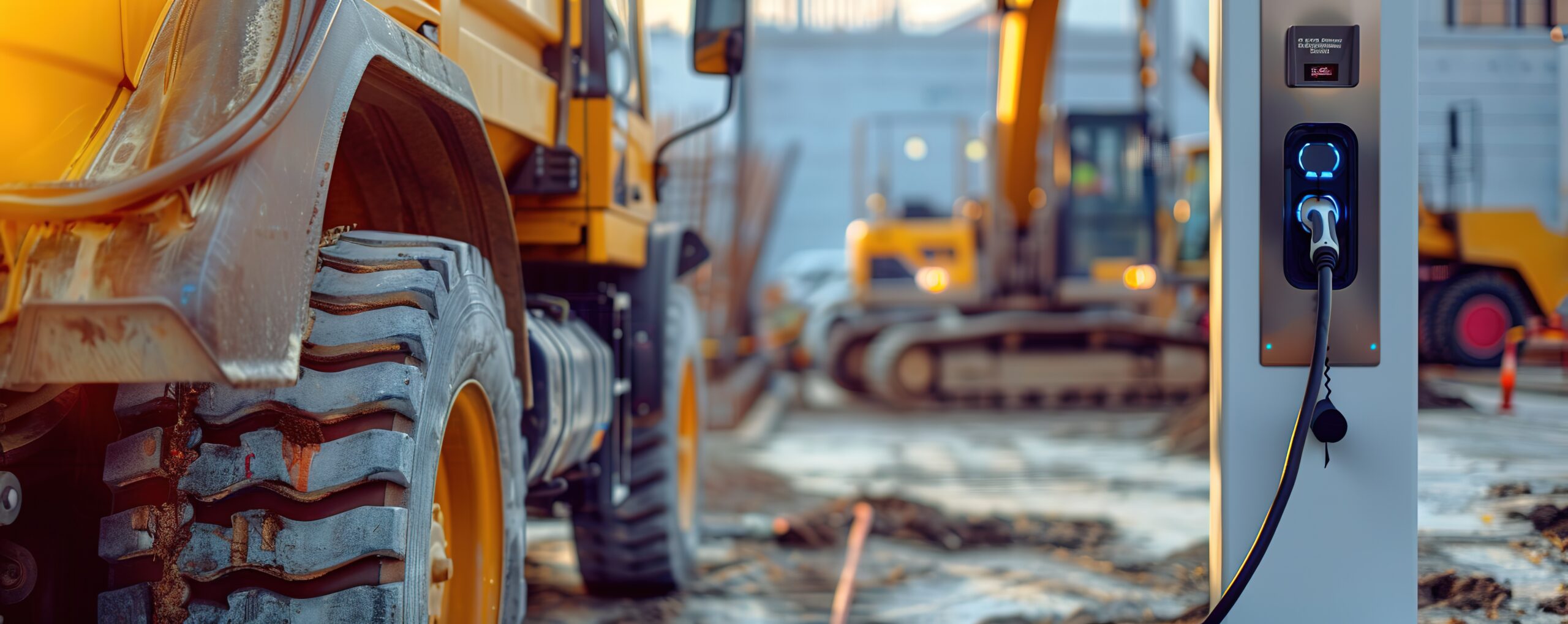
Electric vehicle charger beside heavy machinery on construction site


Source link

Charged EVs | Kempower unveils ChargEye cybersecurity framework to enhance EV charging station data security

0


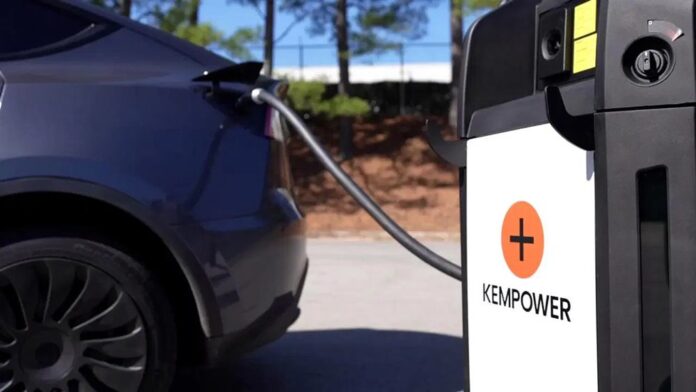
Kempower has released technical details about the cybersecurity architecture of its ChargEye charging station management system. The company reports this is the first time it has publicly shared information about the security foundations of ChargEye, which is developed and designed exclusively in Finland by Kempower’s internal engineering team.

ChargEye’s software development lifecycle is certified under the ISO 27001 standard for information security management. Kempower says it was first granted ISO 27001 certification in 2024 and, following a recent audit, has retained certification for the second consecutive year. The certification recognizes Kempower’s practices in cybersecurity, data protection, risk management, and staff training.

ChargEye’s data handling complies with the European Union General Data Protection Regulation. Full in-house development allows Kempower to maintain security oversight and introduce updates rapidly. The company notes that ChargEye follows Open Web Application Security Project best practices to counter common software vulnerabilities. A technical highlight is the use of Vehicle-to-Grid Public Key Infrastructure (V2G PKI) encryption, which secures two-way communication between electric vehicles and the power grid. This feature positions ChargEye to support future smart energy systems by enabling secure charging and discharging operations.

The platform offers continuous monitoring, a stated uptime above 99 percent, and a formal incident response procedure. Kempower regularly engages in “Hack Day” events, where ethical hackers attempt to breach its systems, and it conducts frequent third-party security audits to identify and address vulnerabilities.

“We believe cybersecurity is a shared responsibility – and that starts with openness,” said Mikko Veikkolainen, VP, Innovations and Research at Kempower. “By sharing information of the cybersecurity of ChargEye, we wish to inspire the whole EV charging industry to pay attention to cybersecurity of EV charging technology. The safety of EV charging infrastructure becomes more and more critical, as the EV adoption evolves.”

Source: Kempower


Source link

Charged EVs | Renesas launches R-Car Gen 5 SoC platform for multi-domain software-defined vehicle computing

0


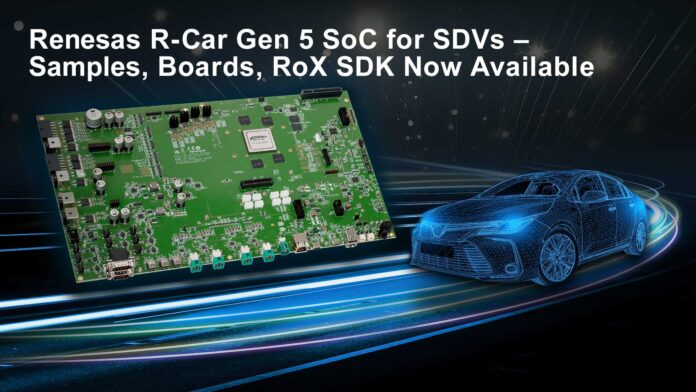
Renesas Electronics has expanded its software-defined vehicle (SDV) offerings with the introduction of the R-Car X5H, a multi-domain automotive system-on-chip (SoC) produced using 3 nanometer (nm) process technology. The R-Car X5H is designed to run advanced driver assistance systems (ADAS), in-vehicle infotainment (IVI), and gateway functions simultaneously, according to the company. Sampling of the Gen 5 silicon has begun, and evaluation boards and the R-Car Open Access (RoX) Whitebox Software Development Kit (SDK) are available for development use.

Renesas says the R-Car X5H achieves up to 35 percent lower power consumption compared to previous 5 nm SoCs. Targeting central compute applications across multiple automotive domains, it offers up to 400 tera operations per second (TOPS) of AI performance, with scalability enabled by chiplet extensions for increased acceleration. The SoC features 4 tera floating-point operations per second (TFLOPS) of graphics processing power, 32 Arm Cortex-A720AE CPU cores, six Cortex-R52 lockstep cores with ASIL D functional safety support, and employs mixed criticality technology to ensure safe execution of advanced functions across domains.

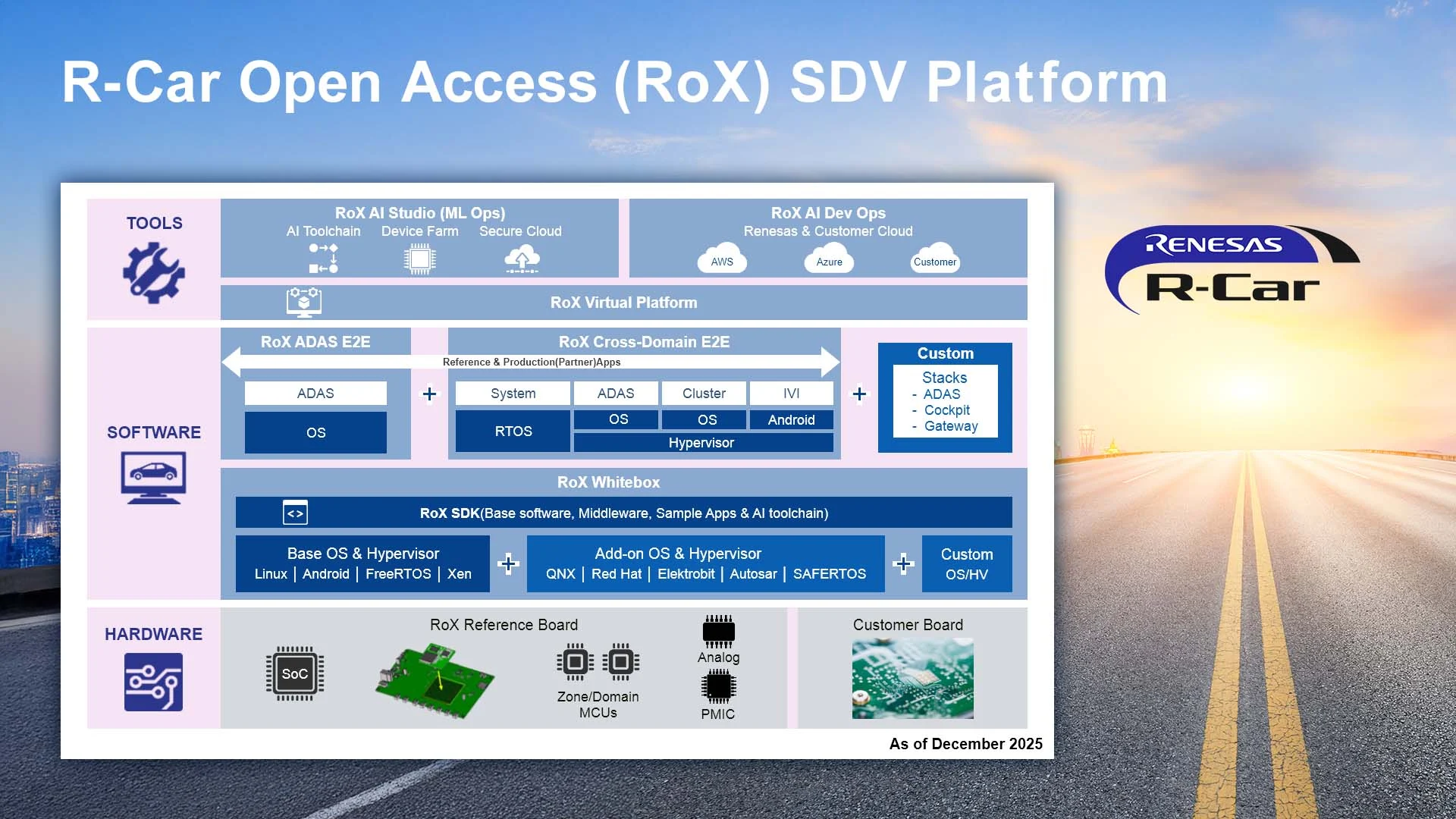
To accelerate development cycles, Renesas has introduced the open RoX Whitebox SDK, supporting Linux, Android, and XEN hypervisor, alongside partner operating systems including AUTOSAR, EB corbos Linux, QNX, Red Hat, and SafeRTOS. The SDK integrates AI and ADAS software stacks for real-time perception, sensor fusion, generative AI, and large language models. It also includes production-grade application software from partners like Candera, DSP Concepts, Nullmax, Smart Eye, STRADVISION, and ThunderSoft. According to Renesas, this platform supports the development of ADAS, L3/L4 autonomous driving, smart cockpits, and gateway systems for next-generation EV architectures.

Renesas reports that the R-Car X5H and RoX platform support integration of ADAS and IVI stacks, real-time operating system (RTOS), and edge AI functionality, all managed under Linux and Android with XEN hypervisor virtualization. The platform handles input from eight high-resolution cameras and up to eight displays at 8K2K resolutions, supporting complex visualization and sensor integration required for SDVs. Demonstrations of these capabilities, in partnership with Bosch and ZF, are planned for CES 2026, where applications such as video perception and radar localization for ADAS will be showcased.

“At CES 2026, we look forward to showcasing this powerful solution with Renesas X5H SoC, demonstrating its fusion capabilities across multiple vehicle domains, including video perception for advanced driver assistance systems,” said Christian Koepp, Senior Vice President Compute Performance at Bosch’s Cross-Domain Computing Solutions Division.

Source: Renesas Electronics


Source link

Charged EVs | NewGenium unveils SuperSynth brine-to-LFP battery technology to streamline domestic lithium cathode production

0


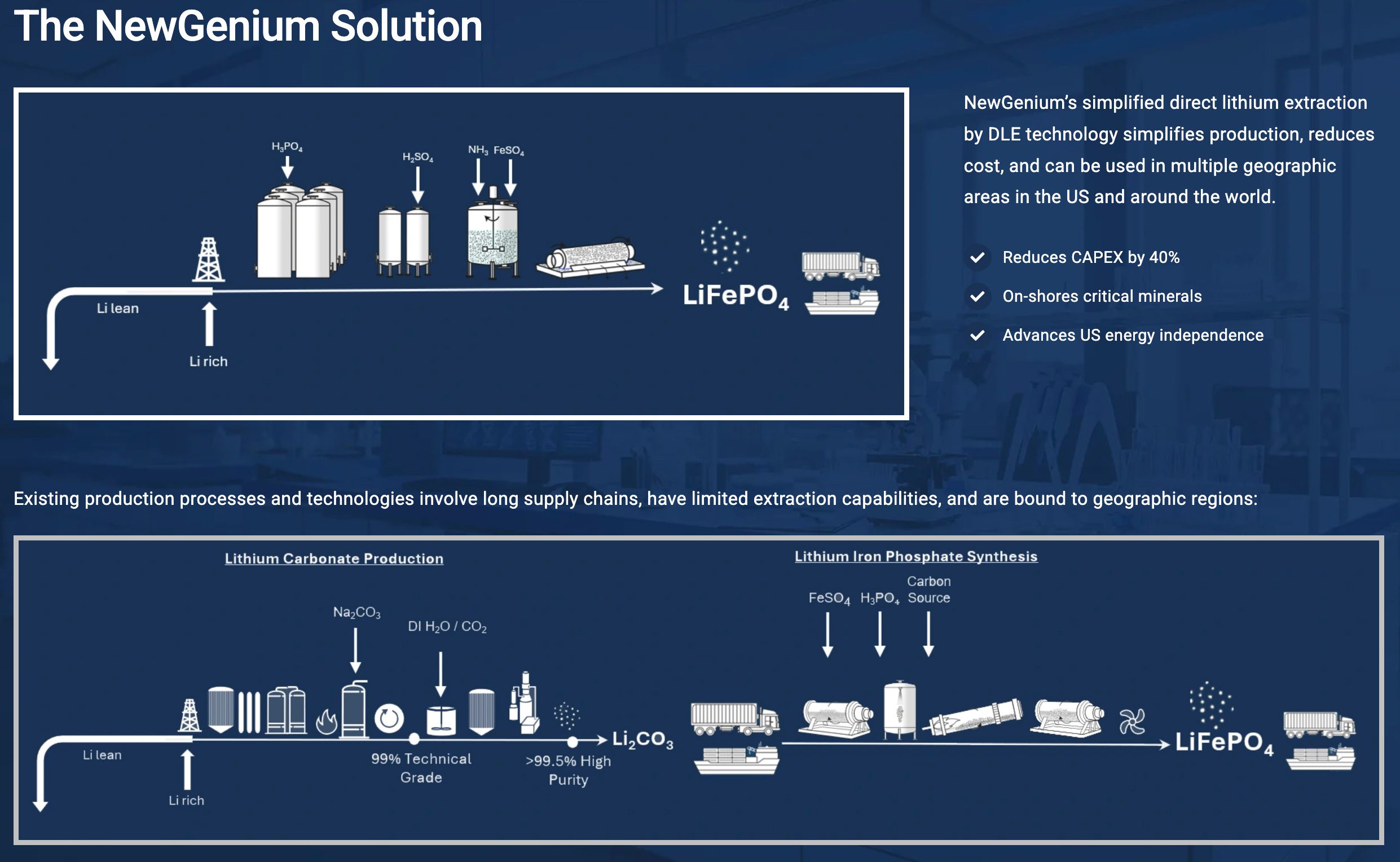
NewGenium, a technology company based in Pasadena, California, has announced its SuperSynth process, a direct brine-to-lithium-iron-phosphate (LFP) manufacturing technology. According to NewGenium, SuperSynth reduces the cost and complexity of LFP production by enabling extraction of lithium directly from brine, consolidating extraction and synthesis steps and eliminating the need for offshore processing. The company reports that its proprietary process offers a scalable route to domestic LFP cathode manufacturing for lithium-ion batteries.

The technology streamlines LFP production to three low-temperature unit operations using common process equipment. NewGenium claims the approach yields significantly less solid waste and achieves a levelized cost of roughly $3 per kilogram of LFP—substantially lower than the current $5 to $15 per kilogram market rate, which includes duties and tariffs. NewGenium’s ion exchange direct lithium extraction (DLE) and in-lab LFP production were proven at its Monrovia, California facility in 2025.

Target applications for SuperSynth include US-based upstream well operators and downstream cathode and battery manufacturers, particularly those producing battery packs for electric vehicles and battery energy storage systems. NewGenium says its process addresses a key challenge in US battery supply chains: converting domestic lithium-rich brines into battery-grade LFP cathode material without relying on international processing or imports. The company references a 2024 US Geological Survey study estimating up to 19 million tons of lithium in US brine reserves, enough to support current demand for nearly 100 years.

Traditional methods typically generate lithium carbonate through evaporation ponds, which require substantial land and multi-year processing periods followed by international transport for LFP synthesis. NewGenium’s process is positioned as an alternative that consolidates and simplifies this supply chain.

“The USA faces a critical moment in which the exploding demand for lithium batteries is not matched by our capacity to produce the necessary LFP cathode materials,” said Christopher Murphy, CEO at NewGenium. “Given the new mandates for energy and critical mineral independence, the country’s battery industry must take advantage of domestic reserves and produced water using DLE technologies. We’re thrilled to have developed a novel chemical process that will help the USA build national independence in critical minerals by extracting lithium from brine and turning it into LFP in a simplified way. Perhaps most exciting is the fact that onshoring USA domestic production of LFP batteries from brine finally becomes both financially and environmentally attractive.”

Source: NewGenium


Source link

Charged EVs | AmpUp launches EV charging pricing recommendation engine

0


AmpUp has released its new Pricing Recommendation Engine, a feature within the AmpUp EV Cloud charging platform designed to help EV charging site operators set competitive and data-driven pricing. This tool is available at no additional cost to AmpUp’s Pro Plan customers and is intended to streamline the pricing process for charging site hosts.

AmpUp says the Pricing Recommendation Engine consolidates five factors—local utility rates, including time-of-use pricing and demand charges, historical site charging patterns, and competitor pricing in nearby locations—to generate customized price recommendations for each charging site. The engine offers site-specific guidance and continually updates recommendations as utility tariffs and regulatory rates change. For new charging sites with limited usage data, the system generates initial baseline recommendations and refines them as more data becomes available.

The Pricing Recommendation Engine is compatible with all hardware supported by AmpUp, without requiring additional devices, external subscriptions or specialized telematics data. The company notes the tool automates price guidance and simplifies onboarding, bypassing common requirements for manual tariff entry or extended questionnaires. Recommendations are presented using an intuitive, color-coded interface designed to provide clear guidance without reliance on third-party services or add-ons.

“Pricing uncertainty is the biggest barrier preventing site operators from maximizing their EV charging investments,” said Tom Sun, CEO of AmpUp. “Our Pricing Recommendation Engine solves this by putting immediate, comprehensive market power directly into the hands of our customers, reinforcing the value we deliver to our partners.”

Source: AmpUp


Source link

Charged EVs | Flemish public transport operator to deploy 500 Daimler electric buses

0


The Flemish public transport operator De Lijn has ordered 80 Mercedes-Benz eCitaro electric buses, which are scheduled for delivery beginning in early 2027. This order is part of a framework agreement under which De Lijn will take delivery of 500 Daimler electric buses.

Vlaamse Vervoermaatschappij De Lijn (just “De Lijn” for non-Flemish speakers), headquartered in Mechelen, Belgium, is one of the largest public transport operators in Belgium. It carries more than 400 million passengers annually. Its fleet includes some 2,200 buses and 400 trams. Since 2022, the agency has procured exclusively electric buses, and it plans to totally electrify its bus fleet by 2035 at the latest.

“A large number of major orders from various markets demonstrates our customers’ trust in the electric bus bearing the star and makes it a true success story,” said Mirko Sgodda, Head of Marketing, Sales and Customer Services at Daimler Buses.

Source: Daimler Buses


Source link

Charged EVs | POSCO Future M and Factorial to cooperate on solid-state battery development

0


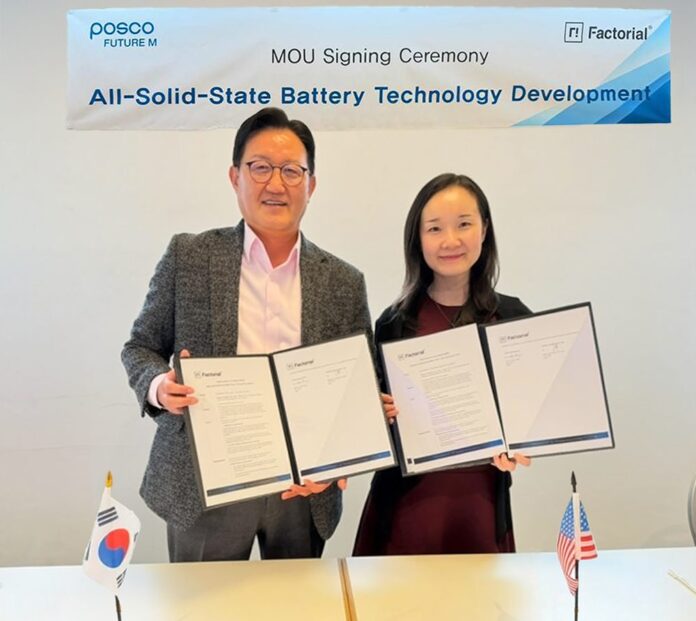
Korea-based battery materials supplier POSCO Future M and solid-state battery pioneer Factorial have signed a memorandum of understanding (MOU) to cooperate on the development of all-solid-state battery technology.

Under the MOU, the two companies plan to develop materials for all-solid-state batteries, which are expected to offer higher safety, superior energy density and better charging performance compared to current lithium-ion batteries.

POSCO Future M is currently conducting R&D on cathode materials for all-solid-state batteries and silicon anode materials, while the POSCO Group is also researching lithium metal anode materials and sulfide-based solid electrolytes.

POSCO Future M Head of Technology Research Laboratory Hong Young-Jun said, “We expect synergy in the next-generation all-solid-state battery business based on Factorial’s battery technology and market presence with global automakers, and POSCO Future M’s competitiveness in cathode and anode materials.”

“Solid-state batteries are entering a new era of commercial readiness,” said Siyu Huang, CEO of Factorial. “We expect work with POSCO Future M to not only accelerate innovation in critical cathode and anode materials, but also strengthen a resilient global supply chain and drive meaningful cost reductions at scale.”

Source: Factorial


Source link