Saturday, April 25, 2026
21 C
London
Home Blog Page 41

Charged EVs | Archer submits applications to launch eVTOL air taxi trials in multiple US cities under new DOT strategy

0


Archer Aviation has announced it is partnering with several US cities to submit multiple applications for initial electric vertical takeoff and landing (eVTOL) air taxi operations, as part of the White House’s eVTOL Integration Pilot Program (eIPP).

The program is a public-private initiative led by the US Department of Transportation and the Federal Aviation Administration, intended to support the integration of air taxis into the US national airspace. The DOT’s rollout of its Advanced Air Mobility (AAM) National Strategy provides a strategic framework for incorporating eVTOLs into the airspace system.

Archer says its applications to the eIPP are structured as public-private partnerships with cities in California, Texas, Florida, Georgia and New York. This includes a notable exclusive application with the City of Huntington Beach, California, making Archer the only air taxi OEM participating in that bid.

The eIPP is guided by the DOT and FAA and aims to bring together industry participants, regulators and local governments to establish early operational pathways for eVTOL services. Archer says its focus is on building essential local operations teams, upgrading infrastructure to accommodate electric aircraft and coordinating with public safety and emergency agencies to lay the groundwork for long-term air taxi operations.

The DOT’s National AAM Strategy outlines 40 recommendations to support safe eVTOL integration, addressing topics such as certification, operations, infrastructure and early deployment. The FAA is expected to review the eIPP applications in this early phase and announce selections in early to mid-2026, with initial operational activity targeted for later in that year.

“We’re past the question of ‘if’ and firmly into ‘when and how’,” said Archer CEO Adam Goldstein. “Through our close work with the Administration, DOT, FAA and other federal agencies, we now have the clearest path to market this industry has ever had. The focus now is execution—building, deploying and flying these aircraft here in the United States.”

Source: Archer Aviation


Source link

Charged EVs | Flux Power secures $3.6 million in lithium-ion pack orders for electric aviation ground support equipment

0


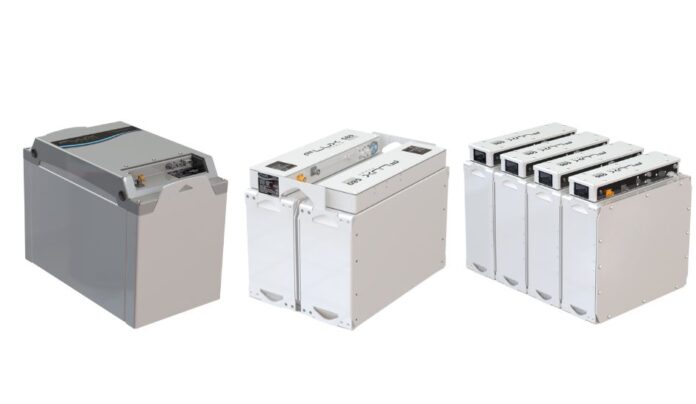
Flux Power has received more than $3.6 million in new purchase orders to provide its lithium-ion battery packs to a major North American airline. The company says that these orders further extend its presence in aviation energy systems, specifically supporting ground support equipment deployments.

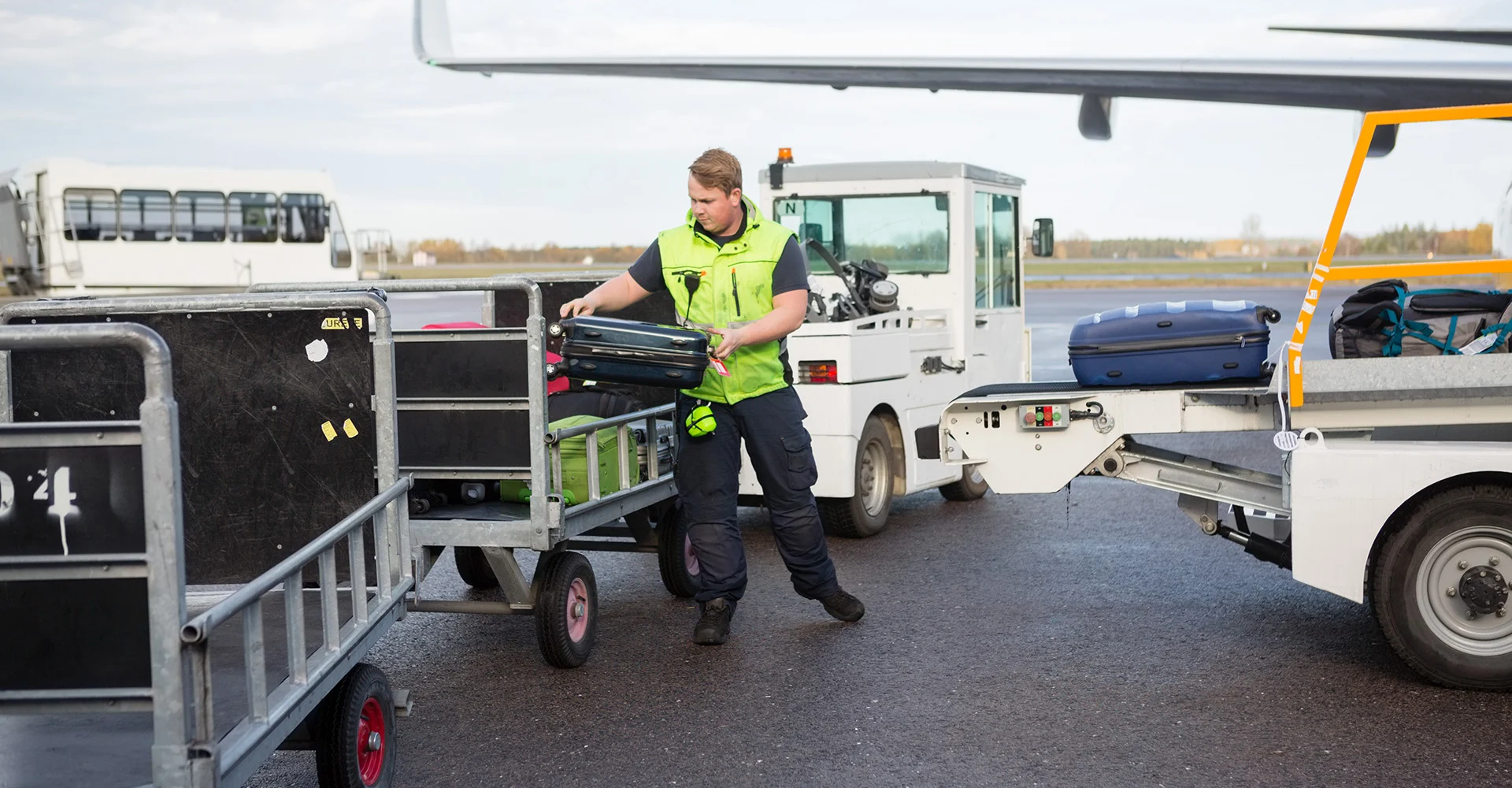
The additional orders will enable the ongoing supply of Flux Power’s lithium-ion battery systems for airport fleet vehicles, including baggage tractors, belt loaders and aircraft pushback units.

The tech includes real-time telemetry, an advanced battery management system and predictive maintenance insights designed to optimize fleet uptime, operational visibility and lifecycle planning for aviation ground support fleets.

Our customers count on us to deliver high quality intelligent energy systems that improve reliability, streamline operations, and support long-term sustainability goals,” adding that the new orders “highlight the value of our technology and the confidence the aviation market has in our solutions,” said Jeff Mason, Chief Operating Officer of Flux Power.

Source: Flux Power


Source link

Charged EVs | US DOE to invest $134 million in developing domestic rare earth supply chain

0


The US Department of Energy (DOE)’s Office of Critical Minerals and Energy Innovation (CMEI) will award up to $134 million to projects establishing domestic supply chains for rare earth elements (REEs).

The funding will support projects that demonstrate the commercial viability of recovering and refining REEs from unconventional feedstocks including mine tailings, e-waste and other waste materials, the DOE said.

By investing in domestic REE recovery and processing, DOE aims to secure US energy independence, strengthen economic competitiveness and ensure long-term resilience in the supply chains for advanced manufacturing, defense systems and high-performance magnets used in power generation and electric motors.

“For too long, the United States has relied on foreign nations for the minerals and materials that power our economy,” said Chris Wright, US Secretary of Energy. “We have these resources here at home, but years of complacency ceded America’s mining and industrial base to other nations.”

Source: US Department of Energy


Source link

Charged EVs | Verkor opens its first battery cell gigafactory in France

0


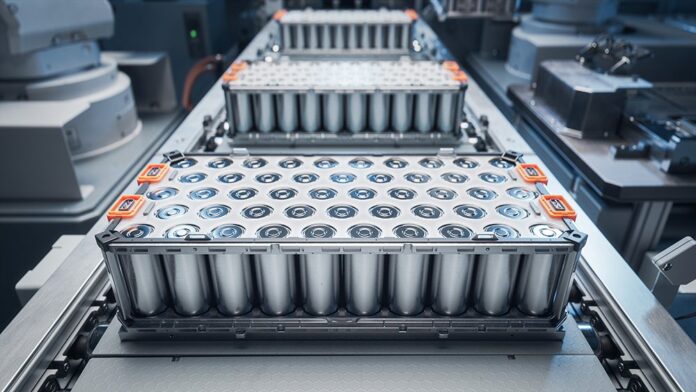
French battery manufacturer Verkor has inaugurated its first battery cell gigafactory, in Bourbourg near Dunkirk.

The facility has an initial annual production capacity of 16 GWh. The commercialization of the first batteries is planned for 2026 for the A390 electric compact crossover SUV produced by French auto manufacturer Alpine. Verkor aims to reach 50 GWh of capacity by 2030.

Verkor has transferred its research activities from the Verkor Innovation Centre (VIC) in Grenoble to the Bourbourg Gigafactory. The aim is for the VIC to design and validate battery technologies and develop future chemistries and product platforms, while the gigafactory industrializes the technology at scale.

The pilot line at the VIC operates 24/7 and has produced tens of thousands of cells. For several months, the gigafactory has been assembling modules from VIC cells and is now manufacturing its own cells.

Since 2020, Verkor has secured more than €3 billion to support the two facilities from several industrial and financial players, and has the support of a consortium of international banks and public institutions such as the European Investment Bank and the French government.

“The inauguration of our Gigafactory, five years after Verkor’s creation, marks the culmination of an exceptional commitment from our teams and the steadfast support of our partners,” said Benoit Lemaignan, CEO of Verkor. “Driven by strong political ambition, this milestone symbolizes Verkor’s transition into a European industrial company and opens the way for the imminent delivery of our batteries.”

Source: Verkor


Source link

Charged EVs | CATL’s marine battery system receives Italian approval

0


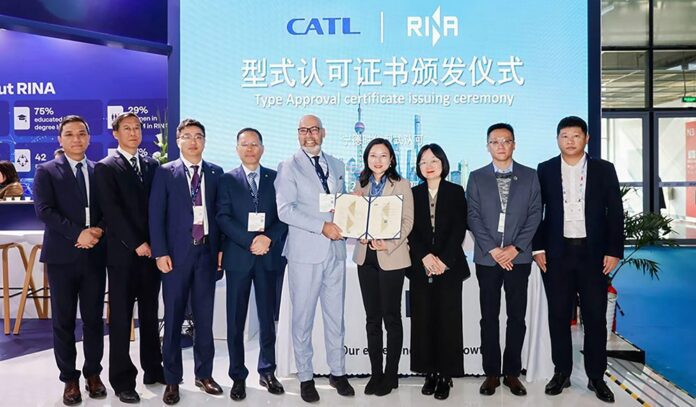
Chinese battery manufacturer CATL‘s marine battery system has obtained the type approval certificate issued by the Italian Classification Society (RINA).

The approval follows certifications from classification societies in France, the US and Norway, adding another crucial “passport” for CATL’s entry into the global market, the company said.

The Jining 6006 electric cargo ship, developed by its subsidiary CATL Electric Ship Technology, was recently selected by the China Communications and Transportation Association as an “Outstanding Typical Case of National Transportation and Energy Integration and Innovation Development in 2025.”

CATL has delivered its products to nearly 900 vessels to date, reflecting the reliability and versatility of its marine solutions across different waters and vessel types.

The company said it has developed a dedicated battery system with high safety, long lifespan and high power for complex marine environments leveraging its expertise in power batteries.

Source: CATL


Source link

Charged EVs | Nissan begins production of third-generation LEAF at English EV plant

0


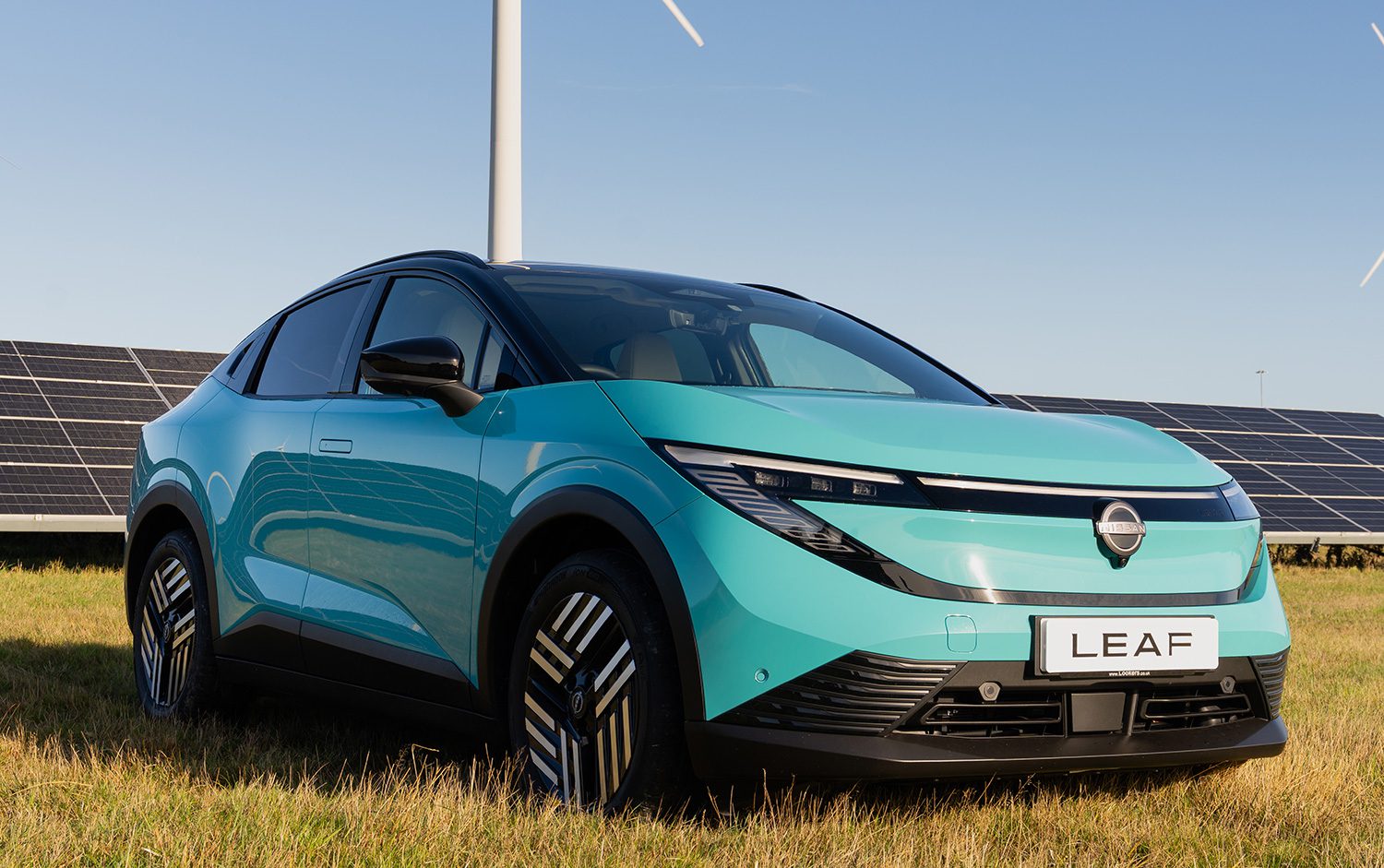
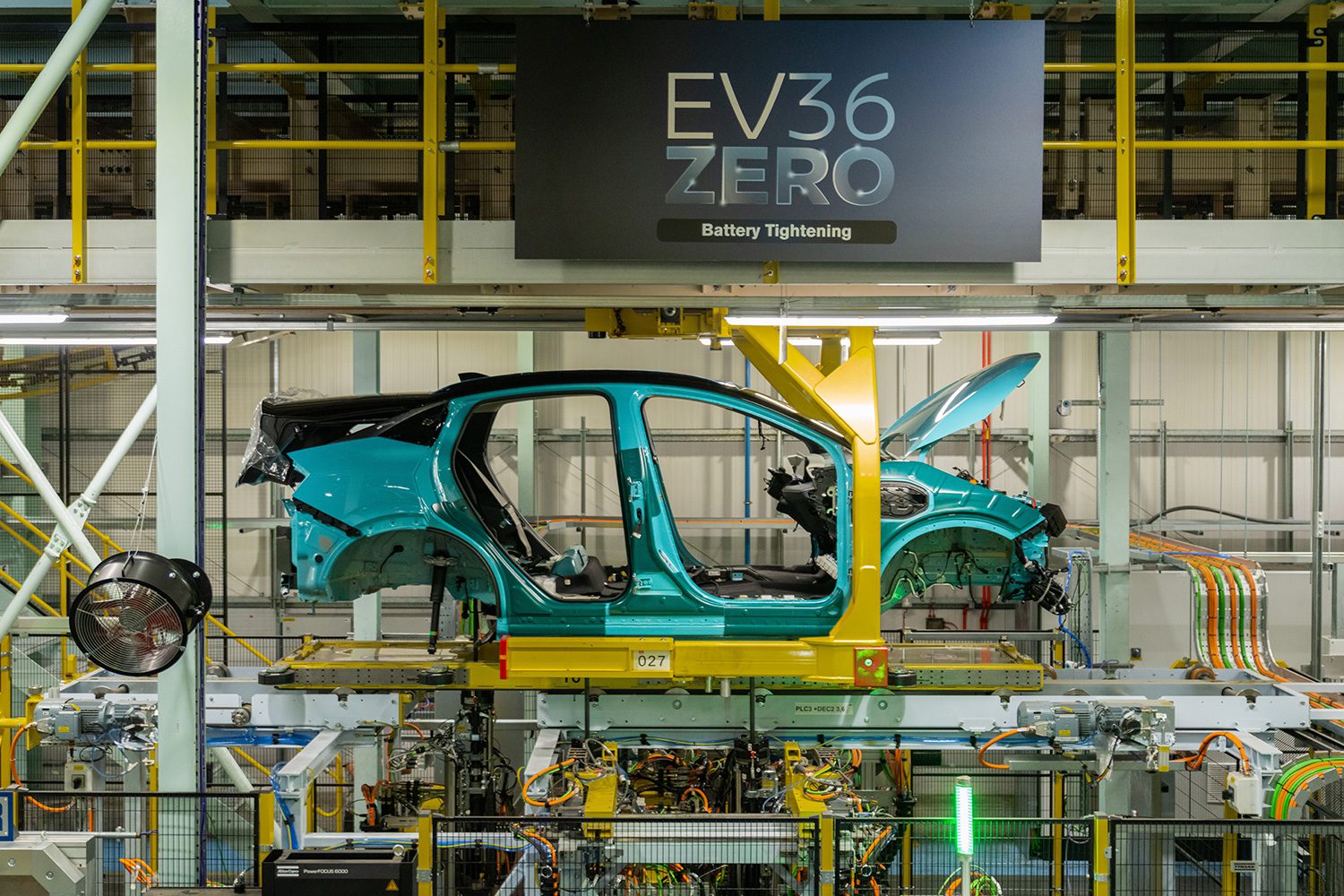
Nissan has started production of the third generation of its LEAF EV at its plant in Sunderland, England.

The new LEAF features a 75 kWh battery pack, and boasts a range of up to 386 miles per charge. The UK government has confirmed that the Leaf will qualify for the full £3,750 electric car grant.

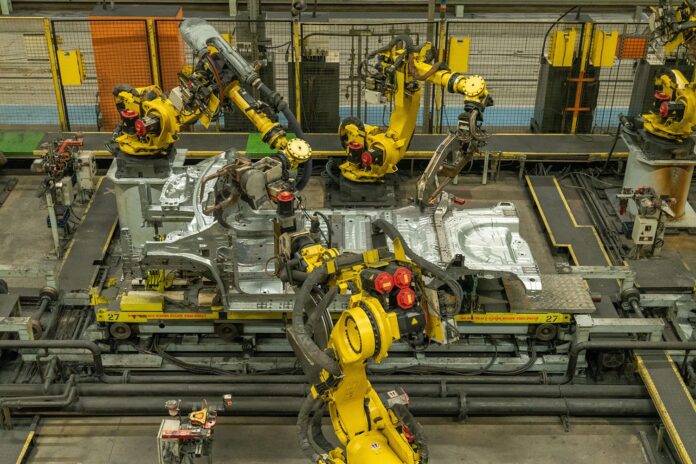
Nissan’s Sunderland plant is Britain’s biggest car factory—it has 6,000 employees and a theoretical capacity of 600,000 cars a year (the factory only made 284,000 in 2024). Nissan has built 282,704 units of the LEAF at the Sunderland plant since beginning production there in 2012.

Nissan says it has invested more than £450 million in manufacturing the new LEAF, including £300 million in the company’s UK operations.

In 2023, Nissan said it was considering building two more EV models in Sunderland—perhaps replacements for the petrol Qashqai and Juke, which are made there. The Guardian reports that “Nissan has not yet made a final investment decision,” and that “sales of the new LEAF will be important in securing the future of production across the rest of the plant [and will be] vital for the future of a next-door battery factory run by the [Chinese] manufacturer AESC.”

Naturally, we wish Nissan the best of luck (and so do the company’s UK employees and local boosters), but the company will be facing some stiff headwinds. Nissan is “going through the painful process of shutting seven factories and cutting 20,000 jobs worldwide,” reports the Guardian (the Sunderland plant will not be affected by the closures). Meanwhile, the UK will be introducing a per-mile tax on plug-in vehicles in 2028, and EV advocates and auto industry trade groups fear that this could significantly cut into demand.

Sources: The Guardian, BBC, Reuters


Source link

Charged EVs | Hyundai and Kia invest in VisIC for power semiconductors

0


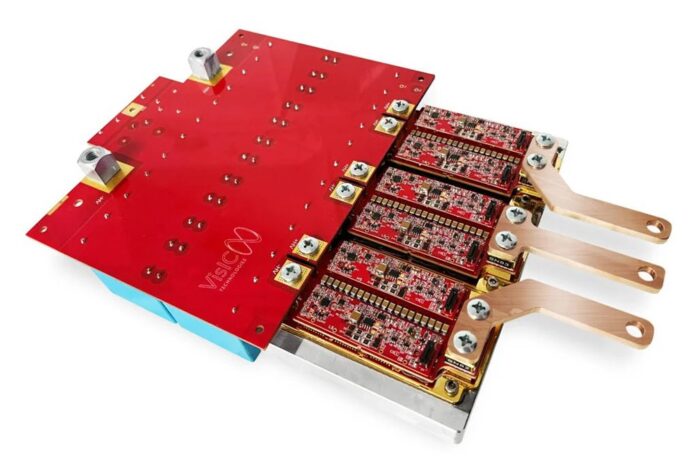
VisIC Technologies, which is developing gallium nitride (GaN) power semiconductors for EVs, has announced the second closing of its Series B funding, securing $26 million.

The round was led by an unnamed global semiconductor company and included participation from automakers Hyundai Motor and Kia.

The lead investor’s focus on advancing critical semiconductor technologies complements VisIC’s D³GaN platform, which is designed to deliver efficiency, scalability and reliability for automotive drivetrains. HKMC’s participation reflects the company’s focus on integrating GaN technology into EV platforms.

VisIC’s GaN-based technology aims to address the limitations of silicon technologies in delivering the efficiency and power density required for next-generation EV platforms, especially at higher voltages, by enabling smaller, lighter and more efficient inverters for 400 V and 800 V architectures.

The company will use the new financing for the optimization, qualification, and release of Gen3 750 V GaN dice and power modules. It will also develop Gen4 1,350 V GaN technology and expand into power requirements for 800 V data centers leveraging the same platform.

“Hyundai Motor Company and Kia are committed to advancing sustainable mobility. Partnering with VisIC enables us to integrate cutting-edge GaN power technologies into our EV platforms, enhancing efficiency, reliability, and performance as we shape the future of electric transportation,” the automakers stated.

Source: VisIC Technologies


Source link

Charged EVs | Inovance Automotive and Innoscience integrate OBC and DC-DC converter into two-in-one GaN power system

0


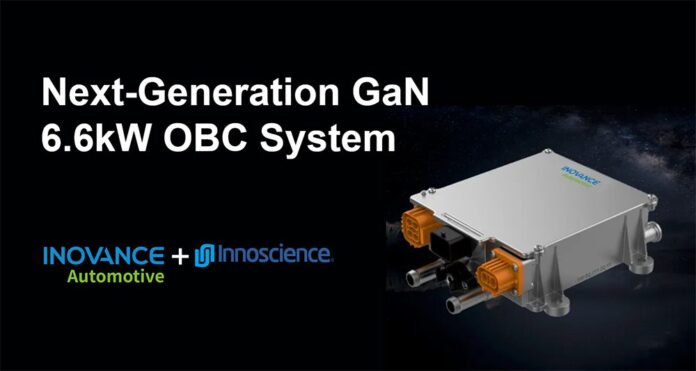
Chinese EV components supplier Suzhou Inovance Automotive Systems and gallium nitride (GaN) power device manufacturer Innoscience (Suzhou) Technology have integrated their 6.6 kW onboard charger (OBC) system powered by 650 V GaN devices.

The two-in-one power system integrates the OBC and the DC-DC converter. The optimized architecture and Innoscience’s high-voltage GaN devices, which feature ultra-low switching loss and high-frequency performance, deliver a 30% increase in power density, reaching 4.8 kW/L. The system also offers a 2% improvement in overall efficiency compared with similar products and a 20% reduction in system weight, Innoscience said.

The jointly developed OBC optimizes internal vehicle packaging by saving space and enhancing integration flexibility at the vehicle level.

“The successful deployment of the GaN-based OBC system in Changan vehicles is a milestone for GaN applications in automotive power systems, representing a breakthrough and a foundational step for both Inovance Automotive and Innoscience in the electric vehicle sector,” Innoscience said.

Source: Innoscience


Source link

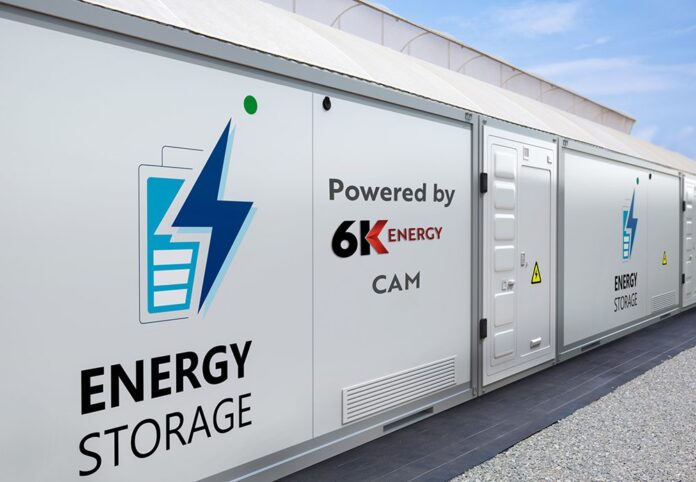
Charged EVs | Defense Logistics Agency awards grant to 6K Energy to develop cathode active material

0


US-based 6K Energy, a division of 6K, has been awarded a research and development grant of $1.9 million from the Battery Network (BATTNET) Program III from the US Defense Logistics Agency (DLA).

The grant will help the company develop and scale up the production of single-crystal (SC) NMC721 battery cathode powders using 6K’s UniMelt microwave plasma process.

Under the 12-month program, 6K Energy will focus on scaled synthesis, post-processing optimization, and performance validation of SC NMC721, including coin-cell and full-cell testing in partnership with a US-based lithium-ion cell manufacturer.

BATTNET is a Defense Operational Energy Program managed under the Defense Manufacturing Technology (ManTech) Program. The goal of the program is to enhance battery logistics and performance by advancing manufacturing technologies through industry partnerships. It prioritizes strengthening the domestic supply chain, improving safety and shelf life, reducing premature disposal and increasing overall battery availability for defense applications.

SC NMC721 is particularly well-suited for the “All-US” cell voltage window of 2.5-4.35 V and meets demanding defense-relevant performance targets, 6K said.

SC NMC721 offers advantages over polycrystalline alternatives, including the elimination of intergranular cracking and reduced electrolyte reactivity, owing to its lack of grain boundaries and inherently lower surface area. Conventional co-precipitation routes for SC NMC721 typically require long calcination times, flux additives, aggressive post-processing, and generate significant waste, which the UniMelt process is designed to address.

The UniMelt production system is a microwave, production-scale plasma platform that can reduce energy consumption and processing cost by up to 50% compared with traditional nickel manganese cobalt (NMC) production routes, according to the company.

“We are excited about this program on many fronts,” said Dr. Saurabh Ullal, CEO of 6K and President of 6K Energy. “This award recognizes the capabilities of our UniMelt platform and validates our ability to produce NMC721 domestically and sustainably. We appreciate the confidence that the DLA and the BATTNET program have placed in 6K Energy, and we believe this effort will accelerate the delivery of high-performance NMC721 materials critical to our nation’s defense and energy security.”

Source: 6K


Source link

Charged EVs | BHP and Rio Tinto bring Caterpillar electric haul trucks to the Pilbara

0


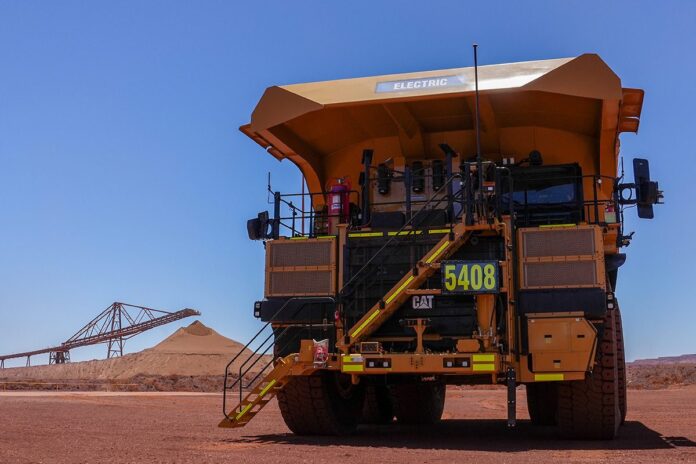
Metal and mining giant BHP’s Jimblebar iron ore mine in the Pilbara, Western Australia has started on-site testing of Caterpillar’s Cat 793 XE Early Learner electric haul trucks in collaboration with Rio Tinto.

Once commissioned, the trials will begin to test the viability of electric trucks as an alternative to diesel in large-scale iron ore mining operations. The trials will help inform the development of technology, processes, infrastructure and people required to support electric machinery in mine sites.

BHP and Rio Tinto are working closely with Caterpillar, supported by Caterpillar equipment dealer WesTrac, to accelerate development and transition their fleets as soon as commercially and operationally viable.

Following the joint trial, the mining giants will each independently determine progress towards scaled trials within their operations.

Ongoing testing and development throughout this trial will inform the approach the companies will take to testing a larger number of haul trucks and the potential integration of electric haul truck fleets.

“Replacing diesel isn’t just about changing energy sources, it’s about reimagining how we operate and creating the technologies, infrastructure and supply chains to transform mining operations. These trials will help us understand how all the pieces of the puzzle fit together: the battery technologies, generation and charging infrastructure, power management, as well as the supply chains to potentially deliver this at scale,” said Tim Day, BHP Western Australia Iron Ore Asset President.

“A significant shift like this demands a strong commitment to research and development, coupled with collaboration across the industry. This is going to take time to get right, which is why trials like this one with Rio Tinto and Caterpillar are so critical,” Day added.

Source: Rio Tinto


Source link