Sunday, April 26, 2026
9.6 C
London
Home Blog Page 45

Charged EVs | Comau invests in Intecells to accelerate commercialization of battery electrode manufacturing

0


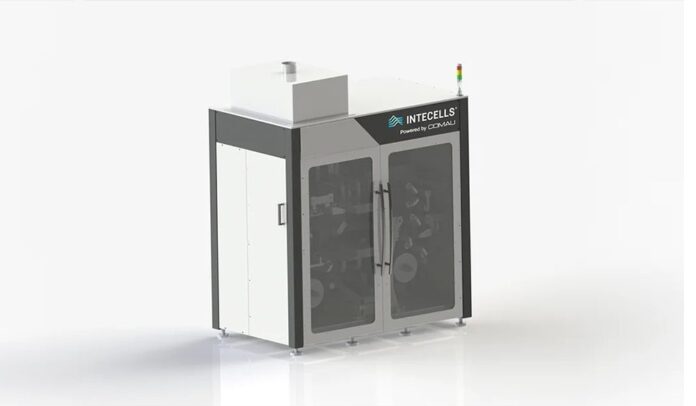
Italian industrial automation company Comau has acquired a stake in Intecells, which develops battery manufacturing processes and equipment based on plasma technology, to optimize the use of cold plasma within industrial cell manufacturing processes.

The two companies will continue their collaboration to deliver an electrode production solution using cold plasma technology to streamline the manufacturing process. The solution will aim to improve cell performance and reduce investment costs by 50%, halving energy consumption.

The companies will validate the technology they have developed with customers and integrate it within existing cell manufacturing lines. This will focus on reducing cycle time and energy consumption in the soaking and drying phases, leveraging Intecells’ approach which eliminates the need for solvents and binders. They will also focus on improving cell capacity, cyclability and production quality across a full range of battery types and sizes.

“In fast-moving sectors like electric mobility and stationary battery storage, where companies face pressure to optimize both product and production costs, it’s essential to combine technological excellence with operational agility,” said Pietro Gorlier, Comau’s CEO. Our work with Intecells demonstrates how we’re advancing smart, scalable solutions that can be integrated into new and existing battery cell lines. At the same time, it strengthens our footprint in the United States, supporting our ability to operate effectively on a global level while responding more rapidly to local market needs.”

Source: Intecells



Source link

Charged EVs | Taiwan Semi adds first SMC/SMB devices to its automotive-grade SUPER CLAMP TVS Series

0


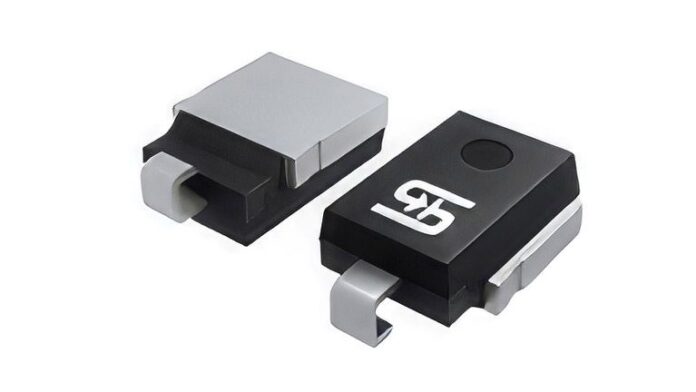
Taiwan Semiconductor has introduced its new automotive-grade 24V SUPER CLAMP snapback TVS devices in compact SMC and SMB surface-mount packages.

SUPER CLAMP TVSs combine lower clamping voltages, higher peak pulse currents and lower-voltage ratings than conventional TVSs, according to the company. The snapback devices allow circuit designers to use fewer, less costly components without compromising circuit reliability.

The new devices in SMC (LSMC24CAH) and SMB (LSMB24CAH) package options can help further reduce PCB space.

The complete series is offered in three package types: DO-214AB (SMC), DO-214AA (SMB) and DO-218AB.

When used in compact surface-mount PCB layouts, SUPER CLAMP TVSs can reduce parts count and eliminate the need to overdesign to achieve automotive-level reliability.

Providing maximum pulse currents of up to 300 A, SUPER CLAMP TVSs provide a higher margin of system protection than alternative options, the company said.

Samples are available now and the lead time for production quantities is 8-14 weeks.

“As processor and other VCC voltages in automotive designs keep getting lower, the need for more precise and aggressive transient protection is needed to reduce parts count and to protect these sensitive electronics,” said Sam Wang, Vice President, TSC Products. “In addition to saving money and design time, the new SMB- and SMC-packaged SUPER CLAMP devices offer options for drop-in upgrades in space-limited designs where better protection is needed.”

Source: Taiwan Semiconductor


Source link

Charged EVs | Kenworth expands zero-emission lineup with new medium-duty electric trucks

0


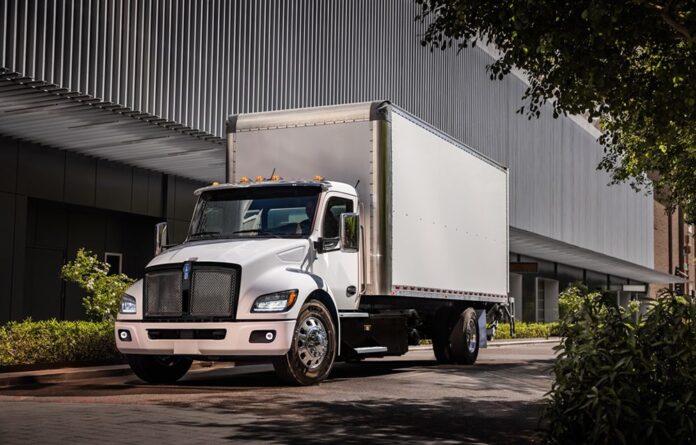
Kenworth, a PACCAR company, has launched its first conventional medium-duty battery-electric trucks: the T280E, T380E and T480E. These new Class 6-8 BEV models are designed for a wide variety of applications, including pickup and delivery, utility, regional haul and vocational applications.

The new models are now available for order from Kenworth dealers in the US and Canada. Production is scheduled to begin in 2026.

“The launch of our new medium-duty battery-electric lineup demonstrates Kenworth’s dedication to helping customers transition to zero-emission transportation with practical, powerful, and flexible solutions,” said Kevin Haygood, Kenworth’s Assistant General Manager for Sales and Marketing. “The T280E, T380E, and T480E are engineered to deliver the performance and dependability our customers expect from Kenworth, while offering the benefits of reduced emissions and quiet operation.”

Kenworth’s medium-duty BEVs are powered by PACCAR’s fully integrated ePowertrain platform, which offers multiple electric motor ratings from 170 kW (230 hp continuous, 335 hp peak) up to 350 kW (470 hp continuous, 605 hp peak), with peak torque ratings of 1,100 or 1,850 lb-ft. This flexible platform allows customers to spec trucks for local delivery routes, regional distribution or vocational applications that require higher power.

Two battery configurations are offered: 250 kWh (up to 200 miles of range); and 375 kWh (280 miles). All models feature DC fast charging capability with peak charging rates up to 350 kW, supported by PACCAR Parts’ full suite of charging solutions.

  • The T280E (Class 6, 26K GVWR) is offered with e-motor ratings up to 270 kW and up to 200 miles of range, making it suitable for pickup and delivery, as well as urban routes.
  • The T380E (Class 7/8, 33-50K GCWR) is available as a truck or tractor with e-motor ratings up to 350 kW and up to 280 miles of range—it’s designed for pickup and delivery, regional haul, utility and light vocational applications.  
  • The T480E (Class 8, 66-82K GCWR) is available as a truck or tractor with e-motor ratings up to 350 kW and up to 200 miles of range—it’s suitable for heavier pickup and delivery applications, drayage, utility and select vocational applications.

PACCAR’s central drive e-motor is designed to allow wheelbase flexibility, lift axle installations and vocational-friendly BEV integrations. All three models feature factory-installed options for high-voltage ePTO ports, which can be used to power equipment, a mechanical ePTO, or body configurations in conjunction with aftermarket body upfitters.

“Kenworth builds a truck and a powertrain for every job and is proud to expand our comprehensive range of battery-electric models across both vocational and on-highway markets,” said Haygood. “With the addition of the T280E, T380E, and T480E, customers now have even more options to spec trucks that align with their business needs and sustainability goals.”

Source: Kenworth Truck


Source link

Charged EVs | DP World deploys 12 Kempower MCS EV chargers at London Gateway container port

0


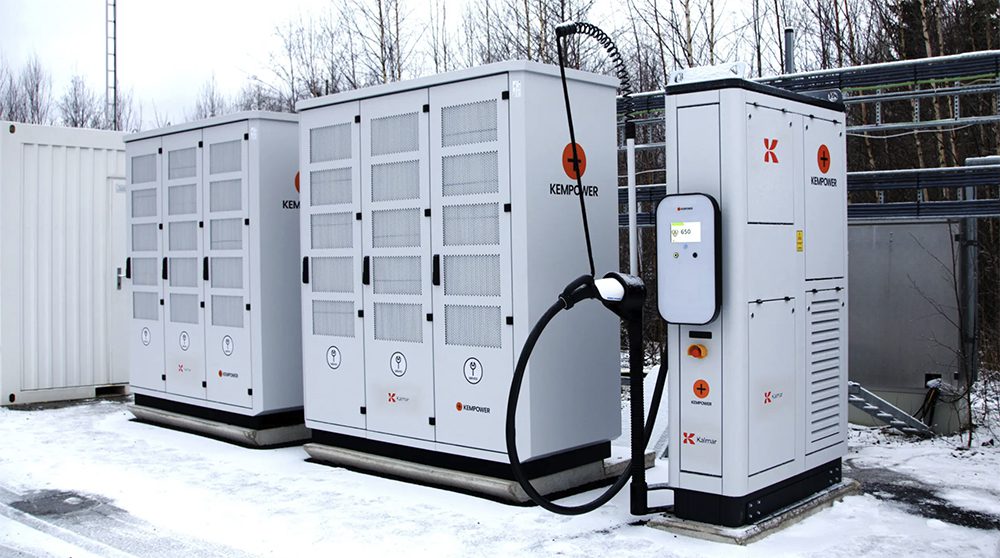
Global logistics firm DP World has installed a 7.2 MW charging site with 12 MCS dispensers at London Gateway, a deepwater container port. The Kempower Megawatt Chargers will power a fleet of 12 Kalmar electric straddle carriers

The Megawatt Charging System (MCS) is an emerging standard for heavy electric vehicles. It can deliver charging power of up to 3.75 megawatts (3,000 amps at 1,250 volts DC).

Kalmar, a global provider of material handling equipment and services, has selected Kempower as a strategic partner to develop a new range of DC fast charging solutions for material handling and logistics, focusing on the port segment.

Screenshot

In 2024, DP World and Kempower deployed a 500 A continuous charging system for Kalmar’s electric straddle carriers at London Gateway. The installation of these 12 MCS chargers represents the second phase of the port’s electrification, and it will increase the total power capacity at the site to 11.2 MW.

Jussi Vanhanen, Chief Market Officer at Kempower said: “We are very happy to continue our collaboration with DP World in the electrification of London Gateway, and excited to supply the first MCS chargers to the site. Transfer to MCS significantly decreases charging downtime, accelerating emission reduction and sustainable material handling and logistics at ports.”

Source: Kempower


Source link

Charged EVs | Hioki launches RM3546 meter for busbar welding quality control

0


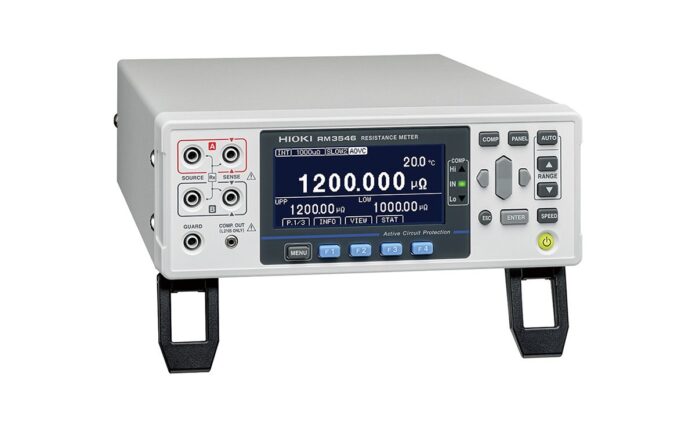
Hioki has announced the RM3546 Resistance Meter, a high-precision measurement instrument designed for electric vehicle and energy storage system battery manufacturing. The RM3546 targets nanohm-class resistance measurement, supporting the growing quality demands of high-volume battery production lines.

The RM3546 offers 1-nanohm resolution within a 1,000 microohm range, using the Advanced-Offset Voltage Correction (A-OVC) feature to suppress thermal noise that can destabilize low-resistance measurements. This enables precise weld quality control for busbars and connections critical to EV and ESS battery packs throughout research and development, prototyping, and mass production.

To address the risks of accidental probe contact with energized components, the RM3546 integrates Active Circuit Protection, allowing it to withstand DC voltages up to 60 V. Hioki says this protection reduces instrument failure and unplanned downtime on high-voltage battery production lines.

The meter features a path-resistance tolerance of up to 9 ohms in 500-milliamp mode, enabling stable measurements even with long cables, multiple relays, or worn probes—conditions commonly encountered in large-scale automation. The instrument supports integration with Hioki multiplexer systems and includes an internal multiplexer board option for flexible, multi-channel inline inspection.

For post-weld evaluation, the Advanced-Temperature Correction (A-TC) function—used in combination with Hioki’s PC application—permits accurate resistance measurement within seconds after welding, minimizing cooling delays and improving production takt time. Hioki identifies the main applications for battery research and development, inline inspection of battery-pack welding and verification of cell-to-cell and fuse resistance.

Additional uses include EV charging infrastructure components and power distribution systems in industrial contexts.

Source: Hioki


Source link

Charged EVs | All new ChargePoint hardware now supports the Plug & Charge seamless EV charging standard

0


EVSE supplier and charging network operator ChargePoint has announced that its entire current hardware portfolio now supports Plug & Charge technology.

Plug & Charge, based on the ISO 15118-20 communication standard, simplifies charging for EV drivers. Instead of navigating proprietary apps or dealing with credit card readers (both common points of failure), drivers simply plug in and go about their business. Authentication and secure billing are handled automatically.

“ChargePoint anticipates that PnC will gain traction, fueling further expansion of EV charging infrastructure, in 2026,” says the company. “It will be particularly useful for the fleet sector and car-sharing businesses.”

Starting January 1, 2027, support for ISO 15118-20 will be mandatory in the EU.

Plug & Charge technology already operates on ChargePoint’s network and via roaming partners in North America and Europe. However, the company points out that scaling it up to encourage widespread adoption will require overcoming complex technical, commercial and regulatory hurdles. (There is also a semantic hurdle. Here at Charged, we say “Plug & Charge,” but some say “Plug and Charge,” and ChargePoint appears to have coined “PnC.”)

Daniel Brown, Senior Director, Product Management at ChargePoint, said: “The consumer demand for Plug & Charge is clear, but scaling access to drivers is a complex exercise in global alignment across hundreds of market players in four key areas.”

To wit:

  1. Charge Point Operators (CPOs) need to source hardware and backend software that is Plug & Charge-compatible.
  2. E-mobility service providers, which manage user-facing data and process payments, need to align their offerings with backend providers that manage chargers.
  3. Car manufacturers (OEMs) must enable their vehicles for Plug & Charge, and prepare their backend software for certificate management by a certification authority.
  4. Certificate authorities oversee the authentication and all necessary security to ensure a seamless, reliable and trustworthy process for the end user.

The very real challenges of scaling Plug & Charge seem to be the reason that ChargePoint competitor EVgo prefers Autocharge (an alternative seamless charging system based on DIN Spec 70121) for the moment. “We are committed to rolling out the Plug & Charge standard once the intricacies around certification and implementation have been addressed, [but] in the meantime, we continue to support Autocharge+ as our current solution to offer seamless session initiation,” an EVgo spokesperson told Charged.

“As awareness of the benefits of Plug & Charge continues to grow and key players collaborate to remove barriers, we anticipate new levels of alignment and significant momentum in 2026,” added ChargePoint’s Daniel Brown. “With ChargePoint’s global scale and expertise driving this innovation, we are positioned as a key enabler of a competitive, interoperable and secure EV charging ecosystem.”

Source: ChargePoint


Source link

Charged EVs | Develon launches new range of electric excavators

0


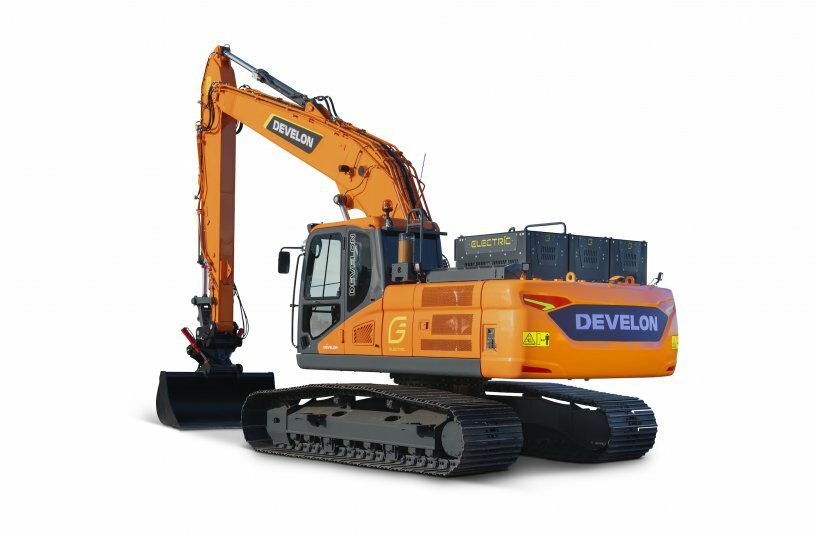
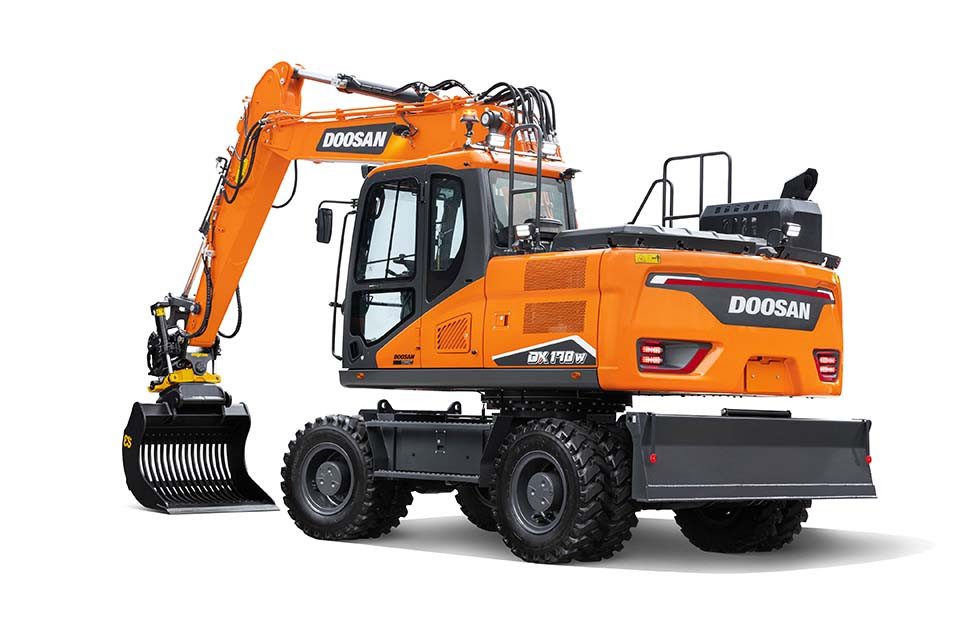
In response to rapidly expanding demand for electric construction equipment, especially in progressive regions like the Benelux and Nordic countries, Develon (formerly Doosan Construction Equipment) is significantly expanding its portfolio of electric-powered excavators.

Develon says its new electric machines offer identical performance to their diesel counterparts, while delivering significant reductions in emissions, noise and vibration.

Built on the company’s proven -7 Series platform, the first wave of electric machines covers key segments across both compact and mid-size classes. The initial lineup includes:

•           DX20ZE-7, DX23E-7 and DX85RE-7 electric mini excavators

•           DX100WE-7 and DX160WE-7K electric wheeled excavators (10 to 20-tonne class)

•           DX230LCE-7 and DX250LCE-7 electric crawler excavators (20-tonne class and above)

The expanded electric lineup will be introduced in phases. The DX160WE-7 electric wheeled excavator and the DX230LCE-7 and DX250LCE-7 electric crawler excavators are commercially available as of the end of 2025.

The DX160WE-7K offers all the new features from Develon’s -7K generation of wheeled excavators, combined with 100% electric drive. It features a 105 kW permanent-magnet motor and a LiFePO₄ battery pack capable of around 10 hours of operation under defined conditions. It boasts the same digging and handling capability as a legacy diesel machine.

The DX230LCE 7 crawler electric excavator is targeted at heavy applications. It delivers production capacity comparable to that of its diesel counterpart, and offers operating time of around 9 hours on one charge. The machine is designed with operator familiarity in mind—controls, attachments and service infrastructure align with the diesel model.

The DX250LCE 7 crawler electric excavator is designed for significant earthmoving and construction applications. It has all the features of the DX230LCE-7, and sports a larger battery pack, bringing total operating time to 12 hours.

The DX100WE-7 electric wheeled excavator and the DX85RE-7 electric mini excavator will follow next year, covering all core segments from compact to mid-size machines.

Source: Develon


Source link

Charged EVs | Sionic Energy and Group14 set new high-temperature benchmark for silicon-carbon anodes

0


Battery technology company Sionic Energy, together with Group14 Technologies, has announced the results of testing that demonstrates a new level of high-temperature stability for 100% silicon-carbon anodes in lithium-ion cells.

By combining Group14’s SCC55 silicon-carbon anode material with Sionic’s proprietary Rapid Integration Silicon Platform containing 100% silicon-carbon (Si-C) anode and enhanced electrolyte, the companies “have set a new benchmark for silicon battery technology, expanding its path to a broader set of applications in transportation, consumer electronics and aviation markets.”

The companies tested Sionic’s Rapid Integration Silicon Platform with SCC55 in 4 Ah, 10 Ah and 20 Ah pouch cells under electrolyte-lean conditions with NMC 83 cathodes. The cells delivered stable 1C/-1C cycling at 45° C, and retained >70% of room-temperature cycle life. Storage testing at 45° C and 60° C displayed substantial suppressed gas generation and lower impedance growth, supporting the potential of extended calendar life over baseline chemistries.

Sionic says its graphite-free Rapid Integration Silicon Platform delivers specific energy of up to 400 Wh/kg, cycle life of over 1,200 cycles, and strong performance, in cell formats already used by partners.

“Our Rapid Integration Silicon Platform delivers up to a 50% jump in performance while dropping right into industry-standard equipment with no complexity: no pre-lithiation, no external compression, no extensive cell design efforts,” said Ed Williams, President and CEO of Sionic Energy.

“This benchmark is a powerful validation that silicon batteries are market-ready,” said Rick Luebbe, CEO and co-founder of Group14 Technologies. “Customers want true drop-in silicon-carbon anodes that deliver up to 50% higher energy density, dramatically faster charging, and robust lifetime across extreme temperatures. These latest results with 100% SCC55 show that we can meet those expectations at scale, today.”

A technical white paper with full test data is available to qualified OEMs, cell manufacturers and investors.

Source: Sionic Energy


Source link

Charged EVs | JET Charge rolls out public EV charging at IKEA locations in Australia

0


JET Charge has completed a large-scale electric delivery vehicle charging project in partnership with IKEA Australia, installing 59 chargers at 7 locations across the country—Tempe, Rhodes, Marsden Park, Sydney CDC, Canberra, Springvale and North Lakes. Future deployments are planned for Richmond and Logan.

“This project proves that zero-emission logistics isn’t just possible—it’s scalable,” said JET Charge CEO and co-founder Tim Washington. “By building intelligent, fit-for-purpose infrastructure, we’ve given delivery partners the reliability they need on the road and IKEA the visibility to lead real emissions reductions across its supply chains. It’s a blueprint any retailer can follow.”

The project included implementation of smart load management for future-proofing and managing energy constraints, as well as the integration of a Chargefox billing system, which allows third-party drivers to pay for charging sessions while reimbursing IKEA for electricity usage.

IKEA says that more than 100 vehicles are now charging at the company’s sites, indicating strong demand from third-party delivery partners.

“JET Charge’s infrastructure, which spans the majority of our Australian delivery network, is already having a significant impact,” said Alexandra Kelly, IKEA Zero Emission Delivery Project Lead, Australia and New Zealand. As of October 2025, some 83% of IKEA deliveries were completed by zero-emission vehicles, Kelly added. “We aim to hit 90% by the end of 2025 and the last 10% when technology allows.”

Source: JET Charge


Source link

Charged EVs | Vianode begins building large-scale synthetic graphite plant in Canada

0


Vianode, a Norwegian producer of advanced battery materials, has started site preparation at its new synthetic graphite facility Via TWO in St. Thomas, Ontario.

Production is expected to start in 2028. The site is located in the Yarmouth Yards Industrial Park, close to key automotive customers, and offers access to Ontario’s electricity grid and strong support from local and provincial authorities.

Subject to reaching a definitive agreement, the Government of Ontario will provide a loan of up to C$670 million ($484 million) in support of Vianode’s investment.

The project is structured as a phased multi-billion-dollar investment. The total planned capacity is up to 150,000 tons annually, supporting delivery of synthetic graphite for around two million EVs per year.

Vianode started Norwegian synthetic graphite production at its Technology Center in Kristiansand in 2021 and commissioned its first full-scale plant Via ONE at Herøya in 2024. The St. Thomas facility is part of the company’s goal to supply advanced materials for up to three million EVs annually by 2030.

“Today marks an important step towards a resilient North American battery supply chain. Ontario and the city of St. Thomas have been strong partners from day one, and Via TWO will bring industrial-scale, low-emission graphite to market through a phased build-out that supports customers, communities and the clean energy transition,” said Burkhard Straube, CEO of Vianode.

Source: Vianode


Source link