Tuesday, April 21, 2026
13.6 C
London
Home Blog Page 9

Charged EVs | ENNOVI patents adhesive-free lamination for battery cell contacting systems

0


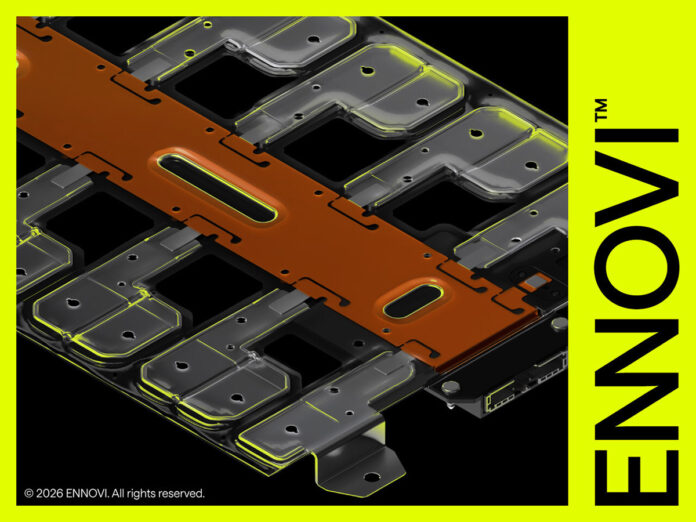
ENNOVI has secured a German patent for its adhesive-free lamination technology for battery cell contacting systems (CCS). The laser-based process eliminates the adhesives used in conventional hot and cold lamination, and the company says the technology is already validated—meaning OEMs can adopt it without having to prove out the manufacturing process themselves.

CCS components connect and integrate individual cells within a battery module, typically combining busbars, voltage sense lines and the physical laminate layers that hold them together. Conventional CCS lamination bonds those layers using adhesives in hot or cold press processes. ENNOVI’s laser lamination achieves the same bond without adhesive material. The technology supports cylindrical, prismatic and soft pouch cell architectures. With this patent, ENNOVI now offers three lamination options (hot, cold and adhesive-free) for its CCS designs, giving battery engineers a process choice matched to their cell format.

The patent’s main commercial argument is risk reduction. Developing a new lamination process in-house takes time and carries qualification uncertainty; using a pre-validated, patented technology lets engineering teams skip that work. ENNOVI supports co-development and tailored engineering engagement, which it says allows OEM partners to maintain control over their product roadmaps.

The technology was developed at ENNOVI’s Advanced Solutions Engineering Center in Neckarsulm, which includes prototyping, testing and R&D capabilities. The facility holds ISO 9001:2015 and TISAX certifications—the latter covering automotive supply chain data security requirements.

“Automotive OEMs and battery manufacturers can design in the unique features of adhesive-free lamination, reduce engineering risk by using a technology that is already validated, rather than reinventing it,” said Randy Tan, Product Portfolio Director for Energy Systems at ENNOVI.

Source: ENNOVI


Source link

Charged EVs | Inlyte Energy taps Ervin Industries for domestic iron battery supply chain

0


Inlyte Energy has struck a supply chain agreement with Ervin Industries, a US iron materials manufacturer founded over 100 years ago, to develop iron powder formulas optimized for Inlyte’s iron-sodium battery systems. The collaboration aims to expand Inlyte’s domestic materials sourcing and reduce dependence on overseas supply chains.

Ervin produces engineered steel shot, grit and advanced metal powders for markets including surface preparation, metalworking and advanced manufacturing—all from recycled metals. Under the agreement, the two companies will refine iron powder specifications, materials characteristics and production processes suited to large-scale battery deployment.

The pitch rests on what iron and sodium have that lithium doesn’t: domestic availability at scale. China controls over 75% of global lithium-ion cell production and an estimated 70-90% of the full value chain, including processing of lithium, cobalt, nickel and graphite. Iron is already produced in large volumes in the US—Ervin sources from recycled metal feedstock. For Inlyte, that means a potential supply chain that doesn’t run through Chinese processing plants.

Inlyte is finalizing site selection for its first US production facility this year. The company plans commercial deliveries in 2027, working with HORIEN Salt Battery Solutions on the sodium battery systems.

“Ervin’s century of experience producing high-quality iron materials gives us a powerful foundation to scale battery manufacturing while strengthening domestic supply chains,” said Antonio Baclig, CEO of Inlyte Energy. “By building on existing, domestic terawatt-hour level supply chains of iron and sodium, this technology can scale rapidly to lower the cost of electricity across the country.”

“We’ve spent decades perfecting iron powder processes for demanding industrial applications,” said Trent Pearson, President/CEO of Ervin Industries. “Working with Inlyte allows us to apply that knowledge to the fast-growing battery sector and help establish a domestic materials supply chain for next-generation energy technologies.”

Source: Inlyte Energy


Source link

Charged EVs | EV charging infrastructure provider VEV emphasizes strategic energy management

0


The UK government recently announced £1 billion in new funding to support the deployment of zero-emission trucks and vans, targeting both vehicle and charging infrastructure costs.

Energy and infrastructure specialist VEV called the funding “a significant and welcome step for the industry,” but noted that it might not be enough to convince operators to make the leap to fully electric fleets.

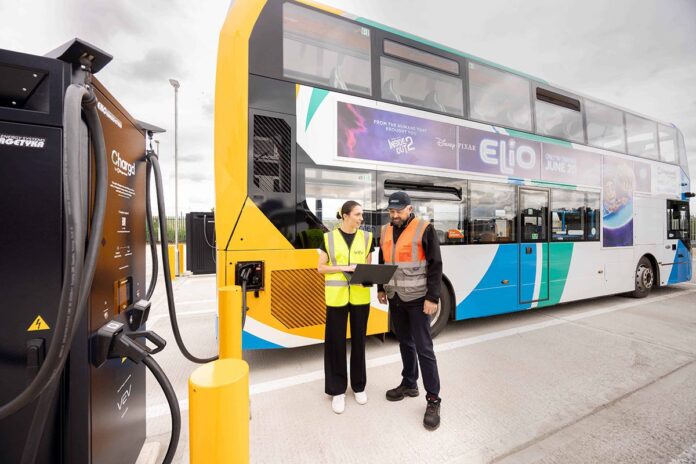
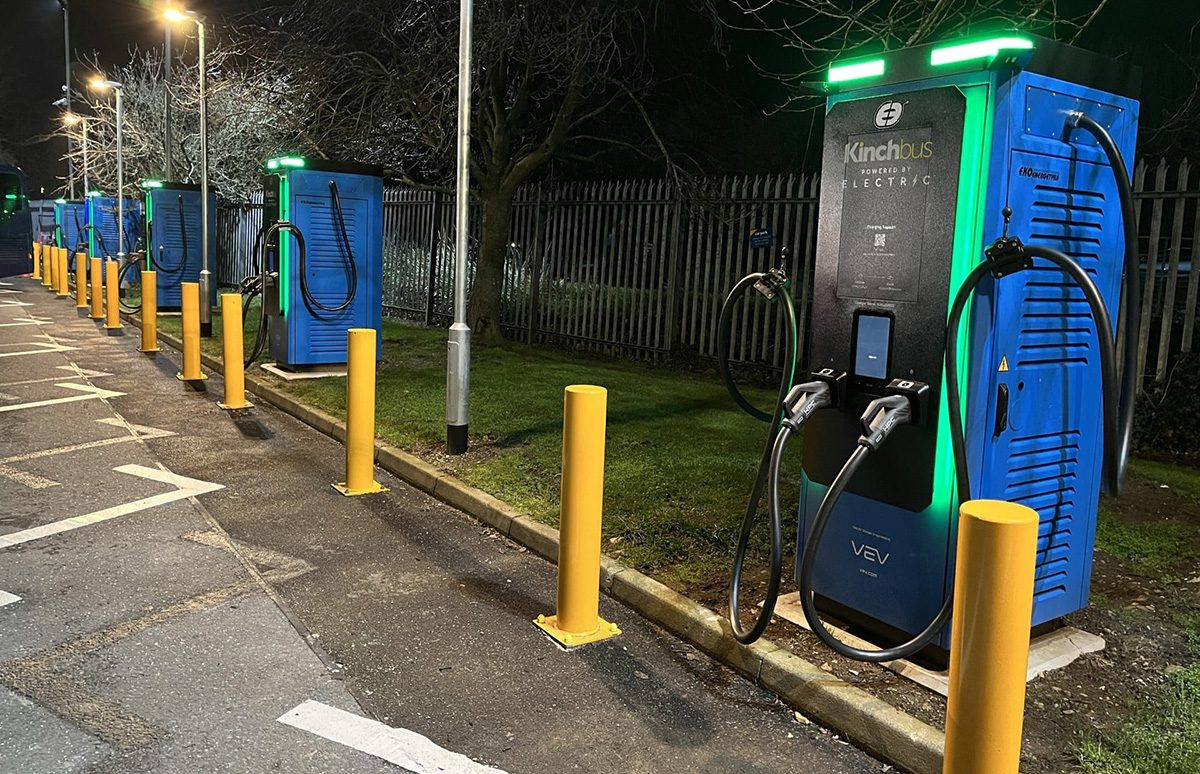
VEV develops EV charging infrastructure and integrated energy systems for fleet operators, transport providers and local authorities. Its VEV-IQ platform is designed to help operators monitor, optimize and manage depot energy use.

“This funding is a positive step, but it doesn’t remove the core challenge facing fleet electrification,” said Mike Nakrani, CEO of VEV. “The issue isn’t upfront cost—it’s the complexity of making electric fleets work operationally at scale. The focus now needs to shift from funding vehicles to delivering integrated charging and energy solutions that actually work in the real world. At the moment, industry just isn’t seeing that happening.”

Commercial fleets typically operate predictable routes and schedules, and vehicles spend long periods parked at depots between shifts. This dwell time creates opportunities for managed charging, allowing operators to stagger energy demand, reducing electricity costs and easing pressure on local electrical grids.

Projects such as Stagecoach’s electrified depot in Chesterfield, England, which supports 57 electric buses and incorporates solar generation, demonstrate how integrating smart charging with on-site energy systems can help fleets manage power costs while improving operational flexibility.

As VEV points out (and as many in the EV charging industry have told Charged), right-sizing charging infrastructure and implementing managed charging can often enable fleet operators to support more vehicles using smaller grid connections than nameplate power capacities might indicate.

Fleet electrification could also play a wider role in supporting local electrical grids. Because charging demand can be managed and scheduled, EV charging depots can absorb surplus renewable generation when supply is high and reduce demand during periods of high demand.

“As the electricity system becomes more reliant on renewable energy, flexible demand will become increasingly valuable,” said Nakrani. “Commercial fleets are one of the few energy loads that can provide that flexibility at scale.”

Source: VEV


Source link

Charged EVs | ChargePoint introduces new EV charger management solutions

0


EV charging provider ChargePoint has launched two new offerings for its charging station owner customers.

ChargePoint Premier Care is a white-glove service for customers with a large charger base or an intricate set of operational needs. Customers receive revenue reports, proactive tracking and full-service network optimization. A dedicated ChargePoint expert can provide case management, support with charger configurations, and detailed reporting.

The ChargePoint Support Portal, which is initially included with all ChargePoint Cloud Plan subscriptions, is a self-service hub designed to simplify technical assistance and enable station owners to resolve issues more efficiently. Key capabilities of the portal include:

  • Comprehensive case management: Users can create and manage support cases, and track parts and labor progress, directly within the portal.
  • Enhanced analytics: The Support Portal provides access to case analysis tools and downloadable custom reports.
  • A knowledge database: Easy access to how-to guides and troubleshooting steps.

“Premier Care and Support Portal bookend ChargePoint’s service offerings for charger management,” said Chief Customer Experience Officer J.D. Singh. “Premier Care allows businesses to streamline operations with our industry-leading team, whereas the Support Portal makes operations easy and intuitive for those who prefer to fully manage their own charger base.”

Source: ChargePoint


Source link

Charged EVs | The certified BMS trap: why it might not actually protect your battery

0


Off-the-shelf controllers with safety certifications are giving e-mobility engineers a false sense of security.

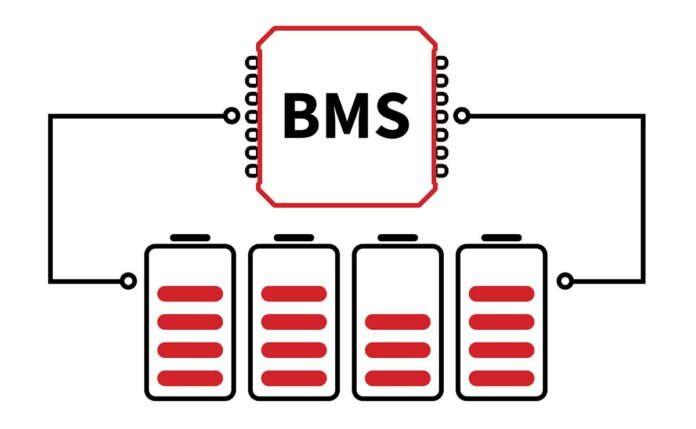
An off-the-shelf BMS with a third-party functional safety certification sounds like a solved problem. SIL-rated, ASIL-rated, ready to drop into your e-mobility battery pack. But according to Rich Byczek, Global Chief Engineer for Batteries at Intertek, that certification probably doesn’t cover what you think it covers.

“Certified BMS systems, meaning certified systems that have functional safety certifications from a third party, don’t necessarily address these functions,” Byczek told Charged during a recent webinar (now available to watch on demand). “They just look at the controller as a more generic electrical system.”

The problem: most certifications evaluate the controller hardware against a general integrity standard (IEC 61508, ISO 26262 or ISO 13849). They verify that the electronics are reliable. They don’t verify that the controller monitors individual cell voltages, manages cell-level temperature limits or handles the specific failure modes of lithium-ion chemistry.

Fuses don’t protect at the cell level

The gap is sharpest with passive protection. A pack-level fuse can interrupt a gross overcurrent event, but it’s blind to an individual cell in a series string being driven past its voltage limits. That requires active, per-cell monitoring, and a generic certified controller may not have the inputs and outputs to deliver it.

For e-mobility systems specifically, Byczek stressed that the failure modes and effects analysis (FMEA) must evaluate overvoltage, undervoltage, overcharge, overdischarge, over- and under-temperature, short circuit and excessive current, all at the cell level. “We look at those at the cell level, not only at the macro or battery pack level,” he said.

This is a different world from portable devices, where legacy standards like IEC 62133 rely on type tests and single-fault evaluations. Those standards were designed for products a user could set down and walk away from.

E-mobility doesn’t work that way. “You’re literally riding on top of that battery, potentially going at a fairly high speed,” said Byczek. “You can’t just get away from it.”

Start with the FMEA, not the certificate

The fix isn’t complicated, but it does require work. Start with an FMEA that covers every safety-critical function your BMS must perform, at the cell level. Then verify that your controller (certified or not) actually has the architecture to deliver each one. A certified controller is a starting point, not a finish line.

The standards themselves can be mixed and matched. SIL, ASIL and Performance Levels don’t map one-to-one, but regulators accept cross-framework approaches as long as your risk assessment demonstrably covers every identified hazard. For BMS systems, you’re typically targeting SIL 2, ASIL B or PLc, but the specific level matters less than proving your system can fail safely when a sensor drifts, a resistor opens or a communication link drops.

For teams pivoting from automotive EV programs into adjacent markets like forklifts, floor scrubbers and personal mobility devices, this is the adjustment that matters most. The batteries may be smaller, but the safety obligations are not.

Watch the full webinar: Rich Byczek’s complete presentation on applying functional safety to e-mobility battery systems is available on demand.


Source link

Charged EVs | KULR to co-develop battery system for Robinson’s eR66 electric helicopter demonstrator

0


KULR Technology Group says it has signed an agreement with Robinson Helicopter to co-develop the battery system for the eR66, a battery-electric demonstrator based on Robinson’s R66 helicopter platform.

Under the agreement, KULR will design and integrate a lightweight battery architecture for the aircraft using its own battery safety and thermal-management technologies. The work will focus on improving energy density, thermal stability and operational efficiency for the eR66, while also establishing rigorous testing and development protocols aimed at aviation safety. Initial program milestones are targeted for late 2026.

KULR says the agreement sets up a broader joint research, engineering and prototyping effort, combining Robinson’s California manufacturing base with KULR’s Texas operations. The goals include lowering long-term operating costs, strengthening domestic aerospace supply chains and exploring second-life uses for the battery systems after flight service.

“The development of a battery electric R66 helicopter alongside KULR represents an important shift in how we serve our global commercial and civil operators,” said Robinson Helicopter president and CEO David Smith. KULR CEO Michael Mo said the company’s battery systems were “designed from day one for dual use: a primary flight cycle and a certified second life.”

Electric aviation is still a brutal engineering tradeoff between energy density, weight, thermal control and safety. KULR CTO Will Walker acknowledged as much, saying the central challenge is balancing high energy density and low weight with “uncompromising safety.”


Source link

Charged EVs | Kulicke & Soffa’s new ASTERION-TW welds copper terminals without heat for power modules

0


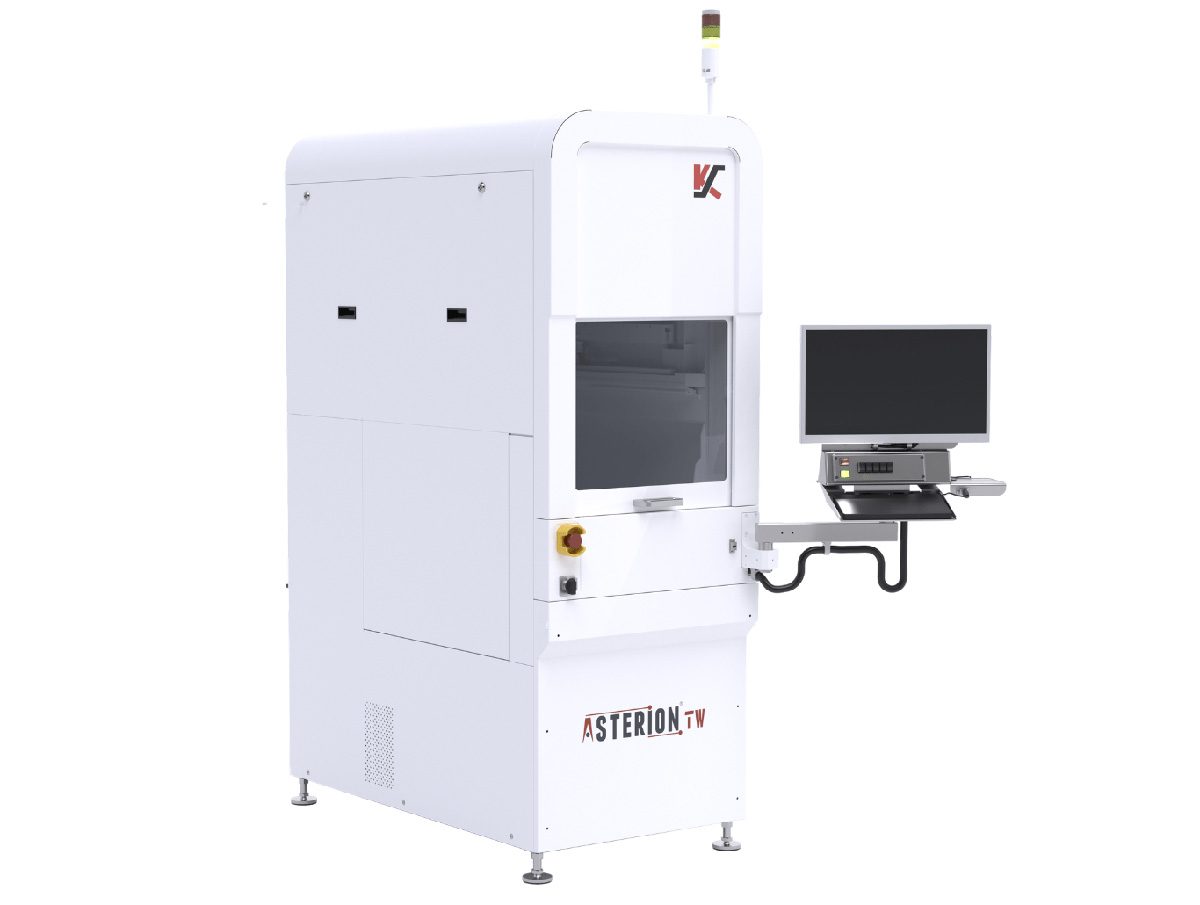
Kulicke & Soffa has introduced ASTERION-TW, an ultrasonic terminal welding system for next-generation power module manufacturing, adding another solid-state interconnect option to its ASTERION platform.

The company says the system is designed for high-reliability applications in markets including transportation, renewable energy and data centers, where conventional mass-reflow processes can be limiting. ASTERION-TW uses ultrasonic welding rather than heat-based joining, and Kulicke & Soffa says that allows it to bond copper terminals up to 2 mm thick while avoiding external heat, adhesives, consumables and chemical byproducts.

On the motion side, the system includes a high-resolution linear motor positioning system with weld placement repeatability of ±40 µm (3σ). Kulicke & Soffa also says ASTERION-TW supports ±180° weld head rotation, a 150 mm vertical stroke for access into deep cavities, and a 300 mm x 300 mm work area. An optional material-handling package adds an inline pallet conveyor with high-force clamping and an integrated cleaning station.

Ultrasonic terminal welding is getting more attention in power electronics because it is a solid-state joining process. That means the materials are joined without melting the bulk interface the way reflow soldering does. In practice, that can help reduce thermal exposure, simplify the materials stack and make it easier to adapt interconnect schemes as module designs change. Kulicke & Soffa also says the process is a greener manufacturing option with lower energy consumption, zero emissions and improved recyclability of assembled components.

ASTERION-TW is the newest member of Kulicke & Soffa’s broader power interconnect lineup, which already includes AVALINE clip attach systems, the base ASTERION wire and ribbon wedge bonding platform, and ASTERION-PW for pin welding. “ASTERION-TW reflects our commitment to deliver high performance interconnect solutions through engineering excellence and close collaboration with our customers,” said Ivy Qin, General Manager of Ball & Wedge Bonding at Kulicke & Soffa.

Source: Kulicke & Soffa


Source link

Charged EVs | ChargeUp’s 2026 cohort adds 10 battery and energy storage startups to New Energy New York accelerator

0


Binghamton University, the Koffman Southern Tier Incubator and New Energy New York have selected 10 companies for the 2026 cohort of the ChargeUp Accelerator, a startup program focused on battery and energy storage technologies.

The group says this is the biggest ChargeUp cohort yet and the third year of the accelerator. The selected companies span a pretty wide slice of the battery and energy storage stack, from mineral extraction and cathode materials to thermal batteries, mobile storage systems and battery manufacturing software. The 2026 cohort includes:

  • BUCKSTOP: An urban mining platform using proprietary datasets and machine learning models to transform how companies approach their assets and financial decisions.
  • EELI Technology, Inc.: Electrochemical technology that could transform mining by tapping into the billions of tons of lithium trapped in sources once considered impossible to mine, with a process that reduces carbon emissions, water use, time and cost.
  • MicroEra Power: First-generation thermal battery product architecture that will enable greater control over heating and cooling at lower costs and carbon footprints.
  • Molhill, Inc.: Specialty biochemicals that improve mineral separation and processing while reducing ecological footprints, with applications in synthesized or regenerative active cathode materials
  • NDB, Inc.: A novel nuclear diamond battery that converts recycled nuclear waste into clean energy with a lifetime of decades, allowing medical, defense and aerospace industries, as well as Internet of Things applications, to eliminate battery replacement.
  • Power 3D: 3D-printed battery technology with ultra-thick electrodes that maximize the amount of potential energy storing material in a battery, enabling higher energy density with applications in wearables, the Internet of Things and medical devices.
  • Power Up Connect: Mobile, self-rechargeable trailer-mounted battery energy storage systems that can be integrated with existing infrastructures, with a variety of potential use-cases — including construction sites, microgrids and emergency shelters.
  • QOR Technologies, Inc.: An artificial intelligence platform that can correct issues on the factory floor, from the beginning of the manufacturing process to the end, reducing human error while taking measures to prevent future anomalies.
  • Ranial Systems, Inc.: A unique computing platform that integrates artificial intelligence to offer predictive and real-time operation monitoring across multiple energy storage applications, improving the safety and resiliency of microgrids and renewable energy infrastructure.
  • WattUP Energy: A high-performance battery offering two times the energy density and three times the power density of conventional lithium-ion batteries, using earth-abundant materials to transform transportation in the land, sea and sky.

Artemis Technologies is participating as an honorary company. Its advanced zero-emission hydrofoil propulsion platform uses high-power electric drivetrains and hydrodynamic lift to elevate vessels above the water’s surface, significantly reducing drag, improving energy efficiency, and redefining performance benchmarks for commercial maritime transport.

ChargeUp says the program runs for seven months, from April through October, and combines curriculum, investor access, mentoring and technical-development support. Company leaders will receive more than 200 hours of curriculum, $25,000 in funding, and up to $100,000 for technical development. The accelerator is run through Binghamton University’s Koffman Southern Tier Incubator and draws on methods used in two other NextCorps programs: Luminate and the Manufacturing Accelerator.

The bigger story here is regional cluster-building. New Energy New York has been trying to turn Upstate New York into a real battery innovation hub, and programs like ChargeUp are one of the mechanisms for doing that. Earlier cohort companies include Ateios Systems, Amel Energy and Fermi Energy.


Source link

Charged EVs | Kodak and Ateios extend RaiCore battery electrodes to LFP, NMC, LCO with PFAS-free verification

0


Ateios Systems and Kodak say they have expanded the RaiCore battery electrode platform to three of the industry’s biggest cathode chemistries—lithium iron phosphate (LFP), nickel manganese cobalt (NMC) and lithium cobalt oxide (LCO)—while also securing third-party verification that the electrodes are PFAS-free.

The companies say independent testing found total organic fluorine levels below the analytical reporting limit of 20 parts per million in RaiCore composite electrode formulations for LCO, LFP, NMC and graphite. That is well below the 100 ppm regulatory threshold for PFAS-containing materials, according to the announcement. Ateios says this keeps RaiCore in the unusual position of being the only battery electrode platform verified by an independent third party as PFAS-free.

At the same time, Ateios introduced what it calls its fourth-generation RaiCore electrodes. The company says the updated formulation pushes active-material loading above 98%, improves the conductive additive network and improves rheology for high-speed gap coating, while staying compatible with existing battery manufacturing lines. That last part is probably the commercial hook: battery makers do not want to rebuild a factory just to adopt a new electrode recipe. Ateios also says LCO and LFP electrodes are already in pilot programs with leading battery OEMs.

The Kodak angle is manufacturing. Kodak says it is contributing its multilayer coating expertise to help scale production-grade battery cells across multiple chemistries. According to the release, support from the US National Science Foundation Energy Storage Engine in Upstate New York helped accelerate validation of RaiCore for LFP cathodes and scale fabrication of production-grade cells through grants including the group’s SuperBoost Technology Translation program.

“With the support of our customers, Kodak, and key materials suppliers, we continue pushing the frontier of battery production speed, performance, and sustainability,” said Ateios founder and CEO Rajan Kumar. Kodak Executive Chairman and CEO Jim Continenza said the company is contributing “precise, high-speed multilayer coating” capabilities to the platform. Ateios says qualification samples are now emerging from Kodak’s development and production coating machine.

Source: Kodak


Source link

Charged EVs | Monta acquires ABB Nordic’s EV charge point management software customer contracts through Vourity deal

0


Monta says it has acquired the charge point management software customer contracts operated by Vourity, ABB E-mobility’s Nordic subsidiary, in a move that expands the company’s CPMS footprint in Northern Europe.

The deal is not an acquisition of ABB E-mobility itself or of Vourity as a whole—it is specifically a transfer of CPMS software customer contracts. According to Monta, ABB E-mobility selected Monta to take over those relationships because it viewed the company as the strongest CPMS option in the Nordics for continuity of service.

Charge point management software is the layer that operators use to monitor chargers, manage access, control pricing, handle uptime issues and, increasingly, tie charging hardware into broader energy-management systems. So while this is a software-contract story, it matters at the infrastructure level: CPMS platforms are becoming one of the real control points in the EV charging business, and the market has been drifting toward consolidation for a while now.

Monta is leaning into that trend. The company says the acquisition is part of its broader European consolidation strategy and argues that operators increasingly want to standardize on established, full-featured platforms rather than smaller regional tools. Monta says its platform now supervises more than 260,000 commercial charge points, supports more than 800 charge point models, and gives clients and drivers access to more than 1.3 million public charge points across Europe and the US. The company also says it operates directly in the US and 11 European countries, and in 32 markets total through partners.

“This acquisition reflects our ambition to be the leading CPMS platform in Europe,” said CEO Casper Rasmussen. Monta says the transition will bring the acquired customers onto its own software platform, including its newer Monta AI capabilities, which it says are designed to help operators diagnose issues faster and run charging networks more efficiently.

Source: Monta


Source link