Ateios Systems and Kodak say they have expanded the RaiCore battery electrode platform to three of the industry’s biggest cathode chemistries—lithium iron phosphate (LFP), nickel manganese cobalt (NMC) and lithium cobalt oxide (LCO)—while also securing third-party verification that the electrodes are PFAS-free.
The companies say independent testing found total organic fluorine levels below the analytical reporting limit of 20 parts per million in RaiCore composite electrode formulations for LCO, LFP, NMC and graphite. That is well below the 100 ppm regulatory threshold for PFAS-containing materials, according to the announcement. Ateios says this keeps RaiCore in the unusual position of being the only battery electrode platform verified by an independent third party as PFAS-free.
At the same time, Ateios introduced what it calls its fourth-generation RaiCore electrodes. The company says the updated formulation pushes active-material loading above 98%, improves the conductive additive network and improves rheology for high-speed gap coating, while staying compatible with existing battery manufacturing lines. That last part is probably the commercial hook: battery makers do not want to rebuild a factory just to adopt a new electrode recipe. Ateios also says LCO and LFP electrodes are already in pilot programs with leading battery OEMs.
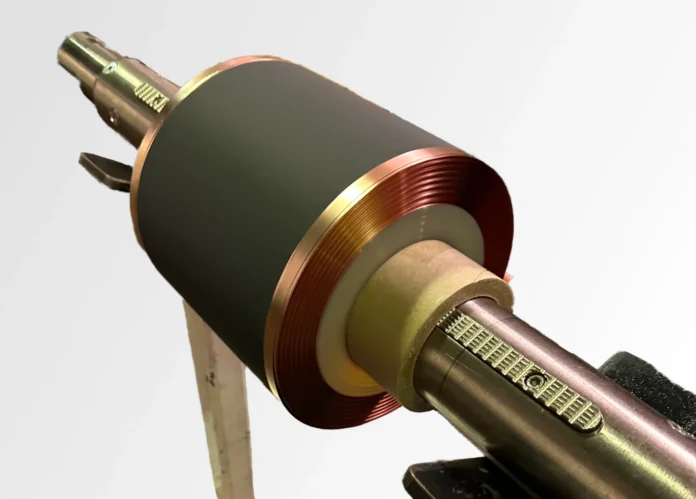
The Kodak angle is manufacturing. Kodak says it is contributing its multilayer coating expertise to help scale production-grade battery cells across multiple chemistries. According to the release, support from the US National Science Foundation Energy Storage Engine in Upstate New York helped accelerate validation of RaiCore for LFP cathodes and scale fabrication of production-grade cells through grants including the group’s SuperBoost Technology Translation program.
“With the support of our customers, Kodak, and key materials suppliers, we continue pushing the frontier of battery production speed, performance, and sustainability,” said Ateios founder and CEO Rajan Kumar. Kodak Executive Chairman and CEO Jim Continenza said the company is contributing “precise, high-speed multilayer coating” capabilities to the platform. Ateios says qualification samples are now emerging from Kodak’s development and production coating machine.
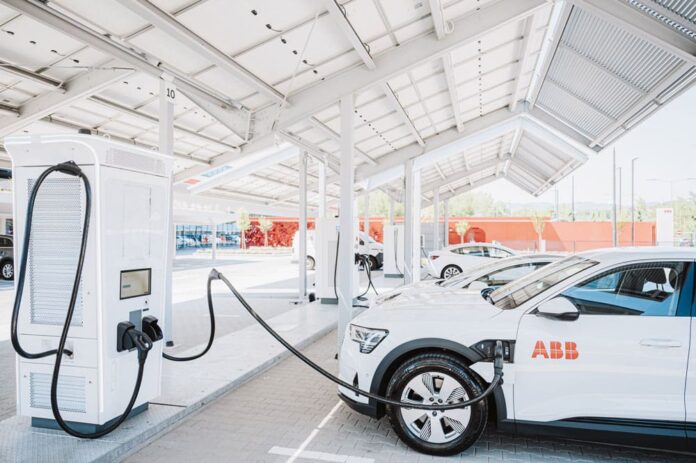
Monta says it has acquired the charge point management software customer contracts operated by Vourity, ABB E-mobility’s Nordic subsidiary, in a move that expands the company’s CPMS footprint in Northern Europe.
The deal is not an acquisition of ABB E-mobility itself or of Vourity as a whole—it is specifically a transfer of CPMS software customer contracts. According to Monta, ABB E-mobility selected Monta to take over those relationships because it viewed the company as the strongest CPMS option in the Nordics for continuity of service.
Charge point management software is the layer that operators use to monitor chargers, manage access, control pricing, handle uptime issues and, increasingly, tie charging hardware into broader energy-management systems. So while this is a software-contract story, it matters at the infrastructure level: CPMS platforms are becoming one of the real control points in the EV charging business, and the market has been drifting toward consolidation for a while now.
Monta is leaning into that trend. The company says the acquisition is part of its broader European consolidation strategy and argues that operators increasingly want to standardize on established, full-featured platforms rather than smaller regional tools. Monta says its platform now supervises more than 260,000 commercial charge points, supports more than 800 charge point models, and gives clients and drivers access to more than 1.3 million public charge points across Europe and the US. The company also says it operates directly in the US and 11 European countries, and in 32 markets total through partners.
“This acquisition reflects our ambition to be the leading CPMS platform in Europe,” said CEO Casper Rasmussen. Monta says the transition will bring the acquired customers onto its own software platform, including its newer Monta AI capabilities, which it says are designed to help operators diagnose issues faster and run charging networks more efficiently.
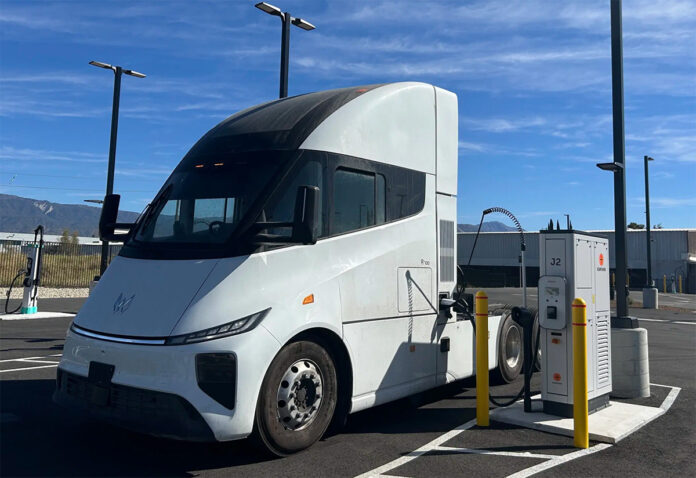
The Megawatt Charging System (MCS) is rapidly making the transition from pilots to real-world commercial operations. A couple of weeks ago, Chinese electric truck OEM Windrose and EVSE manufacturer Autel Europe completed a real-world MCS charging session at a customer site in Holland.
Now Windrose has partnered with EVSE manufacturer Kempower to perform a real-world MCS charging session at EV Realty’s San Bernardino, California charging hub. Kempower says this was the first MCS charging session with the company’s Mega Satellite MCS in North America.
EV Realty’s charging hub features a 1,200 kW Kempower Power Unit connected to two Kempower Mega Satellite MCS dispensers, capable of delivering up to 1.2 MW and 1,500 A of continuous output. Combined with liquid-cooled cable technology, the system is designed to support sustained high-power charging and enable efficient turnaround for heavy-duty electric fleets. The site is set to open in April.
“MCS is a potential game-changer for fleets looking to reduce dwell times and improve the efficiency of their operations,” said Suncheth Bhat, Chief Commercial Officer at EV Realty. “We are building sites that can serve any heavy-duty truck. This test confirms that we will be ready for real-world MCS charging when the trucks hit the road later this year.”
“This milestone of the first successful MCS charging session in North America with Kempower hardware marks a major step for heavy-duty charging in the region, demonstrating real-world interoperability and reliable delivery,” said Kempower VP of Markets and Products Jed Routh.
V-GREEN, an EV charging infrastructure provider that was spun off from Vingroup, plans to invest 10 trillion Vietnamese Dong (around $380 million) to deploy EV charging stations in Vietnam.
The Vietnam News Agency reported that the company plans to build 99 EV charging hubs along national and provincial highways across Vietnam by the end of this year. Each hub will be equipped with up to 100 charging points, each with a maximum capacity of 150 kW. All stations will rely on renewable energy, stored in battery energy storage systems developed and produced by VinFast, Vingroup’s EV brand.
“With 99 hubs in place, VinFast customers can travel long distances with full confidence, even during peak periods,” said Pham Thanh Thuy, Chairwoman and CEO of V-Green.
V-Green has big plans—by 2028, the company aims to deploy 500,000 charging ports in Vietnam, and to expand into international markets.
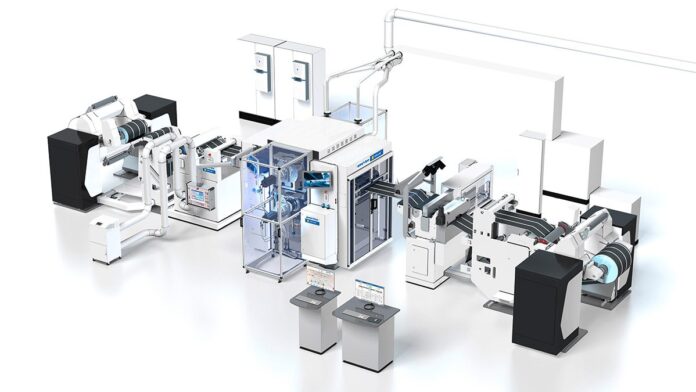
BREYER has supplied the calendering technology for V4Smart, the Porsche-VARTA joint venture producing cylindrical lithium-ion cells in Germany for high-performance applications including sports cars and hybrids.
Calendering is one of the key steps in electrode manufacturing: after the slurry is coated and dried, the electrode passes through precision rollers that compress it to a controlled thickness and density. That step has a big influence on porosity, adhesion, energy density and consistency from cell to cell. In other words, if you want high-performance cells, the calender isn’t just another machine on the line—it’s one of the places where performance gets locked in.
BREYER says its calendering lines are designed to deliver the dimensional accuracy needed for consistent cell performance while minimizing scrap, and have been integrated into V4Smart’s highly automated, digitized production environment at sites in Ellwangen and Nördlingen.
The setup has a plant-wide track-and-trace system. Every individual battery cell is digitally tracked through all production steps via a higher-level control system, with manufacturing data continuously recorded, expanded and passed to the next step. That kind of traceability matters in performance-oriented cell production, where tight batch control is essential.
Distributed power specialist Scalvy has raised $13.9 million in an oversubscribed Series A funding round. This funding round brings Scalvy’s total capital raised to $17 million.
The company will use the new funds to accelerate certification, field testing and deployment of its Power Neuron power delivery platform, and to support the rapid expansion of its team to meet rising demand.
Scalvy’s Power Neuron power delivery platform distributes power conversion and control across compact, software-coordinated modules with built-in energy storage. It’s designed to be deployed directly at energy load points, enabling systems to scale to megawatt-level power with greater efficiency, smaller size, higher reliability and grid interactivity.
Mohamed Badawy, co-founder and CEO of Scalvy, says the electric mobility industry currently faces a dilemma. “If you want higher power, you are forced to sacrifice space, increase costs, and lose usable capacity. Scalvy is the only company enabling systems to scale to massive power levels without those traditional penalties, and crucially, without requiring customers to drastically re-architect their systems.”
Initially, Scalvy is focusing on three rapidly evolving markets: data centers, energy storage and electric mobility.
Scalvy has completed technical validation of its technology under real-world operating conditions with “several blue-chip customers across mobility and energy infrastructure.” The company is now expanding its engineering, product and operations teams in preparation for product certification and near-term field deployments.
The EV charging industry may seem to be divided between hardware and software specialists, but the two are mutually interdependent, and must work together on various levels.
BTC Power’s chargers incorporate three main categories of firmware, which enable the hardware to communicate with the vehicle and with the backend software that powers user authentication and payment processing.
EV charging hardware must be tested for compatibility with vehicles and with backend software systems on an ongoing basis. BTC Power maintains a testing lab and a regular schedule of testing and re-testing.
Ensuring charging hardware and software compatibility: Q&A with BTC Power’s Bill Seamon
EV charging, like most modern technological endeavors, depends on a stack consisting of hardware, software and services, which work together to deliver the desired result. Some companies offer the full stack (e.g. Tesla, or the many companies that offer Charging as a Service), while others specialize in hardware (ABB, Tritium), and others stick to software (AMPECO, Driivz).
We’ve covered heaps of hardware manufacturers and scads of software providers, but when we look a little closer, we find that these are not mutually-exclusive categories. Charging hardware incorporates various kinds of software (firmware, low-level operating systems), and software companies have to test their wares with a wide range of hardware products on an ongoing basis, so sellers of the hard and the soft find themselves working together on various levels.
BTC Power, which describes itself as the second-largest US maker of EV chargers after Tesla, understands this symbiotic relationship as well as anyone. The company has integrated its chargers with more than 50 software systems, and maintains a large testing lab, where, the company says, “all the automakers” test their vehicles for compatibility.
Here at Charged, while we pride ourselves on delving into technical details of EV charging products, one of the reasons we focus on one-on-one interviews is that we love to hear real-world stories about how companies solve problems for their customers. When we approached BTC Power for an article about the company’s testing procedures, the PR people hooked us up with Senior Program Manager Bill Seamon because “he has the best customer stories.”
Charged: So you’re the man with the juicy stories from down in the trenches of charging?
Bill Seamon: Yeah. I was the “test and release” manager. Now I’m a program manager and I’m overseeing a backend migration project right now.
Charged: Backend migration? So, for example, if a charge point operator loses their backend software because the software provider pulls out of the market, you come to the rescue?
Bill Seamon: We’re also getting customers just changing backends from one company to another. Maybe they’re not getting support, I don’t know. But we’re getting a lot of that also.
Charged: I imagine most of your customers are either CPOs or fleet operators. Are there some other categories?
Bill Seamon: We have the whole range, from customers buying hundreds of chargers to customers buying ones and twos. We have the major charge providers; we have the CPOs that sell third-party to customers and help them install it; and then we have individual customers buying two, three, five chargers to put out in front of their convenience stores. We also have utility companies, school districts and hospitality companies who are our direct customers.
Charged: Those customers must have very different needs—I imagine a CPO or a big fleet operator is likely to be quite knowledgeable about charging, whereas a small customer probably has a lot of questions.
Bill Seamon: Yeah, some of them will buy the chargers from us, but then they’ll work with a backend provider that’ll help them install and run through the permit process. But It’s a whole new industry. I think everybody’s still trying to figure out the best way to do it.
Charged: There are a lot of charger companies out there and, well, chargers all do the same thing. How do you differentiate your products from your competitors?
Bill Seamon: Ours are a little more expensive, but we put a lot inside. I think safety is the biggest thing we bring to the table. These things are putting a lot of power through that cable, and heaven forbid somebody gets hurt charging their car. We have thermistors in the cable, in the head, and internal to the charger, and we’re monitoring those thermistors. There’s a big difference from charging a car in Arizona in August to charging a car in Minnesota in December. There’s a lot of internal software checks that are being done all the time while we’re charging the vehicle.
“These things are putting a lot of power through that cable, and heaven forbid somebody gets hurt charging their car.”
Another advantage we offer is stability. We are probably one of the few charger manufacturers that are profitable. We’re making money. Not a lot, but this is a new industry and it’s going to take several years for everything to shake out. But chances are we’re one of the few that are going to be around in 5, 10 years.
Charged: Everyone tells me there’s a shakeout going on, and it’s not over yet.
Bill Seamon: I spent 24 years at Western Digital in the disk drive market. Back then there were hundreds of disk drive manufacturers, and now there’s really two. The same type of thing will probably happen in the EV market. Same with the backend providers, the network providers.
Charged: You have integrated your chargers with more than 50 software systems. How do you test your hardware with all these different software products?
Bill Seamon: We do integration with the backend software to make sure our charger processes billing and credit cards. We have weekly meetings with the larger backend providers. We have a major backend provider coming this week for several days of testing on site.
We have contacts with makers of all the different credit card devices. We’ve had problems in the past where the device manufacturer will update the software without telling us, and the library that our software uses to talk to the credit card becomes incompatible with the new version. We have the capability to talk to our chargers over the air all over the world—we can update the software, do diagnostics, download logs for debugging. There’s some pretty sophisticated things going on inside that charger to make sure we can support it.
We also test with the car manufacturers. Here’s a story about one of the major European vehicle manufacturers. On the CCS2 connector there’s a button you press to release the connector. The vehicle senses that button press, it turns off and tells the charger to shut things down, then the vehicle releases the connector so we can pull it out.
“You can’t just shut down 300 kilowatts going through a connector.”
And this major manufacturer never knew what that button was. When they sensed that button press, they did an emergency shutdown, which caused arcing in our internal power supply, because you can’t just shut down 300 kilowatts going through a connector. We’re like, “Guys, you’re killing us here. You can’t do that.” And they said, “We’ve never seen that button before. We didn’t know what to do.” The spec is pretty cryptic. My only thought was: Engineers that can’t design, write specs.
Charged: We’re talking about the Open Charge Point Protocol?
Bill Seamon: Yeah, and the connector spec and the Level 2 spec—it’s all tied together.
Charged: When a backend provider says they’re charger-agnostic, is that just as simple as being OCPP-compliant?
Bill Seamon: There are different implementations and different levels of OCPP. We meet most of those. But again, it’s the vehicle manufacturer interpreting the spec. We work with these backend providers, run some basic charging tests. I’ve got 15 different backend providers that we’re working with. The backend provider may say, “We need OCPP 1.6.” But there’s a lot of vendor-specific or customer-specific commands that can be implemented. The spec is the core, but there’s a lot of other stuff that gets put into that.
Charged: Your charger is not just a dumb piece of hardware that works with somebody else’s software. You’ve got your own software layers that have to interface with backend providers and all kinds of other software. How does all that fit together?
Bill Seamon: We basically have three major pieces of software. There’s a board in the dispenser that talks to the car and that does the CCS protocol. And we have several people working on that because it’s always changing. A new vehicle will come out, we’ll test with that vehicle. We find stuff. They find stuff.
Second, we have internal firmware that’s in the dispenser and in the tower. For our standalone charger, we have one set. But for installations that have dispensers, there’s a DC cable and CAN lines going from the dispensers to the tower. So, there’s firmware in the tower and firmware in the dispenser talking back and forth for sending power and shutting power off.
Third, there’s what we call the point-of-sale firmware. This is a Java application in the dispenser that provides the GUI interface to the customer, processes credit card transactions, and then talks to the backend provider to send all that information back and forth. Each credit card device works differently, and there are multiple credit card devices that customers want.
Another story—I got a call from a customer that had installed some of our old 50-kilowatt chargers, and they had to wait over a year before the power company gave them power to turn them on. When they turned them on, they found that they had these obsolete card readers that the backend provider couldn’t support. So, we were scrambling to try and see if our point-of-sale application could support that customer, because the backend provider couldn’t.
That brings up another point—dealing with these different backend providers, with the vehicle manufacturers, with the credit card companies, gives us wide knowledge of how to help these customers, which may be the owner of the charger or the person trying to charge his vehicle when he’s in the middle of nowhere. We have a team that works pretty much around the clock that’s tied into our customer support phone number.
If a software provider pulls out, and all these people are panicking and scrambling, they can turn to BTC Power and we’ll know how to help you as quickly as possible.
Charged: It sounds like there’s a certain amount of overlap between the frontend and the backend software. In your example of the credit card reader, the backend couldn’t support the credit card reader, but you found a way to support it.
Bill Seamon: Yeah, there’s different systems for credit card readers. In some cases, we talk to the credit card reader and to their payment network. There’s other companies where we don’t even talk to the credit card reader—it has a separate ethernet port, and when you swipe the card, that reader talks to their server and it knows that that reader is registered to a specific backend and customer. That customer’s backend does the payment, the backend server tells us it’s okay, and we start charging. That’s called an around-the-loop transaction. In other cases, we talk to the credit card reader directly, and in some cases, it’s in between. There’s a lot of different protocols involved.
Charged: So, in some cases, a particular function might be handled by your software, and in other cases it might be handled by the backend?
Bill Seamon: Yeah, it’s all specific based on the backend, the credit card reader and the charger, so there’s all that software going on inside our charger to make sure everything is communicating properly.
Charged: When you’re testing your hardware with different software and different vehicles, is there a standardized testing regimen, or some sort of a scorecard?
Bill Seamon: Well, there’s all different kinds of testing. Right now we’re working with OCA, which is a company that got a certification for OCPP 2.0, 1.6 and all that. They have a lab in Virginia and we have our chargers set up there permanently. We work with them to get OCPP 2.0 certification—they run the test, they send the report to OCA, OCA reviews the report and gives us our certification stickers. We run through that periodically. Different backend providers have their own test processes that we follow.
Charged: I hear a lot about microgrids. A large installation includes not only the charging hardware, but switchgear, transformers and possibly battery storage and/or onsite generation. Tell me a bit about how all that stuff fits together.
Bill Seamon: When our charger talks to the backend provider’s server, it also talks to our own monitoring server. For each customer, we have a monitoring server with its own internal protocol. When there’s a problem, we can react quicker than waiting for the customer to complain because we have a server talking to all our chargers. For that customer, we know what site they’re at, we know the charger serial number…all that information.
Also, we’re working with several large manufacturers to provide energy management. Say we’ve got 10 chargers at a site. They all have, let’s say, 350 kW capability, but we don’t have that much power at the site. If everybody plugs in at the same time, we’ll be reducing the power to all the vehicles so they can all use their chargers and manage that energy at that site based on their power company’s capabilities.
Charged: A subject I’ve been hearing a good bit about in connection with microgrids is cloud control versus local control. Amber Putignano at ABB told me that she sees a trend for more of the control functions to be handled on site, as opposed to everything going to the cloud and back. But Oren Halevi at Driivz, a software provider, pointed out that certain things, like authentication and payment processing, have to happen in the cloud.
Bill Seamon: Yeah, the problem is the chargers don’t talk to each other. They talk to our monitoring portal or to the backend provider, which is the cloud, so if you were to have something local, you would need a third connection for that charger to talk to a local server. I don’t see that happening right away because it would be redundant and extra cost. And today, your credit card transactions are all cloud-based. Our charger will record transactions, and we can keep local account information on it, so if we do lose the internet for a short period of time, then once the internet comes back, we would send all that information. But the payment is really dependent on the cloud anyhow, so you just have to have a reliable internet connection.
Charged: It must be a challenge to make sure new software works with older hardware that may still be in service. And as software and standards change, I guess you have to re-test with customers periodically.
Bill Seamon: In the lab, we have all our chargers on skids, with pigtails coming off of them. If somebody wants to test on an older model, we lift-truck them in, plug them in and begin testing with them within an hour.
“We have a matrix of each version of code that we last tested with each vendor or backend provider.”
For each customer we’ve tested with, we’ll re-test anywhere from every three weeks to every six months. We have a matrix of each version of code that we last tested with each vendor or backend provider. There may be new code coming along, but we don’t change that provider’s code until we test with them and get approval.
We have a software release notice process that we keep internally. We document the whole process so we can keep track of what we released for whom. We record the versions we last tested with Customer X on this device, this charger model, etc. Here’s the new versions, here’s the changes, here’s where they gave us authorization to do a pilot, to do the full rollout.
We have this firmware matrix that has all our customers, all the models. Right now it’s a big shared Excel spreadsheet, and we’ve probably got 400 lines of code in that spreadsheet to keep track of all these different customers. Once this industry consolidates, it’ll make my job a lot easier, to go from 400 to maybe 10.
For its next act, Harbinger has partnered with mobile healthcare solution provider Frazer to electrify ambulances and mobile healthcare vehicles using Harbinger’s plug-in hybrid vehicle chassis and battery technology.
Texas-based Frazer designs and builds emergency response and mobile healthcare vehicles for EMS agencies, fire departments, hospitals and specialty care programs. As part of the new partnership, the company has made a strategic investment in Harbinger.
“At Frazer, we believe the future of healthcare should deliver exceptional medical care directly to the patient, rather than simply transport the patient to care,” said CEO Laura Griffin. “This partnership with Harbinger demonstrates Frazer’s move beyond the traditional ambulance model and into a mobile healthcare solution provider that supports new care delivery models. Hybrid-electric vehicles offer a practical first step toward electrification in emergency and medical environments, while preserving full operational readiness and clinical reliability.”
Frazer and Harbinger plan to build several new mobile healthcare products:
an emergency medical response vehicle built on Harbinger’s hybrid chassis to support mission-critical reliability, clinical grade power redundancy, and drastically reduced operational complexity;
a mobile healthcare platform built on Harbinger’s hybrid chassis to support care delivery outside traditional fixed location facilities such as community care facilities and hospital system extensions;
auxiliary power systems based on Harbinger’s battery technology, providing redundant power for field medical care in both hybrid and ICE vehicles.
Harbinger’s hybrid offering pairs its electric chassis with a gas-powered range extender that recharges the battery when needed. This architecture enables reduced emissions during idling, stable and redundant power delivery for onboard medical equipment, and simplified energy management.
Both Harbinger and Frazer are committed to US manufacturing. Harbinger designs and manufactures its electric and hybrid chassis in-house at its California headquarters, including all major vehicle systems such as the powertrain, battery system, steering, brakes and more. Frazer produces its products in Houston.
“Through this partnership, Harbinger is entering the mobile healthcare and emergency medical response market for the first time,” said John Harris. “Our proprietary platform was designed from the ground up as a modular foundation to support a wide range of commercial and specialty applications. In mobile healthcare, redundancy, uptime and operational flexibility are non-negotiable, and our platform is built to deliver the reliability this market requires.”
Power Innovations International (Pii) is a global provider of power management systems and services. Founded in the US in 1997, Pii became a subsidiary of LITEON in 2014. The company’s EVDC line of DC fast chargers can accept a wide range of input voltages—a feature that addresses a major bottleneck for DC charger installations. (Read an in-depth interview with Nick Stone, Pii’s Product and Market Manager, from our January-March 2025 issue.)
Now Pii has announced that its EVDC lineup is officially cETLus listed, meaning that the chargers have been certified to meet North American electrical and safety standards set by Underwriters Laboratories (UL) and the Canadian Standards Association (CSA).
The EVDC line was evaluated for safety by Intertek, ensuring that the products conform with UL standards 2202, 2231-1 and 2231-2; and CSA standards C22.2 No. 281.1, 281.2 and 346.
Pii’s EVDC chargers are designed to provide ease of installation and maximum power input flexibility. The EVDC line features a direct DC voltage input, making the units suitable for DC-coupled microgrids and DC power distribution systems.
“The EVDC line represents a major step forward in how we approach site-specific charging needs,” said Nick Stone, Pii’s Director of Product. “With a DC voltage input added to our listing, we’re making it easier than ever for our customers to deploy reliable [DC fast charging] infrastructure in an expanded set of applications without the typical installation hurdles.”
“Achieving this listing for our EVDC line reinforces our mission to provide the most flexible charging solutions on the market,” said Pii President Gary Straker. “By meeting these rigorous North American safety standards, we are giving our customers the confidence that they are investing in a product that doesn’t compromise on safety or performance.”
PPST Solutions says it has been named a value-added reseller for EA Elektro-Automatik, expanding its test portfolio to cover both AC and DC power validation for electrification markets.
Engineers increasingly need test coverage across the whole power-conversion chain, not just isolated AC or DC boxes. With the new arrangement, PPST now combines Pacific Power Source AC systems—sources, grid simulators and loads—with EA’s bidirectional DC power supplies, regenerative DC loads, and battery test systems. The company says that combination can reduce integration complexity and support more complete validation workflows for applications including EVs, energy storage, V2G, renewable energy, aerospace, defense, and AI-oriented power infrastructure.
PPST describes the offering as a one-stop AC/DC test platform backed by systems integration, application engineering, and lifecycle support. It also says the platforms are designed to be open and configurable, with built-in safety features and flexible software integration for engineered test environments.
“As power electronics solutions grow in scale and complexity, engineers face new challenges optimizing designs for rapidly evolving industries,” said James Hitchcock, VP and GM of EA Elektro-Automatik at Tektronix. PPST VP Peter O’Brien said the broader lineup is meant to deliver “comprehensive AC and DC test solutions” with strong out-of-the-box value.