Saturday, March 14, 2026
10.6 C
London
Home Blog Page 98

Canoo reportedly places remaining employees on “mandatory unpaid break”

0


Electric vehicle startup Canoo has placed its remaining employees and what it calls a “mandatory unpaid break” through at least the end of the year, TechCrunch reports.

The report cites an email sent to employees, which said they would be locked out of Canoo’s systems at the end of the day Friday, and that benefits would last through the end of December.

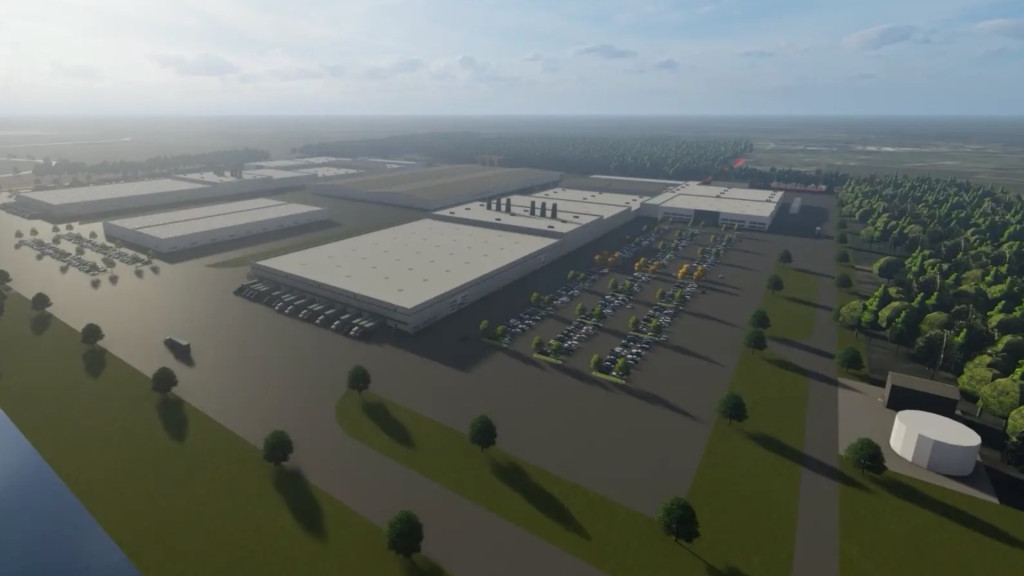
Canoo in Oklahoma

Canoo in Oklahoma

This comes just a few days after Canoo announced that it was furloughing 82 employees and idling an assembly facility in Oklahoma due to lack of funding, TechCrunch notes. That facility wasn’t ramped up, as so far Canoo has only delivered small numbers of demonstration vehicles, including some for the U.S. Postal Service.

Canoo also earlier this year closed the Los Angeles office that originally served as its headquarters. In August the startup announced a move to Justin, Texas, where it’s maintained a corporate office since CEO Tony Aquila took over a few years ago.

Canoo Lifestyle Delivery Vehicle with Walmart logo

Canoo Lifestyle Delivery Vehicle with Walmart logo

And Canoo has lost many executives, including its CTO, CFO, and general counsel, meaning most of the original contingent that launched the startup in 2017 is now gone. That’s coincided with a change in direction under current CEO Aquila, who pivoted Canoo from its original plan of selling van-like EVs on a subscription basis toward commercial vehicles.

That pivot as attracted interest from Walmart and fleet-management company Zeeba, which announced orders for 4,500 and 3,000 Canoo electric vans, respectively, in 2022. In addition to the Postal Service, Canoo has also provided a handful of vans to NASA and an electric pickup truck prototype to the U.S. Army. But the startup hasn’t been able to convert this hype into revenue by ramping up vehicle production.


Source link

Honda and Nissan merger planned by 2026 to fend off Tesla and Chinese EVs

0


  • Merger talks have begun between Honda and Nissan
  • The merger will put the automakers under a join holding company by August 2026
  • EVs, hybrids, platforms, and software will be at the core of overlap

Honda and Nissan have begun talks aimed at fending off electric-vehicle competition, the automakers confirmed on Monday.

The automakers signed a memorandum of understanding as a first step  merger talks, with Mitsubishi potentially joining as a third partner. Nissan already owns approximately 34% of Mitsubishi shares, and there has been some platform sharing between the two automakers.

The plan is for the merged automakers to operate under a holding company with a delisting of both automakers on the Tokyo Stock Exchange at the end of July or August of 2026. The shares of both companies would then be transferred into he new holding company.

A report from Japanese news outlet Nikkei cited competition from Tesla and Chinese automakers in the EV segment as one of the main factors behind the merger.

2023 Nissan Ariya e-4orce

2023 Nissan Ariya e-4orce

This follows a March announcement by Honda and Nissan of a memorandum of understanding for a “strategic partnership in the fields of vehicle electrification and intelligence” expected to cover EVs, hybrids, and software. Mitsubishi was tipped to join that partnership in August. The current alliance between Nissan, Mitsubishi, and French automaker has also collaborated with Honda in the past, most recently on the Altna battery-leasing joint venture.

Combined sales of Honda and Nissan in 2023 totaled more than 8 million vehicles. That would make the merged automaker the third largest by sales volume after Toyota and the Volkswagen Group, which sold 11.2 million and 9.2 million vehicles in 2023, respectively.

A full merger will likely be a needed lifeline for Nissan. The automaker in October announced plans to lay off approximately 9,000 employees, representing 6.7% of its global workforce, and cut production capacity by 20% due to declining sales, primarily in the U.S. and China.

2025 Honda Civic Hybrid

2025 Honda Civic Hybrid

Both automakers are in the midst of an EV reset, with Honda preparing to roll out its 0 Series starting in 2026 and Nissan preparing a next-generation Leaf, as well as larger models for assembly in Mississippi.

The automakers noted the merger would allow for optimization of manufacturing systems and facilities and standardization of vehicle platform.

Hybrids could present more immediate opportunities for integration. Honda’s two-motor hybrid system could replace Nissan’s e-Power hybrid system, which still hasn’t made it to the U.S. after years of discussion. Nissan, meanwhile, could take the lead in electrifying pickup trucks and SUVs—including the body-on-frame models Honda currently lacks.

Note – This story was updated on Dec. 23 after the automakers confirmed the merger plans


Source link

Electric Rolls-Royce conversions make classic luxury silent

0


Rolls-Royce has always prided itself on the quietness of its luxury cars, hence its use of names like Phantom, Ghost, and Spectre. So a near-silent electric powertrain would seem like a good fit.

U.K.-based Evice certainly thinks so. It’s the latest in a crop of companies marketing electric conversions of classic cars, and its first project is a Rolls-Royce Silver Shadow sedan. Known internally as XP1, it’s a prototype for a conversion package for both the Silver Shadow and Corniche convertible that Evice hopes to start offering to customers in Spring 2026.

The prototype has a 77-kwh battery pack providing an estimated range of over 200 miles, likely as measured on the more lenient WLTP testing cycle, along with an 800-volt electrical architecture.

Prototype Rolls-Royce Silver Shadow EV by Evice

Prototype Rolls-Royce Silver Shadow EV by Evice

Output is 400 hp—substantially more than the original gasoline V-8 engine. Evice also claims to have upgraded the brakes, while an active suspension aims to provide the same pillowy ride as the original hydra-pneumatic suspension (derived from Citroën tech) with a greater degree of handling sharpness.

The interior features modern climate control and audio systems, as well as heated and ventilated power-adjustable seats and a touchscreen infotainment system with Apple CarPlay and a rearview camera.

Several other companies are restoring classic electric cars with modern powertrains—including some vintage Rolls-Royces. Another U.K. firm, Lunaz, has done electric conversions of the 1956 Rolls-Royce Cloud and 1961 Rolls-Royce Phantom V, as well as Bentley and Jaguar models.

Rolls-Royce Silver Corniche EV by Evice

Rolls-Royce Silver Corniche EV by Evice

A few of these have also been undertaken by, or commissioned by, automakers looking to tie their heritage to current electrification plans. Yet another U.K. firm, Electrogenic, built a Kia Pride EV restomod to celebrate that automaker’s 80th anniversary. Apprentices recently turned an Audi A2—a European-market hatchback that was a paragon of fuel efficiency when new—into an EV.

It’s also now possible to buy a new electric Rolls-Royce from the factory—the Spectre coupe. The storied brand is looking to shake its traditional reputation for portly vehicles and gas-guzzling V-12 engines by going all-electric before the end of the decade.


Source link

Electric Rolls-Royce conversions makes classic luxury silent

0


Rolls-Royce has always prided itself on the quietness of its luxury cars, hence its use of names like Phantom, Ghost, and Spectre. So a near-silent electric powertrain would seem like a good fit.

U.K.-based Evice certainly thinks so. It’s the latest in a crop of companies marketing electric conversions of classic cars, and its first project is a Rolls-Royce Silver Shadow sedan. Known internally as XP1, it’s a prototype for a conversion package for both the Silver Shadow and Corniche convertible that Evice hopes to start offering to customers in Spring 2026.

The prototype has a 77-kwh battery pack providing an estimated range of over 200 miles, likely as measured on the more lenient WLTP testing cycle, along with an 800-volt electrical architecture.

Prototype Rolls-Royce Silver Shadow EV by Evice

Prototype Rolls-Royce Silver Shadow EV by Evice

Output is 400 hp—substantially more than the original gasoline V-8 engine. Evice also claims to have upgraded the brakes, while an active suspension aims to provide the same pillowy ride as the original hydra-pneumatic suspension (derived from Citroën tech) with a greater degree of handling sharpness.

The interior features modern climate control and audio systems, as well as heated and ventilated power-adjustable seats and a touchscreen infotainment system with Apple CarPlay and a rearview camera.

Several other companies are restoring classic electric cars with modern powertrains—including some vintage Rolls-Royces. Another U.K. firm, Lunaz, has done electric conversions of the 1956 Rolls-Royce Cloud and 1961 Rolls-Royce Phantom V, as well as Bentley and Jaguar models.

Rolls-Royce Silver Corniche EV by Evice

Rolls-Royce Silver Corniche EV by Evice

A few of these have also been undertaken by, or commissioned by, automakers looking to tie their heritage to current electrification plans. Yet another U.K. firm, Electrogenic, built a Kia Pride EV restomod to celebrate that automaker’s 80th anniversary. Apprentices recently turned an Audi A2—a European-market hatchback that was a paragon of fuel efficiency when new—into an EV.

It’s also now possible to buy a new electric Rolls-Royce from the factory—the Spectre coupe. The storied brand is looking to shake its traditional reputation for portly vehicles and gas-guzzling V-12 engines by going all-electric before the end of the decade.


Source link

2025 Chevrolet Equinox EV recalled because it’s too quiet

0


General Motors is recalling certain 2025 Chevrolet Equinox EVs because their federally mandated pedestrian warning systems may not be loud enough.

The recall includes 7,606 vehicles, which may have incorrect software and thus not produce warning sounds at sufficient volume to comply with Federal Motor Vehicle Safety Standard (FMVSS) number 141, according to the NHTSA.

2025 Chevrolet Equinox EV

2025 Chevrolet Equinox EV

So-called “quiet car” rules that require electric vehicles and hybrids to emit warning noises at low speeds were first proposed in 2010 over concerns that a lack of engine noise would make vehicles too difficult for pedestrians to hear at these speeds. The rules weren’t finalized until 2018, however, and multiple delays and extensions meant they weren’t actually implemented until 2021.

A software update for the affected vehicles’ body control modules will make them compliant with these rules. However, despite being purely a software issue, the fix can’t be done via an over-the-air update and will require a visit to a dealership, where technicians will perform the work free of charge.

2025 Chevrolet Equinox EV

2025 Chevrolet Equinox EV

GM expects to mail owner notification letters Jan. 27, 2025, and has assigned reference number N242479760 to this recall. Owners can also contact Chevy customer service at 1-800-222-1020 for more information.

The Equinox EV arrived for the 2024 model year, but those earlier vehicles are not included in this recall. For 2025, GM finally fulfilled the this model’s value promise by launching a $34,995 version with 319 miles of EPA range. That value proposition, along with good first impressions of the 2024 Chevy Equinox EV, netted the Equinox EV a spot as a Green Car Reports Best Car to Buy 2025 finalist.


Source link

Tesla Cybertruck recalled for the seventh time

0


The Tesla Cybertruck is being recalled again, this time because its tire pressure monitoring system (TPMS) light may not stay on, preventing drivers from seeing warnings of low tire pressure.

This recall includes not only the 2024 Cybertruck but also 2017-2025 Tesla Model 3 sedans and 2020-2025 Tesla Model Y crossovers, for a total of 694,304 vehicles. A software update pushed to these vehicles inadvertently reset the TPMS warning light so that it does not reappear after the car is cycled off and back on agin, according to the NHTSA.

Tesla Cybertruck

Tesla Cybertruck

Driving with improperly inflated tires increases the risk of a crash, which is why TPMS is federally mandated. Federal Motor Vehicle Safety Standard (FMVSS) number 138 requires that TPMS warning lights stay illuminated whenever the vehicle is on until the tire-pressure issue that triggers them is corrected.

Tesla estimates that all recalled vehicles have this is issue, and is aware of 76 related warranty claims. However, the automaker is not aware of any collisions, injuries, or fatalities connected to this issue.

Tesla Cybertruck

Tesla Cybertruck

Tesla released an over-the-air update to correct this issue around Nov. 12, so owners don’t have to take their cars to service centers for recall work. The automaker will also follow up with owner notification letters, which are due to be mailed Feb. 15, 2025. Owners can also contact Tesla customer service at 1-877-798-3752. Tesla’s reference number for this recall is SB-24-00-018.

This is the seventh recall of the Cybertruck since deliveries began, and not all have involved software fixes. The last recall, for loss of drive power, required replacement of inverters in the affected trucks. Other recalls have addressed busted windshield wiper motors, accelerator pedals that became “trapped” by trim pieces, and rearview cameras with image delay issues.


Source link

2025 Toyota Corolla Cross Hybrid sees minimal price increase

0


  • The 2025 Toyota Corolla Cross Hybrid costs $29,745, which is $425 more than last year
  • The Toyota Corolla Cross Hybrid comes standard with all-wheel drive
  • EPA fuel economy ratings for the 2025 Toyota Corolla Cross Hybrid should hit 42 mpg combined

The 2025 Toyota Corolla Cross Hybrid is unchanged for the new model year save for a small price bump.

The base S grade now costs $29,745, which is $425 more than the equivalent 2024 model, including a $1,350 destination charge that’s the same as before. This is fairly basic as far as modern cars go, with manually-adjusting front seats and cloth upholstery, but does come standard with an 8.0-inch touchscreen, Apple CarPlay and Android Auto, two front USB-C charging ports, and the expected array of driver aids.

An SE grade priced from $31,065 adds wireless device charging, a pair of rear-seat USB-C charging ports, automatic climate control, blind-spot monitoring, and rear cross-traffic alert. A Nightshade Edition introduced for 2024 adds 18-inch wheels and blackout trim to the SE grade for $31,990.

2025 Toyota Corolla Cross Hybrid

2025 Toyota Corolla Cross Hybrid

The top XSE grade costs $32,930 and adds features like a power-adjustable driver’s seat, dual-zone automatic climate control, fog lights, a rear armrest, 60/40 split-folding rear bench seat, a digital instrument cluster, and what Toyota calls “mixed-media” upholstery.

All Corolla Cross Hybrid models continue to use the same powertrain. A 2.0-liter inline-4 is coupled to the fifth-generation version of Toyota’s planetary-gear hybrid system, with standard all-wheel drive. As in the larger RAV4 Hybrid and Highlander Hybrid, this is an “e-AWD” setup, with a second electric motor powering the rear wheels with no mechanical connection to the front wheels.

As before, the hybrid powertrain generates 196 hp, which Toyota claims will get the Corolla Cross Hybrid from 0-60 mph in 8.0 seconds. The automaker also expects the 42 mpg combined EPA fuel-economy rating from previous model years to carry over. Toyota still offers a non-hybrid Corolla Cross with front-wheel drive or all-wheel drive with an EPA-estimated 32 mpg combined and 30 mpg combined, respectively, and has even built a prototype hydrogen-combustion Corolla Cross as an EV alternative.

2025 Toyota Corolla Cross Hybrid

2025 Toyota Corolla Cross Hybrid

The Corolla Cross repackages the underpinnings of the ubiquitous Corolla sedan and hatchback in a more trendy crossover form, hence the name. It arrived for the 2022 model year, with the hybrid following for 2023. The first two model years of Corolla Cross Hybrid were recently recalled over loss of power brake assist.

Built in an Alabama factory jointly operated with Mazda, the 2025 Toyota Corolla Cross Hybrid is expected to arrive at dealerships in later December 2024.


Source link

AC Future debuting zero-emissions RV at CES in Jan

0


A pair of California-based companies plan to unveil a prototype electric RV at the 2025 Consumer Electronics Show (CES) next month.

The vehicle, officially styled as an “AI Transformable Home” (AI-TH), was announced at CES 2024 this past January by startup AC Future. That firm has since partnered with Hydra Design Labs which, says it specializes in design, fabrication and prototyping for the auto industry to move the idea closer to production readiness.

Rendering of AC Future AI-TH electric RV

Rendering of AC Future AI-TH electric RV

The vehicle is designed to provide 400 square feet of living space with a slide-out section similar to conventional RVs, along with “complete off-grid capabilities, including solar charging, water generation, and internet connectivity,” the AC Future said.

The prototype being shown at CES 2025, which was built by Hydra Design Labs, will be a more refined version of the initial concept that debuted at the 2024 show, according to AC Future. But the startup still hasn’t confirmed a production timeline.

Rendering of AC Future AI-TH electric RV

Rendering of AC Future AI-TH electric RV

Other companies are working on electric RVs. RollAway, for example, aims to rent out luxury RVs made from General Motors BrightDrop electric vans. But RVs also face steeper range and charging challenges than electric cars, due to both the need to extract lots of range from an inefficient package and the lack of high-power charging infrastructure at campsites and RV parks.

Plug-in hybrids might be a better solution, something Airstream’s parent company Thor Industries is already investigating. Battery-powered travel trailers that can help propel themselves, such as the Lightship AE.1 Cosmos Edition due to start production in mid-2025, can also help make zero-emission camping more practical, albeit with the need for a tow vehicle.


Source link

Toyota seeks robots to sort EV batteries for reuse, with federal loan

0


Toyota is due to receive $4.5 million in federal funding for research into automating the teardown and rebuilding of used electric vehicle battery packs for eventual reuse.

The funding comes from the Energy Department’s Advanced Research Projects Agency-Energy (ARPA-E), under the Catalyzing Innovative Research for Circular Use of Long-lived Advanced Rechargeables (CIRCULAR). That project aims to help foster a domestic circular supply chain around EV batteries, according to Toyota.

Circularity in supply chains emphasizes reuse and recycling of materials wherever possible. When it comes to EV batteries, Toyota claims the primary bottleneck for reuse is a slow process of battery pack disassembly and sorting of materials, including classifying battery cells by degree of degradation.

2025 Toyota bZ4x

2025 Toyota bZ4x

With this research project, which will be overseen by the automaker’s Toyota Research Institute of North America (TRINA), Toyota aims to create an automated pack disassembly process, diagnostic tools to classify recovered cells and modules, and a re-fabrication process that will turn those components into “new energy systems.”

Toyota is one of 13 recipients of CIRCULAR funding, and one of several seeking to automate the process. Others include the University of Colorado, which received $1.8 million to test the use of humanoid robots and robot arms to disassemble battery packs, and BMW, which was awarded $4.4 million to develop a battery pack “designed for rapid, robotic disassembly” without compromising structural integrity or energy density.

Getting batteries out to reuse in second-life uses before they need to be recycled for materials will help lower the CO2 footprint of products and potentially cut the environmental and dollar cost of everything along the way. Batteries from everything from Nissan Leafs to Porsche Taycans are already being sent to secondary uses.

2024 Lexus RZ

2024 Lexus RZ

Toyota’s partnership with Redwood Materials is part of this push, too. And it’s resulted in a coordinated effort to help recycle Prius batteries through automotive recyclers—junkyards or salvage yards—around the country.

Redwood itself is receiving a massive $2 billion Energy Department loan, making this Toyota effort look a bit small—but necessary—clerical work. If this project makes for easier-to disassemble future EV battery packs, it could benefit both reuse and recycling.


Source link

Future Honda hybrids will further cut cost, fuel consumption

0


  • Honda’s developing and refining its hybrids despite working on EVs
  • A next-gen hybrid system is in the works
  • Honda’s targeting 100% battery electric and fuel-cell sales by 2040

Honda will continue to refine and development its two-motor hybrid system, currently used in popular models like the Accord, CR-V, and most recently the 2025 Honda Civic Hybrid, as it works to expand production of battery-electric vehicles and hydrogen fuel-cell vehicles.

The automaker on Wednesday provided an update on its next-generation hybrid system, which will continue to be paired with 1.5-liter and 2.0-liter inline-4 engines running on the Atkinson cycle. Operation of the system also won’t change dramatically, with the engine primarily used as a generator, but still able to drive the wheels directly via a clutch.

However, Honda claims efficiency improvements when the engine is being used to drive the wheels, plus an improvement in standalone fuel economy for the 1.5-liter engine. The updated hybrid system also introduces a new front drive unit that’s more compact than before, includes an integrated cooling system, and features more commonality across the larger and smaller engine applications to lower costs, Honda claims.

Honda Prelude concept

Honda Prelude concept

The 2.0-liter version of the hybrid system will be used in concert with a new mid-size vehicle platform currently under development. Hybrids using this platform will see a 10% improvement in fuel economy over the first two-motor hybrid models, Honda claims. That will likely come in part from a claimed 10% weight reduction compared to current hybrids.

On the cost front, Honda is aiming for 60% parts commonality across all models using the new mid-size platform. The goal is to, by 2027, reduce the cost of all hybrid models by 50% from the 2018 cost. Honda claims to have already gotten halfway there with the North American-market Accord Hybrid, having achieved a 25% cost reduction compared to the 2018 model.

As confirmed earlier this year, Honda will also add all-wheel drive to its hybrids in the near future, using a dedicated motor to power the rear wheels in a manner similar to what rival Toyota already does with most of its all-wheel drive hybrids.

Honda Prelude concept

Honda Prelude concept

The automaker will also debut a new feature called S+ Shift in the Prelude coupe that arrives in the U.S. next year. S+ Shift is meant to replicate the feel of gear shifts as a substitute for the manual transmission the new Prelude won’t have. Despite its sporty nature, the Prelude is expected to use the same transmission-less system as other Honda hybrids.

Hybrids will remain important in the near term, but Honda is targeting 100% battery-electric and fuel-cell vehicle sales by 2040. In a separate announcement, the automaker said it was building a new factory in Japan to manufacture a next-generation fuel-cell system, targeting an annual production capacity of 30,000 units. Like many other automakers that previously committed to fuel cells, Honda appears to be pivoting from passenger cars to commercial vehicles. The automaker said it aims to capture 5% of the fuel-cell truck market by 2030, and 30% by 2040.

For passenger cars, the main focus is the 0 Series EVs, announced at CES 2024 and scheduled to make their production debut in 2026. At least some of these EVs will be manufactured in the U.S., and the same basic platform will be used for the joint Sony-Honda Afeela brand, as well as future EVs from Honda’s premium Acura brand.


Source link