Wednesday, April 22, 2026
6.1 C
London
Home Blog Page 16

Charged EVs | Utah to lead five-state pilot program to test eVTOL aircraft

0


The Utah Department of Transportation will lead a federal pilot program to test eVTOL aircraft and other emerging aviation technologies in real-world operations.

The Federal Aviation Administration selected UDOT to lead one of eight projects nationwide for the Electric Vertical Takeoff and Landing (eVTOL) Integration Pilot Program, a three-year initiative designed to help integrate electric aircraft into the national airspace.

Through the initiative known as uFLY, Utah will lead a partnership with Oregon, Idaho, Arizona and Oklahoma, along with more than 30 industry partners and research institutions, to test new aviation technologies and gather data. Industry partners include BETA Technologies, Ampaire, Joby Aviation, Lockheed Martin, Future Flight Global, Alpine Air, Jump Aero and 47G.

Testing will take place across a range of operating environments throughout the western US, including urban areas, rural corridors, mountainous terrain and wildfire-prone regions.

UDOT Aeronautics operates mobile command centers equipped with workstations and satellite connectivity that allow crews to connect aircraft systems, monitor live video and flight data, and coordinate testing operations from the field. The portable units can be deployed statewide and will support data collection and testing.

“Utah has built a national reputation as a home to innovation,” said Utah Governor Spencer Cox. “This partnership puts Utah at the forefront of the next generation of aviation technology while creating new opportunities for economic growth, research and workforce development across our state.”

“With our strong aerospace sector, innovative research institutions and diverse landscape for real-world testing, Utah and our regional partners can help advance these technologies safely and effectively,” said Senate President Stuart Adams.
Source: Utah Department of Transportation


Source link

Charged EVs | Hyundai Mobis operates Hungarian plant to supply EV chassis modules to Mercedes-Benz

0


South Korean component supplier Hyundai Mobis has established a dedicated production base in Hungary to supply German premium automaker Mercedes-Benz for its electric and hybrid vehicles.

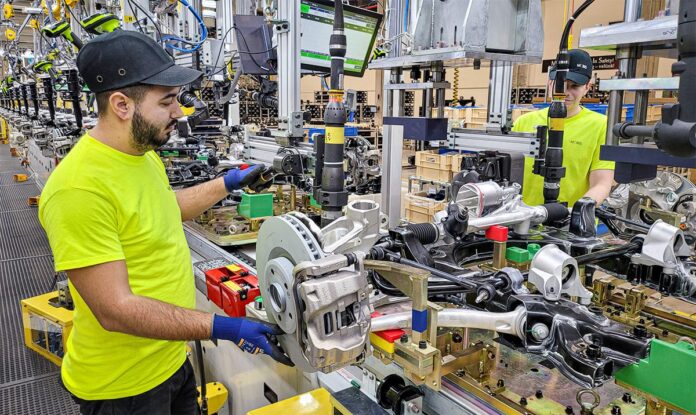
The new production base in Kecskemet, which is now fully operational, is located in central Hungary near the customer’s site. Covering 50,000 square meters, the plant operates under the just-in-sequence (JIS) system, enabling real-time processing of production plans for immediate manufacturing and delivery.

Hyundai Mobis has been supplying front and rear complete axle assemblies to Mercedes-Benz through its Alabama plant in the US.

The Hungarian plant features flexible production lines capable of mixed production of electric, hybrid, and internal combustion engine components, enabling it to adjust rapidly to customer production plans.

Hungary is emerging as an automotive production hub in Eastern Europe to provide local supply to European automakers. The country produces more than 500,000 new vehicles annually. German manufacturers already operate production facilities in the country and Chinese automakers and battery companies are making large-scale investments. South Korean battery companies are also increasing their presence through additional investments.

Hyundai Mobis currently operates production bases in the Czech Republic, Slovakia, and Turkey to supply modules and core components to group companies Hyundai Motor and Kia. The plant in Hungary will serve as a dedicated production base for global customers.

The company is also preparing to begin full-scale operations at its plant in Spain this year to supply battery systems to an unnamed international automaker, bringing its total number of European production bases in Europe to five.

Source: Hyundai Mobis


Source link

Charged EVs | Blink Charging to deploy 200 EV chargers at 90 Korian retirement homes in Belgium

0


Korian Belgium, a provider of elderly care services, is working with Blink Charging on a nationwide EV charging project. Blink plans to deploy over 200 Blink-owned chargers across 90 Korian locations in Belgium. A similar roll-out for Korian Netherlands is planned.

Blink’s fully financed investment model will enable Korian to quickly add EV charging to its sites without upfront costs. Blink will be responsible for the complete lifecycle of the chargers—installation, operation, maintenance and customer support—while the sites generate a recurring income stream for Korian.

The new infrastructure will provide EV charging to Korian employees, residents, visitors, and the public at large. Several chargers are already in place at nursing homes and Korian office locations.

“With our smart charging technology, smooth user authentication and 24/7 customer support, we aim to provide drivers a high-quality charging experience at every location,” said Chris Carr, Senior VP, Sales and Business Development for Blink. “We look forward to having the majority of the planned countrywide network for Belgium installed by the end of 2026.”

“By teaming with Blink and moving forward with our EV infrastructure goals, we reaffirm our shared mission to bring a heightened level of convenience to the families and employees at Korian locations, and surrounding residents,” said Dominiek Beelen, Korian’s CEO.

Source: Blink Charging


Source link

Charged EVs | EGI Battery plans to start battery manufacturing in Michigan in Q3

0


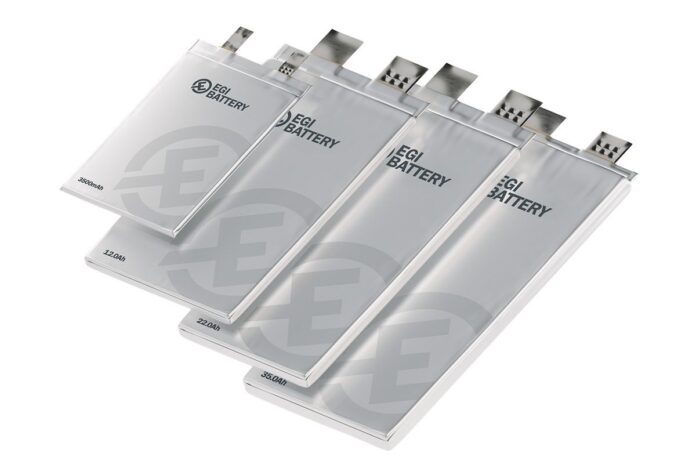
US-based advanced lithium-ion battery manufacturer EGI Battery has established its first US battery manufacturing campus in Ann Arbor, Michigan.

The Ann Arbor facility positions EGI to deliver high-performance, lithium-ion pouch cell batteries in line with the National Defense Authorization Act (NDAA) that will power drones, electric aviation, aerospace, and emerging technologies such as humanoid robotics.

The first footprint of the Zeeb Campus includes approximately 15,000 square feet dedicated to initial manufacturing and laboratory operations, as well as 5,000 square feet of office space, and access to 130,000 square feet of total building capacity to support long-term expansion.

The facility has been designed in a phased scale-up model that allows EGI to expand production in measured, performance-driven stages, according to the company. EGI is targeting Site Acceptance Testing by the end of the first quarter and expects to start production during the third quarter of 2026.

Phase 1 deployment focuses on electrolyte filling, aging, sealing, folding, formation and grading operations. The initial production line is designed for 1 part per minute (ppm) filling and formation throughput, supporting up to 300,000 cells annually at full three-shift operation, which is equivalent to approximately 40 MWh of annual capacity. The 40 MWh capacity target is calculated using EGI’s commercial nickel manganese cobalt (NMC) lithium-ion pouch cell built for Class 1 and Class 2 drones delivering 35 Ah capacity.

The Phase 2 expansion, which is scheduled to begin in 2027, will vertically integrate additional core processes to include all stages from electrode making to cell assembly and final formation. Upon completion, throughput is expected to reach 2 ppm and support up to 600,000 cells annually for approximately 80 MWh of annual capacity.

EGI designs and manufactures battery cells using a technology portfolio that includes silicon-enhanced and graphite anodes as well as application-specific, client-bespoke battery formats designed to OEM system requirements.

The company is building the campus and its workflows to comply with ISO 9001 and AS9100 quality certifications while ensuring at least 95% NDAA-compliant materials by cost in 2028.

“The Zeeb Campus represents the operational foundation of EGI’s long-term manufacturing strategy,” said Thomas McGuckin, CEO and Founder of EGI Battery. “We are building scalable, high-yield production capabilities in Michigan to serve mission-critical industries that require a secure supply chain for domestically manufactured batteries. Our phased expansion model allows us to expand production capacity responsibly while maintaining performance, safety, and product quality leadership.”

Source: EGI Battery


Source link

Charged EVs | Michigan battery plant auction includes automated pouch-cell lines, cleanrooms and pack assembly systems

0


BidItUp Auctions Worldwide is set to auction equipment from a former lithium-ion battery manufacturing facility in Midland, Michigan, in a six-day live virtual sale running March 31, April 1-3 and April 7-8.

According to BidItUp, the equipment comes from a 400,000-square-foot battery plant that had been used for EV and energy storage applications. The company says the site includes Class 10,000 to Class 1,000 clean and dry rooms, integrated automated production lines, and high-volume pouch-cell manufacturing infrastructure.

Highlighted assets include automated battery module and pack assembly lines, cathode and anode slurry mixing systems, coating lines, formation and grading systems, and lab and QA equipment. BidItUp also says the plant includes largely symmetrical pouch-cell production systems with two parallel anode and cathode lines capable of both NMP-based and aqueous processing.

“This auction presents a unique chance for global manufacturers to immediately access advanced lithium-ion production infrastructure without the long lead times associated with building new facilities,” said BidItUp CEO Tara Shaikh.

Source: BidItUp Auctions


Source link

Charged EVs | New e-HYDRIVE hybrid drum drive system powers cement mixer operation without engine idling

0


Revolution Concrete Mixers and London Machinery have developed a hybrid drum drive system that’s designed to power cement mixer operation without engine idling.

The new e-HYDRIVE system addresses “one of the ready-mix industry’s most persistent operational challenges”—unnecessary idling during loading, waiting and pouring—and also reduces fuel consumption and emissions.

The e-HYDRIVE is designed to deliver full drum performance at the job site with the chassis engine off. Early field testing demonstrated measurable reductions in idle time and fuel consumption across daily production cycles.

Traditionally, mixer trucks must run the chassis engine to power the drum during loading, waiting, and pouring. The hybrid system charges the battery while the truck is driving, then powers the drum electrically (the truck can also operate traditionally if needed).

Designed for both new builds and retrofits, e-HYDRIVE is designed to require no significant modification to existing mixer components, allowing seamless integration in active fleets while minimizing downtime.

“Our customers have consistently told us they need practical electrification solutions that work in real production environments,” said Executive VP Bryan Datema. “e-HYDRIVE reduces unnecessary idling, lowers operating costs, and prepares fleets for the future of electrified chassis platforms without disrupting daily operations.”

As part of its development, e-HYDRIVE has operated in active production environments with Amrize, a concrete producer known for evaluating emerging technologies. This collaboration allowed Revolution | London to validate durability, usability and real-world performance under demanding operating conditions.

“This has been a long-term testing effort across multiple generations of the system,” said Ian Paine, Amrize. “Innovation at this level requires commitment, iteration, and a willingness to stay engaged until the value is clear.”

“Electrification in concrete delivery is not a distant concept—it’s happening now,” said Bob Monchamp, President, Revolution Concrete Mixers and London Machinery. “Solutions like e-HYDRIVE help set the foundation for the next era of mixer technology and accelerate the next generation of sustainable concrete delivery.”

Source: Revolution Concrete Mixers and London Machinery


Source link

Charged EVs | Chinese researchers devise high-energy, low-temperature battery based on hydrofluorocarbon electrolytes

0


Researchers from the College of Chemistry at China’s Nankai University have announced a battery breakthrough using a new type of electrolyte.

In “Hydrofluorocarbon electrolytes for energy-dense and low-temperature batteries,” published in the journal Nature, the team explains how they designed and synthesized a series of new fluorinated hydrocarbon solvent molecules with fluorine coordination. Based on this, they constructed an electrolyte system that replaced the traditional lithium-oxygen coordination in electrolytes, enabling a 700 Wh/kg lithium metal battery to achieve reversible cycling.

Oxygen atoms have long been regarded as indispensable elements in the solvents of electrolytes. “Current lithium-ion battery electrolytes are usually composed of lithium salts and carbonate solvents,” the researchers explain. “The ion-dipole interaction between lithium and oxygen in the carbonate solvents can promote the dissolution of lithium salts. However, this solvent has poor wettability and requires a large amount, which makes it difficult to further increase the energy density of the battery. The strong interaction also hinders the interfacial charge transfer in the battery and limits low-temperature performance.”

The Nankai team tested the new electrolytes in lithium metal pouch cells, and were able to achieve specific energy exceeding 700 Wh/kg at room temperature and ~400 Wh/kg at -50° C. These hydrofluorocarbon (HFC) electrolytes thus offer a scalable solution for batteries operating in extreme cold.

Source: Nankai University


Source link

Charged EVs | BYD unveils 1,500 kW EV charging station to go with its 450-mile EV battery

0


Last week, Chinese EV-maker BYD introduced its Blade Battery 2.0, which it says will deliver a range of over 1,000 km (that’s according to China’s CLTC rating system—using the US EPA’s testing system, it probably amounts to a still-impressive 725 km, or 450 miles), and can be charged in just 10 minutes. Of course, charging at such speeds would require a new type of charging station, and now BYD has unveiled that too.

BYD says its new “flash charging” system can deliver up to 1,500 kW of charging power, making it possible to charge a Blade Battery from 10% to 70% in just five minutes, or from 10% to 97% in nine minutes.

Yes, the term “game-changing” gets thrown around a lot, but if any new tech deserves that epithet, this is it. At a stroke, BYD has destroyed any remaining practical reason to buy a legacy gas vehicle. A Blade battery can theoretically deliver as much range as a full tank of gasoline, and a flash charger could charge up that battery faster than you can fill that tank. Oh, and by the way, the new battery is cheaper than the previous generation.

Now, when an obscure startup announces a new super-duper battery tech (as Finnish firm Donut Labs recently did), skepticism is the order of the day. But this is the world’s largest manufacturer of EVs we’re talking about, and the company says the new battery is ready to be installed in 10 production models, including the Yangwang U7, Denza Z9GT, Seal 07 and Sealion 06. The flash charging speed is not unprecedented—it’s basically a 50% improvement on BYD’s 1,000 kW Super E-platform, which it unveiled last year. And the company says it already has 4,239 flash chargers in service, and plans to install 20,000 of them by the end of this year. (It’s not clear whether these will deliver the full 1,500 kW or not, but even 1,000 kW would be almost triple the charging speed generally available here in the West.)

BYD’s flash chargers also feature a novel overhead design that could make the charging plugs more accessible and more secure. At the new stations, the cables hang down from a sliding rail attached to a T-shaped overhead rack, allowing drivers to plug in on either side, and enabling pull-through charging for cars with trailers or for trucks. This also keeps the cables off the ground, minimizing the chances of damage.

Source: Electrek, BYD


Source link

Charged EVs | Xos to roll out V2G capability across its full commercial EV lineup

0


Commercial EV builder Xos has announced V2G (Vehicle-to-Grid) production beginning in April 2026 on a major electric school bus platform in North America, and plans to add bidirectional capability to its entire product portfolio, including step vans, powertrains and energy storage solutions.

Xos will begin production this April with bidirectional charging on a school bus platform serving tens of thousands of routes across the US. Fleet vehicles entering production at this stage will be able to discharge stored energy back to the grid during peak demand events, opening a direct revenue stream for school districts and operators without requiring hardware retrofits. (This capability does not retroactively apply to existing Xos vehicles already in the field.)

By embedding bidirectional capability at the depot level, Xos enables fleets to reduce peak demand charges, defer infrastructure upgrades, and participate in utility demand response programs.

Commercial fleets present excellent use cases for V2G deployment. Vehicles follow predictable schedules, and return to a central depot each night. In particular, school buses typically sit idle outside of morning and afternoon routes, so stored energy can be made available to the grid for extended periods without affecting daily operations.

“V2G is a fundamental shift in how commercial fleets create value,” said Dakota Semler, CEO of Xos. “Starting with one of the most widely deployed vehicle platforms in America and extending across our full product catalog, we are turning new Xos-powered depots into a grid asset. With production beginning this April, we’re delivering the ability to generate revenue, cut peak demand costs, and strengthen community energy resilience without adding complexity to daily operations.”

“The engineering challenge with V2G at commercial scale is not just bidirectional hardware. It is building the capability to manage energy flow across vehicles and sites without disrupting daily operations,” said Saleh Heydari, Chief Technology Officer of Xos. “We designed this to handle predictive scheduling, depot-level coordination, and utility integration, making V2G operationally seamless and financially meaningful from day one.”

Source: Xos


Source link

Charged EVs | Carrar says its immersion-cooled battery architecture stops thermal runaway even with a cell above 800 °C

0


Carrar says testing at its R&D lab showed its Two-Phase Immersion Architecture can prevent thermal propagation between high-energy NMC pouch cells even under extreme failure conditions. In the test, a 72 Ah pouch cell was driven into thermal failure with a temperature rise exceeding 15 °C per second, and the triggered cell rose above 800 °C, while an adjacent cell remained at about 50 °C, according to the company.

The company says the result demonstrates complete prevention of cascade failure—a major safety hurdle for both battery energy storage systems and EV packs. Carrar’s approach submerges battery modules in a dielectric fluid engineered to boil at specific temperatures. Under normal operation, the company says the phase-change cooling keeps cell temperatures uniform and avoids hotspots; under failure conditions, the fluid’s latent heat absorption is meant to soak up thermal spikes quickly enough to stop propagation.

Carrar is also tying the result to tightening safety standards. The company says its architecture exceeds the requirements of China’s GB 38031-2025 standard, which will require zero fire and zero explosion for two hours following thermal runaway, as well as the direction of UL9540A:2025 for stationary storage. Carrar says its system does this passively, without requiring sensors, suppression systems or other active intervention.

“We’re seeing the triggered cell hit catastrophic temperatures while adjacent cells remain near ambient,” said VP Product Bar Ben Horin. CEO Eitam Friedman said the company expects its BESS systems to be commercially ready by the end of 2026 and that it is already working with automotive partners on multi-year programs.

Source: Carrar


Source link