Wednesday, April 22, 2026
7.3 C
London
Home Blog Page 15

Charged EVs | Dealerships sue Volkswagen over plans to sell Scout plug-in vehicles directly to consumers

0


In the Internet Age, consumers have gotten used to buying products directly from their makers, and many see the traditional arrangement by which automakers can sell their wares only through independent dealerships as a vestige of a previous century.

“Not so!” say dealers. “We provide essential product information and after-sales service.” But EVs require less service than legacy vehicles, and most (not all) dealers have done a poor job of educating car buyers about EVs. Dealer groups have also actively lobbied against pro-EV policies.

Newer EV-only brands (Tesla, Rivian) have been selling directly to consumers since their beginnings, and have fought lengthy legal battles to win the right to do so. Legacy OEMs might like to have a go at selling direct too, but this is more or less prohibited by law in every US state.

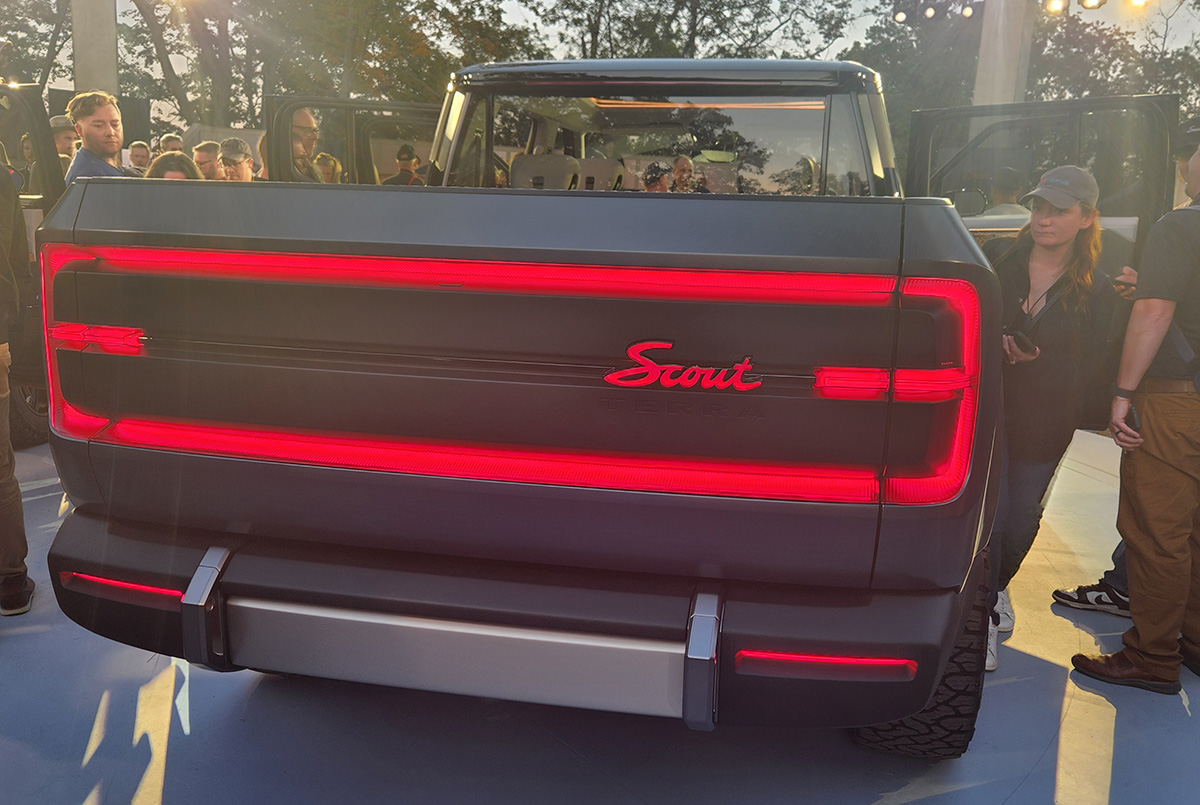
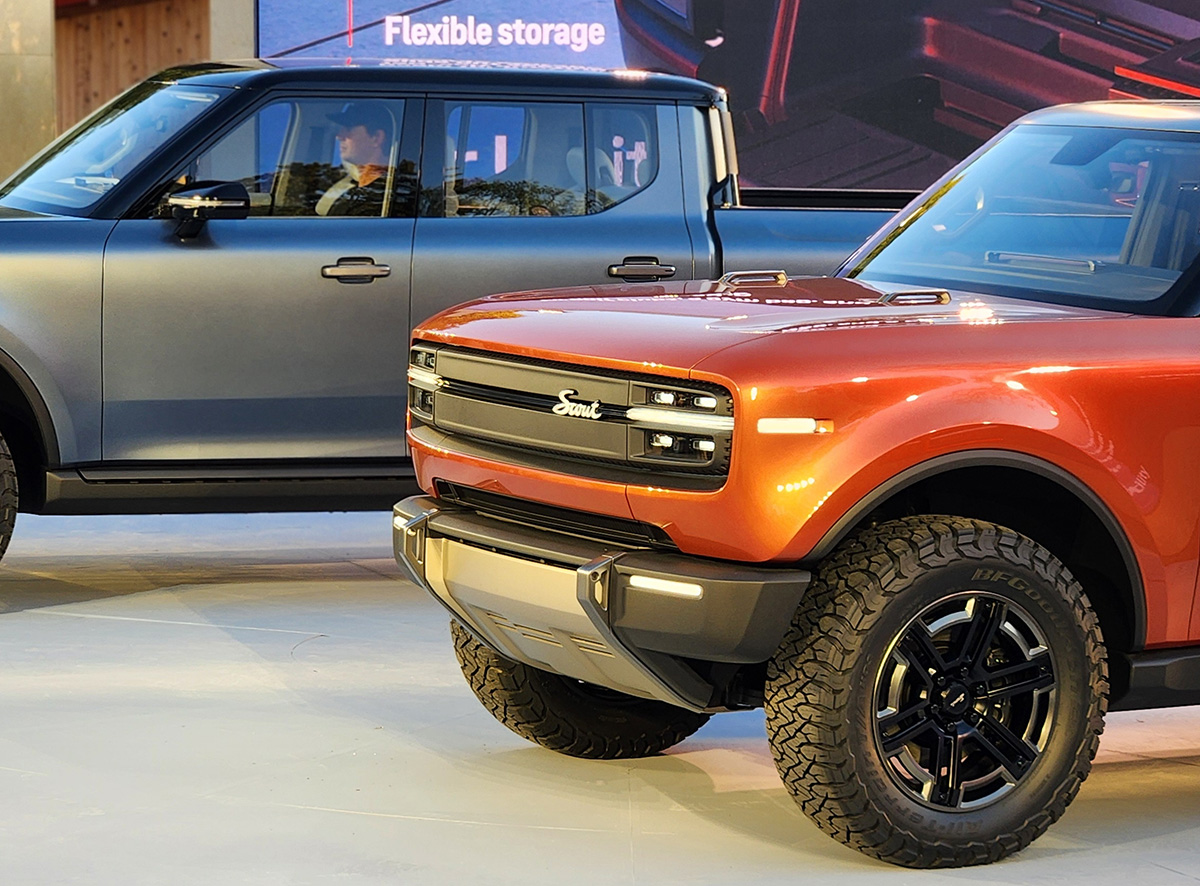
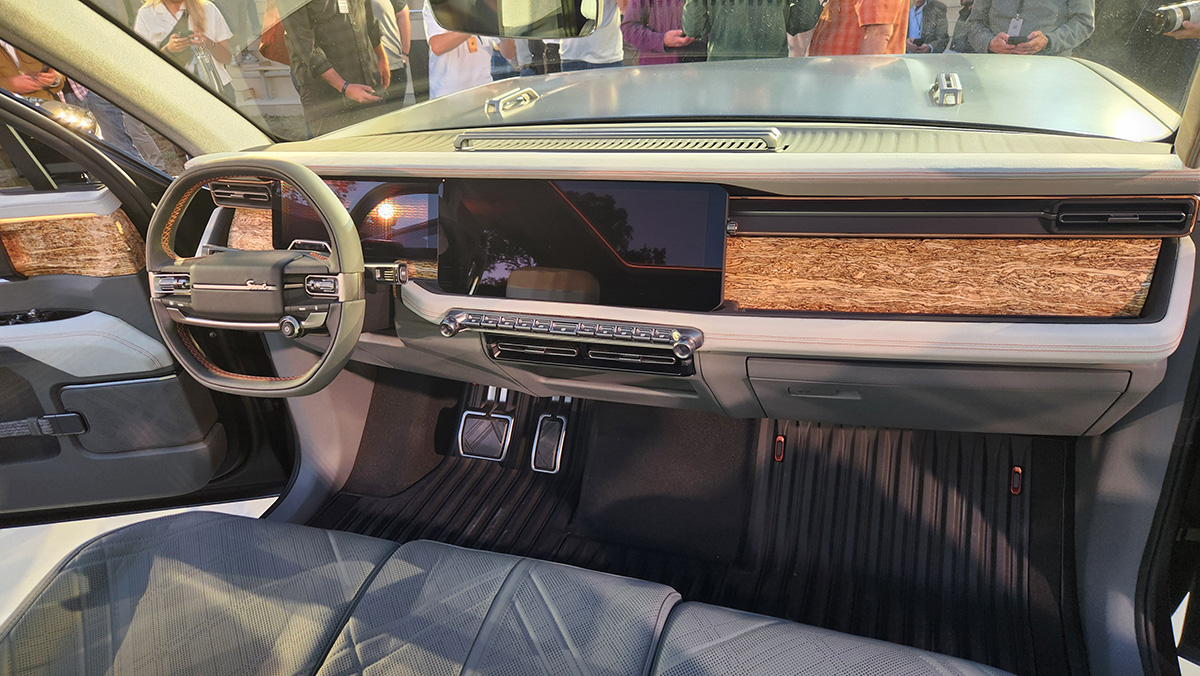
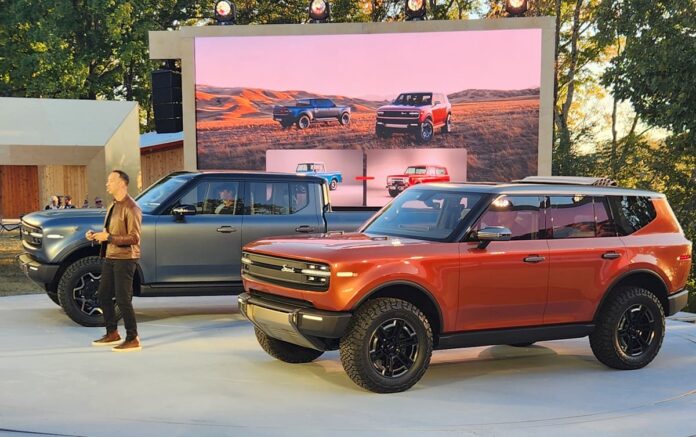
This hasn’t prevented OEMs from poking at the bricks of the venerable automaker/dealership wall. In 2025 Scout Motors, a new electrified-vehicle brand of the Volkswagen Group, announced plans to sell its EVs and PHEVs directly to consumers. Dealer groups immediately began organizing legal challenges. 
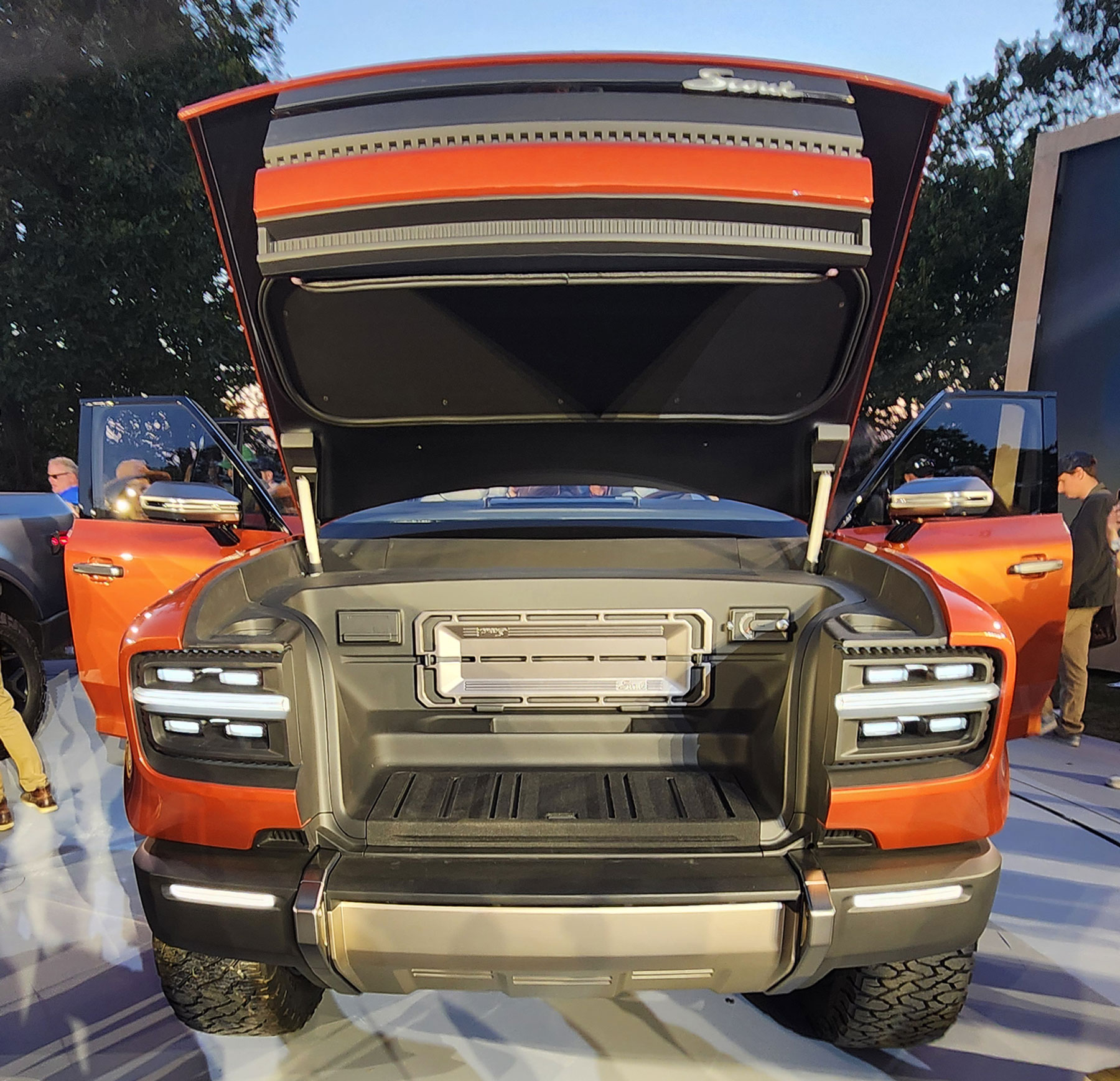
Photos by John Voelcker

Now, two Volkswagen dealerships (Sunrise Imports LLC of Long Island, New York and Curran Volkswagen Inc. of Stratford, Connecticut) have lodged a class-action lawsuit against VW, accusing the automaker of attempting to skirt its legal obligations under the Volkswagen Dealer Agreement by selling Scouts directly to consumers.

The lawsuit, which was filed March 3, 2026, in the US District Court for the Eastern District of Virginia, states: “To avoid these obligations, VW formed separate companies (defendants Scout Motors, Inc. and Scout Motor Sales LLC) to effectively act as shell corporations for distribution.”

According to the lawsuit, Volkswagen sought to shirk its legal responsibilities “based on the fiction that Scout is separate from Volkswagen,” despite Scout CEO Scott Keogh’s statement in a recent podcast that “100% Scout Motors is part of the Volkswagen Group.”

Law firm Hagens Berman has brought successful litigation against Volkswagen on behalf of dealership owners in the past. “We believe Volkswagen was fully aware of its legal responsibilities to dealership owners when it chose to sell Scout vehicles directly to consumers online,” said Managing Partner Steve W. Berman. “It appears that VW has violated its own contract with its dealerships…and we intend to uphold the contractual rights of these small businesses.”

Scout’s web site offers pre-production reservations for $100 a pop. According to the lawsuit, over 150,000 individuals have already paid for reservations.

“VW dealerships are accordingly being deprived of their right and ability to sell these cutting-edge vehicles,” the lawsuit states. “Not only are the dealers losing their opportunity to collect $100 from every purchaser and make a profit from the vehicle’s sale, they are also injured by lost opportunities to finance, service and repair the vehicles, and to cross-sale [sic] these and other VW vehicles.”

Of course, one of the reasons plug-in vehicle brands don’t want to sell through dealerships is that they don’t believe dealers really do want to sell cutting-edge vehicles (but may be happy to “cross-sell” gas vehicles to customers who come in looking for EVs).

Whichever way the court decides this case, it won’t be the last battle in this long war.

Source: Hagens Berman


Source link

Charged EVs | ION Storage Systems qualifies its solid-state battery cells with a customer—production to start this year

0


Solid-state batteries are gradually beginning to come out of the lab and into real-world use. Maryland-based ION Storage Systems started shipping sample cells to customers in the industrial, consumer electronics and automotive sectors last August. Now one of those customers has successfully qualified ION’s Cornerstone Cell.

“We have passed performance qualification with our customer using our Cornerstone cells and plan to start production here in Maryland,” said ION CEO Jorge Diaz Schneider. “We look forward to talking to more customers, helping them innovate without the restrictions of lithium-ion batteries.”

“Bringing a solid-state, anodeless battery out of the lab and into the real world is a company-defining moment for ION,” said Chief Technology Officer Dr. Greg Hitz. “Our unique combination of high-temperature stability and performance characteristics stands alone in the battery market.”

ION says its strategy of commercializing in applications where its technology delivers immediate value, as opposed to pursuing EVs first, is paying off. As Electrek’s Michelle Lewis notes, this approach mirrors the way lithium-ion batteries first entered the market in the early 1990s, beginning with consumer electronics before scaling up to larger formats used in EVs.

ION will supply the initial demand from its facility in Beltsville, Maryland, which is currently being expanded. The company expects production to begin in 2026.

Source: Electrek


Source link

Charged EVs | Group14 begins EV-scale production of silicon battery material in South Korea

0


Group14 Technologies has started EV-scale production of its silicon battery material, SCC55, at its newest factory in Sangju, South Korea.

The facility is designed to produce up to 2,000 metric tons annually, enabling 10 GWh of fast charging battery capacity as production ramps. SCC55 is used across electric mobility, grid-scale energy storage and advanced consumer applications.

Located close to battery manufacturers in Asia, the Sangju factory extends Group14’s manufacturing footprint, operating alongside the company’s commercial factory in Woodinville, Washington. A second US facility in Moses Lake, Washington, is nearing completion.

Group14 obtained full ownership of the plant, which was established as a joint venture with South Korean manufacturing conglomerate SK, in August 2025, and raised $463 million in Series D financing to scale its manufacturing capacity in the US and South Korea.

Group14’s factories are designed to rapidly scale and drop in to commercial battery cell production lines easily, the company said. The factories are delivering battery materials to more than 160 customers worldwide. 

SCC55 offers roughly five times the energy capacity of conventional graphite anode materials, according to Group14, enabling one ton of SCC55 to replace approximately five tons of graphite. By reducing the volume of graphite required in battery production, SCC55 can help manufacturers to diversify supply and improve supply chain resilience.

SCC55 is compatible with multiple cell formats and chemistries, including lithium iron phosphate (LFP), lithium manganese iron phosphate (LMFP) and high-nickel systems.

“Our customers are building silicon battery cells with SCC55 and report reaching 0-100% recharge in 90 seconds, 50 times faster than traditional lithium-ion batteries, and other designs achieving over a 43% boost in energy density,” said Rick Costantino, Group14’s CTO and co-founder.

Source: Group14 Technologies


Source link

Charged EVs | NRCan awards Nano One $3 million to support LFP cathode material supply in Canada

0


Nano One Materials, a process technology company specializing in cathode active materials for lithium‑ion batteries, has been awarded $3 million from Natural Resources Canada (NRCan) under its Energy Innovation Program.

The company will use the funds to support ongoing process optimization, supply chain diversification and enhanced commercial offerings for the production of lithium iron phosphate (LFP) cathode active materials (CAM) using its One-Pot process through March 2028.

The process development work will focus on iron feedstock, using the Nano One R&D facility in Burnaby, British Columbia and its pilot and demonstration facilities in Candiac, Québec. Sumitomo Metal Mining, which is a strategic shareholder in the company, will contribute technical expertise, testing and external validation for the program. 

The One-Pot process is designed to enable cost-competitive input of alternative iron feedstock that can be sourced in various jurisdictions around the world, eliminating the need to source iron phosphate precursor materials while enabling diversification of LFP supply chains.

Nano One is optimizing the technology for the commercial production of LFP across three core markets: EVs, defense, and energy storage systems.

“These funds support us as we bring cost-competitive and scalable LFP processing technology alternatives to markets, strategic partners and customers around the world, and they help us enhance our commercial offerings and supply chain solutions,” said Dan Blondal, Nano One’s CEO.

Source: Nano One


Source link

Charged EVs | U Power’s electric trucks complete operational testing and battery-swapping system integration

0


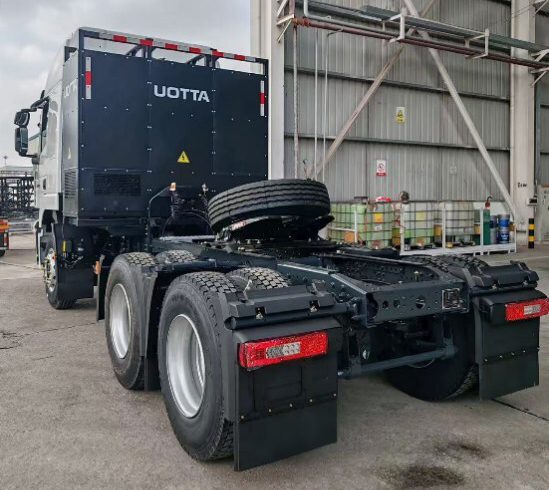
U Power has completed comprehensive operational testing and full-stack integration of the battery-swapping system for heavy-duty truck prototype vehicles it has designed for sale in Thailand.

The completion of testing marks a step forward in U Power’s collaboration with Thailand-based Whale Logistics to deploy 1,000 battery-swapping heavy-duty trucks in the country. The strategic partnership, which was formalized in December 2025, paves the way for the production and delivery of the first batch of heavy truck tractors by May 2026.

The battery-swapping heavy-duty truck project was jointly developed by U Power, heavy truck supplier SAIC Hongyan Automotive and technology company UNEX EV.

The prototype vehicles underwent three months of full-condition road testing, during which the key systems were thoroughly evaluated. Following full-stack integration, all technical parameters met design specifications and aligned with Whale Logistics’ requirements for electrified highway logistics transportation, enabling the companies to move to mass production.

Supported by U Power’s UOTTA battery-swapping solution, which enables battery swaps within minutes, electric trucks can match the operational efficiency of legacy fuel-powered trucks, the company said.

At the same time, vehicle operators can avoid substantial investments in grid expansion and charging infrastructure while eliminating concerns about battery performance degradation.

“Completing full-condition road testing of our pilot vehicles confirms the reliability and efficiency of the UOTTA battery-swapping model,” said Johnny Lee, founder and CEO of U Power. “Via the partnership with Whale Logistics, we are set to deploy 1,000 vehicles in Thailand to meet high-frequency logistics demand and boost operational efficiency.”

Source: U Power


Source link

Charged EVs | Tesla opens first Megacharger station to Semi customers in California

0


After years of development, Tesla is ramping up production of its electric Semi, and simultaneously beginning to roll out the necessary charging infrastructure. The company currently plans to deploy 66 Megacharger locations across the US.

Tesla already has two Megacharger sites operational—one at Gigafactory Nevada and one in Carson, California. However, these appear to be designed to serve Tesla’s own fleet operations. Now the company has opened its first Megacharger station aimed at Semi customers, in Ontario, California.

Tesla’s Megacharger locations are planned for the busiest freight corridors in North America: I-5 on the West Coast, I-10 running east-west, and I-95 and I-75 on the East Coast. The company aims to have 37 sites operational by the end of 2026, and 46 sites by early 2027.

The Ontario site is in the heart of the Inland Empire, one of the busiest freight corridors in the world, strategically located near the junction of I-10 and I-15, as well as the Ports of Los Angeles and Long Beach.

Tesla’s Megachargers can deliver up to 1.2 MW of charging power, but the company says this first public Megacharger cranks out only 750 kW.

Electrek’s Fred Lambert calls the opening of the Ontario Megacharger a significant step that marks the Semi’s transition from the pilot phase to commercial operation. The company has been moving at an impressive pace in recent months, demonstrating 1.2 MW charging in December, announcing a deal with truck stop operator Pilot in January, and opening its first customer-facing station in March (shades of the good old Tesla!).

However, as regular Charged readers know, there’s many a bottleneck between planning and plugging in, from permitting to utility interconnection to construction to commissioning. Electric truck fans will be following Tesla’s timeline closely over the next couple of years.

Meanwhile, the company’s competitors have not been idle. Chargers based on the Megawatt Charging System (MCS), an open standard that supports charging speeds up to 3.75 MW, are already in operation in Europe and the US, and truck OEMs Daimler, Volvo and Scania all plan to deploy MCS-compatible electric trucks in 2026. EVSE manufacturer Kempower has deployed MCS charging hubs at three locations in Scandinavia, and one in San Bernardino, not far from Tesla’s new site.

Source: Electrek


Source link

Charged EVs | Harbinger unveils new electric/hybrid medium-duty work truck

0


Commercial EV manufacturer Harbinger has unveiled a new medium-duty, low cab forward (LCF) vehicle that is available in either an electric or plug-in hybrid configuration.

The new HC Series Cab is designed to deliver enhanced maneuverability, driver comfort, safety and operational cost savings. It doubles as a mobile power station to deliver sustained power for tools and equipment on the job site for prolonged periods.

The HC Series Cab has a 26,000-pound gross vehicle weight rating (GVWR). It can be upfitted with a variety of bodies, including cargo boxes, stake beds, flatbeds and more. The LCF architecture enables longer cargo boxes on shorter wheelbases, allowing fleets to increase usable cargo volume without increasing overall vehicle length.

Commercial EV startups have dropped like fruit flies over the last few years, but Harbinger CEO John Harris told Charged that his five-year-old company’s sales have been growing every quarter (read our January in-depth interview with Harris). He attributes the company’s success to specialization and vertical integration. Harbinger sells only stripped chassis in Classes 4, 5 and 6, a market in which today’s electrification technology is fit for purpose and cost-effective, and Harbinger faces little competition.   

Unlike EVs that are retrofitted from combustion engine platforms, all of Harbinger’s trucks are built from the ground up on the company’s vertically integrated electric architecture. Harbinger’s electric chassis includes all major vehicle systems, which the company designs and manufactures in-house, including the powertrain, battery system, steering, brakes and more. “This vertically integrated approach keeps costs low and provides a higher-performing, safer, and more durable solution than electric vehicles built upon legacy diesel and gasoline platforms,” the company explains.

Harbinger’s range-extended hybrid platform uses a gas engine to recharge the batteries, extending range up to 500 miles, depending on upfit configuration and drive cycle. The vehicle can also recharge its batteries while parked without external power. The platform supports full power take-off (PTO) functionality to operate hydraulic and body-mounted equipment. Harbinger is introducing an onboard AC inverter option that delivers up to 15 kW of exportable power on both EV and hybrid models, enabling crews to run external tools and job site equipment directly from the vehicle.

“The HC Series Cab represents a major expansion of our product line and a defining moment for the medium-duty industry,” said John Harris. “For too long, fleets have had to compromise between payload, maneuverability, range and onboard capability. We engineered this platform to outperform legacy diesel options while unlocking new advantages through electrification and our range-extended hybrid system to enable real work in the field.”

Source: Harbinger Motors


Source link

Charged EVs | Webinar: Reducing thermal interface material scrap—how Fujipoly is rethinking waste

0


Thermal interface materials are playing an increasingly important role in extending product lifetimes and improving energy efficiency—key contributions to a more sustainable society. However, many of these materials rely on thermoset polymers such as silicone, which cannot be reused and often end up as industrial waste.

As a leading manufacturer of silicone-based thermal interface sheets, Fujipoly works to minimize scrap at the customer level. Yet, production processes inevitably generate auxiliary material waste and product offcuts. Recognizing this challenge, Fujipoly has launched new initiatives to explore ways of reusing these byproducts, with the goal of closing the loop and advancing circular manufacturing practices.

Join us to learn how Fujipoly is rethinking waste and taking meaningful steps toward a more sustainable future in thermal management.

Mar 12, 2026, 12:00 pm EDT
Register now—it’s free!


See the complete session list for the Virtual Conference on EV Engineering here.

Broadcast live from March 9 to 12, 2026, the conference content will encompass the entire EV engineering supply chain and ecosystem, including motor and power electronics design and manufacturing, cell development, battery systems, testing, powertrains, thermal management, circuit protection, wire and cable, EMI/EMC and more.


Source link

Charged EVs | Saarland researchers use 3D-printed metallic glass motor parts to cut iron losses

0


Researchers at Saarland University say they have developed iron-rich amorphous alloys for electric motor components that can reduce remagnetization losses by eliminating the crystalline microstructure that causes internal friction and heat buildup in conventional soft-magnetic materials.

The project focuses on replacing coarse-grained crystalline iron alloys used in stators and rotors with metallic glasses containing 70% to 80% iron. According to Professor Ralf Busch, conventional motor losses rise as magnetic fields repeatedly reverse and force microscopic magnetic domains to reorient within a crystal lattice, creating hysteresis losses. In the amorphous materials, the lack of crystallites allows those magnetic regions to reorient more freely, which the researchers say dramatically reduces iron losses and heat generation.

The team says it identified three alloy compositions that resist crystallization while still meeting the requirements for additive manufacturing and motor use. The materials are processed by laser powder bed fusion, in which powder is melted with a laser and built up in layers about 50 µm thick to form fully amorphous motor parts without disruptive crystallites. The researchers say the approach could improve efficiency in devices such as e-scooters, drones and other small electric drives, while also avoiding critical alloying elements such as cobalt.

“The challenge now is to develop the process so that it works reliably in practice and at industrial scale,” said Professor Matthias Nienhaus. The work was carried out under the €3.5-million AM2SoftMag project funded by the European Innovation Council’s Horizon Europe Pathfinder Open program, with Heraeus AMLOY handling 3D printing of magnetic components.

Source: research-in-germany.org


Source link

Charged EVs | Moog Construction’s AEMS combines EV components to save space and cost

0


Motion and fluid control system specialist Moog has unveiled a new electronics system for electric construction equipment that combines EV components to save space and cost.

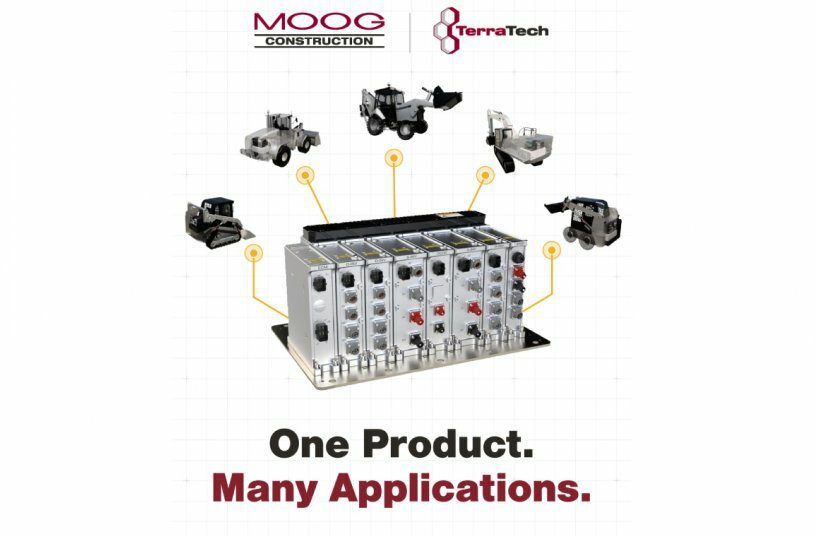
Moog’s Adaptive Electrification Management System (AEMS) is intended to help design engineers and product development teams at construction vehicle OEMs to electrify, automate and digitalize construction machinery efficiently and cost-effectively.

The patent-pending AEMS electronics system is currently featured in machines such as Bobcat’s Rogue X3. Moog describes it “a compact bookshelf” holding a configurable controller, DC/DC converter, high-voltage distribution, and single- and dual-axis inverters. This modular system is designed to enable OEMs to electrify and automate a broad range of machinery—from 6-ton compact track loaders to 25-ton excavators—with just one standardized part number per module.

“AEMS is the most efficient path to achieving electrification, automation and digitalization goals while slashing the cost and boosting the reliability of producing and servicing next-generation vehicles,” said Dr. Nate Keller, Moog’s Strategic Business Manager.

The system uses a high-voltage busbar and shared coolant manifold to reduce the number of cables and hoses by 30%, simplifying assembly and maintenance and reducing cost. Maintenance teams can quickly replace faulty modules on site.

AEMS also manages multiple EV functions with streamlined software architecture. Built-in diagnostics allow consistent system monitoring for traction, steering, lifting and more across machine platforms.

“We recently developed a machine for an OEM with AEMS, completing all system programming in under 15 minutes,” Keller added. “AEMS reduces testing and configuration time by up to eight hours and supports over-the-air software updates post-production to add new features seamlessly.”

Source: Moog Construction


Source link