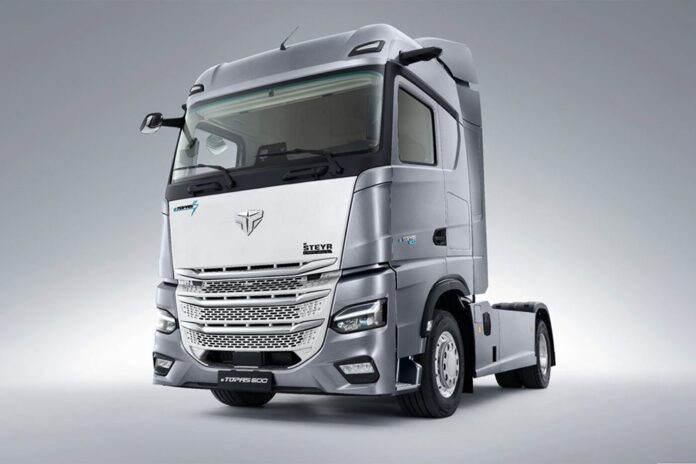
A new Chinese electric truck brand is stalking the European market. Electrive reports (in German) that startup SuperPanther plans to start selling electric semi-trucks in Europe this year.
SuperPanther will rely on a contract manufacturing arrangement with Steyr Automotive in Austria for European production, Frank Schulz, SuperPanther’s Europe sales chief, told Electrive. Series production is scheduled to start this summer, and the company plans to deliver 100 to 200 customer vehicles in Europe by the end of 2026.
Four-year-old SuperPanther is based in Xiamen, China, and already has “several hundred electric trucks” on the streets in the People’s Republic. Europe will be its first export region.
SuperPanther doesn’t want to be seen as the stereotypical Chinese manufacturer, flooding the local market with cheap goods, Schulz told Electrive. “We do not intend to [offer] price breakers—we want to convince with performance, added value and TCO.” SuperPanther plans to provide comprehensive service to its European customers, including charging solutions (in-house or through partners) and repair and maintenance through a cooperation with brand-independent provider Alltrucks.
SuperPanther’s eTopas 600 is built on a BEV-only platform. It’s a 4×2 tractor unit with an empty weight of 10.8 tons and permissible total weight of 42 tons.
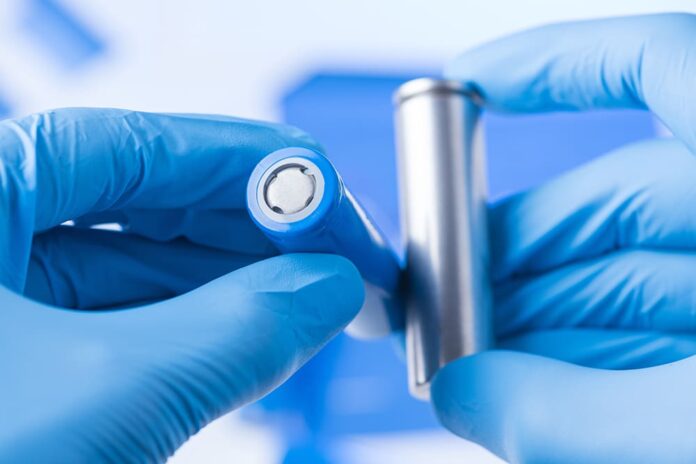
The battery technology comes from CATL, and is much the same as that of Daimler Trucks’ eActros 600. The LFP battery packs offer a gross capacity of 621 kWh, which is expected to deliver a range of 500 kilometers. The eTopas 600 is based on an 876-volt architecture and offers 394 kW continuous and 692 kW peak power in its twin-engine configuration.
SuperPanther’s truck sports dual CCS-2 charging ports, which will enable extra-high charging speeds at compatible charging stations. It’s also slated to be fitted with an MCS charging port.
Steyr Automotive will build the trucks from pre-assembled modules that include core components from China, as well as components from European suppliers including ZF, Schaeffler, Continental and Aumovio. SuperPanther is developing the e-axles, thermal management and software layer in-house, and plans to offer these solutions to third parties.
DHL has been named as the first potential customer—the logistics giant signed an MOU with SuperPanther in 2024.
Honeywell is integrating its AI-powered Battery Manufacturing Excellence Platform (Battery MXP) into the Alabama Mobility and Power (AMP) Center’s battery research lab at the University of Alabama, aiming to improve cell yields and speed up battery factory startups. The AMP Center says the deployment will also support workforce training for battery manufacturing and electrification.
Battery MXP is positioned as an automation platform for battery production that can scale “at any scale,” and Honeywell said it will be the AMP Center’s exclusive automation platform for guiding manufacturers on how to scale cost-effective, high-quality batteries.
“The deployment of Battery MXP supports Alabama’s automotive industry while advancing solutions for data center growth, grid stability, and the state’s long-term electrification and economic development goals,” said AMP Center executive director Mike Oatridge.
Honeywell said it is also working with FOM Technologies at the AMP Center to optimize electrode production within Battery MXP, describing electrode production as one of the most challenging stages of battery manufacturing. The AMP Center battery research lab is expected to open in Q2 2026 and is expected to be one of the first pilot battery production sites available to external organizations.
The push for cleaner energy supply is a driving force for developing new hydrogen technology and adapting existing infrastructure to support it. Since direct measurement is often impractical or even impossible when it comes to hydrogen and fuel cell R&D, modeling and simulation is a useful solution.
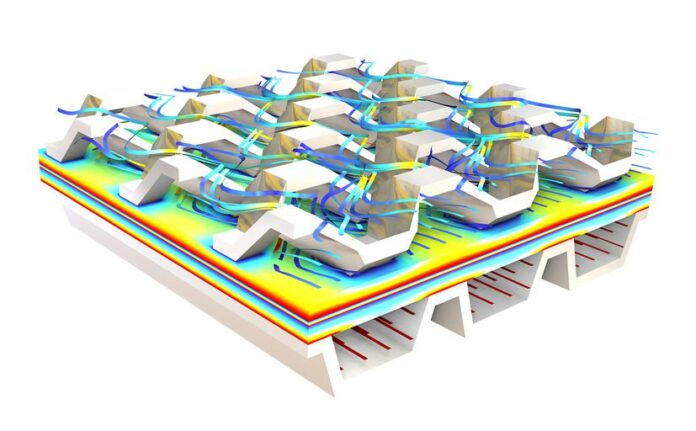
In this webinar at next week’s Virtual Conference on EV Engineering, presented by COMSOL, we will share four examples of using the COMSOL Multiphysics® simulation software to model electrolyzer and fuel cell designs, where the goal is to optimize their performance under specific operating conditions. For each example, we will cover the main steps for creating the model as well as results visualization and analysis. The presentation includes a live demo of setting up and solving a model in the software. Note that COMSOL will follow up with all registrants about this event and any related questions.ed.
Broadcast live from March 9 to 12, 2026, the conference content will encompass the entire EV engineering supply chain and ecosystem, including motor and power electronics design and manufacturing, cell development, battery systems, testing, powertrains, thermal management, circuit protection, wire and cable, EMI/EMC and more.
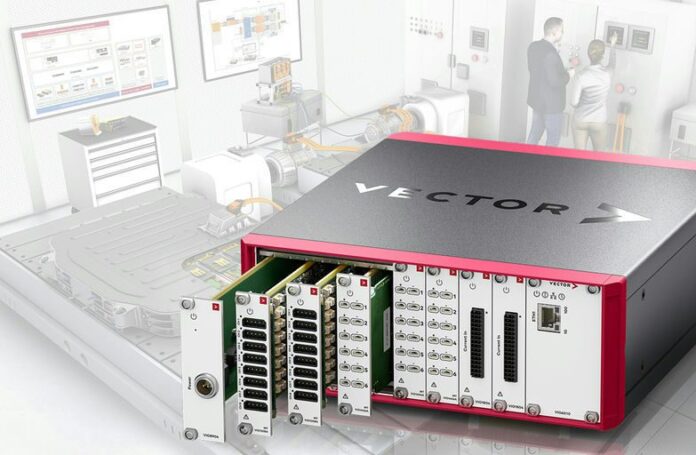
Two things are important for calibrating control units and performing analog measurements in the workplace or laboratory: it should be compact yet have many ports.
The VIO system offers exactly that. Depending on the requirements, a rack can be equipped with 12 slots that can be fitted with different measurement cards as required.
Join this webinar at next week’s Virtual Conference on EV Engineering, presented by Vector Informatik, to learn how connecting to the powerful vMeasure analysis software enables high-channel measurement tasks to be performed efficiently and reliably.
Broadcast live from March 9 to 12, 2026, the conference content will encompass the entire EV engineering supply chain and ecosystem, including motor and power electronics design and manufacturing, cell development, battery systems, testing, powertrains, thermal management, circuit protection, wire and cable, EMI/EMC and more.
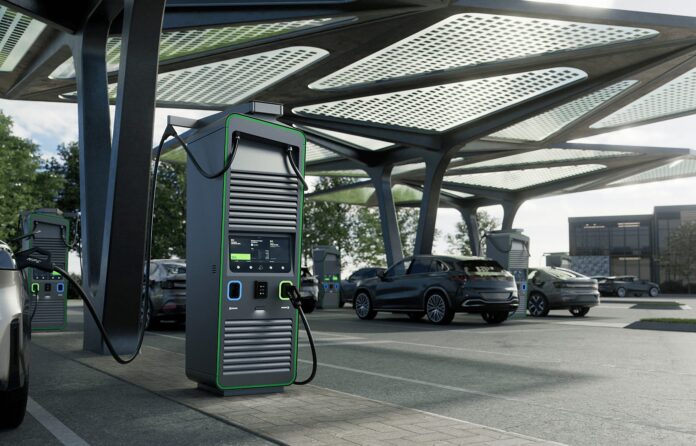
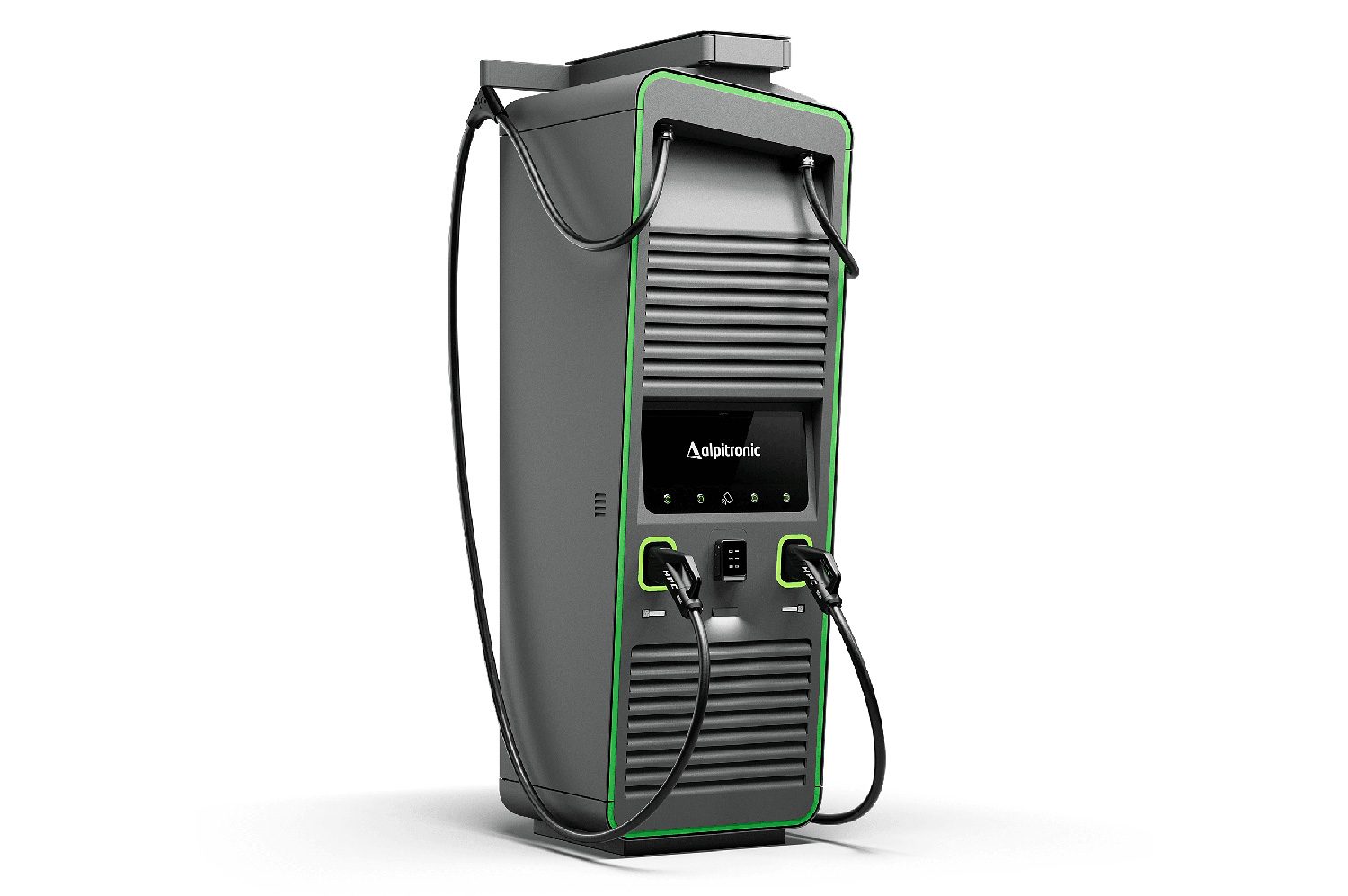
Alpitronic has introduced the HYC400 Series 2, a new version of its HYC400 all-in-one DC fast charger that keeps the same 400 kW maximum output but puts the emphasis on usability, accessibility, and day-to-day operational clarity at public charging sites.
The most visible change is a front-facing, lowered display paired with a redesigned user interface that guides drivers through charging in a step-by-step format. Alpitronic says the system can be controlled via touchscreen and physical controls, helping reduce operating errors and improving accessibility for a broader range of users, including wheelchair users. Integrated lighting is also intended to improve orientation and safety, particularly at night and at motorway sites.
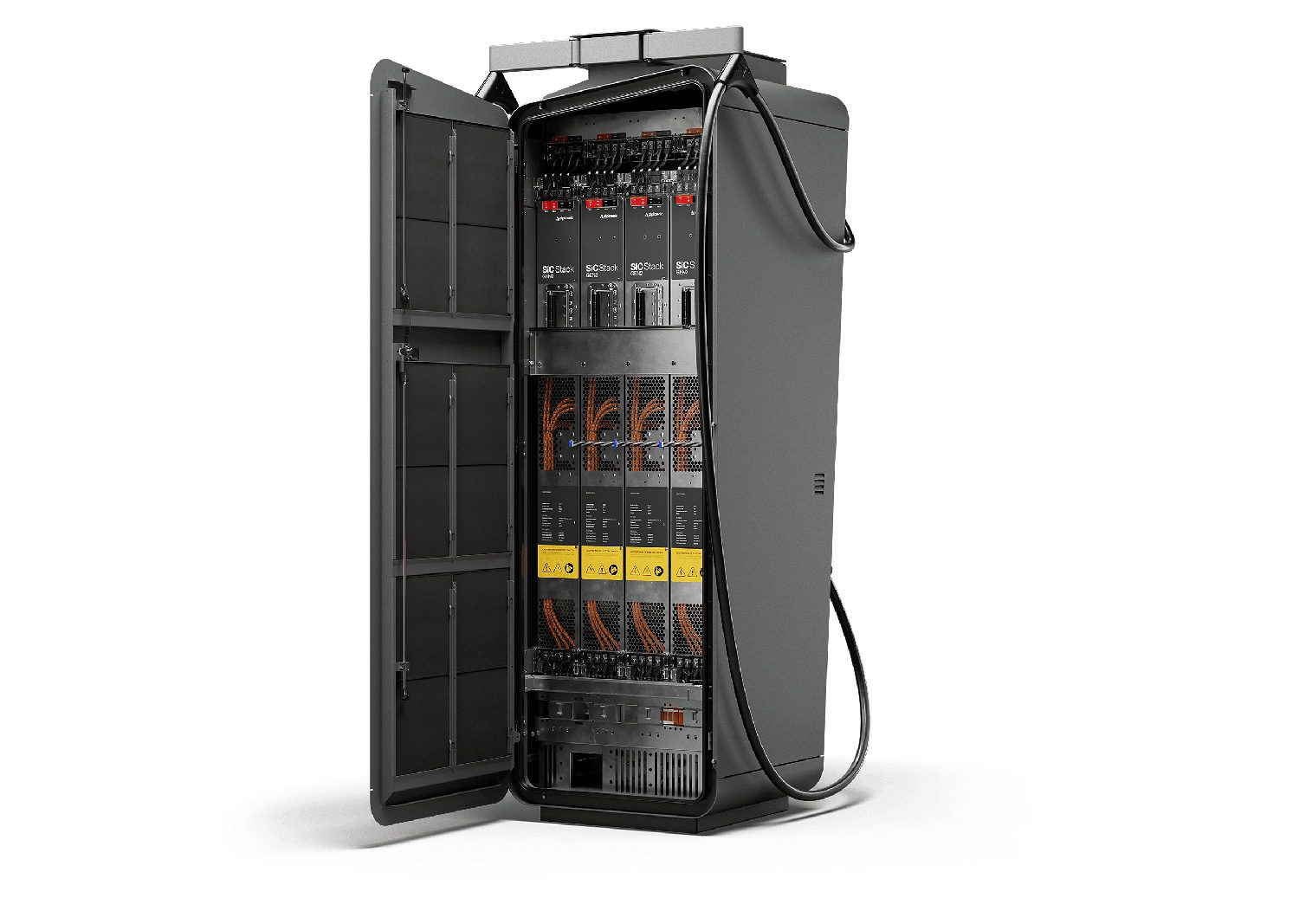
On the powertrain side, Alpitronic says the charger delivers up to 400 kW, with two parallel outputs providing up to 600 A continuous each, and supports a 150 to 1,000 V operating range. Power delivery in 50 kW increments is designed to help operators match output to different vehicles and use cases. The company also claims over 97.5% efficiency, and says the unit uses its SiC Stack Gen 2 power electronics, also used in the HYC1000 megawatt charging system.
“In public charging operations, reliable and intuitive user guidance is as important as charging power in kilowatts,” said CEO Philipp Senoner.
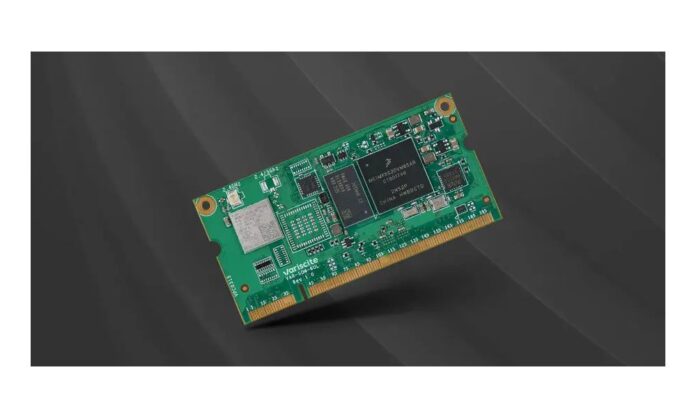
A US-based EV charging station manufacturer cut its development timeline by about 50% after adopting a system-on-module (SoM) platform from Variscite, according to a case study published by the embedded computing vendor.
Variscite is pitching its SoMs as a faster path to production hardware for EVSE makers, with pin-compatible module families that let developers upgrade performance or features without redesigning the carrier board. The company says its Pin2Pin families share a common pinout architecture so a supplier can “swap in” another compatible SoM as requirements change, or build different charger configurations (commercial vs residential) around a common hardware and software framework.
The system supports industrial operating temperatures (-40 °C to +85 °C), cybersecurity features and ISO 27001 certification, plus “extended longevity guarantees.” Variscite says its in-house manufacturing lets customers customize modules to specification, including in smaller orders “as small as 20 units,” and can help stabilize lead times during component shortages.
“Variscite SoMs are designed to power critical EV charging infrastructure at scale, providing a rugged, cost-effective platform that gets developers to market faster,” said Ofer Austerlitz, Variscite’s VP of Business Development and Sales.
EV charging becomes an essential corporate service.
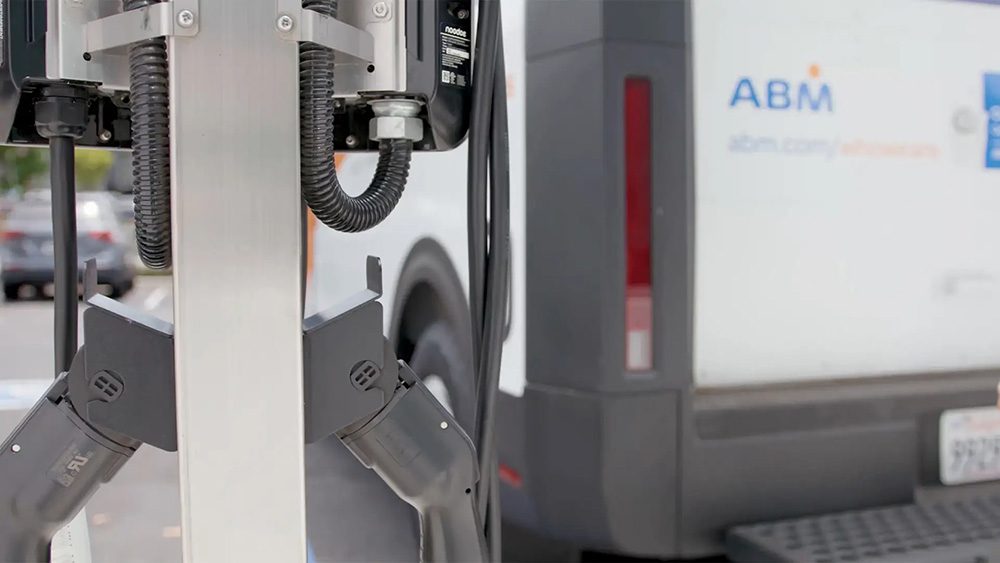
“Focus on your core business” is a tried-and-true business maxim. Companies large and small rely on service providers to take care of logistical tasks so they can concentrate on whatever it is they do to generate profit. That’s what ABM is all about—it provides a vast array of services for companies, from cleaning and maintenance to installing and running building systems like HVAC to managing mailrooms.
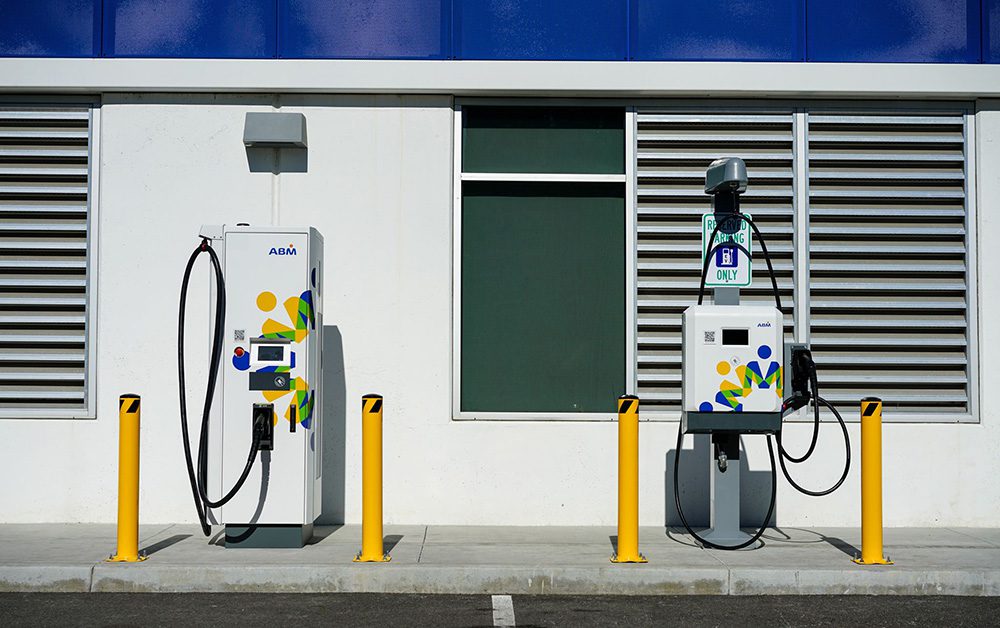
Among ABM’s many offerings are transportation-related services such as managing vehicle fleets and parking facilities. As companies have begun to electrify their vehicle fleets, ABM has developed an extensive range of EV-related services, including a turnkey EV charging package that lets customers outsource their EV charging infrastructure.
Over the years, Charged has covered many companies that provide individual layers of the EV charging infrastructure “stack,” as well as those that offer the complete package—charging as a service. However, most of these have been fairly new companies that were formed specifically to address EV charging, and their target customers tend to be companies that are in the business of operating fleets. ABM is a player in a much larger ecosystem—EV charging infrastructure and fleet management is just one part of its portfolio of services, and its EV charging customers could include just about any organization that operates vehicles.
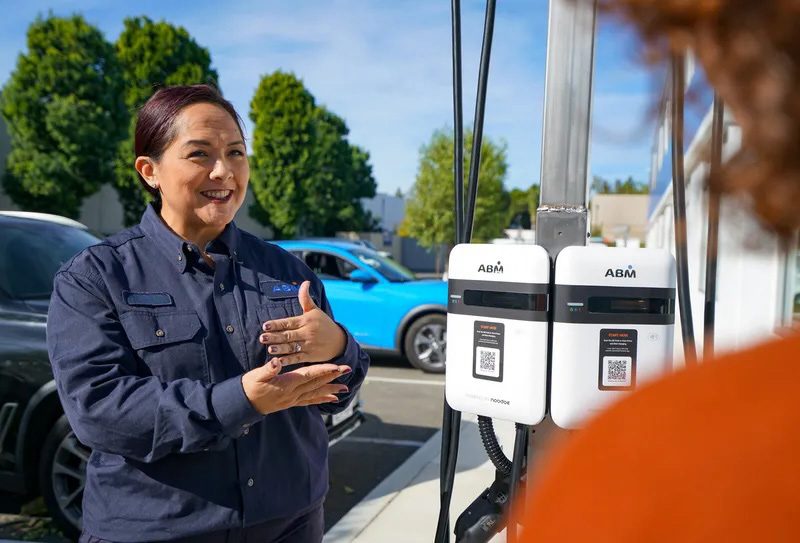
Charged spoke with Satish Jayaram, ABM’s Senior Vice President of eMobility.
Charged: How long has ABM been in the EV charging game, and who are your typical customers?
Satish Jayaram:The charging infrastructure business at ABM started a little over ten years ago. For the first seven or eight years we were heavily passenger car-focused. The two segments that existed at the time continue to exist inside our eMobility portfolio. The first is what we call parking as a segment. This can be a parking garage, an airport, a place of employment…anything other than residential, because we don’t cover residential. Wherever you park your vehicle and need charging infrastructure.
The second segment was OEMs. We had a host of OEMs like the Fords, the GMs, the Chryslers, that were introducing electric vehicles and needed their supply chains and dealerships electrified. We deployed over 30,000 chargers over the first 8-10 years. We started seeing the introduction of commercial vehicles from 2022 on, and we’ve significantly pivoted our business to address Class 2 through Class 8 vehicles.
Over the last couple of years, we’ve been focused on private fleets. Corporate fleets have strong synergies with ABM because we service corporations from a facilities perspective. That was a synergistic space for us, corporate fleets that are electrifying, and also public infrastructure such as school bus fleets, transit fleets, port fleets. The vast majority of our business today is fleets.
Charged: And I imagine you provide other services for those fleet operators beyond just EV charging.
Satish Jayaram:Yes. In the EV charging space, we do complete design and build for fleets, as well as operations and maintenance. We take it from a conceptual design all the way through procurement and construction. And we have a central network operations center that delivers a Service Level Agreement (SLA) to the fleet operator through the life cycle of the infrastructure. We have a network operation center in Cummings, Georgia, and we have field engineers that service and support the depots for whatever the SLA is.
In terms of other services that we provide, several of these customers we touch in one form or fashion from ABM’s core integrated facilities management. In many of these examples, we are providing mechanical services, integrated facility services for depots and for the parent entity, so there’s a fair bit of synergy with the electrification and technical services work that we provide.
We don’t provide vehicles. We have partnerships with third parties that will provide vehicles from a financing perspective.
Charged: Where does your subsidiary RavenVolt fit into the picture?
Satish Jayaram: RavenVolt is wholly owned, it’s integrated with our electrification business. RavenVolt provides the front-end design engineering—everything to do with getting power to the site, including any necessary utility power upgrades, which is more often than not the case, especially in the public fleet space. Oftentimes we find that customers want resiliency, so they need switchgear upgrades. In some cases, depending on the markets that they operate in and the utility jurisdictions they’re in, energy management is required, given the cost of electricity at varying times. RavenVolt provides all of the electrical infrastructure design, build and construction of the microgrid portions of the solution.
Charged: Microgrids are a hot topic. Tell us more.
Satish Jayaram:The way we think about microgrids is essentially three things. One is resiliency. How do we ensure to a fleet customer that the vehicles are charged when the shift starts at 6 am, or when you’re delivering a community service that’s really critical?
The second part of what the microgrid delivers is meeting the client’s stated sustainability goal.
And the third is economics. I’ll give you a good example. I was talking to a fleet operator last week, and they purchased a bunch of electric vehicles. They operated internal combustion vehicles for as long as you can remember, and this fleet manager said, “I’ve been doing this for 31 years. I know exactly how much diesel to buy, I know how much it costs on a per-mile basis. I can tell you in my sleep what all those numbers are, and how to hedge my fuel. Now I have all these electric vehicles coming in. I don’t know what the cost of power is, or how to manage my cost of electricity denominated by per-mile driven. It’s a whole new space for me.”
A part of the microgrid component of the electrical infrastructure is: how do we help customers and fleet operators get the most economic value of electricity from a cost-per-mile standpoint?
So, the third part of the microgrid component of the electrical infrastructure is: how do we help customers and fleet operators get the most economic value of electricity from a cost-per-mile standpoint? That’s the energy management piece, and that determines how you design the microgrid in a way that optimizes cost of electricity per mile.
A microgrid could be as simple as having a generator that provides resiliency, or it could be as complex as projects we’ve done that include solar, generators and batteries so you can optimize your type of charging, and reduce the shock to the grid when you have 50 vehicles that all plug in at the same time. Now, not all customers need all of these components—it’s going to be some combination of these things.
Fleet managers are very focused on the cost per mile—and not just the operational cost per mile, which is fuel and maintenance, but also cost per mile from a CapEx investment standpoint. How do I manage that through the life cycle of the asset?
Charged: I’ve heard a lot of stories about companies that just buy a bunch of EVs, and a year later they’ve got a mess on their hands because they didn’t properly design the infrastructure. Can you give me a case study about how you were able to solve a problem for a customer?
Satish Jayaram:I’ll give you a recent example. We were working on a school bus electrification project. The school district, because there were some funds available from the state and the federal government, purchased a bunch of electric school buses. The school buses showed up, and I think they had 16 Level 2 chargers for 70 buses. The perception was, “Hey, we could just install a few more chargers and we’re good to go.” But for that volume of electric buses, it’s not just putting on a few more chargers. There’s a whole bunch of infrastructure you need to build out, including getting an additional service line from the utility, and upgrading the switchgear. If you’re not a practitioner in the space, you don’t think about these things. How do I plan what the depot looks like and where the vehicles come in, because it’s not the same as internal combustion—you need to have spacing and bollards and striping with a certain amount of space between the buses to get the wires in.
There are a number of examples where vehicles precede the infrastructure, and construction does take time—it’s not something you can do overnight.
In this particular example, we came up with an interim solution for the client until we could build the permanent infrastructure. The answer was not to bring a bunch of diesel generators to power electric buses, because that fundamentally defeats the purpose from an emissions perspective, right? The short-term solution was to provide some batteries combined with propane generators. Propane generators have a significantly lower emissions profile than diesel or gasoline. The batteries in this case were the initial power source that was powered by the grid. In this particular use case that worked well, because you didn’t need as many generators. This use cycle, you’re running these buses from 6:30 in the morning to 3:00 in the afternoon on different shifts. So, the grid was connected to these batteries 24/7, and the backup was the propane generators.
Charged: What about vehicle-to-grid? Is that still a pilot-stage technology, or do you have any V2G applications in actual commercial use right now?
Satish Jayaram: We have pilot projects, but it is not broadly prevalent yet—it depends on the jurisdiction. Obviously electric school buses are a great application for vehicle-to-grid. And I would say, it is not a technology problem to solve as much as it is a distribution-grid interdependency and scheduling and reverse flow of power problem. You can do vehicle-to-grid from a pure charging and vehicle power flow standpoint. But there are other considerations, which is why utilities are really being thoughtful around how best to integrate these into the distribution side of the grid. There’s safety things that need to get resolved, there’s standards that have been written and are being piloted right now at several of the utilities.
Charged: You provide hardware and software as part of the charging infrastructure package. Do you create either of those things in-house, or are you doing a white-label thing?
Satish Jayaram: We provide hardware that best suits the application. We don’t do white labeling of hardware per se. We work with a leading group of hardware providers and have strong relationships with them. We’re not trying to push a particular hardware, but if we are doing the design and build, and we’re doing the operations and maintenance, we’re going to advocate for the hardware that we believe can deliver the full service life to the client. And that includes having parts and technicians that are trained and ready to work on that hardware.
From a software perspective, there’s a lot of EV OS software companies or network companies out there. Everybody has a different use case and a different profile, and there’s really good networks that meet what that client requires.
We are often finding, especially in the fleet space, that it’s not one network they’ve bought. They’ve got hardware with network A, network B, network C, three or four or five different depots. The value add that we bring is that it doesn’t matter which network you’ve picked—we will integrate all of that in a single pane of glass. You can see all the network operating systems on the chargers, the generators, the switchgear, you have eyes on all of it. Network companies really only focus on the hardware of the chargers, but we think about it from a systems perspective—how do we provide uptime to the client in a way that brings all the electrical infrastructure together?
Charged: So you use third-party hardware and software, but I suppose you do have some in-house software that coordinates it all?
Satish Jayaram: Yeah, there’s internally developed software that integrates the different components of the electrical infrastructure.
Charged: Tell us about your new EV ecosystem hub.
Satish Jayaram: Electrification center. EV is only one part of it. We invested in this electrification center to help drive more innovation across the whole tech stack—batteries, chargers, solar, switchgear, microgrid controls and a variety of charging hardware. What we do there is help clients simulate their end use cases. Say a client comes to us and says, “I’m thinking of buying 100 buses or trucks, and I need to have this infrastructure in place. Help me simulate what that would look like from an operational perspective.” We can plug in different components in the electrification center and show the client what to expect from the coordination and integration of multiple DERs and assets.
Another example: we’ve had clients come to us and say, “I have vehicle Type A, I’m thinking of vehicle Type B. Can you help us do interoperability studies around vehicle charging with different charger manufacturers?” We do a lot of interoperability testing work there. We can test utility interfaces and utility communications from an electrical infrastructure perspective. The other thing is simulating problems. If you have a charger problem, you can go back to our testing area and try to simulate the problem, so you can get to root cause analysis much faster than having to send a technician to Boise, Idaho.
It’s also a training center. We bring our field engineers there to take them through a training program. And we have a very large warehouse at the center, in addition to our network operations center. Putting those two pieces there helps us deliver high service levels to our customers, because you can see the infrastructure, you can triage it remotely, and we can have the warehouse ship a power module to the client overnight. It’s a fully integrated innovation, training and service delivery facility.
Charged: I’ve spoken with hardware manufacturers that have extensive interoperability labs where they test their chargers with different vehicles. But I guess that’s not enough, because you still have to do interoperability testing at your level.
Satish Jayaram: We do, and part of why customers come to us is because we don’t make the hardware. We’re pretty independent about it, because we don’t push any particular hardware. At last count, I think we had upwards of 25 different manufacturers’ hardware in there.
Charged: Is there any particular kind of hardware or vehicles that have real interoperability problems?
Satish Jayaram:Yes. Firmware is sort of the bane of the industry from a hardware perspective. Firmware never stays stagnant, and use cases change dramatically, so firmware changes happen a lot. It’s a constant exercise, because everyone is innovating and changing things across the ecosystem. Vehicle manufacturers are trying to drive more efficiency and more range with different battery products and battery management systems. Charging manufacturers are sometimes in lockstep, sometimes ahead of where the vehicle manufacturers are in terms of charging capability. Then you have the network side of things that’s evolving as well from an OCPP perspective. Keeping all three together, across multiple vehicle types and models, is a constant process of coordination, testing, retesting, revalidation.
Charged: I expect charging hardware has to be replaced every few years, not necessarily because it’s worn out but because it’s been made obsolete by new technology. How many years would you expect a charging installation to last before you have to rip and replace?
Satish Jayaram: Obsolescence versus performance are two different vectors. We’re sort of in the first wave of large-scale transition on the DC side, probably in the third wave on the AC side. There has been a step change on the DC side. Battery voltages have gone up significantly and charge rates and vehicle discharge rates are improving significantly.
The performance conversation is a little different—you could run DC chargers for five, seven, eight years. We’ve seen some of the early generation of DC fast chargers that are still operational. Utilization levels are what drives performance and reliability. We have a client that is running upwards of 85% in charging utilization—unheard of in the industry. But we also have customers that are on average, as you would expect, running 30-40% utilization. And the range between that significantly determines the lifespan of the asset.
Charged: What do you see as the most important trends in EV charging over the next few years?
Satish Jayaram: Despite what you hear and read about market conditions, the electrification of transport is an area that will continue to grow, and the fleet side of that is probably the most interesting space from an adoption perspective. The numbers speak for themselves. A lot of new vehicles are starting to come out between Class 3 and Class 8. The big thing we’re expecting to see is the Class 7 and Class 8 range of products that are coming out over the next couple of years.
Megawatt charging is a space that we will keep our eyes on and see what that looks like as standards start evolving and take root. And the challenge around the utility keeping up with that is an area that we are very keen on solving for. Between data centers, an aging grid and Class 6 through Class 8 electrification, we’re going to see all kinds of challenges. By putting our microgrid business and our EV charging business together, we’re able to provide power more quickly and seamlessly to electric infrastructure, and that’s where I think the market will need players like us to come in and innovate.
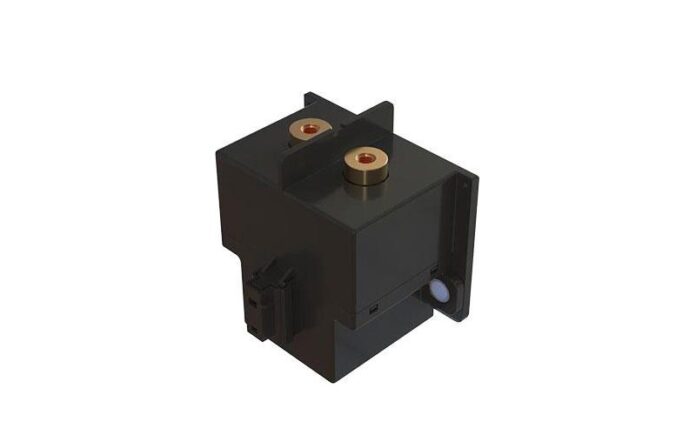
Sensata Technologies has launched its FaultBreak high-voltage contactor for EV power systems, a passive, resettable fault-protection device that combines the functions of a fuse and a contactor in a single component, simplifying high-voltage fault management for more efficient, higher-voltage EV architectures.
Sensata says FaultBreak’s fault-clearing capability has been validated up to 16 kA at 1 kV, and that the device operates with low contact resistance to minimize power loss. Unlike single-use fuse technologies, the FaultBreak can be reset after temporary or nuisance faults are cleared, improving uptime and potentially reducing warranty claims.
By combining protection functions, Sensata says FaultBreak can:
reduce component count by more than 50% versus traditional fuse-and-contactor systems
eliminate pyrofuses, busbars and low-voltage harnessing
eliminate the need for complex electronics, supporting ISO-26262 compliance and system simplification
minimize downtime and warranty costs by enabling rapid system recovery after recoverable fault events
Join this webinaron March 11, where Sensata’s experts will share practical insights on managing high magnitude fault currents, improving system safety, and simplifying EV power architectures.
“Our FaultBreak contactor represents an important advancement in high voltage protection,” said EVP Markus Schwabe, EVP, Automotive, Sensata Technologies. “It helps our customers build electric vehicles that are safer, more dependable, and more economical to produce and maintain.”
Marine battery maker AYK Energy has won a contract to supply what it calls the largest battery ever installed on an ice-class vessel: a 16 MWh Pisces+ system for Germany’s next-generation Polarstern polar research ship. AYK says the battery system will weigh 131 tonnes, be delivered in 2028, and support a vessel scheduled to enter service in 2030.
The new Polarstern is being developed for the Alfred Wegener Institute, with the battery contract signed directly with Wärtsilä, which AYK describes as the world’s largest marine electrical integrator for hybrid propulsion systems. The diesel-electric vessel is designed for year-round Arctic and Antarctic operations, including extended missions in heavy ice.
AYK says the Pisces+ pack will be the core of Polarstern’s hybrid diesel-electric power architecture, enabling peak shaving, load optimization, and lower-emission operation during sensitive scientific work. Battery power is also expected to reduce noise and vibration, which can interfere with research activities.
“Polar research vessels operate at the absolute limits of what ships and onboard systems are expected to endure,” said AYK founder and president Chris Kruger. “The fact that batteries of this scale are now being integrated into ice class research ships shows just how far this technology has come.”
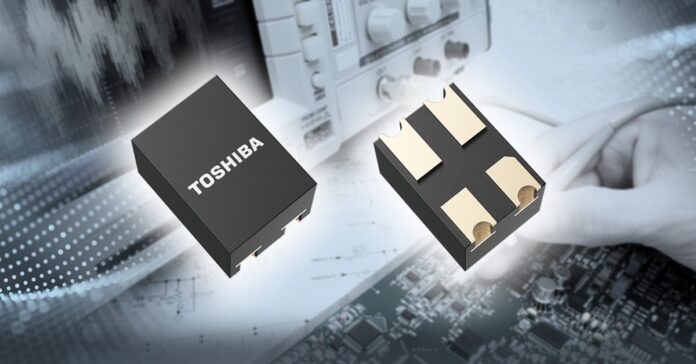
Toshiba has launched four voltage-driven photorelays in a small S-VSON4T package that are rated for operation up to 135 °C, targeting test and burn-in gear that has to run hot to evaluate automotive-grade semiconductors. The new parts are the TLP3407SRB, TLP3412SRB, TLP3412SRHB and TLP3412SRLB, and Toshiba says volume shipments have started.
As electrification and automated driving push higher-density electronics into vehicles, operating temperatures for automotive semiconductors—and the equipment used to test them—keep rising. Toshiba says it increased maximum operating temperature from 125 °C in current products to 135 °C by optimizing the design of built-in elements.
The new devices are voltage-driven photorelays with input-side resistors, eliminating the need for an external resistor and helping reduce board space. They’re also packaged in S-VSON4T, which Toshiba lists at 1.45 x 2.0 mm (typ.).
Toshiba is positioning the photorelays for use in semiconductor testers (memories, SoCs, LSIs), probe cards, and burn-in equipment where multiple relays must fit into limited space while maintaining reliable high-temperature operation.