Wednesday, April 22, 2026
15.1 C
London
Home Blog Page 21

Charged EVs | Dry electrode battery manufacturing: LiCAP says its solvent-free process can cut costs up to 50%

0


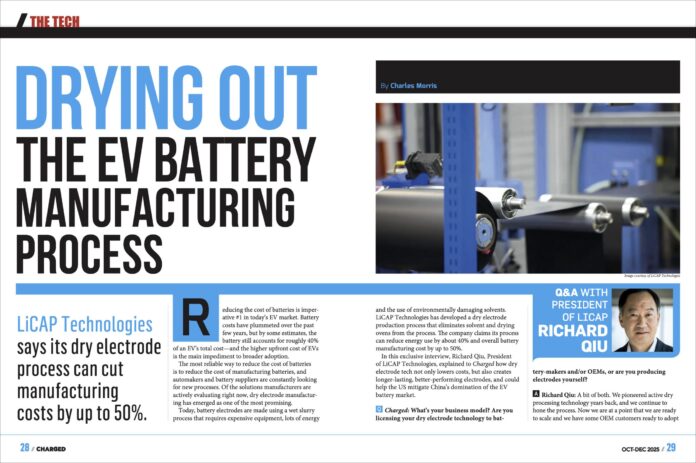
Drying out the EV battery manufacturing process.

Reducing the cost of batteries is imperative #1 in today’s EV market. Battery costs have plummeted over the past few years, but by some estimates, the battery still accounts for roughly 40% of an EV’s total cost—and the higher upfront cost of EVs is the main impediment to broader adoption.

The most reliable way to reduce the cost of batteries is to reduce the cost of manufacturing batteries, and automakers and battery suppliers are constantly looking for new processes. Of the solutions manufacturers are actively evaluating right now, dry electrode manufacturing has emerged as one of the most promising.

Today, battery electrodes are made using a wet slurry process that requires expensive equipment, lots of energy and the use of environmentally damaging solvents. LiCAP Technologies has developed a dry electrode production process that eliminates solvent and drying ovens from the process. The company claims its process can reduce energy use by about 40% and overall battery manufacturing cost by up to 50%.  

In this exclusive interview, Richard Qiu, President of LiCAP Technologies, explained to Charged how dry electrode tech not only lowers costs, but also creates longer-lasting, better-performing electrodes, and could help the US mitigate China’s domination of the EV battery market.
Charged: What’s your business model? Are you licensing your dry electrode technology to battery-makers and/or OEMs, or are you producing electrodes yourself?

Richard Qiu: A bit of both. We pioneered active dry processing technology years back, and we continue to hone the process. Now we are at a point that we are ready to scale and we have some OEM customers ready to adopt our technology to do so. Because it takes quite a bit of time and effort to build a large-scale production line, we’re working with OEMs to license our technology. One of our partners, Dürr, the large equipment manufacturer, has licensed our technology to produce and install the equipment for the OEMs.

Our primary business model is licensing our technology for both the processing technology and the equipment. However, in the meantime, OEMs want to use our product to pilot, to test and to continue innovating. Before getting their large manufacturing lines installed, they want product from us, so we have a small manufacturing capability in Sacramento to produce dry electrodes for those OEMs.

Charged: Your process eliminates some steps in the traditional wet slurry process, saving money and complexity. Give us some more details about how that works.

Richard Qiu: The traditional wet process primarily consists of five steps. That may not seem like too many, but it’s five gigantic steps, each with a lot of moving pieces. Obviously, you can improve each step, but the better way to improve the process is actually to eliminate some of those steps. So, we shrink the five steps into three steps, which substantially reduces the complexity of the process, as well as the size of the facility required to install the equipment.

The traditional wet process consists of five steps. We shrink the five steps into three, which substantially reduces the complexity of the process, as well as the size of the facility required to install the equipment.

We do a simple three-step process. In the first one, you mix the materials, you think about formulation, get the right binder and activating materials in there, and prepare for manufacturing. The second step we call the freestanding film. Then the last step is densification, calendering.

When you do wet processing, you put everything altogether along the way, but when we do our process, we produce freestanding film. One benefit of doing that is that you can produce different chemistries—that’s why we call our platform chemistry-agnostic. You just have to manage the mixing, make sure the chemistry works well and produce at the speed you want at the thickness you want to produce.
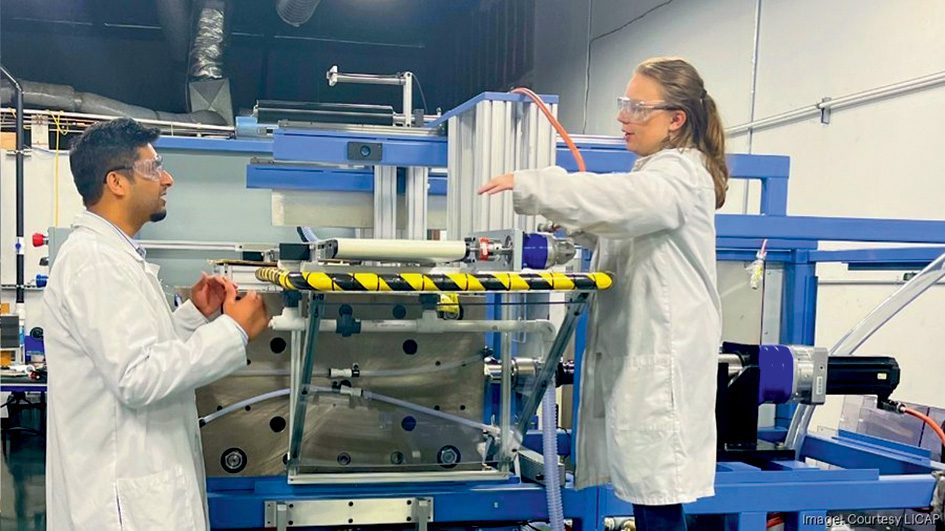
A key element of that is that any waste because of process irregularity or the edge of the film, you can 100% recycle, meaning that you will save tremendous amounts of raw materials. As we all know, battery raw materials are expensive and they’re hard to find, particularly here in the US, so 100% recycling is tremendous.

And after producing the freestanding film, then you can perform densification based on the application, whether it’s EV, energy storage or another application.

Charged: Making the transition from the wet to the dry process sounds like it takes some time. Can you give us an idea of how far along in that process you are with some customers, and how long it might be before this process is actually being used on the production line?

Richard Qiu: Good question. We have two OEM customers that are adopting our technologies. First one is Cellforce, which is part of Porsche in Europe, and they’re working towards bringing a new high-performance car to market. They have some performance metrics they want to hit, but they are also thinking about cost savings. This is a greenfield opportunity—they’re building a gigafactory for that capability. We started working with them last year and we continue to help them fine-tune the different pieces.

The next project is our partnership with Nissan in Japan. We’re working together to develop new technology for a next-generation all-solid-state EV battery. We’ve been working with them for a couple of years, but we recently expanded our strategic partnership to jointly develop the solid-state battery. They already built a part of the plant in 2025. Now we are in the process of working with them to refine the technology, and also building a gigafactory, and we’re targeting production in 2028.

Now the question is, what if you already have a multi-billion-dollar investment in the wet process in place? We start to see people have those conversations about at what point they will convert from wet to dry. This is no different than any other technology adoption curve. You will always have better technology coming up, probably cheaper, better, faster. But what are you going to do? You have to switch to new technology.

We see a lot of interesting demand for greenfield opportunities. When you need to build a new facility, our technology makes it easier for people to do so, because incremental investment for CapEx is typically 50% of what you have to invest for the wet process. And the facility size probably shrinks by 60% and incremental OpEx is reduced by 60-70%.

Some of the process equipment can be dropped in. Some probably needs to be modified. Some won’t be needed at all—for example, large solution-drying equipment. And you’re going to use less energy. Sixty percent of the electricity used for electrode manufacturing is used in the drying process. We eliminate that. So, we are in the early stage for conversion projects, but we are in the middle stage in terms of doing new projects.

Charged: So, a greenfield project versus replacing an existing line, those would have two different timelines.

Richard Qiu: That’s right. I would say the greenfield projects will see earlier adoption than the replacement projects. 

Charged: You say your process is chemistry-agnostic.

Richard Qiu: Our platform is typically more flexible than the wet process, because as you simplify the process, there are fewer things you need to adjust. From our perspective, it’s really two things. One is the chemistry and how you mix the materials. With freestanding film, you still have to adjust the chemistry, binder and activation, to make sure the film quality is there and the thickness uniformity is there, because the different materials have different characteristics—particle size, that sort of thing. But for us, it’s easier to adjust, and also easier to experiment to make sure we achieve the best process parameters so we can achieve the right production throughput.
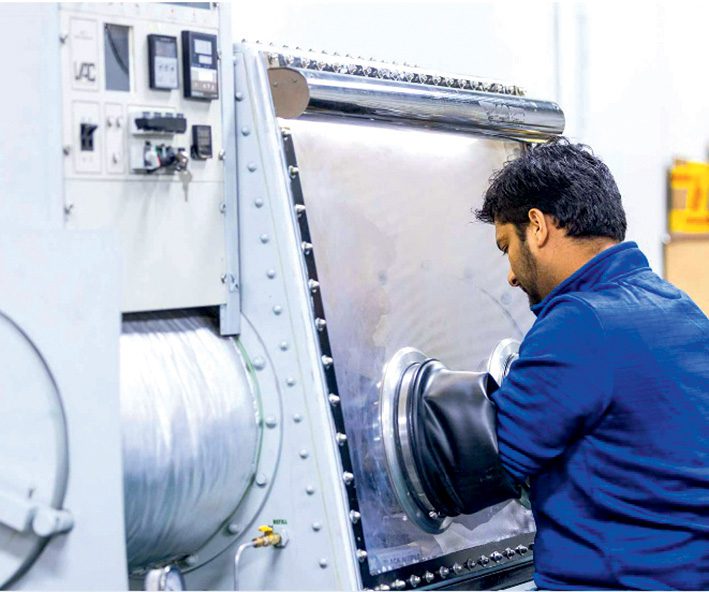
We have done that for more than half a dozen chemistries, because we’re working with different OEMs, different customers that have their different applications. For example, one of the major enterprises working with us here in US for an energy storage application, they use different chemistry and a different process, different thickness of the electrode.

Charged: Tell us more about your work with Nissan to develop solid-state batteries. Is that a separate thing from your production line innovations, or do they complement each other?

Richard Qiu: It is working together. For all-solid-state batteries, it’s a different, new chemistry, and some of the elements are sensitive to the environment, the temperature, that sort of thing, so you have to make them in controlled settings. The solid-state battery has very strong performance metrics and people really love it—fast charging and all this good stuff—but it requires a different manufacturing process.

Mass-scale production of solid-state batteries is not there yet. We are probably the first one working with Nissan to bring those barriers down, so we can mass-produce solid-state batteries by 2028. We start by choosing the right chemistry for the desired performance metrics, adding different materials, different binders, to make sure ionic connectivity is there, because that’s really the most key element for solid-state batteries. Then we have to think about how we can mass-produce them, and achieve the throughput we want to have. So it’s a very large, complex joint development effort. We have been working with Nissan for almost two and a half years. Now we’re scaling up.

Charged: Your process reduces costs, reduces complexity, and improves sustainability because you’re getting rid of the toxic solvents. You also claim to deliver performance improvements—higher energy density and power density. Tell us more about that.

Richard Qiu: In our process, we don’t use toxic solutions in drying out. Normally, with the wet process, when you dry a solution out, you take things out. For us, because we start out with the mixing technology activation, we can stretch materials, almost like cotton candy.

Initially when we thought about this, we thought about shrinking the footprint of manufacturing, reducing complexity, mostly from a cost and speed perspective. But as a result, because there’s no toxic solution drying out and we put the binder activation in that way, all those things actually make the materials stronger. Not to get into material science too deeply, but all those things result in stronger binding, so it creates better density and better ionic connectivity.

Now, we don’t really talk too much about the performance improvement, because today the industry is really focused on cost reduction. But we actually achieve both.

We don’t really talk too much about the performance improvement, because today the industry is really focused on cost reduction. But we actually achieve both.

Charged: Tell us more about recycling. You’re able to recycle all the scrap from the process. Is that something that other processes aren’t able to do?

Richard Qiu: If you don’t use freestanding film, it will be really hard to recycle because as you produce the electrode, you laminate other materials to the electrode material. To recycle, you have to peel those other layers back. People do recycle, but it takes another investment, another set of complex equipment to strip the materials back and recycle. And normally you won’t be able to recycle all of them. But for us, the freestanding film before densification is almost like the raw material, so you can send 100% back to the feedstock. We don’t say 100% because people make arguments—we normally say 98 or 99%. So that’s one key piece.

The other piece is that when you produce the freestanding film at high speed, normally the edge is not all straight and you have to cut the edge. That’s part of the manufacturing process—you’re cutting the edge to make sure you have the right width for the application, and the material you’re cutting off goes back to the feedstock.

Charged: You have some competitors in this space. AM Batteries makes equipment for the dry coating process, and Tesla has been working on dry coating tech.

Richard Qiu: In 2019 Tesla bought a company called Maxwell Technologies. The founding team of LiCAP was actually the founding team of Maxwell. Maxwell was making dry electrodes for ultracapacitors, but Tesla bought Maxwell because they were thinking about adapting that technology to produce batteries. I think they are successfully doing that for anode production, a little less for cathode production. Tesla is really, really good at the mechanical side because they’re a car manufacturer, but a little less in terms of how you integrate the chemistry, process and equipment together.

I believe we are ahead of all this competition, in the best position to capitalize on this opportunity in the market. If you produce film at high-speed throughput—60 meters or 80 meters per minute—the film quality needs to be really strong, because of the tension adjustment and other things. And because of that, most people think about the process from the mechanical perspective, but they often forget that you have to have the right materials, right mix, right film, right binder, right activation, so the material can be stretched fast enough, but strong enough to produce the freestanding film.

I think that’s a really key piece for our technology. We have an integrated process—it’s not just thinking about the mechanical part of producing film, but also the front end, the mixing. A lot of companies talking to us have said we have the best mixing technology, hands down, in the industry.

Can you reproduce a machine? You probably can if you are a really good equipment manufacturer, but you also have to think about the chemistry, the materials, the additive, formula, mixing, all that stuff, and that’s a different animal. Our team is a combination of material science, chemistry and mechanical equipment guys, and we work together with an integrated approach, a very cross-functional team. Most companies out there, they focus on one, maybe two of these pieces, but we focus on all three together, and that’s unique.  

This article first appeared in Issue 74: October-December 2025 – Subscribe now.


Source link

Charged EVs | Webinar: Automotive CoolGaN™ enabling highly-efficient & affordable e-mobility

0


100 V Gallium Nitride (GaN) is transforming automotive power electronics with higher efficiency, faster switching, and compact system designs.

Join this webinar at our March Virtual Conference on EV Engineering, presented by Infineon, for an engaging session on how CoolGaN™ Automotive Transistor 100 V G1 is shaping the future of automotive power electronics. This webinar will cover the fundamentals of GaN technology and its unique advantages in enabling higher efficiency, faster switching, and more compact designs.

We will explain key automotive applications such as on-board chargers, DC-DC converters, and traction inverters, highlighting how GaN drives performance while reducing size, weight, and system costs. Gain insights into the value propositions and product portfolio that make GaN a game changer for the electrified vehicle era.

Mar 10, 2026, 10:30 am EDT
Register now—it’s free!


See the complete session list for the Virtual Conference on EV Engineering here.

Broadcast live from March 9 to 12, 2026, the conference content will encompass the entire EV engineering supply chain and ecosystem, including motor and power electronics design and manufacturing, cell development, battery systems, testing, powertrains, thermal management, circuit protection, wire and cable, EMI/EMC and more.


Source link

Charged EVs | FibreCoat’s AluCoat composite EV battery case integrates EMI shielding, passive cooling

0


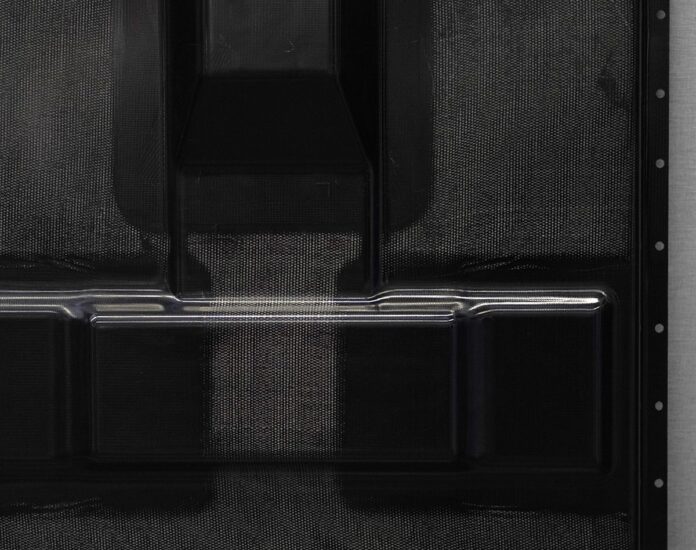
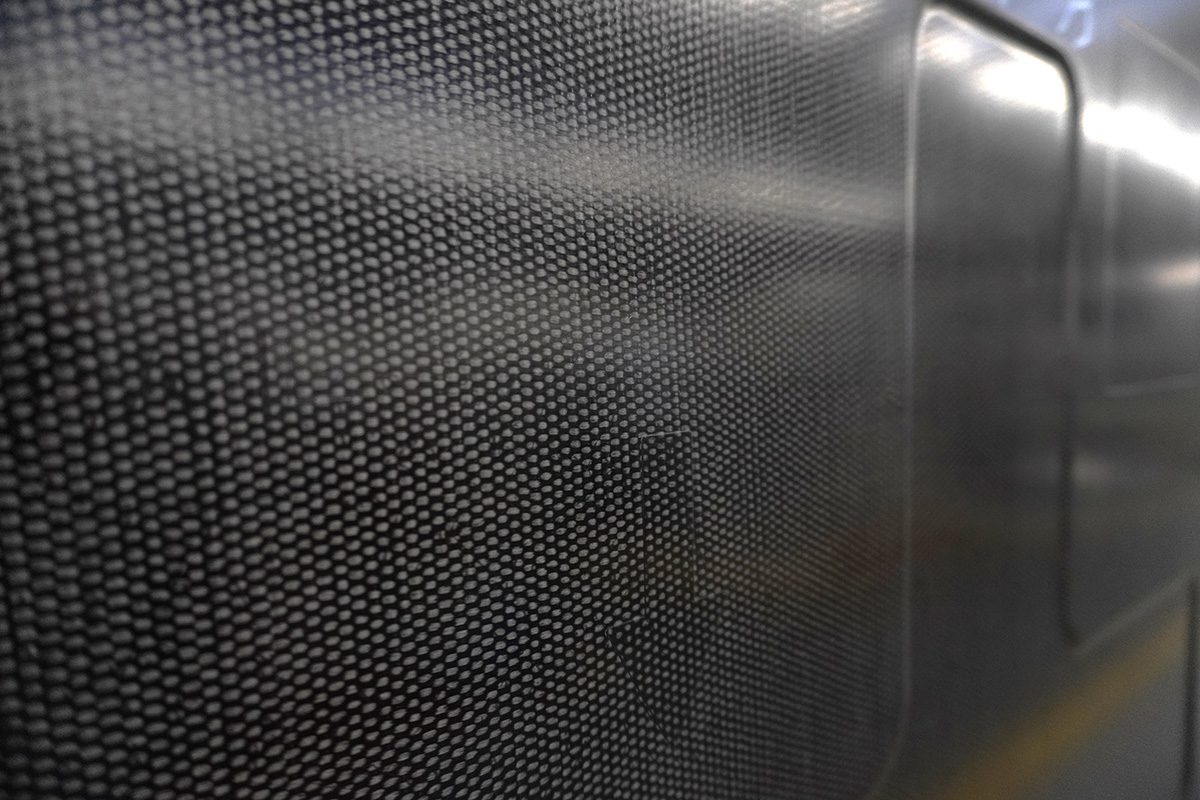
FibreCoat says it will unveil a next-generation composite battery-case concept for EVs at JEC World 2026 in Paris (March 10-12), developed with composite manufacturer Coleitec and engineering consultancy Forward Engineering. The company’s approach uses its AluCoat material—an aluminum-coated fiber yarn—to add conductivity and functional layers directly into the composite, rather than relying on foils, plates or sprayed coatings applied as secondary steps.

According to FibreCoat, the component integrates woven fabric made from AluCoat yarn into a composite structure produced using Coleitec’s HP-RTM (high-pressure resin transfer molding) process. The company says the material-level approach can provide integrated electromagnetic interference shielding, improved fire protection, and passive cooling effects, while reducing production steps, complexity and carbon footprint.

Multiple prototypes were manufactured on Coleitec’s industrial HP-RTM line as part of a joint development program. “During the HP‑RTM production trials, we saw how AluCoat integrates smoothly into established composite processes while adding real functional value,” said Coleitec CTO Bin Wei. “Achieving this level of functionality without changing the existing production process makes AluCoat a very strong candidate for broader industrial adoption.”

Source: FibreCoat


Source link

Charged EVs | Battery-maker Electrovaya receives $10.5-million purchase order from Fortune 500 customer

0


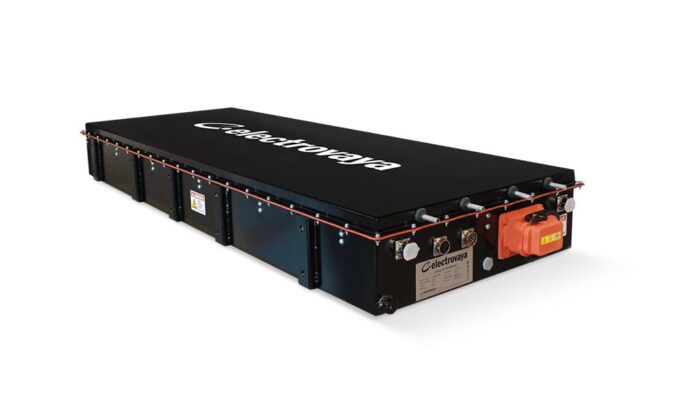
Battery manufacturer Electrovaya has received new purchase orders for its Infinity battery systems totaling approximately $10.5 million through its OEM sales channel.

“A Fortune 500 US-based customer” will buy Electrovaya’s Infinity battery systems to power material handling electric vehicles at multiple distribution centers.

Electrovaya says its Infinity battery systems are “engineered for demanding, high-duty-cycle applications, delivering exceptional safety, longevity and performance for industrial electric vehicle fleets.”

“Electrovaya is proud to support our customers’ shift toward safe and long-lasting energy solutions for their logistics operations,” said Dr. Jeremy Dang, Vice President of Business Development at Electrovaya. “Additional orders are also anticipated as they continue to advance their electrification strategy.”

Source: Electrovaya


Source link

Charged EVs | Hitachi Energy partners with Pakal on new silicon switch for ≥3.3 kV power modules

0


Hitachi Energy is collaborating with Pakal Technologies to incorporate Pakal’s IGTO(t) silicon power switch into Hitachi Energy’s high-voltage power module portfolio, starting with devices used in applications including rail, renewables, energy storage and power infrastructure for AI and data centers.

The companies say the work targets a core problem in large-scale electrification: reducing losses in high-voltage power conversion. Pakal claims its IGTO(t) (Insulated Gate Turn-Off Thyristor) technology delivers about 30% lower losses than today’s widely used devices, and 30% lower conduction losses at high current and temperature than IGBTs, while remaining compatible with existing module architectures.

Pakal describes the IGTO(t) as the first new high-voltage silicon power semiconductor since the IGBT was introduced in the 1980s. At the system level, the companies say the performance gains can translate into higher power density, reduced thermal and cooling requirements, and improved efficiency.

“We are pleased to join forces with Pakal Technologies to incorporate its novel IGTO(t) within our semiconductor portfolio,” said Niklas Persson, Managing Director of Hitachi Energy’s Grid Integration business unit. Pakal CEO Ben Quinones said the partnership provides “a long-term partner capable of scaling impact.”

Source: Hitachi Energy


Source link

Charged EVs | Autocharge vs Plug & Charge (ISO 15118): What’s the difference—and what comes next

0


Every year, technology makes it easier to spend money—except when it comes to EV charging. We can buy a candy bar or a car with one tap of our credit card, but charging on the highway (for non-Tesla drivers) requires dealing with a phoneful of often poorly-designed apps.

Plug & Charge, a system based on the ISO 15118 standard that handles user authentication and payment automatically, has been in development for several years, and it’s starting to catch on. The system is already widely used in Europe, and starting in 2027, support for ISO 15118-20, the latest version of the standard, will be mandatory in the EU. (To the best of our knowledge, there is no regulatory obligation or timeline mandating ISO 15118-20 support in the US.)

EVSE supplier and charging network operator ChargePoint recently announced that its entire current hardware portfolio supports Plug & Charge. A growing number of other CPOs also support the system. (“Plug & Charge,” with the ampersand, is the official form of the name. Some in the industry also use “PnC” for short.)

However, implementing a new standard can be slow, and while waiting for Plug & Charge to gain more widespread adoption, some players have deployed a separate system called Autocharge, based on DIN Spec 70121. EVgo was one of the first to embrace Autocharge, and the company says that 30% of its charging sessions are now initiated using its version of the system, Autocharge+. Meanwhile, charging provider Emobi is touting its own ISO 15118-based system, which it calls JustPlug.

Is a standards war brewing? Sorry to spoil the fun, but no. Vehicles and chargers can simultaneously support both Plug & Charge and Autocharge. In fact, both ChargePoint and EVgo, among others, support both systems. Furthermore, Tesla’s system is also based on the ISO 15118-2 standard. Some fine day, all the seamless charging systems should be able to work side-by-side without drivers having to worry about it.

It’s also important to note that Plug & Charge and Autocharge are not standards—they are sets of features that are enabled by standards. As CharIN Project Manager Semih Tetik explained to me:

  • DIN 70121 provides the baseline DC charging communication protocol that essentially every DC-capable vehicle supports.
  • ISO 15118-2 builds on this baseline and introduces advanced features including Plug & Charge.
  • ISO 15118-20 extends the framework with more capabilities, such as bidirectional charging (V2G) and wireless charging.

The EVSE experts I’ve spoken to seem to agree that Autocharge is an interim solution that will eventually be replaced by the more secure Plug & Charge. However, “eventually” is a key word here—the gurus also agree that much work remains to be done to enable wide adoption. 

Tritium CEO Arcady Sosinov called Autocharge “very rudimentary.” He told me, “All you’re doing is registering the MAC address of your car with the network’s backend, and they link it to an account. But it’s insecure, and it’s sort of a hack. Autocharge has to go away, but the issue is that most vehicles on the road today are not Plug & Charge capable.”

“We are committed to rolling out the Plug & Charge standard once the intricacies around certification and implementation have been addressed, [but] in the meantime, we continue to support Autocharge+ as our current solution to offer seamless session initiation,” an EVgo spokesperson told Charged.

Juha Hytönen, Senior Director, EVs at security specialist Irdeto, told me: “AutoCharge was developed to address one narrow use case. It’s great because it showcases how simple charging an EV can be, and it has proven the potential for Plug & Charge. However, AutoCharge doesn’t provide the security foundation. I think there is a place for AutoCharge for a few years until ISO 15118 is fully deployed, but Plug & Charge is eventually going to replace it.”

ChargePoint is using Plug & Charge in North America and Europe, but has said that scaling it up to encourage widespread adoption will require overcoming “complex technical, commercial and regulatory hurdles.” Daniel Brown, Senior Director, Product Management at ChargePoint, said: “The consumer demand for Plug & Charge is clear, but scaling access to drivers is a complex exercise in global alignment across hundreds of market players in four key areas.”

To wit:

  • CPOs need to source hardware and backend software that is Plug & Charge-compatible.
  • E-mobility service providers, which manage user-facing data and process payments, need to align their offerings with backend providers that manage chargers. 
  • OEMs must enable their vehicles for Plug & Charge, and prepare their backend software for certificate management by a certification authority.
  • Certificate authorities must oversee authentication to ensure a trustworthy process.

CharIN’s Semih Tetik: “Autocharge is inherently less secure, as it relies on identifier-based mechanisms rather than cryptographic authentication. Many OEMs have already implemented ISO 15118-2 and therefore have the technical foundation to support secure Plug & Charge using PKI-based authentication. From this perspective, implementing Plug & Charge is not fundamentally complex. ISO 15118-20 introduces additional complexity, [but] it represents a long-term unifying communication protocol, capable of supporting both current and future charging use cases. With advanced features such as V2G, increased complexity is unavoidable, but this is accompanied by higher security, including TLS 1.3 and comprehensive certificate handling.”

CharIN is actively supporting the development and deployment of Plug & Charge through its periodic Testival events. “ISO 15118-2 interoperability testing is already part of our test scope, and PKI-related tests, which are essential for Plug & Charge, are conducted in cooperation with our partners,” Tetik told us.  


Source link

Charged EVs | Webinar: Measuring shield currents in high voltage EV cables—even on the go

0


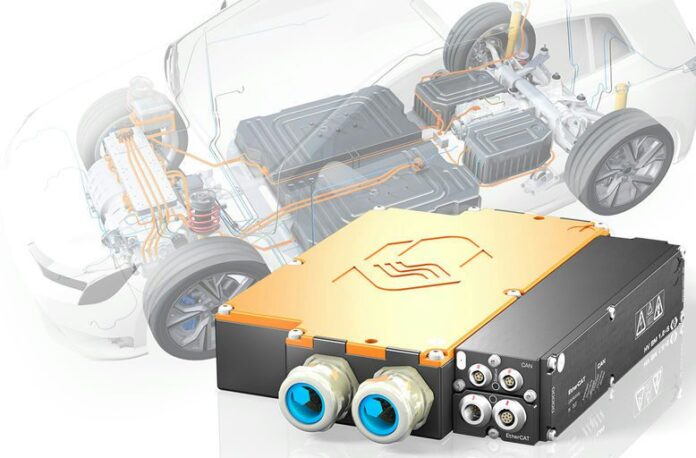
Shielded cables are often used in electric vehicles to prevent the effects of high shield currents, such as cable fires. Detailed measurements of the shield currents—especially during test drives help to verify whether the cables are properly designed.

Join this webinar at our March Virtual Conference on EV Engineering, presented by Vector, to learn how the HV BM 1.2+S simultaneously acquires inner conductor and shield currents at a data rate of 1 MHz via EtherCAT®, with a robust design that is ideal for harsh environments.

Mar 11, 2026, 11:45 am EDT
Register now—it’s free!


See the complete session list for the Virtual Conference on EV Engineering here.

Broadcast live from March 9 to 12, 2026, the conference content will encompass the entire EV engineering supply chain and ecosystem, including motor and power electronics design and manufacturing, cell development, battery systems, testing, powertrains, thermal management, circuit protection, wire and cable, EMI/EMC and more.


Source link

Charged EVs | United Chargers launches Grizzl-E Connect Commercial EV charging software platform

0


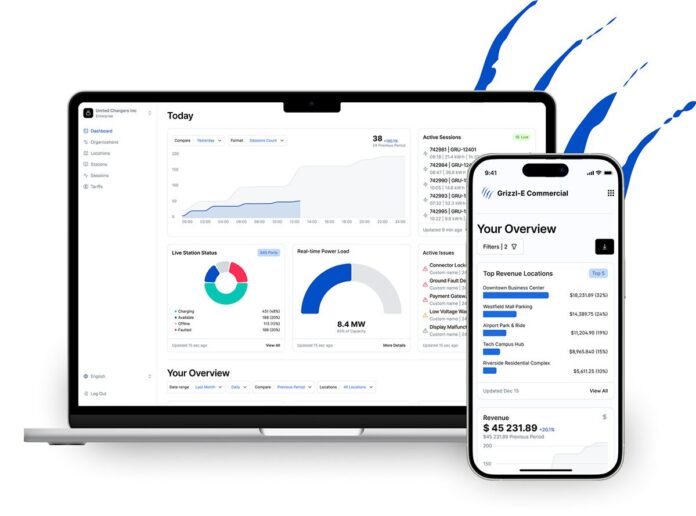
United Chargers has released Grizzl-E Connect Commercial, a commercial EV charging software platform designed to turn its Wi‑Fi-connected Grizzl-E chargers into payment-enabled commercial units.

The company says site owners can activate commercial features over Wi‑Fi, then control access, set pay‑per‑use pricing, configure power management, and monitor usage—features aimed at commercial, multifamily, and fleet deployments. United Chargers also announced a limited-time promotion: customers who buy a three-year Commercial Software License get one year free.

United Chargers says its Grizzl-E commercial chargers are UL-certified, include a warranty and technical support, and use a rugged aluminum indoor/outdoor enclosure built in Canada.

The platform also ties into Grizzl-E Club, a rewards program that the company says provides cashback incentives funded via Canada’s Clean Fuel Regulation credit markets. “By combining Grizzl-E Connect Commercial with Grizzl-E Club, station owners can earn 5 cents per kWh,” said CEO Gleb Nikiforov.

Source: United Chargers


Source link

Charged EVs | EnergyHub and Rivian partner to expand access to utility managed EV charging programs

0


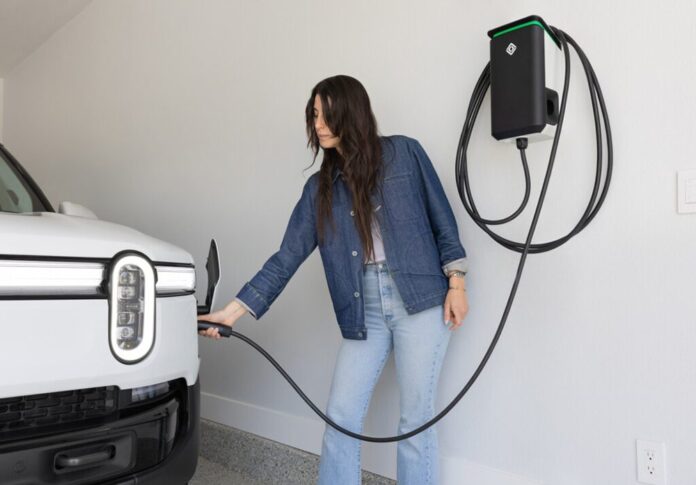
EnergyHub, a provider of grid-edge flexibility solutions, has partnered with EV manufacturer Rivian to expand access to utility EV programs for Rivian drivers in North America.

As more drivers electrify, utilities are increasingly implementing managed charging programs in order to align charging behavior with local grid conditions. EnergyHub and Rivian aim to make it easier for Rivian drivers to discover and participate in utility EV programs, and for utilities to recruit drivers and scale managed charging programs.

“Partnering with EnergyHub allows us to provide intuitive smart charging features built directly into the Rivian ecosystem,” said Andrew Peterman, Director of Advanced Energy Solutions at Rivian. “By integrating managed charging programs, we’re lowering costs for our drivers, and also ensuring that every Rivian on the road contributes to a more resilient and secure grid.”

EnergyHub’s managed EV charging technology enables dynamic load shaping, coordinating EV charging to deliver the energy drivers need while conforming to capacity constraints across the distribution network. EnergyHub’s broader Virtual Power Plant (VPP) platform also integrates other devices such as connected thermostats and stationary storage batteries.

“Every new EV on the road is a win for drivers and the environment, and by managing charging effectively, we ensure this growth remains a benefit for the grid as well,” said Seth Frader-Thompson, President of EnergyHub. “Rivian’s software ecosystem and customer engagement make it easier for drivers to participate in utility programs, while grid-aware managed charging ensures EVs can serve as a resource to manage the load growth we are seeing.”

Source: EnergyHub


Source link

Charged EVs | 2026 Subaru Uncharted first drive: 308-mile range, NACS and AWD option

0


It’s quick where the Crosstrek is poky, more fun to drive, and offers some off-road capability. Is it a real Subaru? That’s for shoppers to decide.

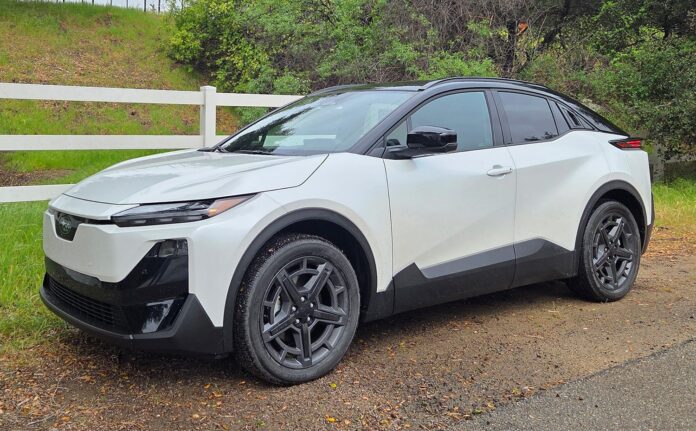
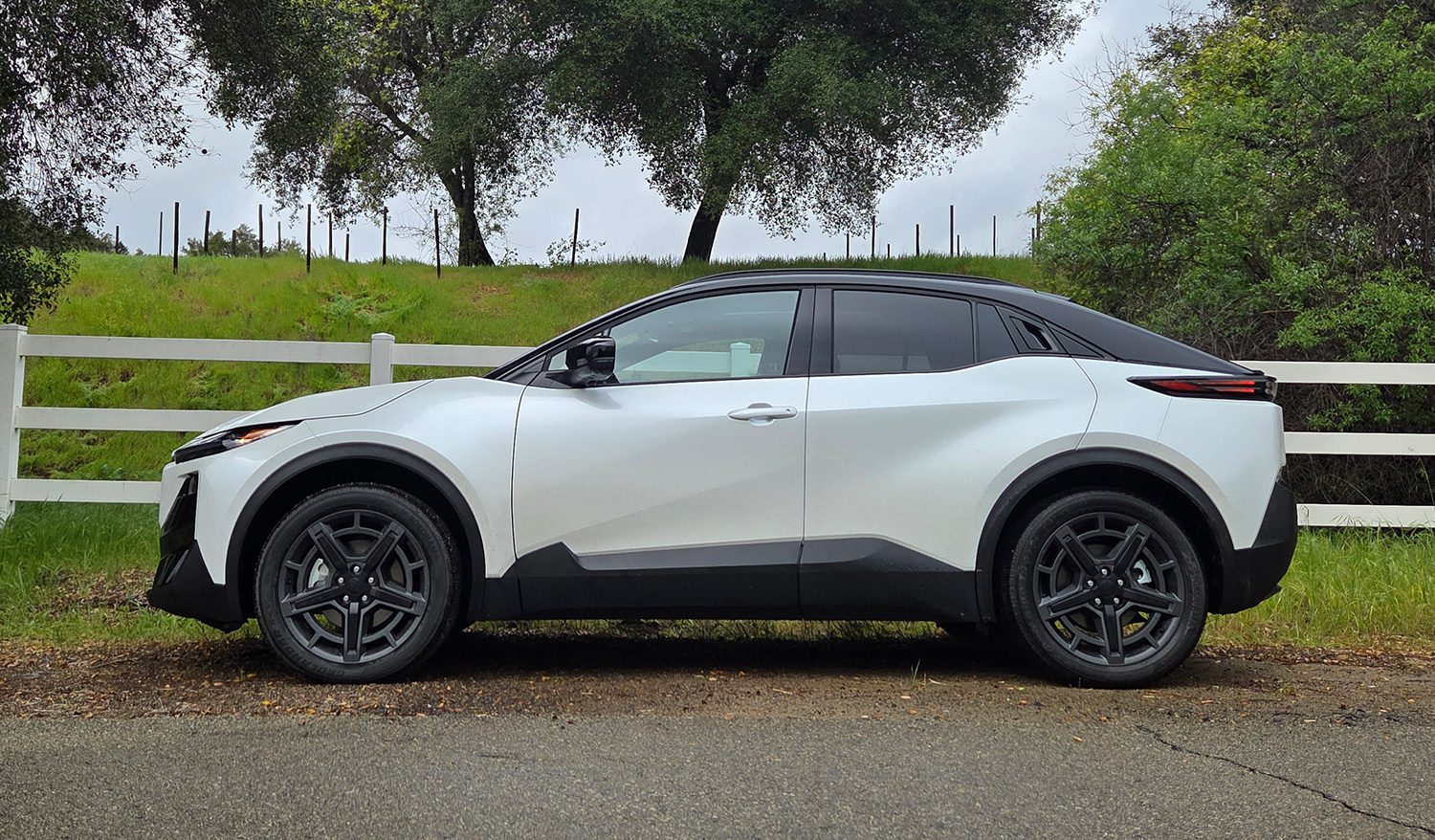
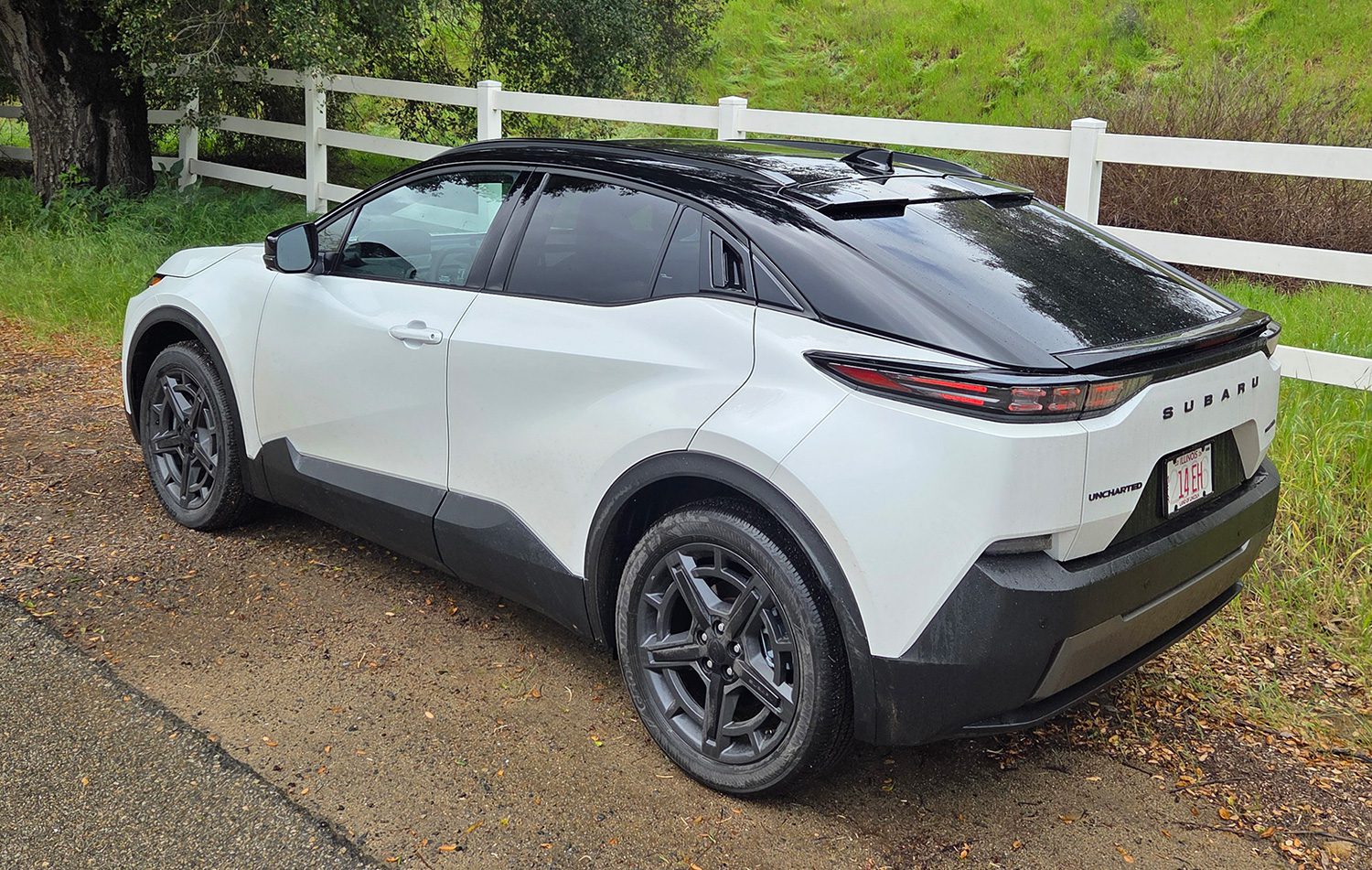
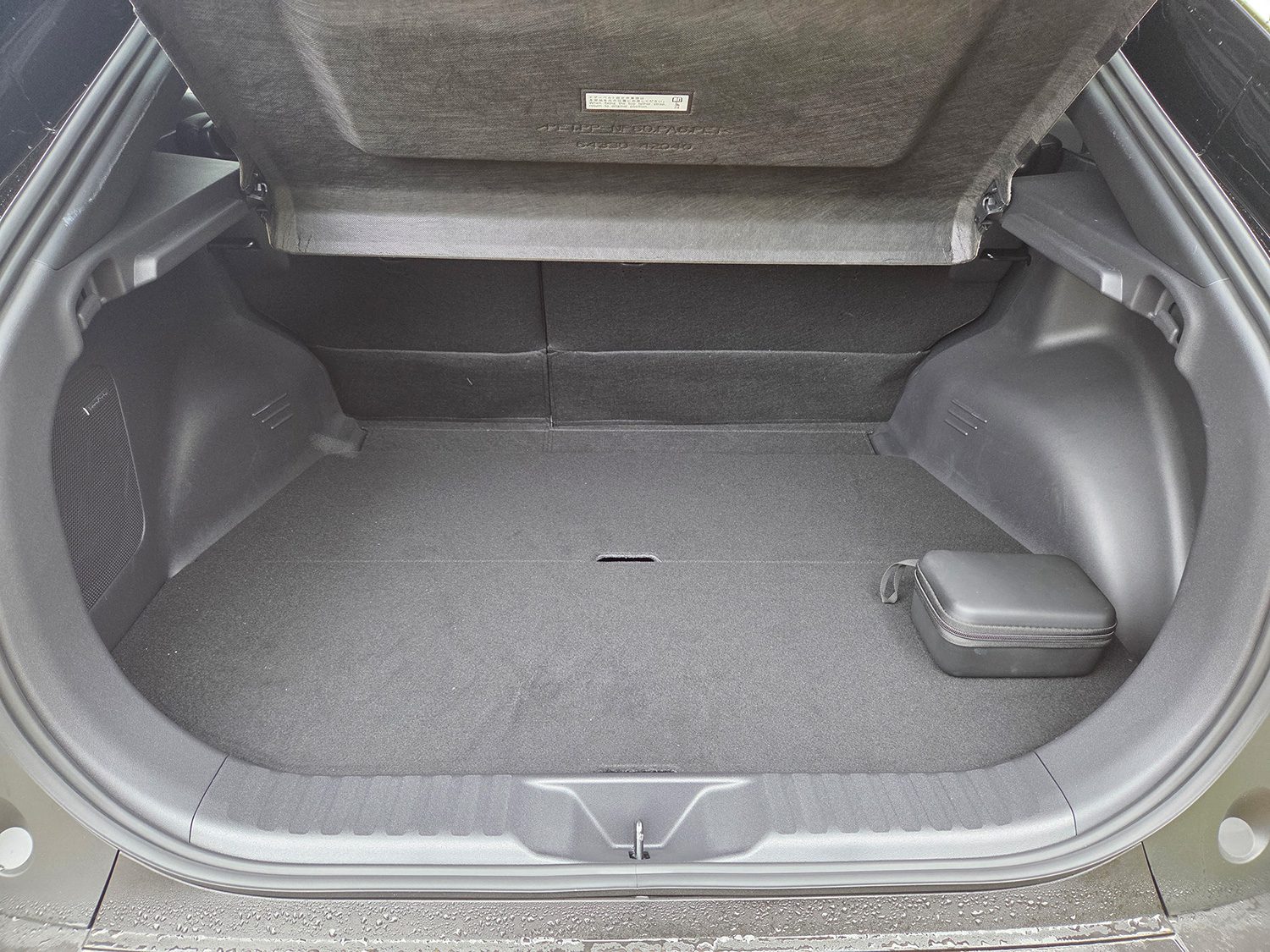
The 2026 Subaru Uncharged electric hatchback will arrive at dealers within several weeks. It’s the smallest of three EVs Subaru offers this year—along with the Solterra on sale since 2022 and the newly arriving Trailseeker. While it offers all-wheel drive, a “limited availability” base model of the Uncharted Premium powers the front wheels alone. Known for its all-wheel-drive expertise, Subaru hasn’t offered a FWD-only model in roughly 30 years. But, that one version of the Uncharted hits its mark: the EPA range rating is 308 miles, above the crucial 300-mile level.

Adding all-wheel drive lowers range, as it does on any EV; the Uncharted Sport, with AWD standard, is rated at 287 miles, while the top Uncharted GT trim falls further to 273 miles, also with AWD standard. That Uncharted Premium FWD model has a starting price of $36,445; the range-topping Uncharted GT comes in at $45,245 (both prices include a mandatory $1,450 destination fee). Importantly, that FWD base model just beats the Nissan Leaf FWD in range.

Uncharted: Crosstrek counterpart

Each of Subaru’s three EVs is roughly analogous to an existing gasoline model in the lineup: the Solterra to the Forester, the Trailseeker to the Outback, and the Uncharted to Subaru’s smallest and least expensive model, the Crosstrek (or its less butch sibling, the Impreza hatchback). Among EVs, the Uncharted’s closest competitor is the Volvo EX30 Cross Country, with the Kia Niro EV, Hyundai Kona Electric, and Nissan Leaf in the same segment but having fewer off-road chops.

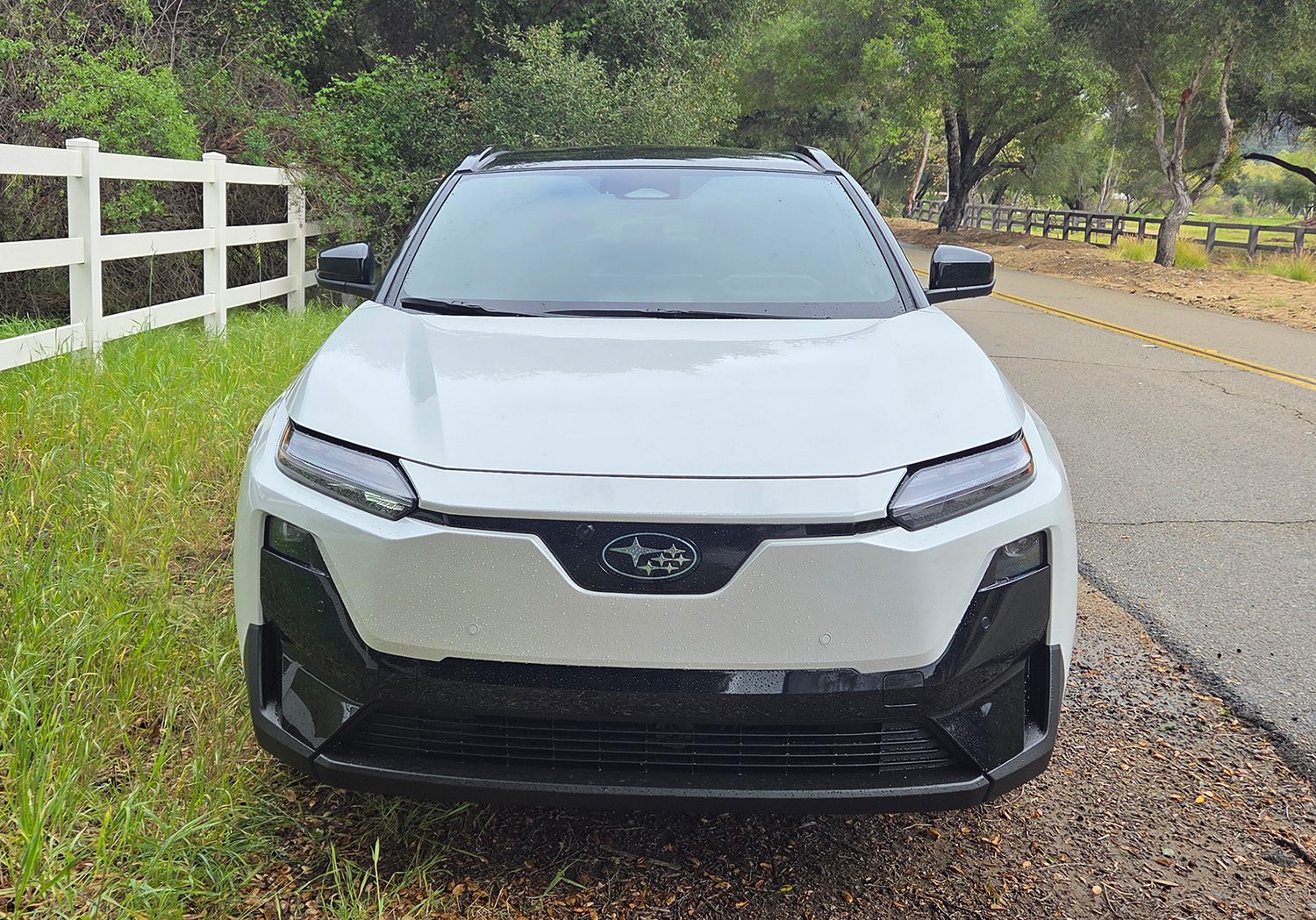
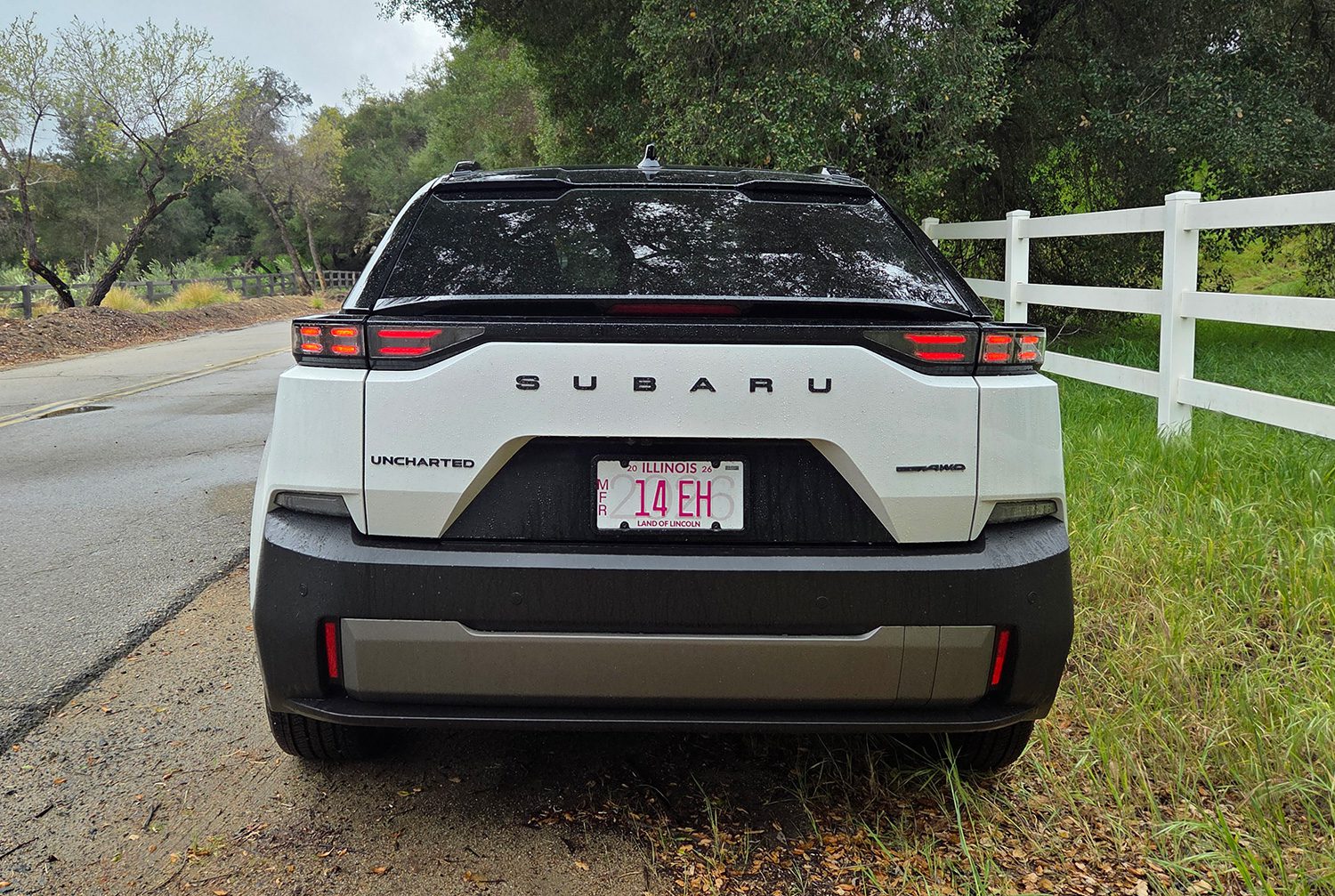
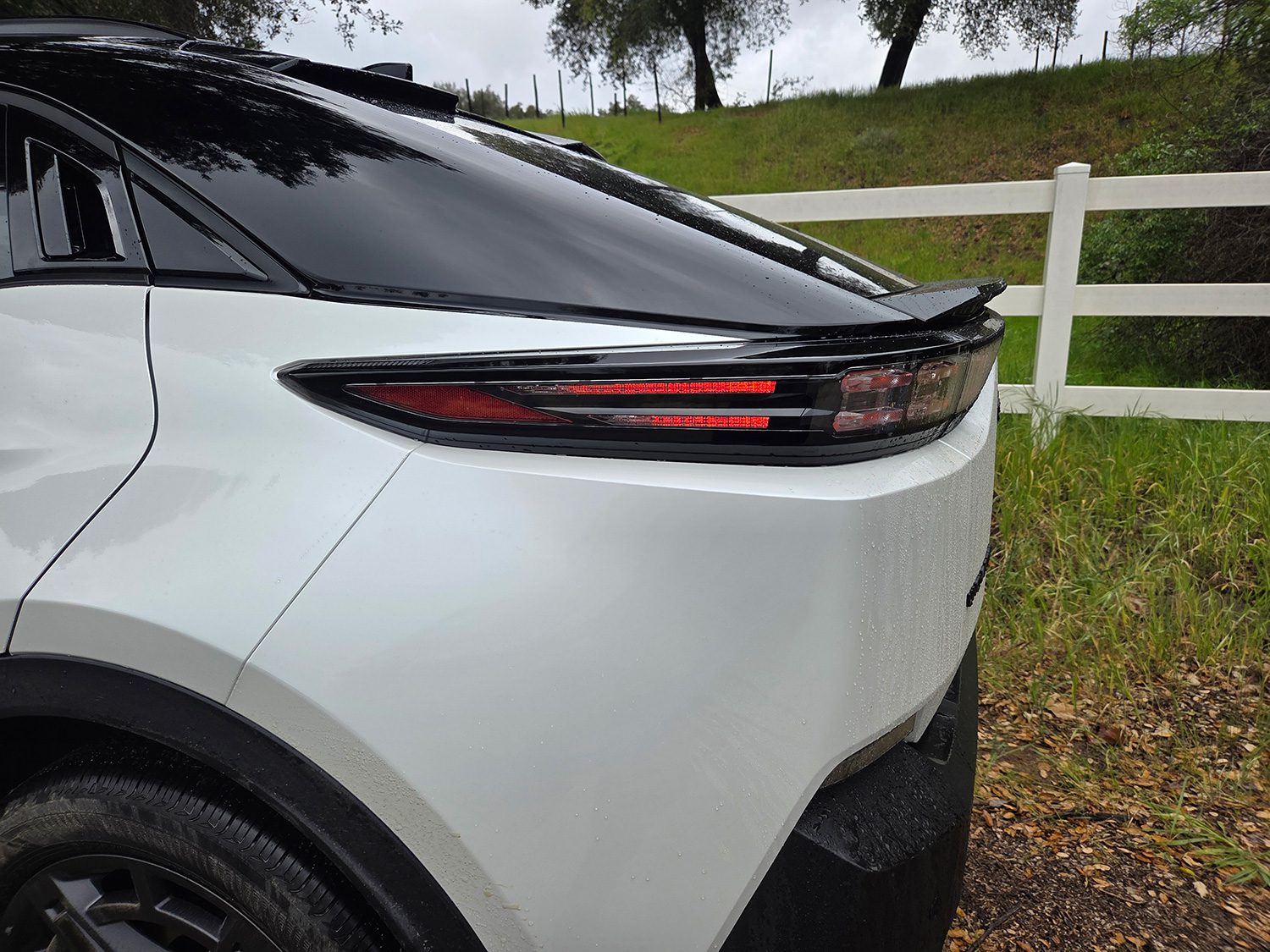
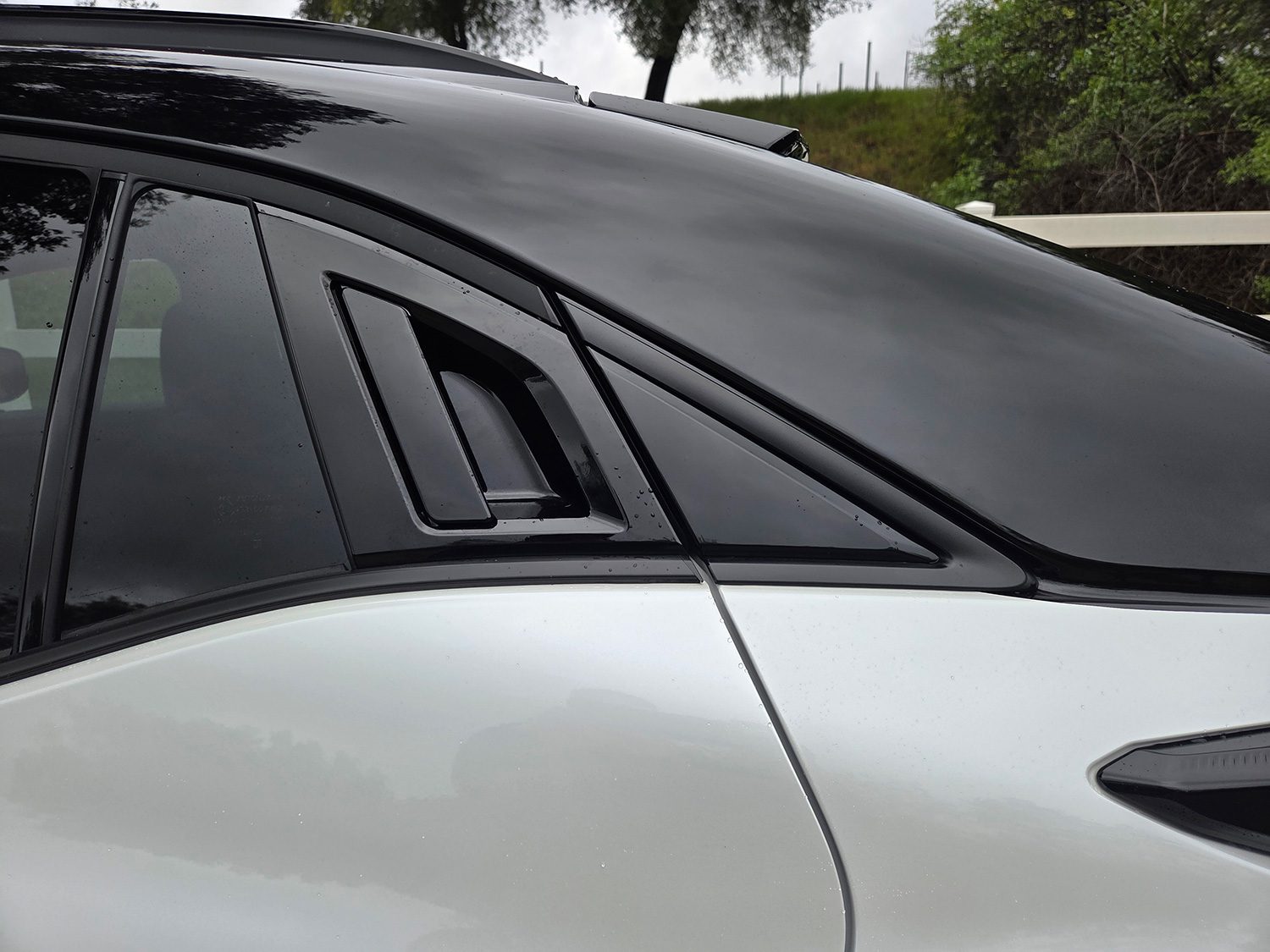
The 2026 Uncharted was unveiled last July and, not to put too fine a point on it, is effectively a Subaru badge plus some very minor changes applied to the car also known as the Toyota C-HR EV. Both cars have all but identical sheet metal, and both go on sale this quarter. We spent half a day driving an Uncharted in the pleasant environs in and around Orange County, California.

Subaru’s plans for a more elaborate off-road test course were washed out, literally, by the torrential rains that pelted Southern California for days before we arrived. A substitute course bulldozed into place offered steep, muddy hillocks, and enough dips and rises to lift a wheel off the ground even with 8.2 inches of ground clearance—only 0.5 inch less than the Crosstrek, and a bit more than the corresponding Toyota C-HR at 7.3 to 8.0 inches.

It also had breakover angles that showed the usefulness of the car’s front-facing camera within the Multi-Terrain monitor view while using the off-road X-Mode drive setting. Annoyingly, that view disappeared as soon as the Uncharted went above 6 mph—apparently a Toyota safety measure—meaning drivers had to select it (a multistep sequence) before the next hill.

Fast acceleration … in a Subaru?

As the lightest Subaru EV, with a battery pack of 74.7 kilowatt-hours, the Uncharted is pleasantly quick in traffic. That contrasts with the Crosstrek, which requires the more expensive Hybrid model to offer even average performance. Off-the-line acceleration has never been a Subaru characteristic, until now. On the all-wheel-drive GT model, the company quotes a 0-to-60-mph acceleration time of 4.7 seconds, and total power between the two drive motors of 338 horsepower (250 kilowatts). The FWD Premium base model comes in at “only” 221 hp (160 kW). Like every 2026 electric Subaru model, the Uncharted will come standard with a NACS charging port.

While each of Subaru’s EVs has a very, very close Toyota sibling, the two companies have split responsibilities differently for each of the three. The powertrain, including battery pack, motors, and power electronics, fell to Toyota. But Subaru took responsibility for the all-wheel-drive system and tuning, the roadholding and ride, and several aspects of the car’s safety systems. Both companies had input into the design, and the Uncharted is built in Toyota’s Motomachi plant in Japan.

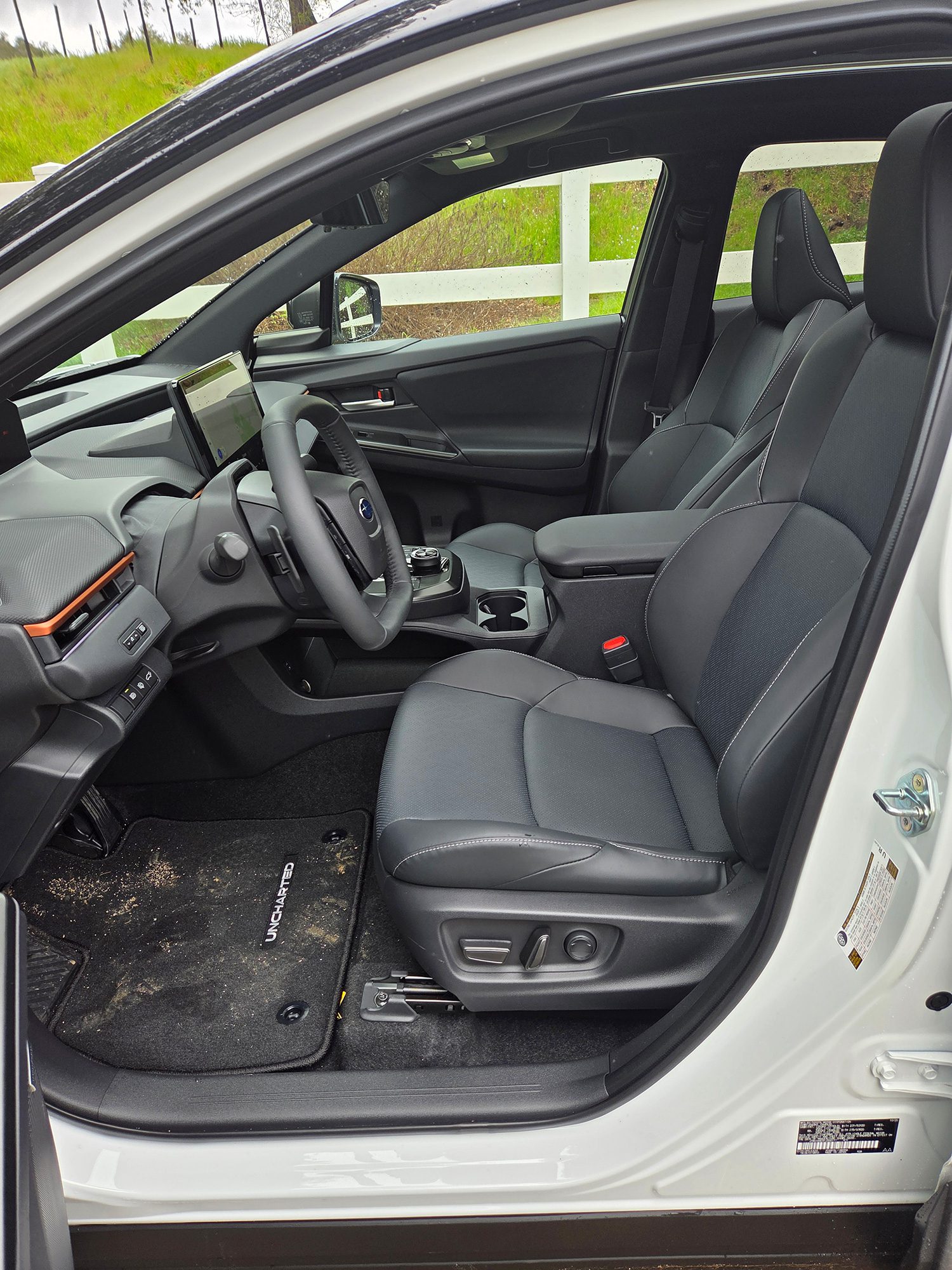
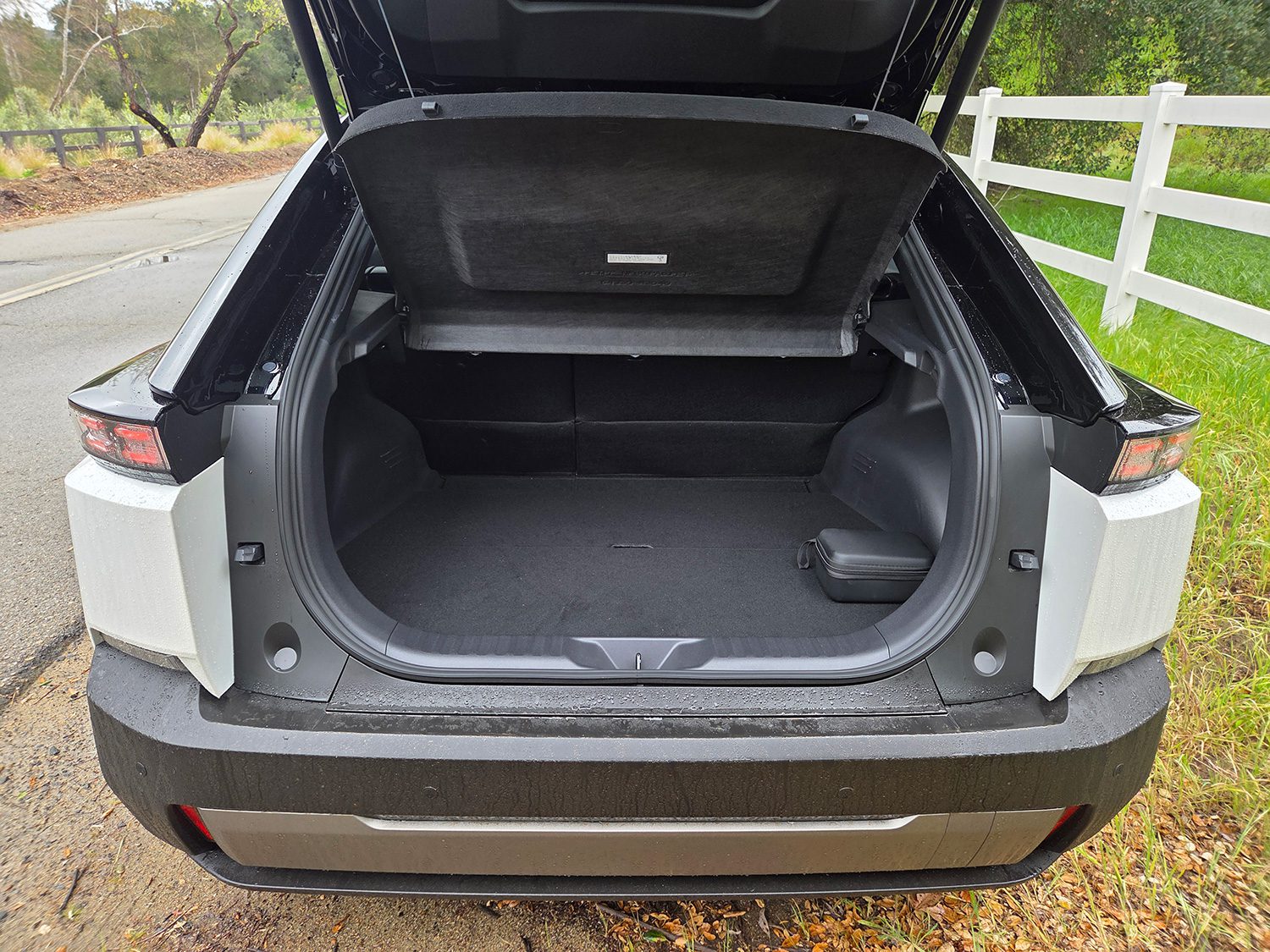
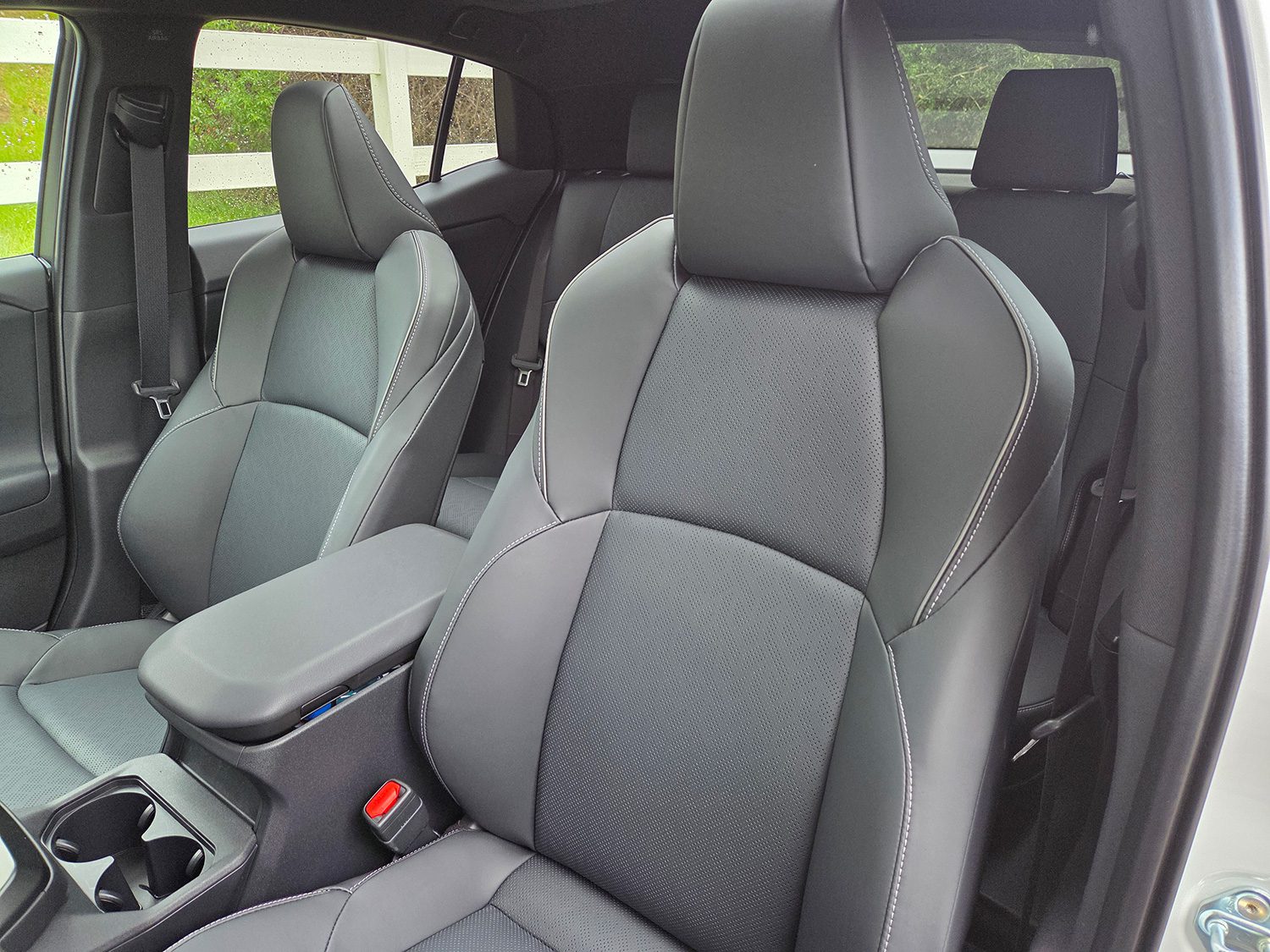
To our eyes, this entry-level Subaru EV looks like a Toyota both inside and out. The design language and some of the unexpected body accents are less off-road Subaru and more urban Toyota. Inside, the interior layout, instrument cluster, and central infotainment touchscreen are all directly traceable to current Toyota models.

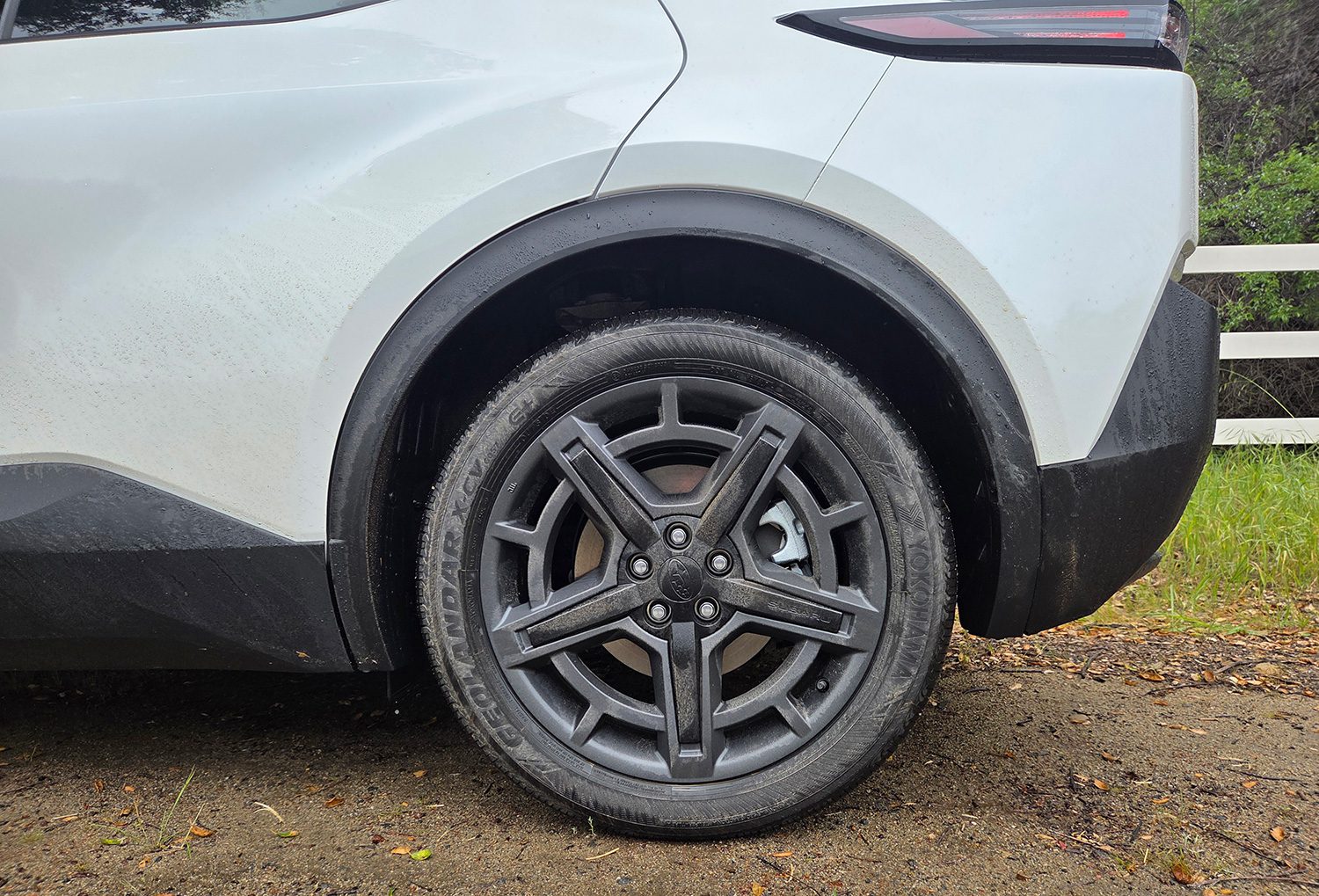
The car’s 14-inch center touchscreen includes Android Auto and Apple CarPlay phone mirroring as standard, and dual wireless phone chargers sit in the front console. Rear-seat passengers can charge their devices on a pair of USB-C ports. Wheels come in various 18- and 20-inch versions.

Is it a ‘real Subaru’—and does that matter?

But none of the Toyota flavor may matter to Subaru shoppers who assess the Uncharted. The company’s market research suggests they’re ‘Youthful Explorers’ with a median age of just 32, believe “life is about the journey”, and view owning an EV as a responsible thing to do for the environment. We’d wager Toyota’s C-HR shoppers are more urban, possibly older, and view EVs as more practical and perhaps as a way to save money on running costs.

Given the progressive, outdoorsy nature of its loyal customers, Subaru could probably have done well with EVs starting in the late 2010s. But the company is tiny by global standards, and it simply didn’t have the cash to fund its own EVs. Enter Toyota, which owns a percentage of Subaru—and has finally come around to offering multiple EV models.

So whether any given auto reviewer see the Uncharted as a genuine product of the quirky company that’s given us reliable adventure and standard all-wheel drive for 30 years, versus just a Subaru-inflected Toyota, the market will tell us how Subaru buyers view this new electric entry.

We certainly aren’t betting against this one becoming another Subaru success.

Subaru provided airfare, lodging, and meals to enable Charged to bring you this first-person drive report.


Source link