Wednesday, April 22, 2026
16.4 C
London
Home Blog Page 23

Charged EVs | Maryland utility will subsidize 28 electric school buses in a pilot that will also test V2G tech

0


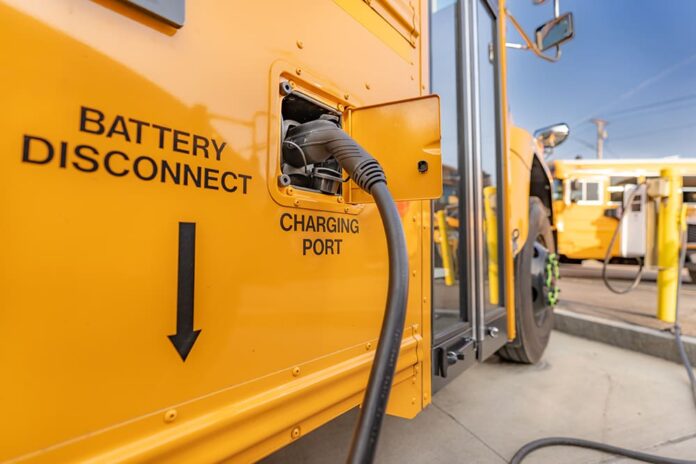
Electric utility Potomac Edison, a subsidiary of FirstEnergy that serves some 285,000 customers in Maryland, has received approval from the Maryland Public Service Commission to launch a pilot program aimed at helping local school systems transition to zero-emission school buses, EVinfo reports.

Maryland’s Climate Solutions Now Act of 2022 requires public school systems to purchase zero-emission vehicles. Potomac Edison aims to address one of the biggest barriers to EV adoption by covering the cost difference between diesel and electric buses (up to $250,000 per unit), along with the cost of charging infrastructure and any necessary electrical upgrades.

The $11.1-million pilot program will support the deployment of up to 28 electric school buses within Potomac Edison’s Maryland service territory, and will provide technical and administrative assistance to help school systems plan charging locations, install equipment and train personnel. The program will also include access to vehicle-to-grid technology, allowing Potomac Edison to evaluate how energy stored in bus batteries can be fed back to the grid when vehicles are not in use.

“This program is designed to help make [the EV] transition more practical and affordable,” said Jim Myers, FirstEnergy’s President of West Virginia and Maryland. “We’re reducing upfront costs and offering hands-on support to help school systems integrate electric buses smoothly. At the same time, we’re exploring how these buses can support grid reliability through innovative technology.”

Source: EVinfo


Source link

Charged EVs | Automotive connectivity and efficiency: seizing the Wi-Fi 7 opportunity—download the guide

0


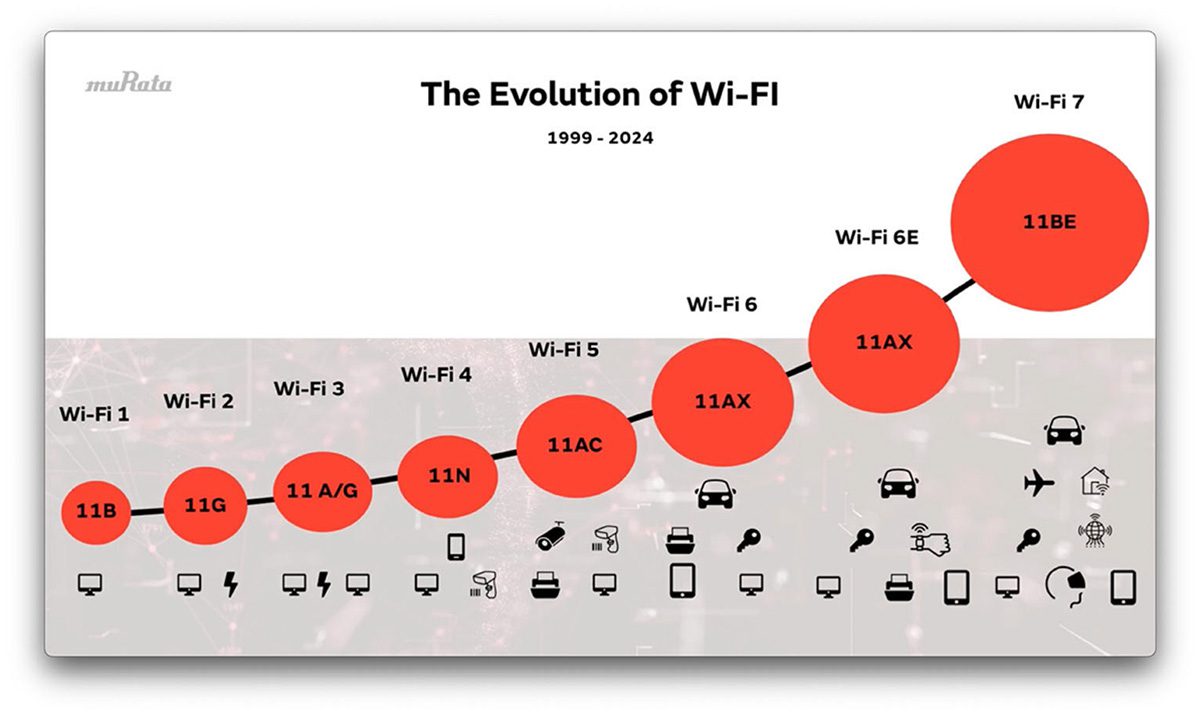
Wi-Fi 7 positions itself as a key technology for advanced automotive connectivity, supporting up to 16 spatial streams and a 320MHz channel width. Its high bandwidth capacity addresses the data transmission requirements of ADAS and autonomous driving applications.

This paper, titled “Murata Wi-Fi 7 Automotive Connectivity and Efficiency White,” outlines Wi-Fi 7’s capabilities and its relevance to the automotive industry.


Source link

Charged EVs | POSCO Future M invests in US-based Factorial to develop all-solid-state batteries

0


South Korea’s POSCO Future M has invested in battery developer Factorial, following a memorandum of understanding (MOU) signed by the two companies in November 2025 for the development of all-solid-state battery technology.

POSCO Future M is preparing for the growth of the all-solid-state battery market and will supply Factorial with a stable source of high-quality battery materials. Factorial operates a pilot plant for all-solid-state batteries in Cheonan, South Korea and is actively expanding its business.

Factorial’s all-solid-state battery platform, Solstice, delivers high levels of energy density and safety according to the company, which has established partnerships with major automakers in Korea, Europe and North America.

POSCO Future M’s Pohang cathode material plant

Factorial has been conducting sample testing of all-solid-state battery cathode materials with POSCO Future M and evaluated the Korean firm’s materials as “high-performance.”

POSCO Future M’s material design and coating technologies are optimized for all-solid-state batteries. As part of the POSCO steelmaking giant, the company is expanding its portfolio of all-solid-state battery materials, including sulfide-based solid electrolytes and silicon and lithium metal anode materials.

“Both companies have developed materials technology through a close and continuous partnership. This further developed partnership will enable us to secure competitiveness in line with the rapidly growing all-solid-state battery market,” said Hong Young-Jun, Head of Posco’s Technology Research Laboratory.

Source: POSCO


Source link

Charged EVs | Advanced thick-film heaters on steel (HoS) for EV batteries: from cold starts to warm rides

0


Sponsored by Heraeus.

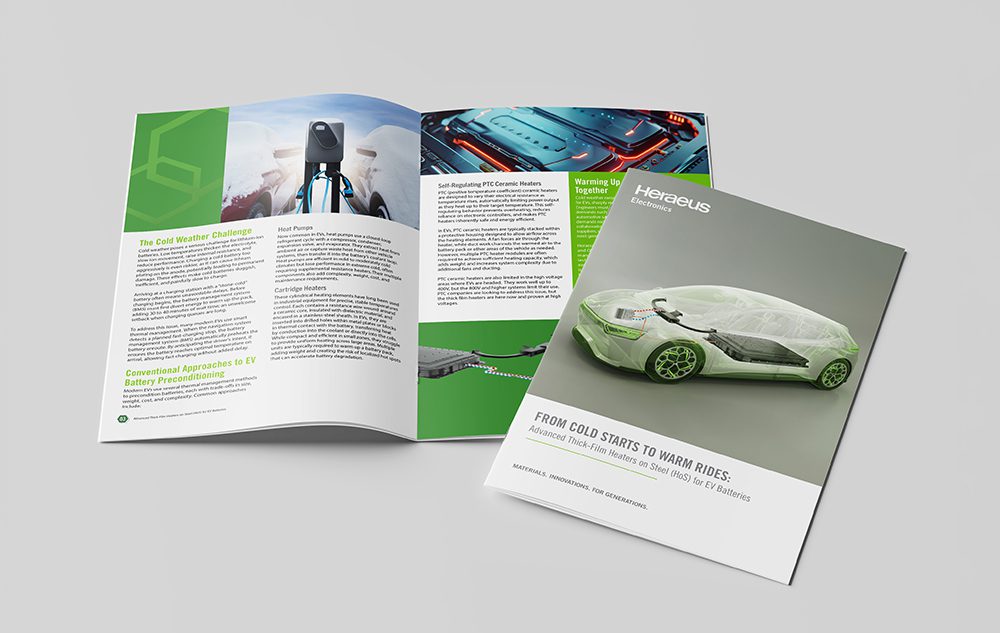
The electric vehicle market is emerging as a leading field for advanced heating technologies. In EVs, heating systems are essential not only for passenger comfort but also fundamental to thermal management, keeping battery cells within their optimal temperature range in cold climates. Proper thermal control enables faster and more efficient charging, longer driving range, and extended battery life. To achieve this, EV battery heaters must be compact, lightweight, reliable, energy-efficient, and durable under demanding conditions.

Thick-film heaters on steel (HoS) are advancing as a next-generation solution, gaining adoption in Asia due to their high-power density, design flexibility, and proven resilience in harsh environments. Unlike conventional systems such as heat pumps, cartridge heaters, or positive temperature coefficient (PTC) ceramic heaters, HoS technology offers superior efficiency, reduced size and weight, and faster thermal response.

This paper reviews traditional EV battery heating methods, outlines the performance advantages of HoS technology, and examines the market forces driving innovation in thermal management. A case study is also presented that demonstrates how HoS technology is enabling progress in electric mobility.


Source link

Charged EVs | Webinar: How to isolate charging interoperability failures fast, without endless site hopping and raw nex dumps

0


Join this webinar at our March Virtual Conference on EV Engineering, where comemso electronics GmbH will present a structured approach to quickly isolate interoperability errors in the charging process without time-consuming on-site appointments or unreadable hex dumps. The focus is on practical methods that can be used to clearly isolate causes and reproduce them.

Key takeaways:

  • Clear separation of EV, EVSE, and communication errors through targeted isolation strategies.
  • Reduction of troubleshooting time through structured analysis instead of trial and error in the field.
  • Comprehensible results for development, testing, and service without raw data overload.

Mar 12, 2026, 8:45 am EDT
Register now—it’s free!


See the complete session list for the Virtual Conference on EV Engineering here.

Broadcast live from March 9 to 12, 2026, the conference content will encompass the entire EV engineering supply chain and ecosystem, including motor and power electronics design and manufacturing, cell development, battery systems, testing, powertrains, thermal management, circuit protection, wire and cable, EMI/EMC and more.


Source link

Charged EVs | Evolito to develop axial-flux motor for electric aircraft wheel taxi system

0


Evolito says it is collaborating with Airbus, backed by the UK’s Aerospace Technology Institute and Innovate UK, to develop an on-aircraft electric wheel taxi system that lets aircraft taxi with the main engines switched off. The company says the goal is to cut operating costs, noise and emissions, with Project SONATA targeting a 47% reduction in taxi emissions.

Evolito has been selected to develop a low-speed, high-torque electric motor based on its axial-flux technology for the program (System Optimisation of Non-propulsive energy in Aircraft Taxi technologies and Architectures). The company says the proposed motor is expected to deliver about 56 Nm/kg and 350 kW peak power, and meet integration requirements for future landing gear applications.

“By developing low speed, high torque motors for aircraft landing systems, we are extending the performance envelope of our technology and contributing to the reduction of aviation’s environmental impact whilst also reducing operating costs,” said Evolito CEO Chris Harris.

Project SONATA also includes the University of Southampton, Compound Semiconductor Applications Catapult, Magnomatics, Drive System Design and DePe Gear. UK Industry Minister Chris McDonald called the work a contribution toward “Jet Zero,” and said the government is backing it through the Aerospace Technology Institute.

Source: Evolito


Source link

Charged EVs | ROHM adds compact HPLF5060 package to 40 V, 60 V automotive MOSFET lineup

0


ROHM has expanded its lineup of low-voltage (40 V, 60 V) automotive MOSFETs by introducing new devices in a compact HPLF5060 package (4.9 mm × 6.0 mm). The company is positioning the parts for applications such as main inverter control circuits, electric pumps and LED headlights.

As low-voltage MOSFET packaging trends smaller—toward 5060-size and below—ROHM says board-mount reliability can suffer due to narrow terminal spacing and leadless designs. The new HPLF5060 package is meant to address that tradeoff: it has a smaller footprint than the widely used TO-252 (6.6 mm × 10.0 mm) package, and uses gull-wing leads to improve mounting reliability. ROHM also says copper clip junction technology enables high-current operation.

Mass production of the HPLF5060-based products began in November 2025, and ROHM says online sales have started, including availability via distributors such as DigiKey and Farnell.

Next up, ROHM says it plans to start mass production around February 2026 of its smaller DFN3333 (3.3 mm × 3.3 mm) package using wettable flank technology, and has begun development of a larger TOLG (TO-leaded with gull-wing) package (9.9 mm × 11.7 mm) aimed at high-power, high-reliability applications.

Source: ROHM


Source link

Charged EVs | New study: plug-in hybrids use three times more fuel than automakers claim (even when drivers do plug them in)

0


Plug-in hybrids (PHEVs) are the epitome of a transitional technology. Their boosters say they enable drivers to complete many journeys on battery power, while offering more range for longer trips. Detractors say that they would, if owners actually plugged them in. Despite the best efforts of skeptical journalists, automakers have largely refused to release any data on how often their customers plug in their PHEVs.

A new study from the Fraunhofer Institute has found that PHEVs use much more fuel in real life than their manufacturers officially claim. The Institute carried out a large-scale analysis of about a million vehicles, using data transmitted wirelessly by PHEVs produced between 2021 and 2023 by several manufacturers.

As reported by The Guardian, the data enabled analysts to measure their real-world fuel consumption, as opposed to the figures included in the vehicles’ official EU-approved certifications. (The Fraunhofer study does not appear to have addressed the question of whether PHEV owners regularly plug in or not.)

The official fuel efficiency figures for PHEVs range from one to two liters of fuel per 100 km. (In Europe, fuel efficiency is measured in liters/100 km, not in MPG as in the States.) However, the Fraunhofer study found that, in real-world driving, the vehicles burned an average of six liters per 100 km, about three times more than automakers claim.

As every PHEV driver knows, the vehicle switches between electric and fossil power depending on which mode its little automotive brain deems to be appropriate at a particular time. Most models feature an “EV mode,” but even when driving in this mode, the gas engine will kick on from time to time. The Fraunhofer Institute’s researchers found that this is the main reason for the higher real-world fuel usage. Automakers tend to claim that their vehicles use little or no fuel when in EV mode. The study found that this is not the case.

Patrick Plötz of the Fraunhofer Institute told German broadcaster SWR that the combustion engines in PHEVs seem to turn on far more frequently than previously thought.

German-manufactured PHEVs were among those with the lowest fuel efficiency—the worst performers of all were from Porsche. The highest fuel efficiency levels were found at the budget end of the PHEV market, in vehicles from Kia, Toyota, Ford and Renault.

The Fraunhofer scientists have called for EU testing procedures to be revised to fit the real-world findings. In the EU, automakers face penalties for exceeding permitted limits on carbon emissions. Herr Plötz called on regulators to use the real-world emissions data. “Then one could say a manufacturer who does not comply with the [emissions] limits on the road may have to pay a penalty.”

Source: The Guardian


Source link

Charged EVs | California and the UK increase climate cooperation, Octopus Energy to invest $1 billion in the state

0


Governor Gavin Newsom has announced an expanded partnership between California and the UK “to tackle climate change and promote sustainable development together.” During a recent visit to the UK, the Governor and UK Secretary of State for Energy Security and Net Zero Ed Miliband, signed a Memorandum of Understanding (MOU) “deepening cooperation on climate.”

Governor Newsom also paid a visit to Octopus Energy, a retail supplier of renewable electricity, which was founded in the UK and has operations in nine countries, including in Texas. Octopus plans to invest nearly $1 billion in California companies and projects focused on “clean technologies and nature-based solutions.”

“Octopus and California are both leading the way in clean energy innovation,” said Octopus Energy Generation CEO Zoisa North-Bond. “With supportive policy and world-class entrepreneurship in and around Silicon Valley, it’s an ideal place to back long-term investment partnerships that will benefit the UK economy. We’re excited to expand Octopus internationally, backing the booming US clean tech sector while bringing innovation, growth and returns to the UK.”

Source: California Governor’s Office


Source link

Charged EVs | Proventia and Morrow sign long-term master supply agreement for LFP battery cells

0


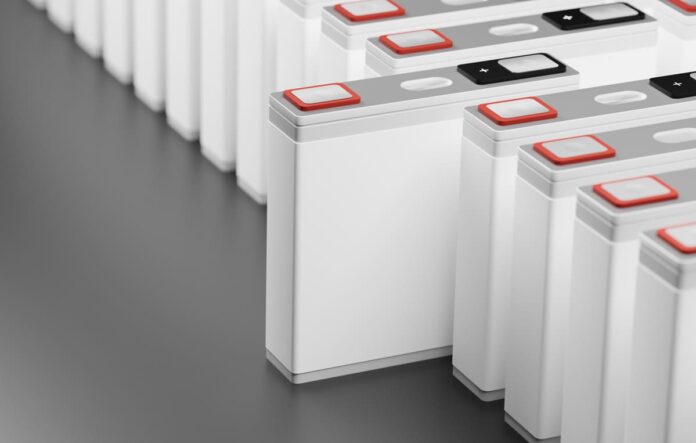
Finland-based Proventia and Morrow Batteries have signed an agreement for long-term delivery of lithium iron phosphate (LFP) battery cells for Proventia’s battery modules and packs used in off-highway machinery and industrial applications.

The agreement covers prismatic LFP cells and allows the addition of future cell chemistries as they become commercially available.

Under the agreement, Morrow will supply LFP cells for Proventia’s standard and customer-tailored battery packs. Deliveries are already underway, and the contract runs through 2031.

Proventia plans to start its first customer deliveries using Morrow cells in spring 2026. Morrow will ramp up its production capacity and continue refining its processes throughout this year.

The companies will also continue joint simulation and pack-level optimization to shorten development time, cut prototyping and testing costs and further improve battery performance and reliability.

“Being able to offer our customers battery technology manufactured in Europe, including the cells, is extremely important to us and increasingly required by our customers. This agreement supports our electric powertrain and battery development programs with quality, flexibility, and speed,” said Jari Lotvonen, Proventia’s CEO.

Source: Proventia


Source link