Wednesday, April 22, 2026
11.5 C
London
Home Blog Page 26

Charged EVs | Japanese EV startup partners with major gas station chain

0


Japanese startup KG Motors (whose investors include Toyota Gosei) makes a tiny, affordable city EV called the MiBot. The single-seat MiBot is aimed at drivers who have short urban commutes—it has about 100 kilometers of range, a top speed of 60 km/h, and a rock-bottom price tag of ¥1 million (around $7,000).

KG delivered the first units in late December 2025. Now CleanTechnica reports that Idemitsu Kosan, one of Japan’s largest oil refiners and gas station operators, took an early interest in the electric runabout, and that company execs envision some interesting synergies with their business.

In January, the two companies signed an agreement to collaborate. Idemitsu will provide sales support, delivery handling, insurance services, and after-sales maintenance and parts support.

Idemitsu will provide e-mobility services on a pilot basis at some of its apollostation service stations in Tokyo and Hiroshima beginning in April—around the same time that KG Motors plans to bring the MiBot into mass production, beginning at a volume of 300 to 500 units per month.

Idemitsu plans to converts some of its apollostation locations to electrified energy hubs. Many of the stations already offer EV charging. Under the company’s new Smart Yorozuya (“many trades”) strategy, select locations will add shopping options, solar generation and renewable electricity supply.

Oil companies have been diversifying into EV charging for years. But as CleanTechnica’s Raymond Tribdino writes, this is a deeper collaboration that could become “a test case for how a legacy oil company can remain relevant in an electrified future.”

Source: CleanTechnica



Source link

Charged EVs | Helix supplies dual-motor propulsion system delivering 1,000 hp for McMurtry Spéirling hypercar

0


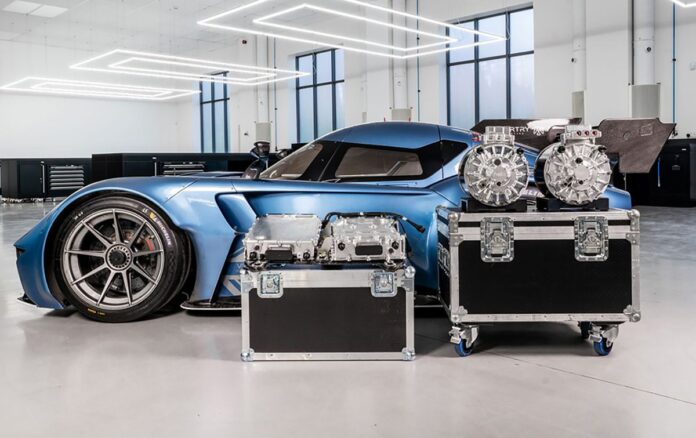
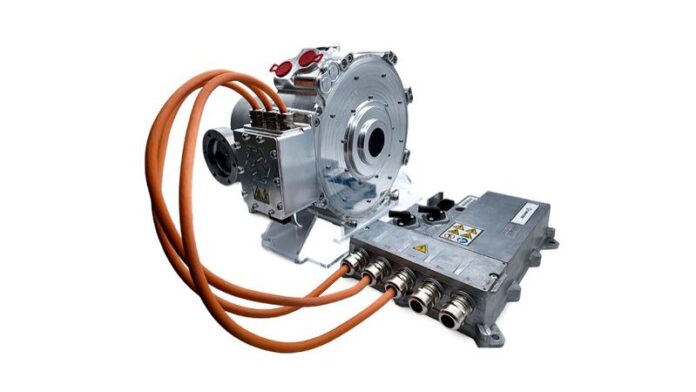
UK-based electric motor manufacturer Helix has developed a bespoke dual-motor propulsion system for the McMurtry Spéirling, the single-seater electric fan hypercar that holds records at Goodwood and Laguna Seca. Customer deliveries of the production car are set to begin in 2026.

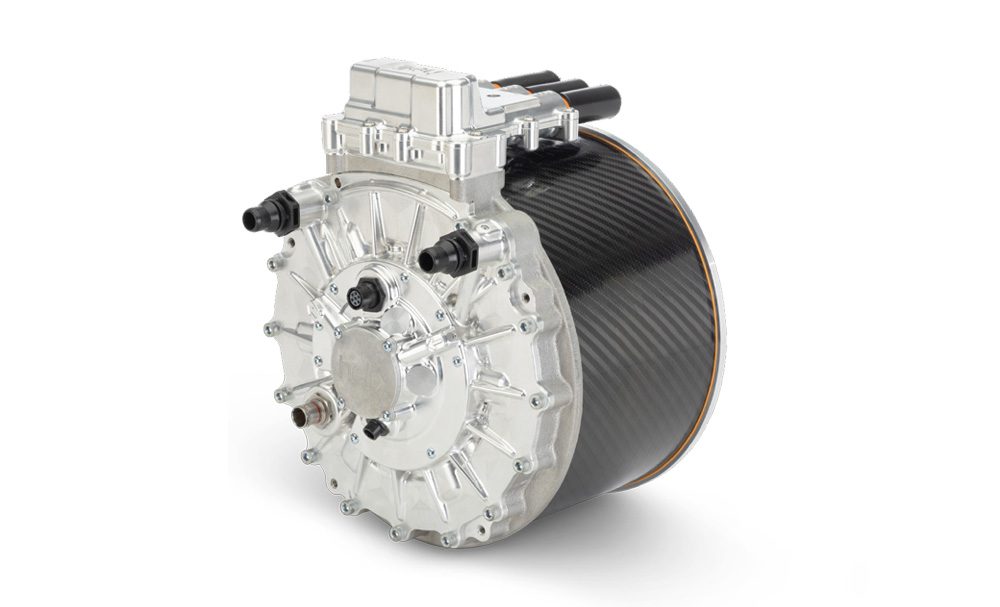
The system pairs two Helix SPX242-94 motors at the rear of the vehicle, delivering a combined 1,000 hp and 1,000 N-m of torque. Each motor produces 500 N-m and weighs just 33 kg. The compact packaging was tailored to the Spéirling’s tight single-seater layout, where it works alongside McMurtry’s fan-based downforce system. The motors mate with McMurtry’s own gearbox.

Helix SPX242-94

The Spéirling can accelerate from 0–60 mph in 1.5 seconds and cover a quarter mile in eight seconds. It has posted the fastest-ever lap of the Top Gear test track.

“The McMurtry Spéirling demonstrates one of the most effective applications of advanced electric motor technology,” said Simon Mead, automotive chief engineer at Helix. “We are proud to have been involved in its journey from an early stage, with Helix drive motor propulsion systems featuring throughout the evolution of this groundbreaking hypercar, from prototype to production.”

Helix has previously supplied propulsion systems for Formula E as well as hypercars including the Aston Martin Valkyrie, Lotus Evija and Czinger 21C.

Sources: Helix


Source link

Charged EVs | Webinar: How to decrease risks of catastrophic failures in EV battery cells (it is not what you think)

0


Lithium-ion battery technology has played a significant role in the advancement of electric vehicles and other consumer electronics. As market competition intensifies, manufacturers are striving to achieve higher power densities and production throughput. While lithium-ion technology has matured, electrical shorts can still develop inside the cell after passing production tests due to burrs or particles on the positive electrode reaching the negative electrode after inflation occurs. If these cells, which are susceptible to failure, reach the end user, the results could be catastrophic.

In order to decrease the risk of failure in the field, the root cause must be identified and any defective cells must be filtered out before they reach the end user. You may be surprised to learn that traditional Hipot and IR tests fail to catch future failures. So how do you properly identify the root cause which makes a cell susceptible to a greater risk of failure?

Join this webinar at our March Virtual Conference on EV Engineering, presented by Chroma, to learn how to identify and mitigate these occurrences in the dry cell stage before electrolytes are introduced.

Mar 10, 2026, 12:30 pm EDT
Register now—it’s free!


See the complete session list for the Virtual Conference on EV Engineering here.

Broadcast live from March 9 to 12, 2026, the conference content will encompass the entire EV engineering supply chain and ecosystem, including motor and power electronics design and manufacturing, cell development, battery systems, testing, powertrains, thermal management, circuit protection, wire and cable, EMI/EMC and more.


Source link

Charged EVs | Minespider launches digital marketplace for second-life EV batteries and recycled materials

0


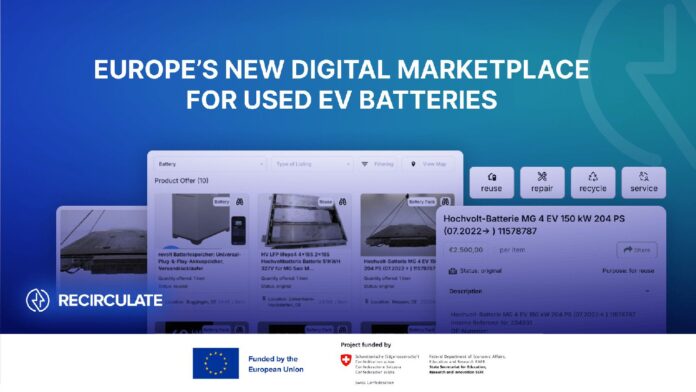
Berlin-based traceability firm Minespider has launched Recircle.market, a digital marketplace designed to connect companies across the EV battery reuse, refurbishment and recycling value chain.

The platform enables listing and trading of second-life batteries with verified technical and lifecycle data, sourcing of recycled battery materials and components, and connecting with service providers for testing, diagnostics, logistics, dismantling and certification. Users include OEMs, battery sellers, recyclers and service providers.

A central feature is integration with Digital Battery Passports (DBPs), providing transparent access to battery origin, chemistry, performance history and health data. With the EU Battery Regulation making DBPs mandatory from February 2027, Minespider says the marketplace is built to leverage that data to improve trust and reduce transaction costs in what has been a fragmented market.

“With Recircle.market, we are building the digital backbone for Europe’s circular battery economy—connecting data, materials and market actors in one interoperable ecosystem,” said Volker Krümpel, co-founder and general counsel at Minespider.

The current release is an MVP, developed as part of the EU-funded RECIRCULATE project. The platform will be further developed based on industry feedback and regulatory requirements.

Source: Minespider


Source link

Charged EVs | it’s electric to install 16 curbside EV charging stations in Washington DC pilot

0


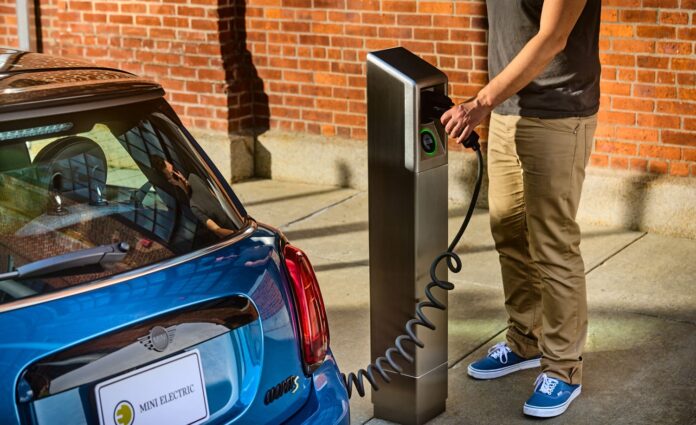
Curbside charging is the solution for urban drivers who want to go electric, but who lack private parking spaces and can’t install their own chargers. A pioneer in this space is it’s electric, which we profiled in our July-September 2024 issue.

Now Washington DC’s District Department of Transportation (DDOT) has partnered with it’s electric on a pilot program that will explore the possibilities of rolling out neighborhood curbside charging in the city.

The Neighborhood Curbside EV Charging Station Pilot will “inform regulation updates and demonstrate guidelines for a permit program for private vendors to install, operate and maintain curbside EV charging stations in the district’s public right-of-way.”

For starters, it’s electric will install, operate and maintain pairs of curbside chargers at eight locations in the city—one location in each ward (16 chargers in total). The first location is already open, next to The Festival Center on Mozart Place NW. The remaining seven sites will be deployed in the coming months. All locations have been reviewed to ensure safety, accessibility and compatibility with other street uses.

it’s electric’s Level 2 chargers don’t have attached cables. Drivers bring their own J3068-compatible charging cables, which the company provides free. This bring-your-own-cable arrangement is the norm in Europe and elsewhere, and has the advantages of eliminating vandalism and reducing street clutter.

“By implementing this pilot, DDOT can foster experimentation around urban electrification to help cities across the country accelerate the learning curve for curbside EV charging deployments,” said DDOT Director Sharon Kershbaum.

“From EV charging to E-bike battery swapping, DDOT is delivering innovative transportation infrastructure that demonstrates what cities must do to create sustainable, livable neighborhoods,” said Judy Chang, Project Director for it’s electric.

“The Festival Center is a hub for mission-driven groups, and we are thrilled to extend our commitment to our community all the way to the curb,” said Bill Mefford, Executive Director at The Festival Center. “it’s electric’s business model allows us as the property owner to share in the revenue, which we then can reinvest in our other initiatives.”

Source: it’s electric


Source link

Charged EVs | Turntide’s new axial flux drive unit delivers up to 700 kW peak in a stackable package

0


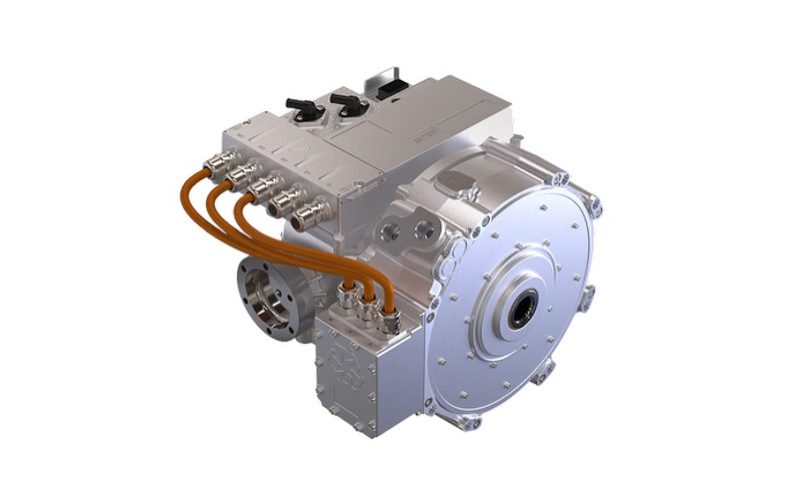
Turntide Technologies has unveiled a modular axial flux electric drive unit (EDU) that integrates motor, inverter and gearing with shared cooling in a single package. The company says the axial flux design delivers 53% higher torque density than a comparable radial flux motor in 58% less volume and at 37% less weight.

The platform supports 400 V and higher, with single or stacked motor configurations scaling from 73 kW to 220 kW nominal and 300 kW to 700 kW peak. Target applications include off-highway equipment, construction, powersports, commercial vehicles and automotive. The low-speed, high-torque characteristics of the axial flux motor allow for simpler gear designs, which Turntide says reduces mechanical complexity, weight and maintenance costs.

The company is positioning the EDU as a pre-validated platform aimed at OEMs looking to electrify without the component-level integration work that typically adds months or years to development programs. “By handling the integration, validation, and testing upfront, our EDU decreases the risk, time and cost of bringing new products to market,” said CEO Steve Hornyak.

Turntide recently put the platform through a durability test at King of the Hammers, one of the most demanding off-road races in the US. Its Sierra Echo-R became the first purpose-built EV to qualify for and compete in the Desert Challenge course, completing more than 600 miles of terrain with no drivetrain issues, according to the company.

Source: Turntide Technologies


Source link

Charged EVs | UT Austin spinout Supra aims to recover gallium, scandium and other critical minerals from waste streams

0


Supra Elemental Recovery, a spinout from the University of Texas at Austin, has launched with a $2 million pre-seed round to develop technology for recovering critical minerals—including gallium and scandium—from domestic waste streams such as industrial byproducts, mine tailings and electronic waste.

The US is currently 100% import-dependent for both gallium and scandium, elements essential to semiconductors, aerospace and defense applications. Gallium in particular is a key feedstock for the GaN power devices increasingly used in EV onboard chargers and power conversion systems.

Supra’s approach uses proprietary reusable cartridges through which dissolved industrial waste is pumped. The cartridges selectively capture and release target minerals in sequence. The company claims up to 100x greater selectivity and speed compared to incumbent refining methods, enabling higher purity at lower cost without the toxic processes used in conventional refining.

“Every year, billions of dollars worth of critical minerals are trapped in domestic waste streams,” said CEO Katie Ullmann Durham. “By profitably recovering these elements, we can secure the inputs needed for America’s advanced manufacturing future.”

The technology is also being validated for cobalt, lithium and lanthanides used in batteries and magnets. Commercial pilots are expected later in 2026. The pre-seed round was led by Crucible Capital, with participation from the UT Seed Fund, Climate Capital, Portmanteau Ventures and Pew Protection Trust.

Source: Supra


Source link

Charged EVs | Navitas unveils 5th-generation SiC MOSFET platform with 35% improved switching figure of merit

0


Navitas Semiconductor has launched its 5th-generation GeneSiC technology platform, a 1200 V SiC MOSFET line based on what the company calls Trench-Assisted Planar (TAP) architecture. The design combines the ruggedness of a planar gate structure with the performance benefits of a trench in the source region.

The headline improvement is a 35% better RDS(on) x QGD figure of merit compared to the previous-generation 1200 V technology, which translates to lower switching losses and the ability to operate at higher frequencies. The platform also achieves a roughly 25% improvement in the QGD/QGS ratio, which paired with a stable threshold voltage (VGS(th) ≥ 3 V) helps prevent parasitic turn-on in high-noise environments.

On the reliability side, Navitas is qualifying the parts to what it calls “AEC-Plus” grade—exceeding standard AEC-Q101 and JEDEC requirements. That includes 3x longer duration for static high-temperature, high-voltage stress testing and dynamic reverse bias and gate switching tests designed for fast-switching mission profiles. The company claims an extrapolated gate-oxide failure time exceeding one million years at 18 V operating VGS and 175° C.

“Our customers are redefining the boundaries of power conversion in AI data centers and energy infrastructure,” said Paul Wheeler, VP and GM of Navitas’ SiC business unit. “Significant technological improvements in our 5th-generation GeneSiC technology underscore Navitas’ commitment to delivering industry-leading performance and reliability in silicon carbide MOSFETs.”

The new platform complements Navitas’ existing ultra-high-voltage 2300 V and 3300 V SiC lines from the 4th-generation GeneSiC platform. New products based on the 5th-generation technology will be announced in the coming months. A white paper on the TAP architecture is available on the Navitas website.

Source: Navitas Semiconductor


Source link

Charged EVs | BorgWarner to supply 800 V integrated drive module and dual-inverter generator for EREV trucks

0


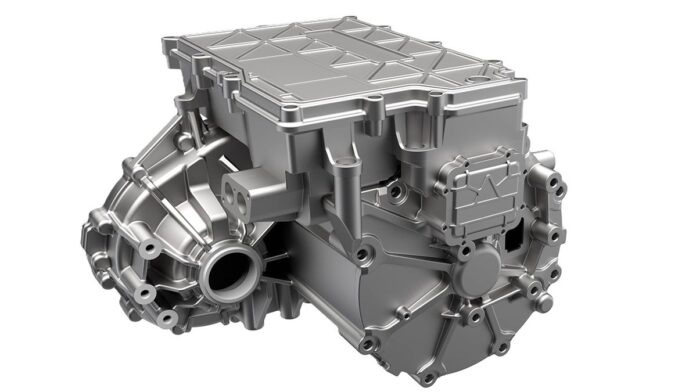
BorgWarner has secured a contract with an unnamed major North American OEM to supply an 800 V integrated drive module (iDM) and a generator module with a dual inverter. The components will be used in a series of the automaker’s extended-range electric vehicle (EREV) trucks and large-frame SUVs, with production set to begin in 2029.

The iDM is a two-in-one unit combining an induction e-machine with a gearbox. BorgWarner chose an induction motor rather than a permanent magnet design, which the company says eliminates rare-earth magnet dependency and supports a more resilient supply chain. The generator module pairs a permanent magnet electric machine with the dual inverter, mounted directly to the internal combustion engine to extend the vehicle’s electric range.

A key design challenge was fitting the drive components into packaging space shared with the ICE. BorgWarner says it achieved the required power and torque targets in a compact form factor using its torque-dense induction machine for the iDM and its next-generation Viper power module technology in the dual inverter, which the company describes as an “extremely power-dense” design that enabled a smaller, more cost-effective package.

“This business win showcases our breadth in the propulsion space in North America,” said VP Stefan Demmerle, “from platform-based, high-performing and efficient drive units to inverters, e-machines, control boards and more.”

Source: PRNewswire


Source link

Charged EVs | London Borough of Harrow rolls out 500 new on-street EV charge points

0


On-street charging is the solution for urban EV drivers who don’t have dedicated parking spaces, and London is at the center of the action.

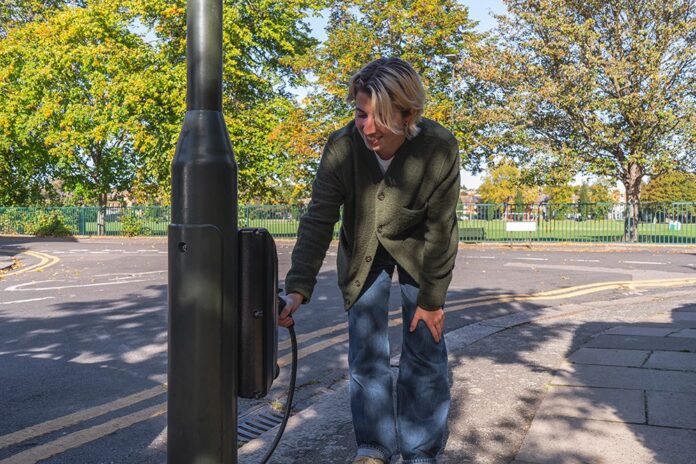
Now the London Borough of Harrow is rolling out 500 new on-street EV charge points in partnership with EV charging provider char.gy.

The charge points are attached to lamp columns and provide low-powered charging, perfectly adequate for topping up an EV while it’s parked overnight.

225 new charge points have already been installed, and another 275 are slated to be deployed by October 2028. The new charge points run on 100% renewable electricity. They feature clear pricing and discounted overnight rates.

“We’re putting residents first by making it easier to charge electric vehicles where people actually live,” said David Ashton, Cabinet Member for Finance and Highways. “More on-street charging means less time searching for a plug and more confidence for drivers every day. “

“This expansion will make a real difference for everyday drivers: people who live without a driveway, those switching to electric for the first time, and anyone who wants reliable, affordable charging close to home,” said John Lewis, CEO of char.gy. “We look forward to working with the council, residents and local communities as these chargers go live.”

The Borough of Harrow has produced a short video to get residents excited about the new infrastructure.

Source: char.gy


Source link