Thursday, April 23, 2026
6.2 C
London
Home Blog Page 33

Charged EVs | Syensqo and Axens form Argylium to advance sulfide solid electrolyte materials in Europe

0


Belgian materials company Syensqo and French clean fuels firm Axens Group have launched Argylium, a new company that will focus on developing and scaling up the industrialization of sulfide solid electrolyte materials for all-solid-state batteries (ASSBs).

The new company builds on Syensqo’s solid-state battery pilot line in La Rochelle and more than a decade of technology development at its Paris laboratory.

Argylium brings together Syensqo’s work on advanced materials and Axens Group’s experience in process design, industrial scale-up and global operation of in-organic chemistry industrial plants. That will be complemented by French public research organization IFPEN’s expertise in inorganic chemistry as well as oxide or sulfide divided materials at its Lyon research center.

Argylium will focus on collaborating with European research institutions, automotive OEMs, battery manufacturers and energy technology partners to drive innovation and  bring ASSBs to commercial production, contributing to Europe’s goal of building a sustainable and competitive solid-state battery industry.

“With over 50 years of experience in scaling up technologies to commercial levels, in partnership with IFPEN and aligned with our strategy to develop industrial assets in Europe for the production of advanced battery materials for cathodes (CAM) and recycling of black mass, our association with Syensqo aims to lay the groundwork and build a robust ecosystem for the commercialization of solid electrolytes by 2030,” said Fabrice Bertoncini, Axens Group’s Executive VP, New Development and Transformation.

Source: Syensqo



Source link

Charged EVs | Mercedes-Benz eActros electric trucks drive 2,400 km in long-haul endurance test of Megawatt Charging System

0


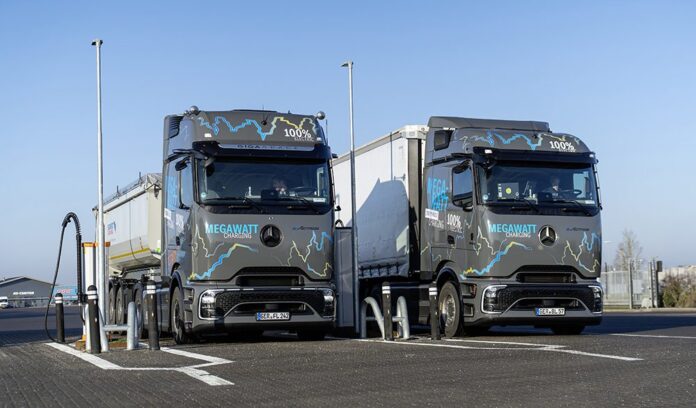
Development engineers from Mercedes‑Benz Trucks tested the Megawatt Charging System on a long‑distance test drive with two MCS‑compatible eActros 600 electric trucks.

The aim was to ensure optimal compatibility between the vehicle and megawatt charging stations from various manufacturers, as well as to gain insights into real‑world usability—including under winter conditions—ranging from the charging curve and average charging power to the overall performance of the MCS infrastructure.

The test run covered a route of approximately 2,400 kilometers, from the Mercedes‑Benz plant in Wörth am Rhein, Germany, through the Netherlands, Belgium and Denmark, to Linköping in southern Sweden. The vehicles were recharged at both public and private MCS charging sites specifically designed for trucks.

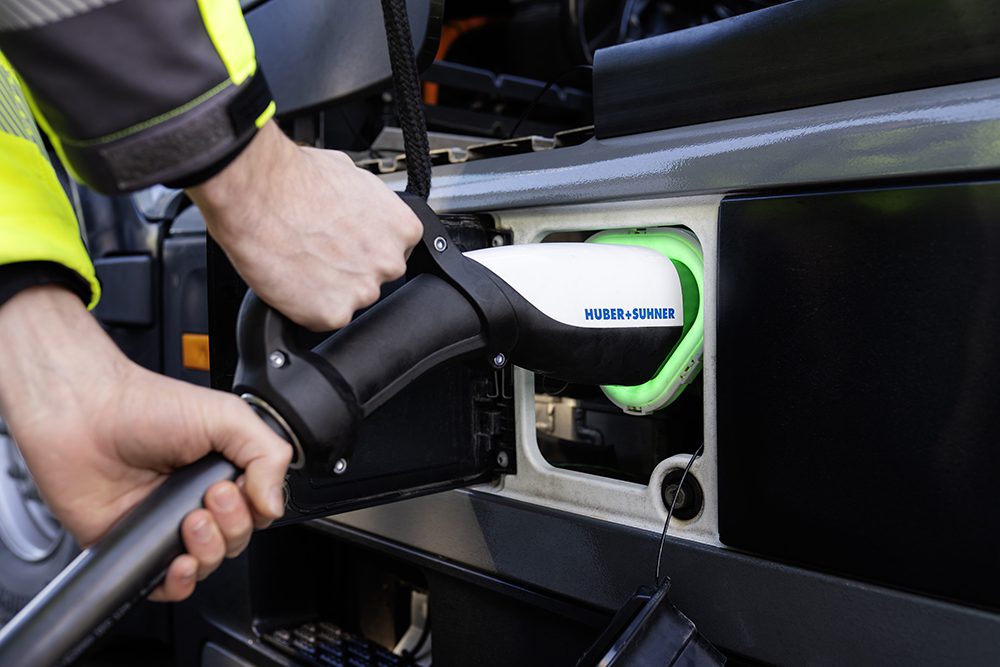
The MCS standard enables charging at power levels of up to 1,000 kW. Global standards organization CharIN is working to promote uniform interfaces between charging stations and electric trucks, and to facilitate the development of a pan‑European fast‑charging network for heavy‑duty commercial vehicles.

“The key challenges in megawatt charging lie in harmonizing the vehicle with various charging systems,” said Peter Ziegler, Head of E Charging Components, Mercedes Benz Trucks. “At the same time, the extreme charging currents in MCS charging place high demands on thermal management. The current test run provides an important opportunity to evaluate these aspects under real-world operating conditions.”

Source: Daimler Truck


Source link

Charged EVs | EV charging provider L-Charge raises $10 million in new funding round

0


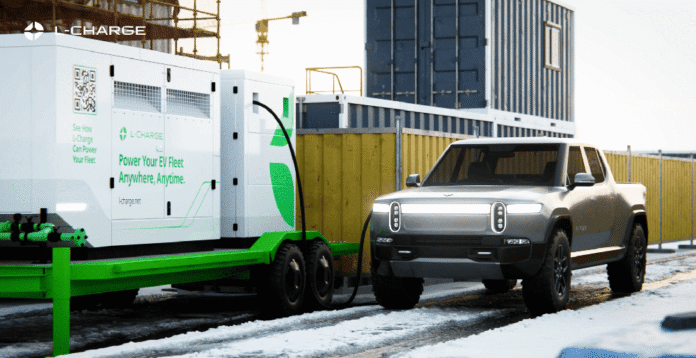
EV charging provider L-Charge has closed a $10-million funding round, led by Ultra Capital.

L-Charge will use the new capital to expand its national installation footprint; add new product categories; expand its portfolio of off-grid chargers; grow sales, operations and customer support teams to support increasing project volume; and strengthen long-term infrastructure and service capabilities. The investment will support rapid growth in installations in the rideshare, last-mile delivery and fleet segments.

Fleet operators installing charging infrastructure continue to face permitting delays and infrastructure backlogs that add cost and slow EV deployments. L-Charge aims to address these challenges by delivering modular, off-grid charging solutions that enable fleets to electrify in a matter of weeks.

L-Charge’s Charging-as-a-Service and Power-as-a-Service offerings provide commercial customers with a flexible, zero-CapEx alternative to traditional grid-dependent charging infrastructure.

“Demand for our solutions continues to grow as fleet operators look for reliable ways to deploy EVs despite grid limitations and rising costs,” said Stephen Kelley, CEO of L-Charge. “This investment allows us to scale faster, support more customers, and keep building the team needed to sustain our next phase of growth.”

“L-Charge is solving one of the most critical bottlenecks in fleet electrification today—access to power,” said Kristian Hanelt, Partner at Ultra Capital. “Their ability to deploy charging infrastructure independent of grid timelines makes them uniquely positioned to support the rapid electrification of commercial fleets.”

Source: L-Charge


Source link

Charged EVs | Aperam launches “slinky” production method for electric motor stators and rotors

0


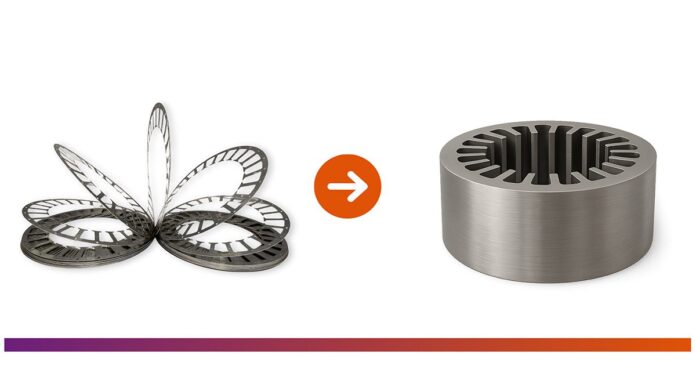
Aperam has announced a new “slinky” production method for making iron-cobalt (FeCo) alloy stators and rotors for high-performance electric motors. The company says the approach adapts an in-plane helical winding process—already used for electrical steel—to FeCo alloys, which it describes as difficult to form despite “exceptional magnetic performance.”

Aperam’s slinky method forms motor components from continuous strips instead of stamping them from sheet metal. It uses a combination of linear stamping and in-plane helical bending to create slinky stators and rotors. The process reduces metal scrap to 10–30%, versus conventional methods that can waste up to 70% of the high-cost material.

Aperam says that combining FeCo alloys with the slinky process yields +35% power density for eVTOL aircraft, +25% torque for hypercars and –15% motor size, which it calls essential for aviation weight constraints.

The approach is built around Aperam’s AFK family of FeCo alloys, including IMPHY AFK1, AFK18 and AFK502R.

“FeCo alloys offer unparalleled magnetic performance, but their cost has historically limited their efficient use,” said Frederic Mattei, CEO Alloys and Specialties and CIO at Aperam. “With ‘slinky’, we drastically reduce waste and also enable the design of more efficient electric motors, helping our customers meet the growing demands of sustainable transportation.”

Source: Aperam


Source link

Charged EVs | HPQ Silicon lithium-ion cells earn UL 1642 certification for US commercial sales

0


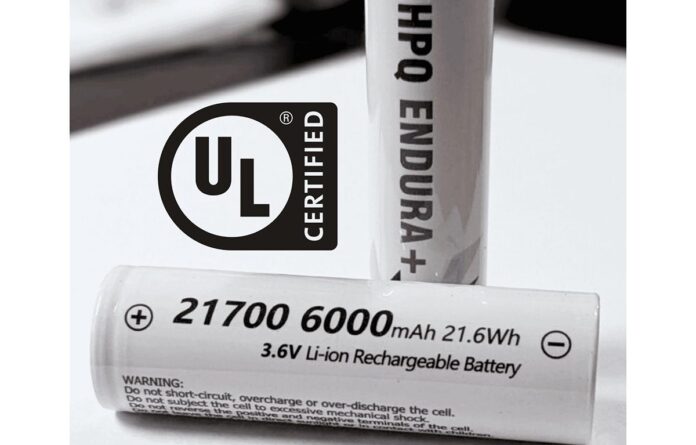
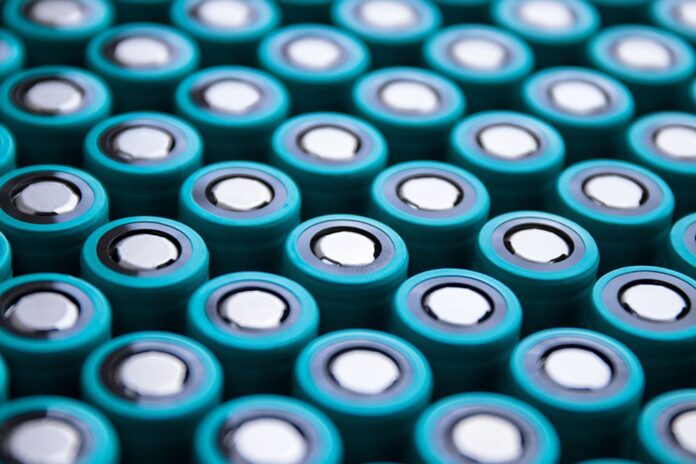
HPQ Silicon’s ENDURA+ lithium-ion battery cells have received UL 1642 certification, a US safety standard required for commercial acceptance of lithium-ion cells. The certification covers its cylindrical 18650 (4,000 mAh) and 21700 (6,000 mAh) cell formats and clears the cells for US commercial sales.

The company says the UL 1642 milestone follows its earlier UN 38.3 transport certification and completes its US regulatory framework for the HPQ ENDURA+ cell platform. With both certifications in place, HPQ is moving from validation to commercialization, including immediate customer engagement and qualification discussions in the US market.

The UL 1642 evaluates cell-level safety through electrical, mechanical and thermal stress tests intended to simulate real-world use and failure scenarios, and is a prerequisite for downstream integration into certified battery packs and finished products because it applies at the cell level.

“Certifying at the cell level, is where real market access begins in the United States,” said Bernard Tourillon, President and CEO of HPQ Silicon Inc. “UL 1642 gives OEMs and integrators confidence that safety has been engineered into the core of the product, not added later at the system level. For HPQ ENDURA+, this removes a key qualification hurdle and allows commercial conversations to focus on performance, scalability, and integration rather than regulatory risk.”

Source: HPQ Silicon


Source link

Charged EVs | Study details automakers’ resistance strategies against electric vehicles

0


To those of us who’ve been following the industry for the past decade, it’s plain that legacy automakers have devoted considerable resources to avoiding the transition to EVs. A new study, “The temporal evolution of resistance strategies during low-carbon transitions: Revealing the industry playbook of US, German, and Japanese automakers in the unfolding electric vehicle transition (1990–2025),” published in ScienceDirect, details the strategies that US, German and Japanese automakers have employed to resist the EV transition.

“Rather than understanding resistance as a temporary phenomenon in early transition stages, we conceptualize it as a dimension recurring over multiple phases,” the authors write. “We develop an ideal-type framework of changes in the type and focus of resistance strategies during five phases of low-carbon reorientation, thereby identifying the industry playbook. We apply this framework to three case studies of incumbent automakers in the United States, Germany and Japan, which since the 1990s have used multiple resistance strategies while reorienting towards BEVs.”

The long process of dragging automakers kicking and screaming into the future has unfolded at different paces in the three major auto markets. The authors found that “US automakers resisted strongly from the early 1990s, German automakers gradually increased their resistance strategies over time, and Japanese automakers hardly resisted in early phases (because of their reorientation towards hybrid electric vehicles) but strongly resisted BEVs in later phases. We further find that US automakers used more overt confrontational strategies, while Japanese and German automakers relied on less visible lobbying and consultation tactics. Automakers shifted focus in the last period from opposing the direction of travel towards resisting the speed of change.”

The authors found that the OEMs have consistently resisted selling EVs over time, and continue to do so even now that they have made significant investments in EV factories and supply chains (and as they fondly fantasize about their “electric futures” in press materials aimed at the left-leaning media).

“Although automakers are now significantly reorienting towards BEVs, they continue to use resistance strategies,” the study authors write. “We explain this paradox by suggesting that automakers play multi-dimensional chess, in which they reorient in some dimensions while resisting in others.”

Another way of explaining the apparent paradox: corporations, like governments, are not monoliths, and their policies are not always logical or consistent. As Charged and others have often noted, there have always been pro-EV and anti-EV factions within every automaker, and like Zoroaster’s good and evil spirits, these eternally vie for the mastery.

Source: The Last Driver License Holder


Source link

Charged EVs | New report: Managed EV charging can double the number of EVs the electrical grid can support

0


A favorite trope of the anti-EV crowd is that EVs will “crash the grid.” None of the utility execs we’ve spoken to share that fear, but it is true that unmanaged charging can exacerbate the problem of peak power demand. The answer is managed charging, which schedules charging for off-peak times.

EnergyHub, a provider of grid-edge flexibility solutions, and The Brattle Group have released the results of a study that used real-world EV data from an EnergyHub program in Washington State to quantify the grid reliability and cost savings benefits of active managed charging.

The Brattle Group’s analysis of EnergyHub’s active managed charging solution shows that optimization of EV charging can help utilities meet this challenge effectively by reducing local grid stress and minimizing wholesale market costs, while continuing to ensure customer charging needs are met.

The report, “Demonstrating the Full Value of Managed EV Charging,” compares two active management strategies tested in real-world trials to both unmanaged charging and chaging that takes advantage of passive time of use (TOU) rates.

The researchers found that active managed charging:

  • Reduces EV charging peaks by up to 50%. Active management smooths EV load at the service transformer and feeder levels, reducing distribution grid congestion.
  • Significantly increases distribution system hosting capacity. Managed charging can allow the distribution network to support approximately double the number of EVs before requiring upgrades.
  • Saves up to $400 per EV annually.
  • Delivers 95% of charging during off-peak periods. Active managed charging can handle complex time-of-use rate schedules for customers, reducing charging bills.
  • Ensures customer charging needs are met. In the study, 100% of EVs that remained plugged in with sufficient time to charge reached their desired target state of charge, while individual customers overrode charging commands in an average of 2.3 sessions per month under active management strategies. 

“As utilities prepare for accelerating EV adoption, understanding the real-world performance of active managed charging is critical for planners to be able to utilize these solutions in distribution system planning,” said Akhilesh Ramakrishnan, Managing Energy Associate at The Brattle Group and co-author of the study. “This report provides a rigorous, data-driven evaluation of how active managed charging can improve hosting capacity and reduce grid infrastructure costs. By using actual vehicle data to model distribution system impacts, this study moves the industry beyond assumptions to actionable insights that support proactive planning and investment decisions.”

“This report confirms that active managed EV charging isn’t just a theoretical solution—it delivers measurable grid value today,” said Freddie Hall, Data Scientist at EnergyHub. “By actively shaping load at the distribution level, utilities can defer costly upgrades, improve reliability, and design programs that work for both the grid and drivers.”

Source: The Brattle Group


Source link

Charged EVs | Honda and Princeton NuEnergy to collaborate on plasma-based direct cathode-to-cathode battery recycling

0


Japanese automaker Honda and battery materials manufacturer Princeton NuEnergy have signed a memorandum of understanding (MOU) to collaborate on the development of lithium-ion battery recycling technologies.

Since 2022, the companies have conducted joint technical validation of Princeton NuEnergy’s plasma-based direct cathode-to-cathode recycling and upcycling technologies for lithium-ion battery manufacturing scrap and end-of-life materials.

Through this work, Princeton NuEnergy has produced rejuvenated nickel manganese cobalt (NMC) cathode active material that has performance characteristics comparable to primary raw material. This supports Honda’s long-term goals for resource circularity and electrification, the companies said.

The strategic partnership will focus on collaborative validation projects and the potential for future commercial-scale applications that align Honda’s global electrification strategy and Princeton NuEnergy’s goal to expand cost-efficient production of battery-grade cathode active materials through a closed-loop platform.

“Our work with Honda shows strong technical alignment and a clear pathway for advancing circular battery materials. This MOU reflects a shared commitment to accelerating the next phase of sustainable, high-performance material production,” said Dr. Chao Yan, co-founder and CEO of Princeton NuEnergy.

Source: Princeton NuEnergy


Source link

Charged EVs | POSCO FutureM signs joint venture agreement for LFP cathode materials

0


South Korean battery materials manufacturer POSCO FutureM has signed a joint venture (JV) agreement with CNGR and its Korean subsidiary, FINO, to manufacture lithium iron phosphate (LFP) cathode materials.

The companies have agreed to build an LFP cathode material plant that will have an annual production capacity of 50,000 tons. Located in the Yeongil Bay 4 General Industrial Complex in Pohang, South Korea, site construction is scheduled to begin in 2026. Mass production is slated for 2027.

POSCO Future M has long been in discussions with CNGR to strengthen their business partnership across production, technology, and marketing, establishing CNP Advanced Materials Technology, a joint venture with CNGR and Pino, in 2024.

POSCO Future M said it is accelerating its LFP cathode material business in response to rapid growth in the energy storage systems market.

Although LFP batteries deliver lower power output than nickel manganese cobalt batteries, their low price and long lifespan are driving increasing use in various applications, including energy storage and entry-level EVs.

Separately from the contract signing, POSCO Future M plans to convert part of the high-nickel cathode production line at its Pohang cathode material plant into an LFP cathode material production line to begin supplying the LFP market in the second half of 2026.

Source: POSCO


Source link

Charged EVs | Kempower and GodEnergi partner to deliver commercial EV charging in the Nordics

0


Finnish EVSE manufacturer Kempower and Danish EV infrastructure provider GodEnergi have been working together since 2022. GodEnergi became Kempower’s sales and service partner in 2023.

GodEnergi offers commercial EV charging infrastructure in Denmark, Sweden, and Norway, where it operates over 7,000 charging points. More than 1,500 of these are DC fast chargers specifically designed to support the needs of heavy transport, B2B customers and the public sector. Some 80% of GodEnergi’s installations are produced with Kempower solutions.

GodEnergi delivers end-to-end EV charging solutions, from initial concepts to fully operational systems that include traffic measures such as lighting, road markings and bollards. The company has its own team of project managers, electricians and contractors. GodEnergi’s service technicians are factory-trained on Kempower charging equipment.

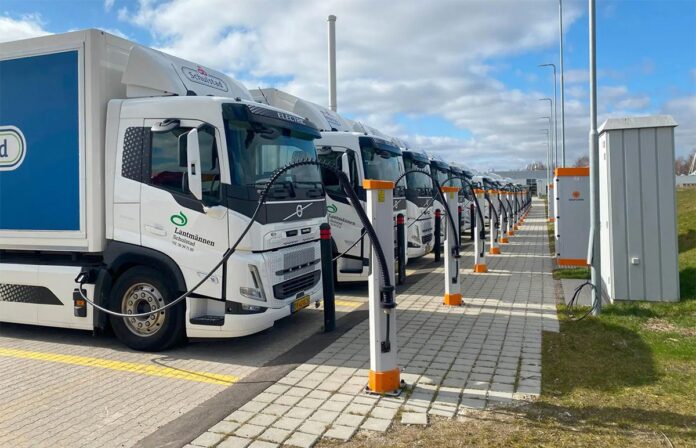
In 2024, the two companies equipped 27 locations in Denmark with charging infrastructure for electric trucks. The companies built two sites for transport and logistics provider Danske Fragtmænd, in Aalborg and in Odense, where GodEnergi installed Denmark’s first megawatt charger for electric trucks. The Odense station includes four Kempower Liquid-Cooled Satellites and payment terminals, enabling future revenue generation.

Also in Aalborg, GodEnergi and Kempower built a large electric bus charging station for Tide Bus, featuring 124 charging points and intelligent charging management from ChargEye. The facility includes six transformers drawing 6,500 A from a 20,000-volt supply, powered by over 20 km of cable.

The companies built two depot charging stations, in Hvidovre and Vejle, for bread producer Lantmännen Schulstad, which is transitioning to a 100% electric truck fleet.  

Multinational manufacturer Danfoss has five locations that combine depot and fast charging, allowing trucks to load, unload and charge simultaneously.

GodEnergi equipped the Gladsaxe Operations Department with a solution featuring 27 charging outlets for garbage and crane trucks and 2,000 amps of current.

“We feel confident setting up Kempower charging solutions at our customers’ sites—they are both efficient and intelligent. We can create highly flexible and creative solutions, adaptable to all types of installations. Both software and hardware continuously evolve to meet industry needs,’’ says Jan Darville, owner and CEO of GodEnergi.

Source: Kempower


Source link