Saturday, April 25, 2026
17.3 C
London
Home Blog Page 39

Charged EVs | VAC and Aclara developing mine-to-magnets supply chain

0


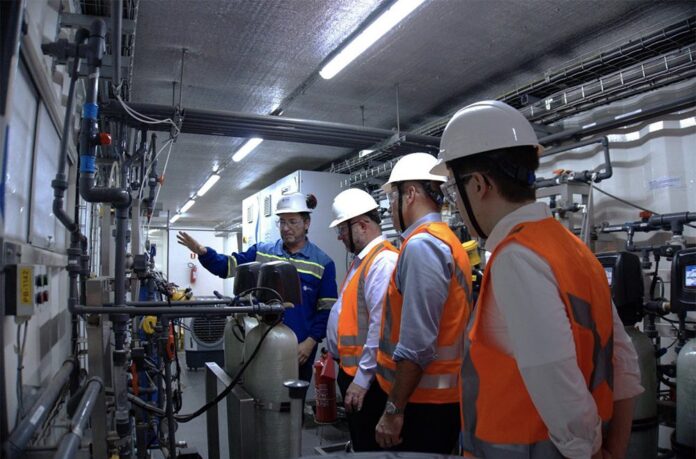
Aclara Resources strengthened its relationship with Germany-based Vacuumschmelze (VAC) and its subsidiary eVAC Magnetics during a recent visit to its Carina Project pilot plant facility.

The companies are working together to design and implement a fully integrated rare earth supply chain for the production of permanent magnets.

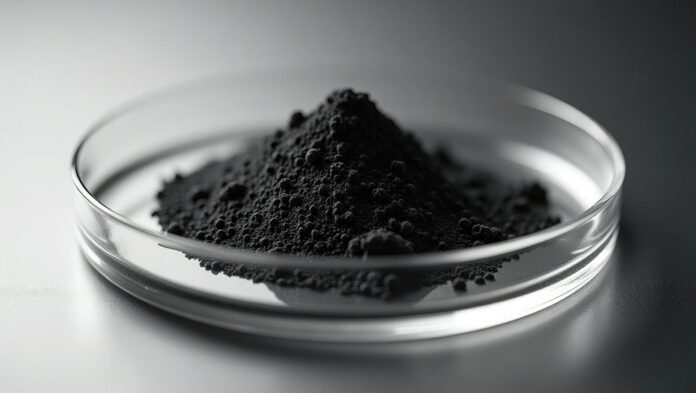
Aclara’s pilot operation at the Carina Project in Goiás, Brazil has produced approximately 150 kg of high-purity mixed rare earth carbonate (MREC) using the company’s Circular Mineral Harvesting process. 

The MREC will be further refined into individual rare earth oxides at Alara’s recently-announced separation facility in Louisiana, which is scheduled for completion by the fourth quarter of 2027. The company plans to develop metal and alloy processing capabilities at the same site to convert the oxides into the specialized alloys required for magnet production. 

Aclara and VAC discussed product specifications, process scalability and integration pathways with VAC’s magnet manufacturing operations, including the eVAC magnet production facility that opened this year in South Carolina. 

 “VAC’s visit to our pilot facilities represents another tangible step toward realizing our shared vision of an integrated, transparent and sustainable mine-to-magnets supply chain,” said Jose Palma, Executive Vice President of Aclara. “Aclara is uniquely positioned to supply significant quantities of heavy rare earth elements by mid-2028, perfectly aligning with VAC’s growth plans in the United States and globally.”

The companies signed a memorandum of understanding in 2024, which formalized their intent to jointly develop a mine-to-magnet supply chain for manufacturers in the EV, renewable energy, robotics and advanced manufacturing sectors.

Aclara and VAC agreed to collaborate technically and commercially to establish a cost-effective and geopolitically independent supply chain for rare earth permanent magnets, and to jointly engage with automakers and industrial customers to present a solution for securing permanent magnets produced outside Asia. To that end, the companies agreed to align their product specifications and cost models to ensure that Aclara’s rare earth oxides, alloys and magnets will meet VAC’s magnetic manufacturing requirements.

Aclara is developing two ionic clay deposits rich in heavy rare earths in Brazil and Chile as well as the separation plant in Louisiana. It has also formed a metals and alloys joint venture with CAP to produce high-performance rare earth alloys, a key feedstock for VAC’s permanent magnet production lines.

Source: Aclara



Source link

Charged EVs | Cabot signs multi-year EV battery materials supply deal with VW subsidiary PowerCo

0


Cabot has announced a multi-year supply agreement with PowerCo SE, a Volkswagen Group battery manufacturing subsidiary. Under the deal, Cabot will supply conductive carbons and conductive dispersions for lithium-ion EV battery electrodes, positioning the agreement as part of Cabot’s growth push in battery materials.

Cabot says its conductive carbons and dispersions are designed to increase battery conductivity and efficiency. The company reports that these conductive formulations can support higher energy density, faster charging, and extended battery life in lithium-ion batteries—performance targets aligned with next-generation EV requirements.

“We are proud to collaborate with one of Europe’s foremost EV battery manufacturers to deliver innovative solutions that meet the evolving demands of the electric vehicle market,” said Jeff Zhu, Executive Vice President and President, Carbon and Silica Technologies, Battery Materials and Asia Pacific Region. “This agreement positions us as one of the leading conductive materials suppliers in the European EV battery market. Furthermore, it reflects the strength of our technology and our ability to scale production to meet growing global demand.”

Cabot notes the agreement is expected to contribute “meaningfully” to its growth in battery materials and reinforce its role in the EV value chain.

Source: Cabot


Source link

Charged EVs | Allegro launches ACS37200 current sensor for low-loss EV power electronics

0


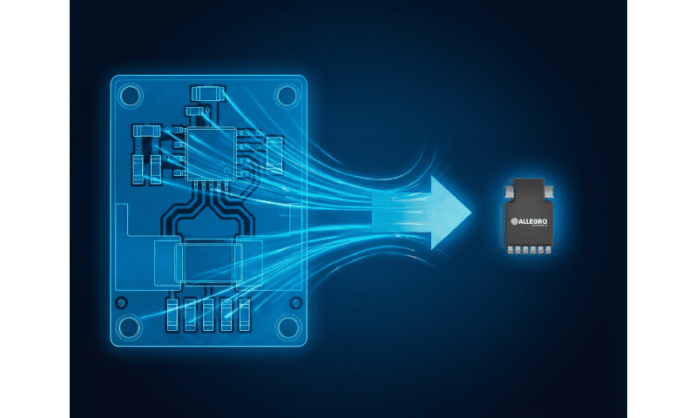
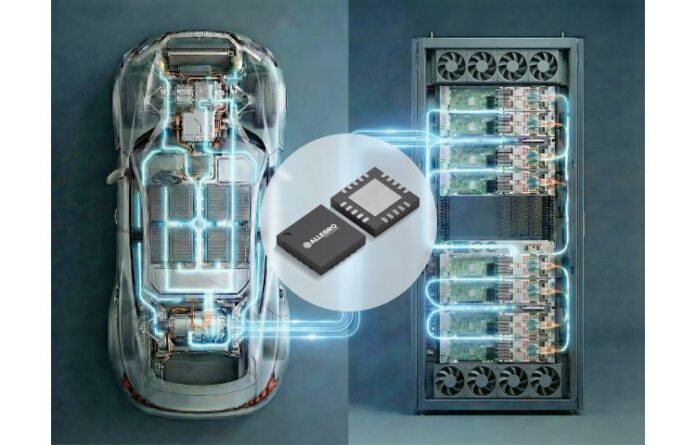
Allegro MicroSystems has introduced the ACS37200, a galvanically isolated current sensor designed to increase efficiency and power density in high-current applications, including hybrid and EVs. Allegro says the ACS37200 addresses a key challenge facing EV and industrial power engineers: the heat and energy loss caused by traditional shunt resistors in high-current designs.

The ACS37200 features a conductor resistance of 50 microohms, which, according to Allegro, reduces power loss by 90 percent when compared to a conventional 0.5 milliohm shunt resistor in a 100 amp system. For example, a traditional shunt could waste up to 5 watts as heat, while the ACS37200 would limit this loss to 0.5 watts. This minimizes wasted energy and reduces the need for bulky heatsinks, enabling more compact and energy-efficient power electronics in EVs and related applications.

The sensor is packaged in a 100-square-millimeter PSOF footprint, which Allegro says is 70 percent smaller than its previous-generation ACS772 CB package and occupies 95 percent less board space than discrete shunt-based solutions. The small size and reduced thermal output allow designers to optimize system layouts for higher power density and reliability.

For EV traction inverters, battery management and other high-voltage power systems, the ACS37200 integrates certified galvanic isolation at 1,000 volts RMS (1,414 volts DC) within a single surface-mount package. It meets the UL 62368-1 safety standard and comes factory-calibrated, effectively replacing shunt resistors, isolation amplifiers, and associated passive components. This integration simplifies bills of materials, streamlines supply chains and reduces the complexity of high-voltage isolation design.

“Our customers consistently tell us that power is a major bottleneck. Systems need to monitor, convert and deliver more power than ever before in the same or even smaller form factors,” said Matt Hein, Business Line Director of Current Sensors at Allegro MicroSystems. “By drastically cutting power loss and offering a 95% reduction in footprint, we are giving our customers more design freedom, higher power density, and a faster path to building smaller, more efficient systems for the future of e-Mobility, industrial automation, and clean energy.”


Source: Allegro MicroSystems


Source link

Charged EVs | ElectricFish targets gas stations for its Turbo Charge EV charging platform

0


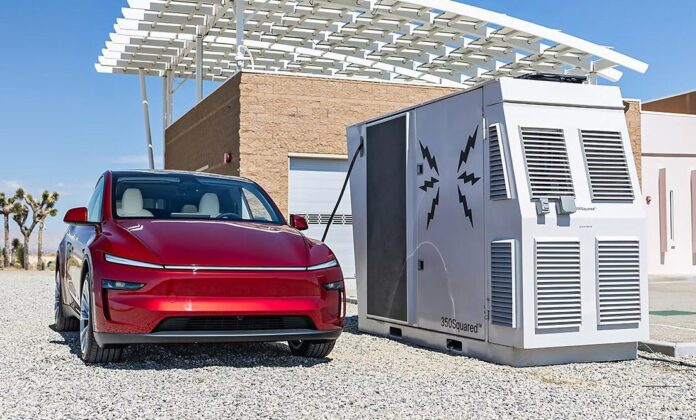
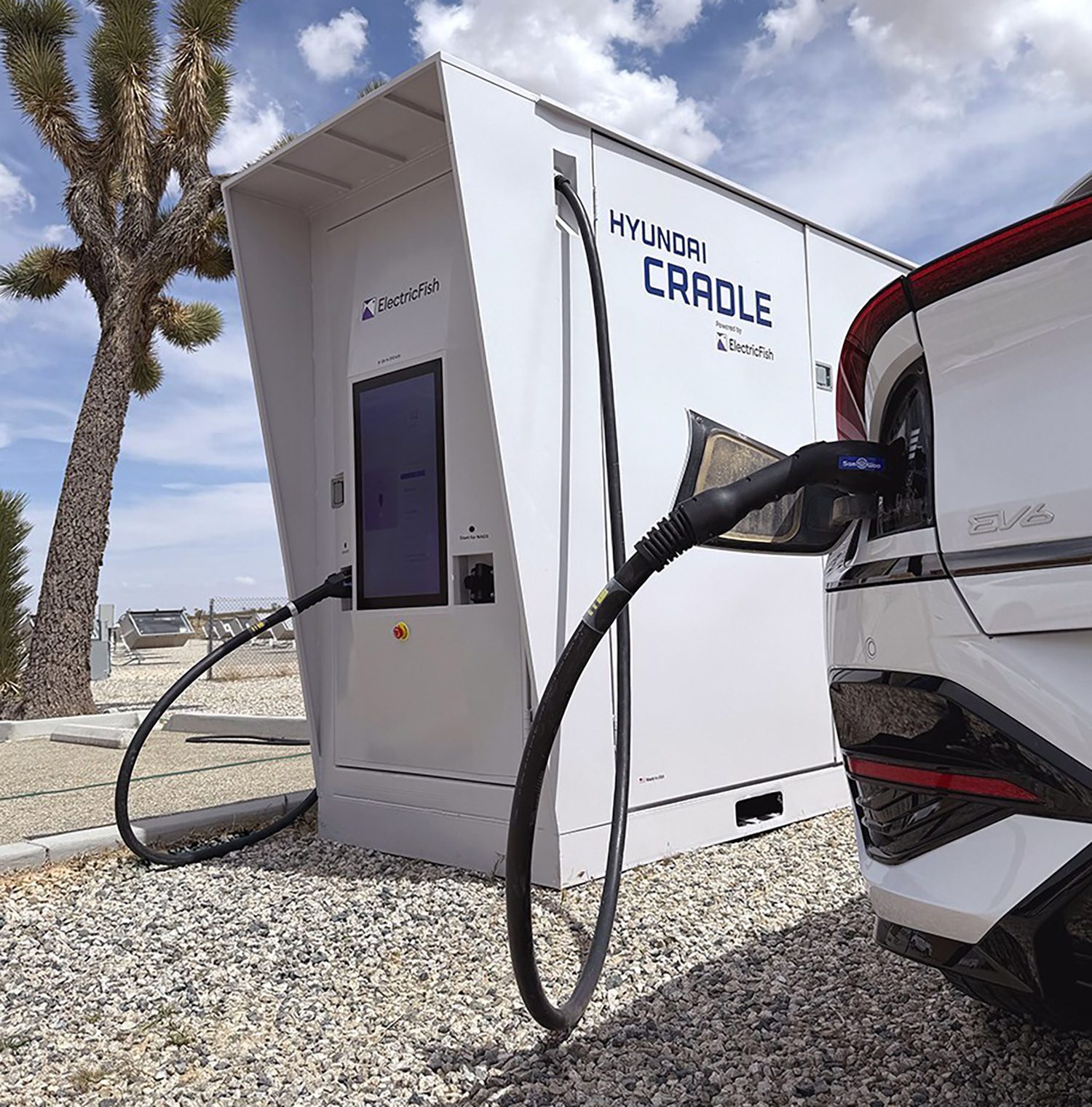
ElectricFish Energy has unveiled a new EV charging platform aimed at gas stations. The new Turbo Charge platform includes three integrated components:

  • The ElectricFish 400squared is an EV charger with energy storage. Each unit combines a 400 kWh battery with dual 400 kW DC fast charging ports.
  • Reef is a real-time charging station management system that gives operators visibility into charging sessions, energy flow and station performance.
  • Stargazer, the system’s cloud-based engine, is designed to optimize charging schedules, predict demand, and manage grid services to maximize revenue for site hosts.

“We don’t sell EV chargers or batteries—we sell time and uptime,” said ElectricFish CTO Nelio Batista. “We’ve decoupled charging speed from grid limits by actively managing when energy flows in or out, so fast charging strengthens the grid instead of destabilizing it.”

ElectricFish has several installations already underway in the US. A commercial deployment is now live in Detroit’s Eastern Market district, where ElectricFish provides charging for a logistics hub’s fleet of electric trucks, as well as to the public.

ElectricFish’s battery-supported chargers draw power from their own energy storage systems rather than directly from the grid—they can absorb demand spikes, and can even sell power back to the grid during peak periods. According to the company, its system can deliver 400 kW charging from a 30 kW grid connection, and can be deployed in 4-6 weeks.

Under ElectricFish’s revenue-share program, station owners provide space and a modest electrical connection. ElectricFish covers the hardware and installation and then splits the charging revenue with the host.

“Gas stations are built for short dwell times and high turnover. We designed our new Turbo Charge service to behave like a pump, not a parking space,” said Anurag Kamal, ElectricFish CEO and co-founder. “But the real moat is our software. Our Stargazer engine doesn’t just charge cars. It manages energy flow, predicts demand, and helps utilities stabilize the grid. We’re not a hardware company. We’re an energy platform.”

Source: ElectricFish


Source link

Charged EVs | NEO Battery Materials receives first commercial order for silicon-enhanced battery materials

0


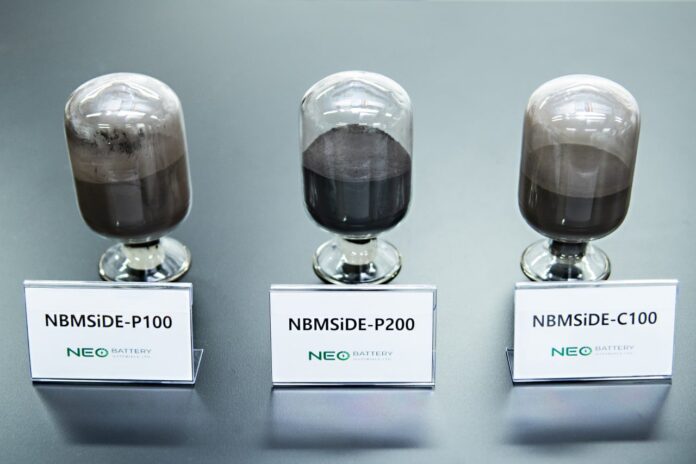
Canada-based NEO Battery Materials, which is developing silicon-enhanced battery materials and components, has received its first commercial purchase orders for near-term delivery from an unnamed Fortune Global 500 Asian automotive manufacturer.

The lithium-ion battery orders were issued through ENPLUS (EN+), a temporary intermediary coordinating commercial supply with the OEM.

Unlike earlier commitments that NEO has received from drone and robotics partners that require development lead times, the company has already started manufacturing for the OEM’s orders and will ship the batteries upon completion.

NEO is producing the batteries at its new facility in Gimje, South Korea. The facility’s commercial-scale electrode and high-capacity pouch cell production capabilities have enabled the company to begin production without new construction or commissioning delays.

“We are pleased to initiate commercial production with a global automotive OEM partner through EN+,” said Seok Joung Youn, Head of Manufacturing and Facility Operations at NEO. “These orders provide an opportunity to demonstrate our manufacturing capability in producing industry-grade battery components and cells. As we work toward commercial output in the automotive sector, we will continue advancing silicon-enhanced battery production and expanding our downstream market pipeline.”

Source: NEO Battery Materials


Source link

Charged EVs | Umicore and HS Hyosung form JV to industrialize silicon anode materials for EV batteries

0


Belgian battery materials producer Umicore has formed a joint venture (JV) with South Korea’s HS Hyosung Advanced Materials to advance the industrialization and commercialization of its silicon carbon composite anode materials for lithium-ion EV batteries.

After more than a decade of research and development, Umicore’s flagship center for anode technology in Olen, Belgium, is ready to transition to industrial-scale production, the company said.

The joint venture, Extra Mile Materials, will further develop the technology, and scale Umicore’s existing line to an industrial demonstration plant by the end of 2026. Umicore will hold a minority stake of 20% in the JV.

All of Umicore’s employees working on the anode materials will transfer to Extra Mile Materials. The materials are in qualification at multiple battery cell makers, the company said.

“This joint venture aligns with our strategy to partner along our battery materials value chain. Scaling and valorizing the anode material technology created by our teams in Belgium demonstrates our commitment to innovation,” said Bart Sap, CEO of Umicore.

Source: Umicore


Source link

Charged EVs | Volt Carbon reports second US patent and new lithium battery test results

0


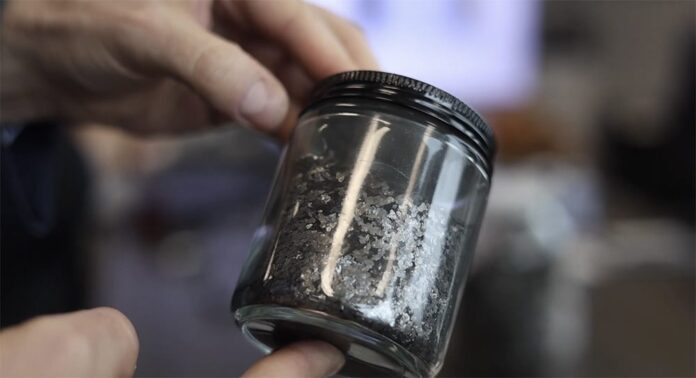
Canadian lithium battery developer Volt Carbon Technologies has received a second United States patent for its dry-separation graphite platform and reported new technical results from its lithium battery development program.

Volt Carbon has received its patent titled “Method and System for Aerodynamic Air Classification” from the United States Patent and Trademark Office, issued as USPTO Patent Number 12491538. The patents for its air classification technology support the aerodynamic separation method at the core of its dry separation graphite purification technology.

The company operates a lithium-ion battery plant and a graphite processing facility in Guelph, Ontario and holds mining claims across Ontario, Quebec and British Columbia.

Recent work at the Guelph facility includes long-duration cycling, high-rate discharge testing, and expanded low-temperature evaluations to determine the most effective configurations for extended cycle life and high discharge performance in its batteries.

The testing is part of the company’s ongoing work to refine its lithium metal architecture. The battery has now achieved 1,600 cycles at a 0.75 C discharge rate and demonstrates stable behavior over a significant number of cycles, the company noted. The cathode loading used for this single layer pouch cell is projected to support a 340 Wh/kg lithium metal configuration with parallel testing underway to advance the company’s 400 Wh/kg design.

Cells tested at a 10 C discharge rate using Volt’s low temperature electrolyte formulation demonstrated strong capacity retention under high power demand. This highlights the chemistry’s ability to deliver rapid discharge performance while maintaining stability.

The battery demonstrated stable behavior and strong operating characteristics under cold-load conditions, having made meaningful gains in performance below -40° C compared with its previously reported performance last year.

In a separate evaluation using a different cell format, Volt Carbon also completed a comparative low-temperature test of its Solid UltraBattery pouch cell against a commercially available 21700 lithium-ion cell.

The Solid UltraBattery pouch cell delivered usable performance at -20° C and -40° C, while the commercial 21700 cell showed a rapid decline at -20° C and complete failure at -40° C. Previous testing has shown Volt’s cell can withstand temperatures as low as -80° C.

“Demonstrating strong retention at a 10 C discharge rate is important for aerospace and UAV applications that require rapid power delivery,” said V-Bond Lee, President and Chief Executive Officer. “These performance levels are generally not seen together in lithium-metal systems, making the results important for engineering teams evaluating high-power or cold-weather platforms. Strengthening our IP portfolio alongside this technical progress remains an important part of our strategy.”

Source: Volt Carbon Technologies


Source link

Charged EVs | Autel Energy launches MaxiCharger EV charger with integrated app-free credit card payments

0


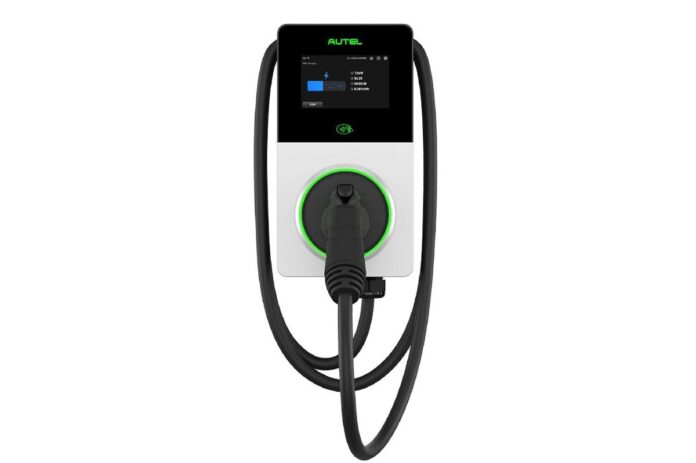
Autel Energy has launched its new MaxiCharger AC Single configuration for US markets, featuring an integrated Nayax Uno Mini payment device. This upgrade delivers app-free credit card payment capabilities directly at the charger and is aimed at accelerating large-scale AC charging deployments in sectors such as destination, workplace, hospitality, fleet and multi-family residential applications.

The latest MaxiCharger AC Single retains its existing architecture and installation footprint but now incorporates embedded card payment functionality. Technical specifications include adjustable output up to 19.2 kW at 80 amps (site configurable), smart dynamic load balancing for networked installations, support for ISO 15118 Plug & Charge and AutoCharge, compatibility with Open Charge Point Protocol 1.6J and 2.0.1, a five-year standard warranty, and a design lifespan exceeding 10 years. The integration introduces no mechanical or enclosure changes, supporting streamlined adoption for retrofits or new construction.

The embedded Nayax Uno Mini system adds support for contactless EMV, chip insert and NFC wallet payments. Users benefit from app-free, registration-free charging for public access, while RFID and closed-loop payment options are available for fleet and controlled access deployments. The system enables immediate monetization of charging infrastructure.

Integration with Nayax follows a 2025 partnership, with a plan to bring Nayax payment technology to an estimated 100,000 Autel chargers across North America and Europe by late 2026.

Autel Energy says that operators gain a consistent installation workflow with current AC Single units, rapid commissioning via Autel’s digital platform, remote monitoring and diagnostics, and several connectivity options, including Wi-Fi, Ethernet, and Wi-SUN.

“Our partnership with Autel is about enabling smarter, more scalable EV charging,” said Aaron Greenberg, Chief Strategy Officer at Nayax. “By embedding the Nayax Uno Mini directly into the MaxiCharger platform, Autel is delivering a charger that is turnkey, card-payment ready, and designed for deployment at scale across North America.”

Source: Autel Energy


Source link

Charged EVs | Less Common Metals to supply rare earths to Arnold Magnetic Technologies

0


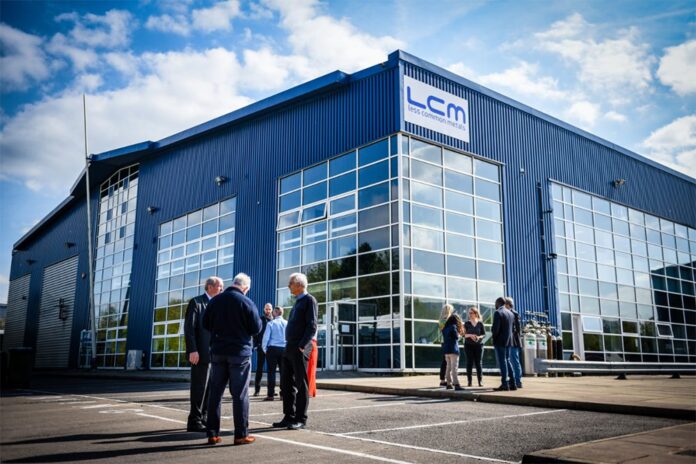
UK-based Less Common Metals (LCM), which was recently acquired by USA Rare Earth, has signed a supply agreement with Belgian chemical company Solvay and Arnold Magnetic Technologies, a subsidiary of Compass Diversified, to provide rare earth materials for Arnold’s permanent magnet production.

LCM’s metal and alloy-making capabilities will ensure a reliable source of high-quality rare earth materials from outside China for Arnold’s production.

USA Rare Earth completed its acquisition of LCM in November 2025. LCM continues to serve its global customer base while providing alloy feedstock for its new parent’s Stillwater, Oklahoma magnet manufacturing facility, which is scheduled to be commissioned during the first quarter of 2026.

USA Rare Earth intends to establish domestic rare earth and critical minerals supply, extraction and processing capabilities to supply its magnet manufacturing plant and sell surplus materials to third parties.

“This collaboration exemplifies the type of industrial partnerships that are rebuilding strength and resilience across the rare-earth ecosystem outside of China,” said Barbara Humpton, CEO of USA Rare Earth. “LCM’s role demonstrates the strategic importance of secure, reliable sourcing, and how collaboration between trusted partners can guarantee sustainable access to critical rare earth materials for global magnet manufacturers.”

Source: USA Rare Earth


Source link

Charged EVs | Allegro MicroSystems expands gate driver portfolio to simplify 800 V SiC power design

0


Allegro MicroSystems has released its AHV85003 and AHV85043 isolated gate driver chipset, expanding its Power-Thru isolated gate driver portfolio. This chipset joins Allegro’s existing AHV85311 integrated solution, forming a product ecosystem for high-voltage silicon carbide (SiC) designs in EVs, data centers and other systems. Allegro says that this new offering addresses the challenge of power conversion design in 800-volt systems by eliminating the need for external isolated bias supplies for gate drivers, which can reduce the overall solution footprint and bill of materials.

The Power-Thru isolated gate drivers integrate both signal and power across a single isolation barrier. This architecture reduces common-mode capacitance by up to 15 times compared to traditional isolated gate drivers that use external bias DC-DC converters. The company says that the devices achieve up to a 20 decibel improvement in electromagnetic interference (EMI) performance compared to leading competitor solutions, which can significantly boost system efficiency and reduce noise challenges for design teams.

For EV designers using SiC FETs, the expanded product family supports a multi-source strategy with selectable gate-to-source voltages of 15, 18, or 20 volts, along with adjustable regulated negative voltage. This enables compatibility across SiC FETs from different vendors, reducing the need for board redesigns. The new portfolio provides two options: the AHV85311 integrated solution includes the isolation transformer for a streamlined, all-in-one approach, while the new AHV85003 and AHV85043 chipset allows engineers to customize external transformer selection to meet specific isolation requirements and optimize layout or cost.

“We are redefining what engineers should expect from a gate driver,” said Vijay Mangtani, Vice President and GM of High Voltage Power Products at Allegro MicroSystems. “With Power-Thru, we solved the fundamental physics problem of noise in high-voltage systems. Now, by offering both a chipset and an integrated solution, we are giving our customers a complete toolkit. Whether they need the plug-and-play speed of an integrated solution or the granular control of a chipset, they get the same game-changing efficiency and the freedom to use the SiC FETs of their choice.”

Source: Allegro MicroSystems


Source link