Tuesday, April 21, 2026
9 C
London
Home Blog Page 5

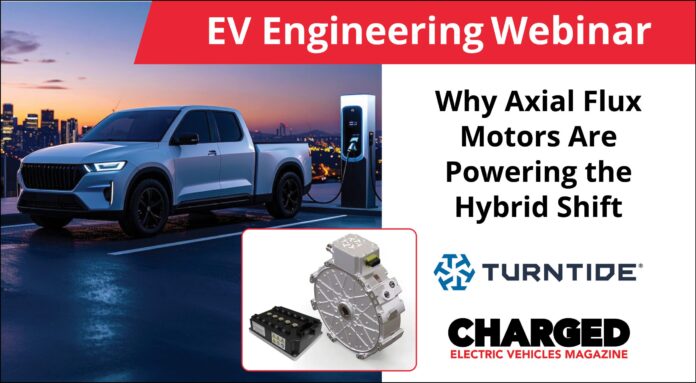
Charged EVs | Webinar: Why axial flux motors are powering the hybrid shift

0


This transformation is occurring globally, and axial flux technology is the answer.

Across on-highway, off-highway, marine, and industrial equipment sectors, the path to decarbonization is rarely linear. Real-world duty cycles, infrastructure limitations, cost pressures, and regulatory diversity mean that a single powertrain solution cannot meet every operational need. Hybrid systems have emerged not as an interim compromise but as a durable and scalable architecture for the future of mobility and work machines.

Join this webinar where experts from Turntide Technologies discuss the hybrid transformation and how axial flux motors are the X-factor for smart and efficient systems.

Register now. It’s free!
May 19, 2026 11:00 AM ET


Source link

Charged EVs | Arteco expands low-conductivity coolant options for EV indirect cooling systems

0


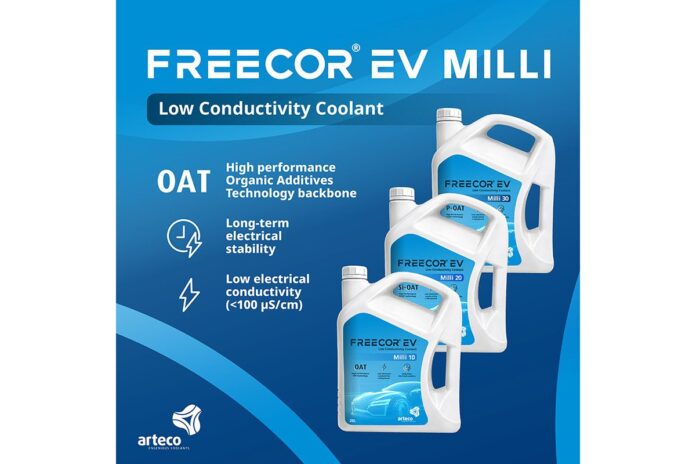
Arteco has added two patented coolants to its Freecor EV Milli range—Freecor EV Milli 20 (Si-OAT) and Freecor EV Milli 30 (P-OAT)—completing a three-product lineup of low-electrical-conductivity (LECC) formulations for indirect cooling systems in battery electric vehicles. The existing Freecor® EV Milli 10 uses standard OAT technology; the two additions bring silicate-OAT and phosphate-OAT variants.

All three are monoethylene glycol (MEG)-based and maintain electrical conductivity below 100 μS/cm, compliant with China’s GB 29743.2 standard and ASTM D8566 for low-conductivity EV coolants. They’re intended for indirect cooling of battery packs, electric motors and power electronics—the circuits where coolant leaking into a high-voltage system poses a short-circuit risk.

Low electrical conductivity is the critical property: conventional antifreeze runs at conductivities orders of magnitude higher, which is acceptable in combustion engine cooling systems but problematic near high-voltage BEV components. Keeping conductivity below 100 μS/cm limits fault current if coolant contacts live components. Beyond electrical safety, the range includes a brazing flux compensation package that protects aluminum heat exchangers from residue buildup, organic corrosion inhibition for long service life, and thermal performance Arteco says supports battery longevity and faster charging cycles.

The three OAT variants give manufacturers flexibility to match coolant chemistry to their system architecture—OAT, Si-OAT and P-OAT differ in inhibitor longevity, silicate or phosphate contributions, and interactions with aluminum components. All variants are available with bio-based or recycled base fluids under Arteco’s ECO coolant program. Freecor EV Milli 20 and 30 are now available through Arteco’s distribution network.

Source: Arteco


Source link

Charged EVs | Investor groups press freight industry to reduce fleet emissions

0


The ongoing process of transport electrification sometimes resembles a tug of war: forward-looking companies, environmental and consumer advocates, and (sometimes) government agencies pressure industries to electrify, while automakers, freight haulers and their trade groups pull in the other direction, trying to preserve the fossil fuel-dependent status quo as long as possible.

Arguably, the only pressure that matters in the end is economic pressure. With this in mind, NGO ShareAction “mobilizes global investors to use their influence to tackle climate change, protect the natural world and improve people’s health.”

Recently, some 31 investors, representing over $1.8 trillion in assets under management, issued a public statement urging freight and logistics companies to take action to address air pollution, calling for improved reporting, target setting, and concrete measures to reduce harmful emissions.

The investors warn that transparent reporting on air pollution remains limited—few companies in the freight and logistics sector acknowledge their contribution to harmful emissions, and even fewer are taking proactive steps to reduce pollutants.

The signatories are urging companies in the freight and logistics sector to:

  • Recognise air pollution as a material business issue.
  • Measure and disclose key health harming air pollutants.
  • Set time-bound reduction targets for priority air pollutants.
  • Accelerate the transition to cleaner vehicle fleets.
  • Engage in industry and policy initiatives to support effective action on air pollution.

Alongside calls for voluntary action from companies, signatories are urging standard-setting bodies and government to strengthen mandatory corporate disclosure requirements for air pollution.

“Investors are rightly concerned about the lack of meaningful action from freight companies to reduce harmful pollutants from vehicle fleets,” said Justine Holmes, Clean Air Lead at ShareAction. “Air pollution is one of the most damaging health risks in investors’ portfolios—healthcare costs and lost workforce productivity cost the global economy $6 trillion every year.”

Source: ShareAction


Source link

Charged EVs | HPQ Silicon reports 6,696 mAh from GEN4 silicon anode in 21700 format, 45% above graphite baseline

0


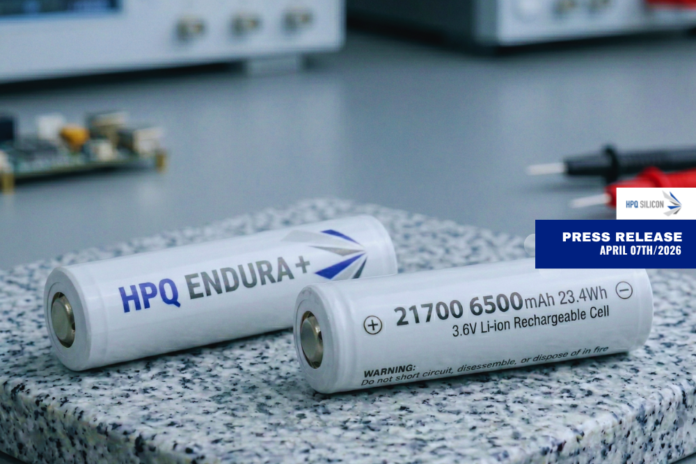
HPQ Silicon has reported that 21700 cylindrical cells made with Novacium’s GEN4 silicon-based anode material achieved an average discharge capacity above 6,600 mAh, with a record cell reaching 6,696 mAh at 319.9 Wh/kg gravimetric and 906.2 Wh/L volumetric energy density, under standard industry test conditions (0.1C discharge, 4.2–2.5 V, 25 °C).

Commercial 21700 graphite cells typically deliver 4,800–5,000 mAh. HPQ notes that capacities above 6,500 mAh in this format are currently limited to a small number of developers globally, citing Molicel, EVE Energy and Amprius as comparables. GEN4 represents a 45% improvement over HPQ’s graphite baseline and a 9% advance over GEN3 in the same format.

The result is the latest step in a staged generational progression. HPQ’s 18650 graphite reference measured 2,778 mAh; subsequent generations in 18650 reached ~3,153 mAh (GEN1), ~3,808 mAh (GEN2) and ~4,030 mAh (GEN3) before the transition to 21700 cells pushed GEN3 to ~6,050 mAh and GEN4 to its current 6,600+ mAh average. Future iterations are targeting the 7,000 mAh range.

The cells were manufactured by an industrial partner, and HPQ describes these as development and validation results rather than commercial production data. HPQ holds exclusive North American rights to commercialize Novacium’s GEN3 and GEN4 materials under the ENDURA+ brand.

“Reaching an average above 6,500 mAh, with a peak of 6,696 mAh, using a material that has not yet been fully optimized, confirms we have an industrially viable, high-performance solution advancing within our commercialization pathway,” said Bernard Tourillon, President and CEO of HPQ Silicon.

Source: HPQ Silicon


Source link

Charged EVs | SWTCH Energy’s new EV charging system works with one tap—even offline

0


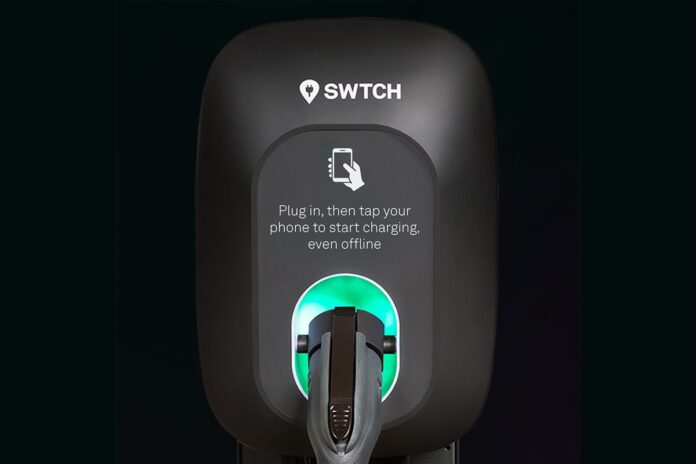
EV charging provider SWTCH Energy has added a new feature within its SWTCH Cortex intelligent charging platform that lets drivers start a charging session with a single smartphone tap—even when a cellular signal is unavailable.

Underground garages and remote commercial sites are notorious dead zones for cellular connectivity, SWTCH explains. For EV drivers, this can result in a frustrating gap between pulling up to a charger and getting a charge started.

The new SWTCH Tap feature is designed to eliminate that gap. The technology uses NFC to identify the charger and the driver’s account instantly—bypassing menus, app downloads and cloud handshakes.

When both the charger and the driver’s phone are online, the tap provides a one-click start—no QR codes, no looking up station IDs, and no waiting for a signal. If a driver has no cellular signal on their phone, the charger recognizes their SWTCH account via NFC and authenticates the session locally. Even in the case of a complete network outage, the system can authorize the charging session using local intelligence—via SWTCH Nexus edge computing or cached user IDs on the charger itself.

SWTCH’s approach uses a standard OCPP framework to cache user data locally, so the charger retains the ability to authenticate sessions even when entirely disconnected from the cloud. Transaction data syncs automatically once connectivity is restored.

“The biggest hurdle to a great driver experience is often the connectivity burden at the site,” said Carter Li, CEO of SWTCH. “With SWTCH Tap, we’ve streamlined the process to a single tap while ensuring the charger works every time, regardless of network status. By utilizing local authorization and UID caching, the charger can make decisions in real time without waiting for a cloud handshake.”

Source: SWTCH


Source link

Charged EVs | Emobi and DIMO deliver customized Plug & Charge-enabled EV charging for fleets

0


EV charging roaming provider Emobi and software provider DIMO have collaborated to launch a device that enables electric vehicle fleets to implement Plug & Charge using Emobi’s ISO 15118-based JustPlug solution.

Plug & Charge is a system based on the ISO 15118 standard that handles user authentication and payment automatically, with no need for apps, RFID cards or other clumsy solutions. The system is already widely used in Europe, but as numerous players in the EV charging field have told Charged, technical hurdles are holding back wider adoption. Many EVs on the road today don’t support Plug & Charge.

Emobi and DIMO claim to have found a way to work around this limitation: “Unlike existing Plug & Charge implementations that rely on automaker-issued certificates, this solution enables ISO 15118 digital certificates that are provided directly to vehicles through DIMO’s physical or virtual device, allowing any fleet or driver, with any vehicle, to independently enable Plug & Charge.”

DIMO says its aftermarket device suite can serve as a “bridge” for Plug & Charge without requiring any changes to the vehicle. Emobi’s JustPlug technology can issue and manage an ISO 15118 digital certificate at the fleet level via DIMO’s device, eliminating the need for automaker involvement, firmware updates or charging hardware upgrades.

“Electric vehicles have been promised a seamless Plug & Charge experience for years, but have had to keep waiting as the industry struggled to deliver it at scale,” said Lin Sun Fa, CEO of Emobi. “Issuing ISO 15118 digital certificates directly to fleets through DIMO’s device puts control where it belongs, and unlocks Plug & Charge functionality for any car today.”

“Plug & Charge is just the beginning. Once a vehicle has a session identity through DIMO, you can layer on tolling, parking, insurance, and connected services that activate per trip and shut off at return,” said Yevgeny Khessin, co-founder of DIMO. “Emobi is the first partner to ship on this infrastructure, and charging is the perfect place to start.”

Source: Emobi


Source link

Charged EVs | Purem by Eberspächer hits 100,000-unit China production for steel EV battery housing, targets Europe

0


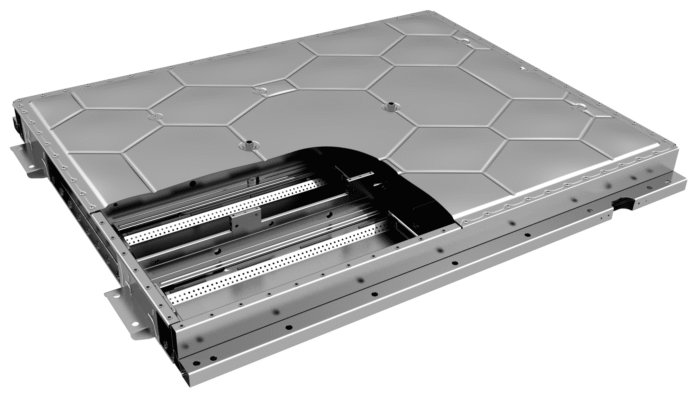
Purem by Eberspächer is bringing its high-strength steel battery housing to the European EV market, following the start of series production in China at volumes exceeding 100,000 units per year from the second half of 2026. The company will present the technology at AABC Europe 2026 in Mainz, Germany, from May 18–21 (booth 606).

The steel housing is positioned as a cost and weight alternative to the aluminum designs currently standard in EV battery packs. Higher-strength steel enables thinner walls, Purem says, resulting in housings that are lighter than aluminum equivalents—while also being cheaper to produce and lower in manufacturing carbon footprint due to lower CO₂ intensity in production and superior recyclability. The China program was secured through nominations from Chinese OEMs.

For the European market, Purem has co-founded a consortium to develop a stainless steel variant through a concept study. Partners include Sphere Energy, Bertrandt, the Tillmann Group, Reinert, Baosteel Lasertechnik and 3M. The group is targeting a design that eliminates the need for additional corrosion protection while achieving crash resistance through purpose-designed profiles and reinforcements. Purem also says it’s using AI tooling to calculate individual customer specifications and manufacturing adaptations faster than conventional engineering methods.

Purem is the exhaust and acoustic systems division of Eberspächer Group, applying its existing expertise in materials processing and welding to battery enclosure development.

Source: Eberspächer


Source link

Charged EVs | Electrovaya collaborates on DOE-funded project to develop next-gen energy storage for critical infrastructure

0


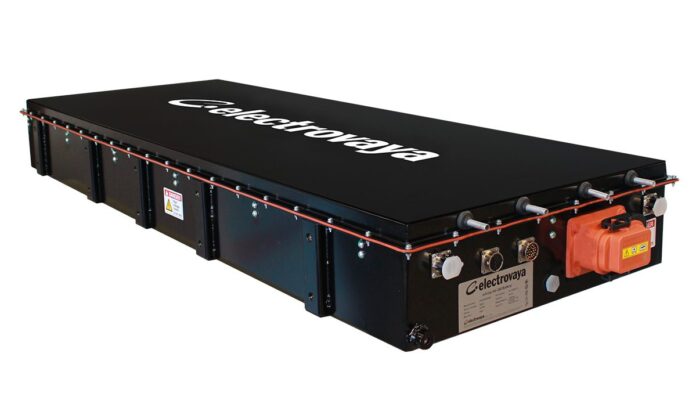
Battery manufacturer Electrovaya will participate in a DOE-funded project led by Binghamton University to develop and demonstrate a next-generation energy storage system for critical infrastructure applications.

The project, supported by a $5-million award from the DOE under its Critical Facility Energy Resilience (CiFER) program, will focus on the design and deployment of a 1.2 MWh battery system, which will be installed at Binghamton University’s Center for Energy-Smart Electronic Systems (ES2) and integrated into a data center test environment.

Project partners include LiiON, Eaton and the Pacific Northwest National Laboratory, providing expertise in battery technology, power systems and grid integration. Electrovaya will contribute its proprietary Infinity Battery Technology.

The system will be deployed in a real-world data center environment to demonstrate peak shaving, backup power and load management capabilities. It will feature a scalable architecture designed to serve as a replicable model for deployment across data centers and other high-demand applications.

“This project represents an important step forward in demonstrating how advanced battery systems can support the rapidly growing energy demands of data centers and other critical infrastructure, while using domestic supply chains,” said Dr. Raj DasGupta, CEO of Electrovaya. “There is a clear need for safe energy storage solutions that can enhance grid resilience while reducing peak demand pressures. Electrovaya’s technology is well-positioned to address these challenges through its proven safety record and long cycle life.”

Source: Electrovaya


Source link

Charged EVs | U Power readies battery-swapping trucks for Thailand and targets Q2 Hong Kong taxi launch

0


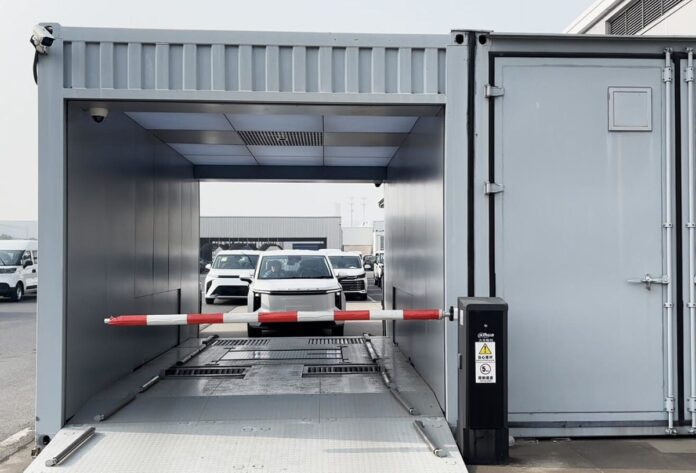
U Power Limited has completed production of the first batch of vehicles from a 1,000-unit battery-swapping heavy-duty truck order in Thailand, while its Hong Kong taxi battery-swapping project is targeting commercial launch in Q2 2026 following completion of vehicle certification requirements.

The Thailand program, branded UNEX, runs through partnerships with SUSCO (Susco Public Company Limited) and Whale Logistics Group. U Power says it is the first company to achieve scaled commercial operations of battery swapping for commercial transport vehicles in overseas markets outside mainland China. The company already operates a taxi battery-swapping service in Phuket, launched in 2025 through the same Thailand partnerships.

The Hong Kong project has been in development since 2024. U Power completed the city’s first commercially capable demonstration battery-swapping station in June 2025 and has since been running road testing and swapping compatibility validation on a vehicle model identified in October 2024. The company says it has now cleared all required certifications under Transport Department requirements and the vehicles are ready for on-road operation. Station construction is proceeding in parallel, with a Q2 2026 target for commercial launch.

U Power’s case for Hong Kong is largely economic: operators avoid installing charging infrastructure or upgrading grid connections, fleet managers aren’t exposed to battery degradation risk, and integration with a battery banking system keeps day-to-day operating costs competitive—arguments well-suited to the city’s high-density, efficiency-focused taxi sector.

“Leveraging our AI-driven energy management system and standardized battery-swapping infrastructure, we are building an ecosystem for a wide range of commercial battery-swapping vehicles and advancing the electrification of commercial transportation,” said Li Jia, Founder and CEO of U Power Limited.

U Power describes itself as the world’s first publicly listed battery-swapping technology company, having listed in 2023. Its commercial vehicle battery-swapping model, branded UOTTA, dates to 2020.

Source: U Power Limited


Source link

Charged EVs | Federal court upholds ioneer’s Rhyolite Ridge lithium mine permit, clearing path to construction

0


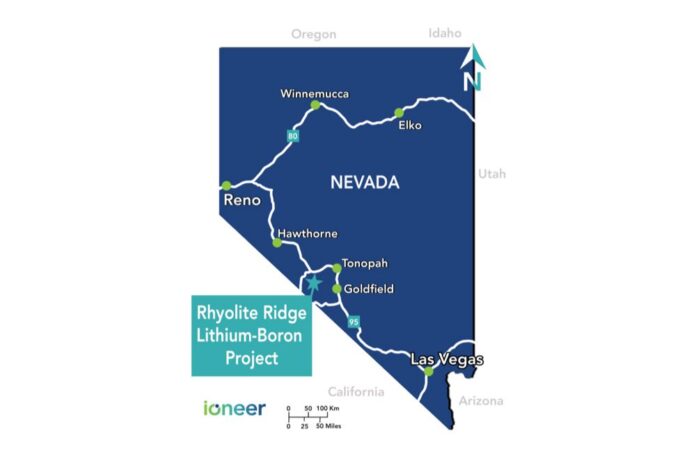
A federal judge in Nevada has upheld the Bureau of Land Management’s approval of ioneer‘s Rhyolite Ridge Lithium-Boron Project, rejecting a legal challenge that sought to block the mine over threats to an endangered wildflower. US District Judge Cristina Silva issued the ruling March 30, finding that BLM and the US Fish and Wildlife Service complied with the Endangered Species Act, the Federal Land Policy and Management Act and the National Environmental Policy Act in approving the project.

The lawsuit, filed by the Center for Biological Diversity, the Western Shoshone Defense Project and the Great Basin Resource Watch, centered on Tiehm’s buckwheat—a rare flower whose entire known population grows within roughly 10 acres inside the project area. Plaintiffs argued federal agencies failed to ensure the mine wouldn’t jeopardize the plant’s survival. Silva found that ioneer’s mitigation measures, including fencing around the habitat and buffer zones between mining operations and the buckwheat’s location, were sufficient under the ESA. The project will affect 4.9% of the plant’s 1.4-square-mile critical habitat.

Rhyolite Ridge is designed to produce 22,000 metric tonnes of battery-grade lithium carbonate per year alongside boric acid, with output projected to support lithium supply for more than 370,000 EVs annually. The project secured a $996 million DOE loan guarantee in January 2025 and holds offtake agreements with Ford Motor Company, Prime Planet Energy & Solutions (a Toyota-Panasonic joint venture) and South Korea’s EcoPro Innovation. ioneer received its final BLM permit in October 2024 after a permitting process that began in 2020. Groundwork construction is expected to start in 2026, with production targeted for 2028.

“The need for domestically sourced and processed lithium and boron has never been greater,” said James Calaway, Executive Chairman of ioneer. “The United States requires Rhyolite Ridge and more projects like it if we want to secure domestic critical mineral production.”

Patrick Donnelly of the Center for Biological Diversity called the decision “deeply disappointing,” adding that ioneer’s mitigation plan was “nothing but a house of cards that won’t save this important wildflower.” The ruling can be appealed to the Ninth Circuit.

Source: ioneer


Source link