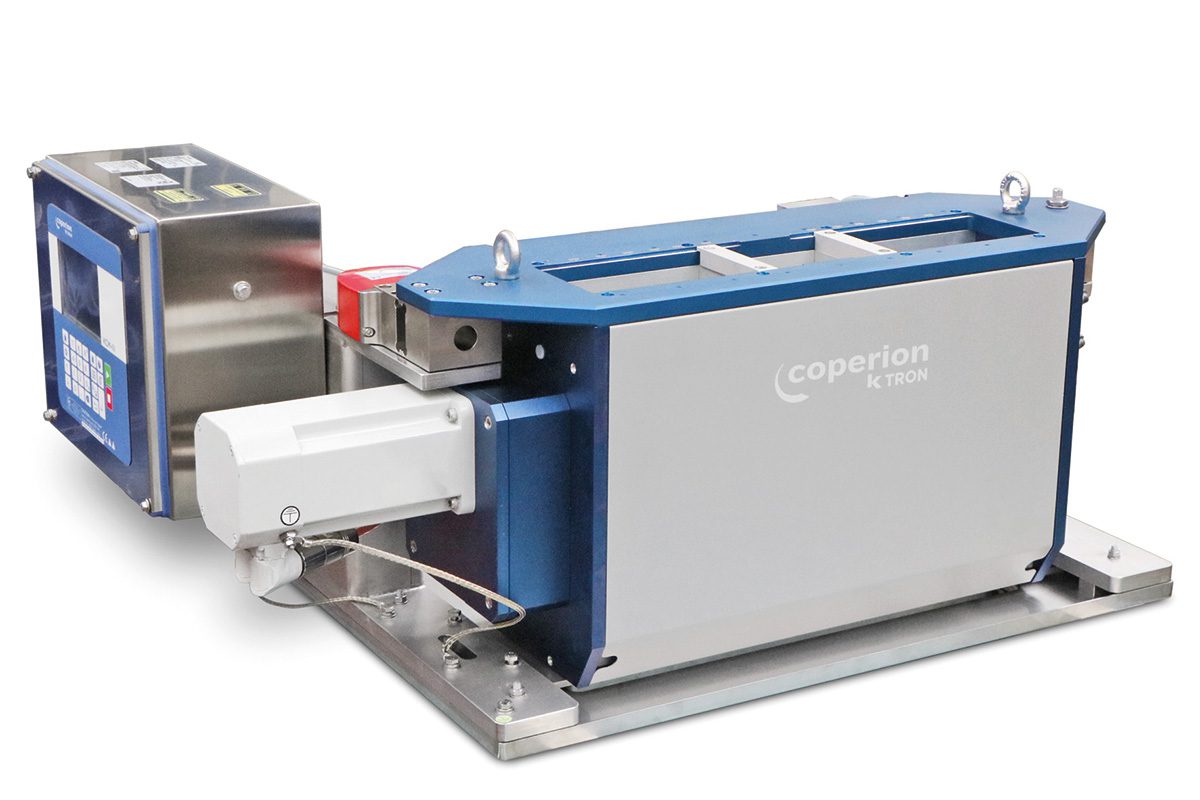
Coperion K-Tron has introduced the RF400 Roller Feeder for battery manufacturing, a feeding system aimed at improving consistency in dry-electrode processing at laboratory and pilot scale.
The company says the RF400 is designed to provide uniform deposition of electrode dry blends while reducing waste and production variability. The system uses a grooved feed roller paired with a smooth scraper roller to feed material gently and consistently, helping prevent bridging at the outlet and improving distribution across the calender roller below.
The feeder supports a coating width adjustable up to 400 mm, making it suitable for lab and pilot-scale battery production setups. The company also says the unit integrates with its existing KCM-III controls and Smart Force Transducer weighing technology to enable real-time monitoring, precise feed-rate control and adjustments for changing material characteristics.
Dry-electrode manufacturing is getting a lot of attention because it promises lower energy use and less solvent handling than conventional wet coating—but it also makes material handling and uniform deposition trickier. “The RF400 will set a new standard in the industry,” said Jay Daniel, Head of R&D Feeders and Feeding Systems at Coperion K-Tron.
hofer Vienna and Pankl Turbosystems are jointly developing fully integrated electrified turbo systems for hybrid and high-performance powertrains, combining the turbomachine, electric machine, power electronics and control strategy into a single engineered system.
The companies say the idea is to avoid treating the e-turbo or e-compressor as an add-on subsystem. Instead, the high-speed electric machine—built with Form Litz winding technology—the power electronics, software controls and turbo machinery are being developed together from the start, with hofer handling the electric machine, electronics and software integration, and Pankl leading turbomachinery design, aerodynamics, materials, and high-speed mechanical integration.
According to the announcement, the integrated approach is intended to improve boost response, raise overall system efficiency and fit more cleanly into hybrid and high-performance architectures. The companies also say it can reduce cooling and packaging demands while improving volumetric and gravimetric power density, EMC and NVH performance, and long-term reliability.
Both companies stress that the development is being carried out to established industrial validation and quality standards, with an eye toward regulated and safety-critical markets. That makes sense: once you’re spinning an electric machine and turbo hardware at very high speed in a tightly packaged system, “integration” stops being a marketing word and starts becoming the whole engineering problem.
Scalvy says a joint concept evaluation with Valeo has validated its modular battery-integrated power architecture for EVs under WLTC operating conditions, marking a step toward automotive deployment of the company’s distributed “Power Neuron” platform.
Instead of using separate centralized inverters, DC-DC converters and onboard chargers, Scalvy’s architecture distributes those functions into compact modules at the edge of each battery pack. The company says that reduces switching and conduction losses while making the system scalable across vehicle classes and battery chemistries.
In the lab-based WLTC evaluation, Scalvy says the system achieved a peak inverter efficiency of 98.3% at 10,000 rpm and 65 Nm. The company also says module-level state-of-charge balancing kept SOC deviation between battery modules negligible during testing, and that the system maintained motor temperatures below 62 °C and power-device temperatures below 65 °C without hotspot formation.
That combination of tight SOC balancing and pulse-like distributed switching reduces localized electrical and thermal stress, enabling faster charging and extending battery life by up to 15%, according to Scalvy. Valeo’s Farouk Boudjemai said the results were “highly encouraging” and would help advance the concept’s readiness level. Scalvy says it is field-testing the technology with select customers and is targeting commercial production in 2027.
In electric motor engineering, copper is king. The more copper you can pack into the stator, the lower the electrical resistance, and the more current, torque and power the machine can deliver. Traditional motors rely on bundles of round wires, but those circular cross-sections leave large pockets of unused space.
“If you would take such a motor and cut through and count the surface of the copper compared to the area where the wires are, you will get something of the order of 40% of the volume is copper,” Dr. Florian Kassel, co-founder of Germany-based electric motor developer SciMo, told Charged in an interview. “This is very cheap to manufacture, but only allows very small currents, and results in poor performance.”
The copper density in the stator is a key property of an electric motor determining the performance for a given motor size. An increased copper density leads to reduced stator diameter, less motor weight and a reduced rotor diameter, enabling increased rotational speeds. Adding material makes the rotor heavier, which slows down the rotor. “If you go to a higher diameter to put in the copper that you need, you’re also missing all the possibilities to spin the rotor to high speeds, which in turn reduces your maximum power output,” Kassel said.
One solution is the auto industry’s hairpin technology: thick copper bars, roughly 2.5-3 mm across, bent like oversized staples and inserted into the stator slots. On the far side, every protruding end must be precisely aligned and welded to form closed loops.
This technique delivers high copper density, but only works economically at large scale because it demands complex, highly specialized machinery. And it has drawbacks at high rotational speeds, as larger conductors suffer significant high-frequency losses, which can sap efficiency during sustained, high-power driving.
“If you buy, for example, a Porsche Taycan, you can reach high efficiencies at typical inner-city speeds. But if you go on the highway and just floor it, you will have very high losses. And you will lose a lot of energy, resulting in a significantly reduced range.”
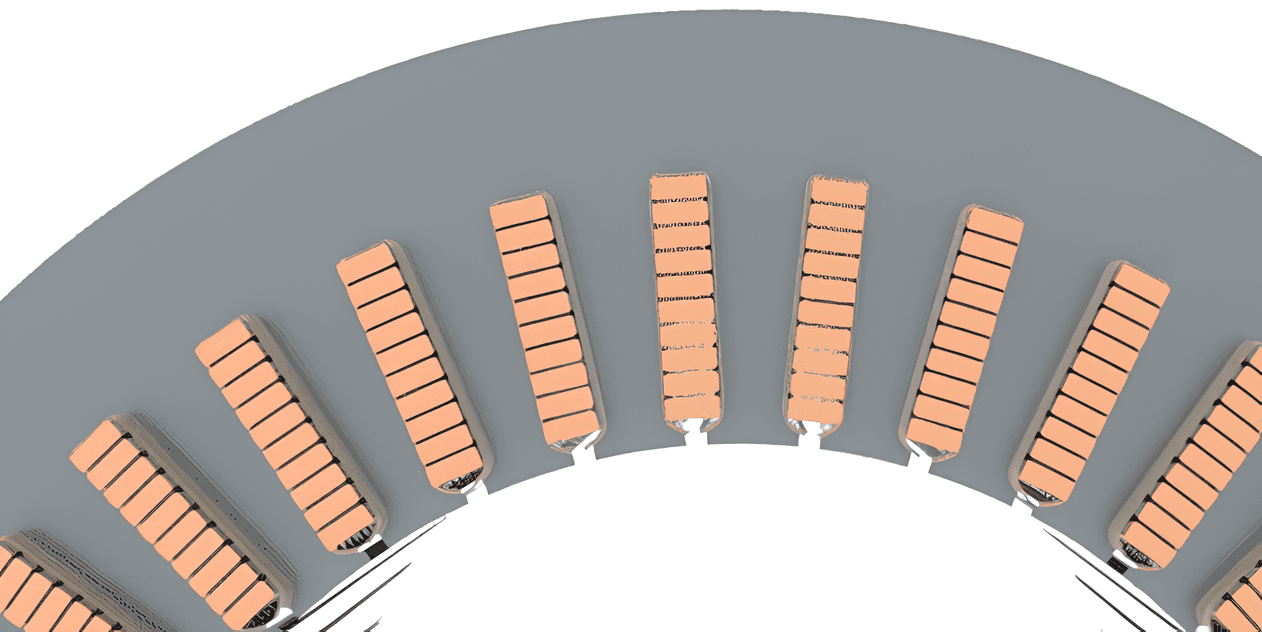
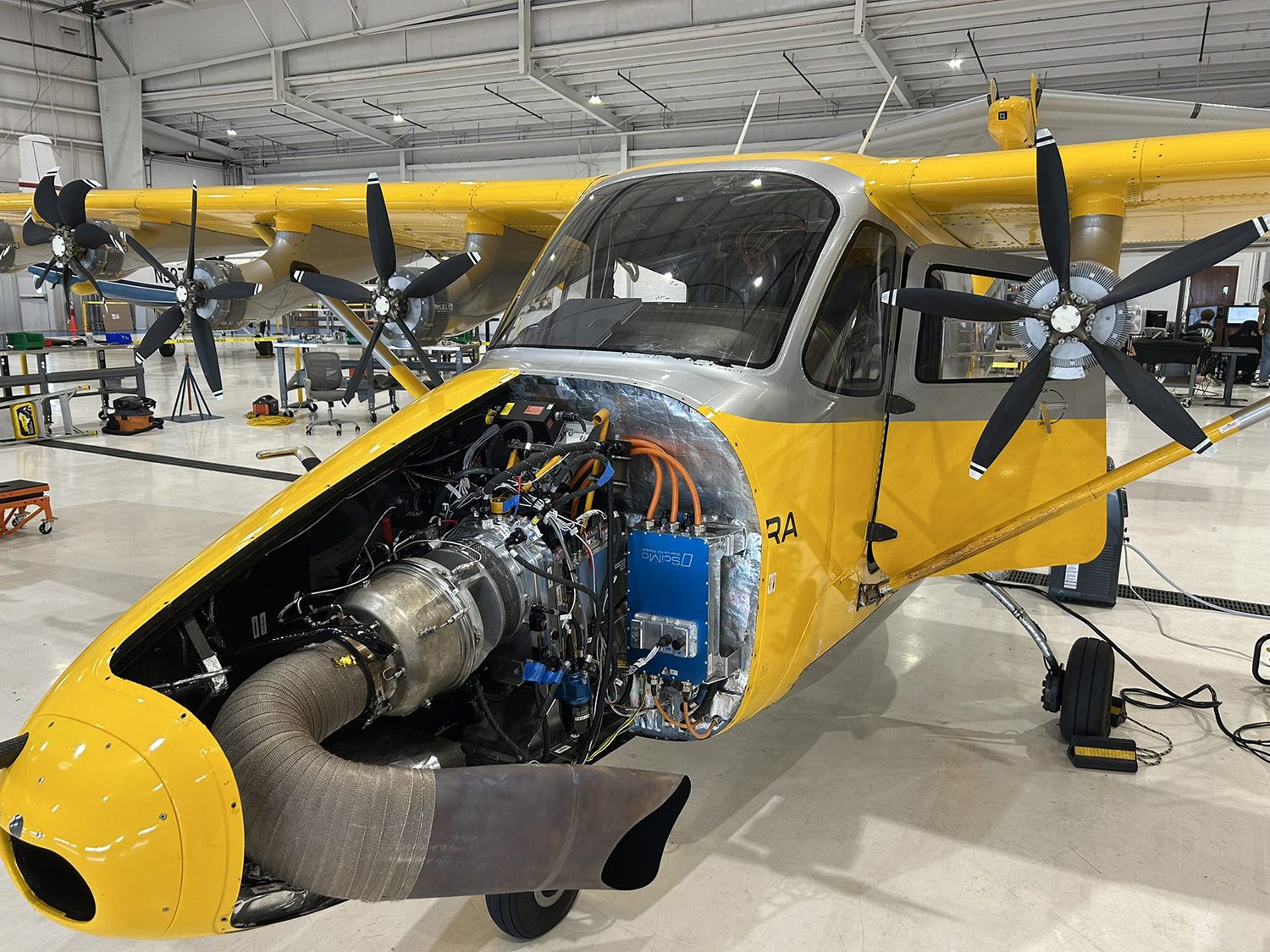
To overcome these limitations, Germany-based SciMo uses a different approach. The company has developed a novel motor winding architecture that maximizes copper utilization without increasing size or weight. The technology keeps the rectangular shape, but uses thin, fragile and flat wires, roughly 1×4 mm, to fill the slots in the motors. This allows for a smaller motor that contains the same amount of copper, increasing the density and supporting higher speeds.
“We’re reaching something in the order of 70% copper filling factor. So we can double the copper density in the motor, and therefore we can put much more current through the system and have much higher power densities,” Kassel said.
The smaller cross-section avoids the high-frequency losses that plague hairpins. The method pairs high copper density with better efficiency at top-end RPMs. “We don’t have these negative effects, so we’re somewhere in between these two worlds and have a really nice tradeoff,” Kassel added.
This winding technique brings an unexpected second advantage: thermal performance. Because each conductor is individually and precisely positioned geometrically, every wire lies only about 1.5 mm from the water-cooled motor housing, creating a highly efficient cooling effect.
In traditional round-wire bundles, hundreds of strands may sit buried in the middle of a coil, far from any cooling path. Hairpin motors, meanwhile, must contend with chunky weld points that can only efficiently be cooled by oil. The precisely arranged flat wires in SciMo’s motors create a clean thermal path, letting engineers push more current without overheating.
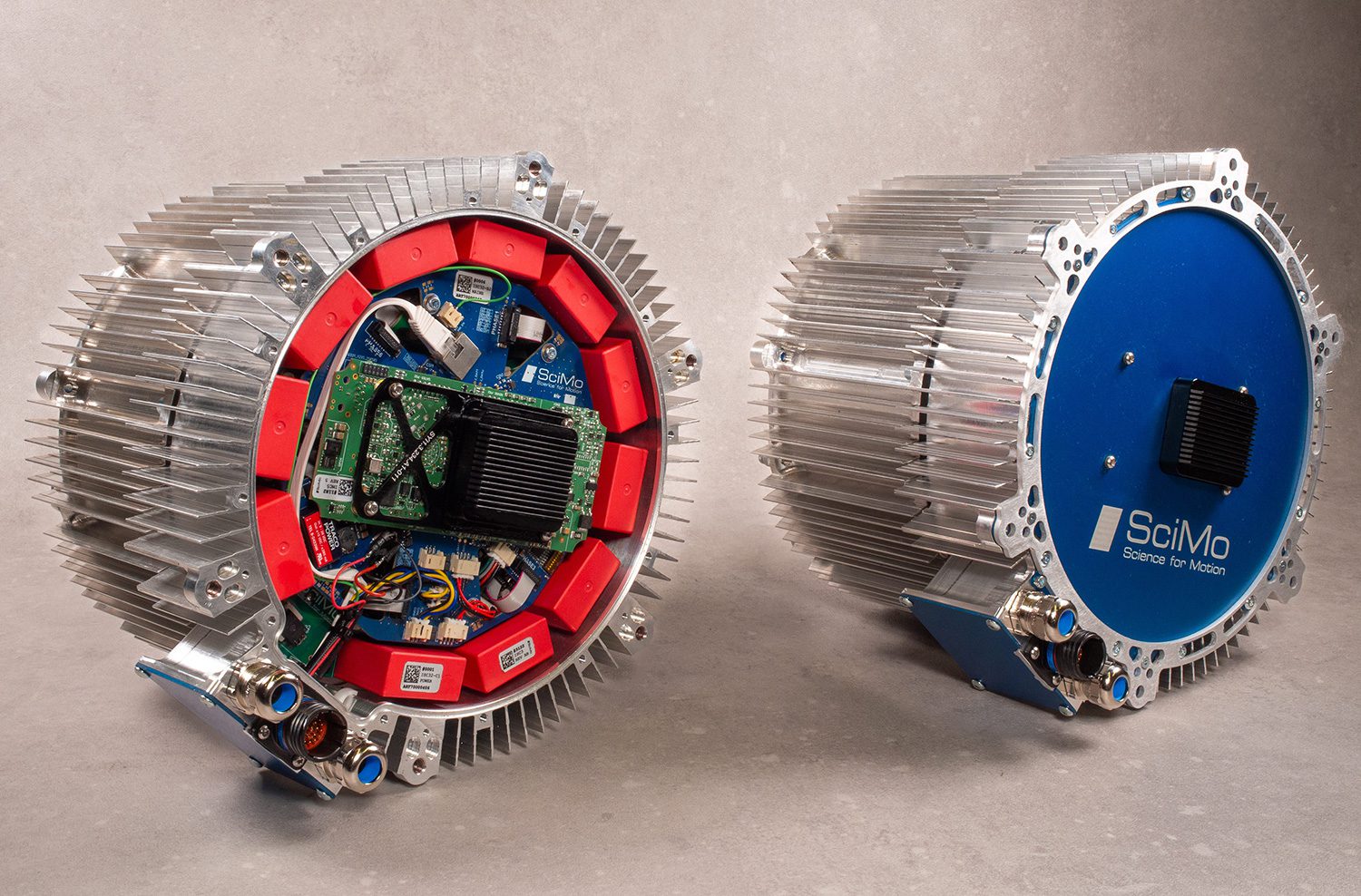
The result is an unusually high power-to-weight ratio—in the order of 20 kW/kg, several times that of typical production motors. In motorsport applications, the company builds lightweight units of 20–30 kg that are capable of peak outputs comparable to 2,000 horsepower when used in multi-motor setups.
Slashing winding costs through full automation
SciMo was founded in 2017 by three PhD students working with the Karlsruhe Institute of Technology (KIT) and supported the students on the university’s formula racing team with electric motors. Every year, about 60 students develop, build and drive a vehicle in the Formula Student Electric international competitions.
“During that time, we realized that these motors were exceptionally good; they had significantly higher power density compared to all the competitors,” Kassel said. “In the following years this team won the World Title of the series and made first places several times—at that point we knew: this technology is really something.”
The SciMo team has grown to 25 people working on the technology full-time, building the business by working with customers directly without backing from outside investors to fund its development.
But producing such stators hasn’t been simple. In the early years, each unit required weeks of painstaking manual work. “We started in the beginning doing it by hand. It was highly expensive. It took three weeks for just one stator.”
Production was limited to small batches, often just three to 30 motors per customer, depending on the project. That limited the business to niche applications willing to absorb high labor costs, such as motorsport or early-stage aerospace customers.
The company’s turning point arrived in 2022, when it secured roughly €2 million in support from the EU’s Horizon 2020 accelerator program to automate the production process.
Semi-automation followed. Machines supported the technicians in winding the stators, which reduced the production time to one week.
Now the company has achieved fully automated production—an essential step toward scaling the technology beyond today’s niche markets.
“Since founding SciMo, we have always had this target of having fully automated manufacturing of this winding technology,” Kassel said. “This winding takes up 30-35% of the total manufacturing costs of the motor, and now we can drop that to half. And the more volume we produce, the better the margin gets.”
Because the cost per unit improves with volume, the company can now consider markets that were previously out of reach.
Scaling motor innovation with robotic precision
The new winding line relies on robotic systems guided by a sophisticated software stack, rather than the conventional CNC-style machines that dominate the motor industry. These robots execute fine, force-controlled movements to place each fragile rectangular wire into the stator slots with more accuracy than skilled human technicians. “There’s no reduction in precision or performance,” Kassel noted. “With automation, it actually gets better.”
But precision comes at a cost: time. Unlike the automotive industry’s hairpin-wound motors, which can be produced in around 60 seconds per stator, even with full optimization, a single SciMo stator is expected to take roughly six hours to wind. That makes it challenging to scale the technology for mass-market production.
“It’s still very time-consuming to produce motors with our winding technology,” Kassel said. “We will never be a competitor to hairpin technology or anything like that.”
Instead, the robotics-based process offers something equally valuable for certain sectors: flexibility. Because the system relies on software-defined motion paths for precision rather than fixed tooling, engineers can reconfigure the winding setup quickly to accommodate different stator geometries or custom layouts. Producing five units for a research program, 50 for a specialty vehicle maker, or 500 for an electric bus fleet all fall within the company’s sweet spot.
The approach has practical limits. Scaling to 10,000 units a year would require upwards of 20 to 25 winding machines—an investment that would make other technologies more cost-effective. But in the niche markets where high performance matters more than ultra-low manufacturing cost, the company’s robotic system gives it an edge. It can deliver custom, high-performance motors without the rigid tooling and requalification burdens that constrain hairpin or other conventional winding manufacturing technologies.
“Now that we have the fully automated winding technology ready we can look at other markets with increased economic pressure,” Kassel said. ”There’s no drawback, there’s no reduction in precision or in performance…if we scale up now.”
Powering motor sports, aviation and the next frontier
Automation enables SciMo to dominate the high-performance, low-volume applications in which precision, adaptability and unconventional engineering pay off.
That includes the high-end automotive sector, where manufacturers of high-performance car brands are willing to pay a premium for increased power density.
“In the motorsport business, where we have batch sizes of 100 to 200 motors per year, we’re a big competitor,” Kassel said, “because you can either have a cheap, non-custom, mass-produced motor or you go to manually produced custom motors that rely heavily on expensive materials and come with astronomical prices. SciMo is exactly in between these two worlds.”
One of the most promising applications is electric aviation, where weight is crucial. One of SciMo’s first customers was a company developing electric people-carrying drones. “You want to have as little weight as possible, and therefore we could sell these motors at high prices.” The sector’s needs align perfectly with the company’s lightweight, high-output motors.
“We are in many different industries at the moment. The main customers come from the motor sports and aviation industries, but we also provide electric motors for rocket engines or as dyno motors in test bench applications,” Kassel said.
Setting the stage for the next leap in electric motor engineering
If SciMo succeeds in scaling, the economic implications could be as transformative as the performance gains. Conventional motors derive around 70% of their cost from materials, especially copper and steel.
By packing copper more efficiently, engineers can shrink the entire motor, reducing overall material use by roughly 30% while enabling smaller, faster rotors that further boost power and efficiency. And because SciMo winding architecture inherently runs cooler, it opens the door to future upgrades.
“Now if we would say, we need an even higher performance output, we could do this either with advanced magnetic materials for much higher temperature tolerance, or with ultra-thin premium electrical steel to cut stator losses even further,” Kassel said.
Electric motors are fundamentally constrained by heat, because as the temperature rises, the magnets weaken and can be permanently destroyed. But motors built with premium, heat-resistant materials can tolerate much higher operating temperatures.
“For us, there’s still lots of room for improvement; but at the moment, we don’t need it. We are just happy that we have now managed to get this winding technology fully automated and can pass on these savings to our customers,” Kassel said.
“We’re now at a really interesting point in time for the company where we’ll now try to scale up and find new markets, and we’ll see how it goes. But this is the point we’re standing at. So, exciting times ahead.”
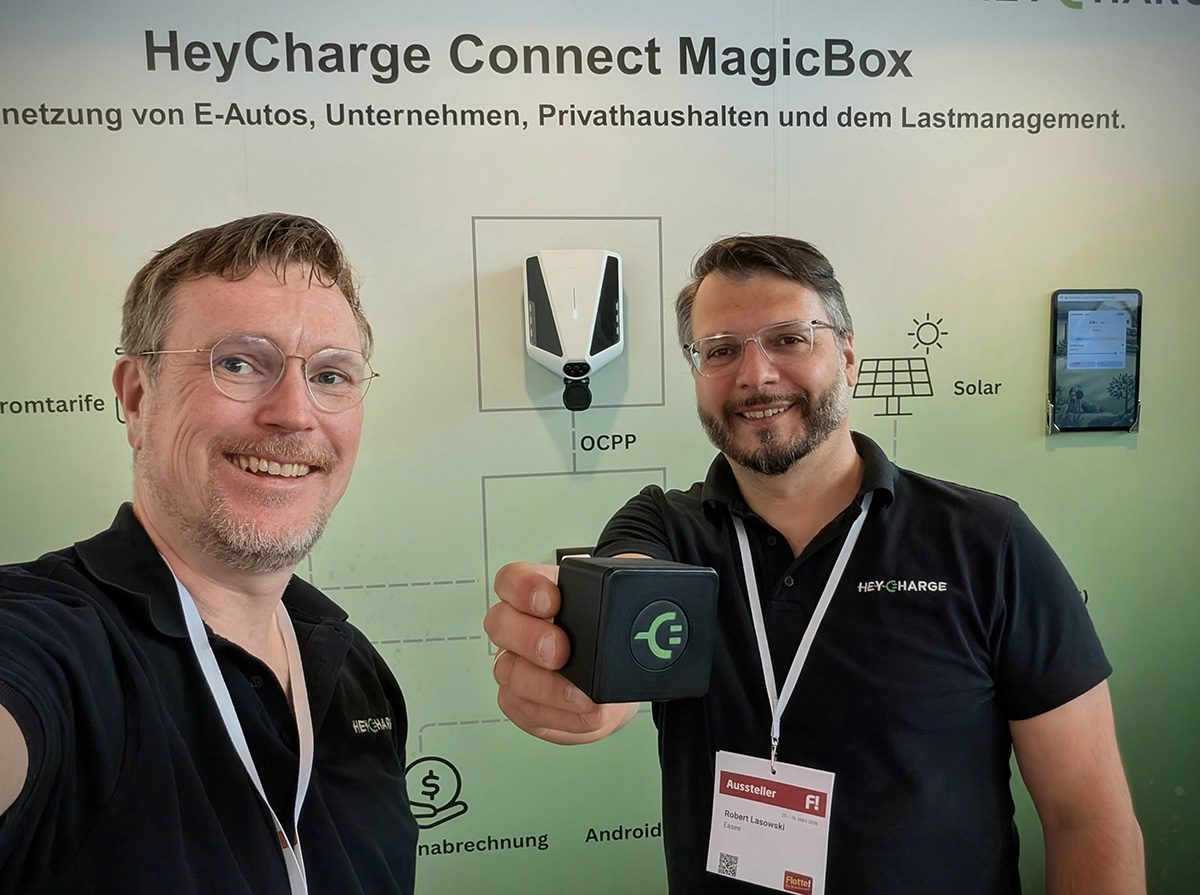
HeyCharge has launched HeyCharge Connect, a new product line of retrofit adapters for existing EV chargers, and the first product—the MagicBox—is aimed at turning ordinary OCPP-compatible home wallboxes into smarter, offline-capable charging systems.
The Munich company says the MagicBox plugs into any OCPP-compatible charger and connects it to HeyCharge’s SecureCharge platform without an electrician visit, firmware changes, or downtime. Unlike cloud-dependent chargers that can struggle in garages with poor connectivity, the MagicBox can manage charging sessions, enforce energy limits and communicate with other devices over a local mesh network even when internet access is unavailable.
Once installed, HeyCharge says the adapter enables solar and dynamic-tariff optimization, dynamic load management, smart-home integration and company-car reimbursement features. The company says it already supports Home Assistant, with Matter support planned for the second half of 2026, and can connect with rooftop PV systems and time-varying electricity tariffs to schedule charging around self-consumption and power cost. It also supports Germany’s §14a EnWG requirements for grid operator control of large electrical loads.
HeyCharge is also adding in-vehicle access through Android Automotive OS, which it says will let drivers start and manage charging sessions from the vehicle infotainment system—useful in fleet and pool-car settings where RFID cards and phone apps become operational clutter. The MagicBox will launch first with Easee across Germany, Austria and Switzerland, with availability expected in Q2-Q3 2026.
Diodes Incorporated has expanded its automotive-compliant PowerDI8080-5 MOSFET lineup with a new 100 V N-channel device that the company says offers industry-leading on-resistance for 48 V automotive designs.
The new DMTH10H1M7SPGWQ features a maximum RDS(on) of 1.5 mΩ and is aimed at 48 V BLDC motor drives in applications such as electric power steering and braking systems, along with battery disconnect switches and onboard chargers. Diodes also introduced additional 40 V, 60 V, and 80 V devices in the same 8 mm x 8 mm gullwing-leaded package, including a 40 V part with 0.4 mΩ maximum RDS(on), which the company says is among the lowest in the industry.
The package itself is a big part of the pitch. Diodes says the PowerDI8080-5 footprint is 64 mm²—about 40% of the board area of a TO-263 (D2PAK)—with a low 1.7 mm profile for space-constrained applications. The company also says copper-clip die bonding cuts junction-to-case thermal resistance to as low as 0.3 °C/W, allowing drain currents up to 847 A, while the gullwing leads support automated optical inspection and improved temperature-cycling reliability.
The broader lineup includes the 80 V DMTH81M2SPGWQ, the 60 V DMTH6M70SPGWQ for 24 V applications, and 40 V parts for 12 V motor drives, DC-DC conversion, and microcontroller-driven automotive loads. Diodes says the devices are AEC-qualified and built in IATF 16949-certified facilities.
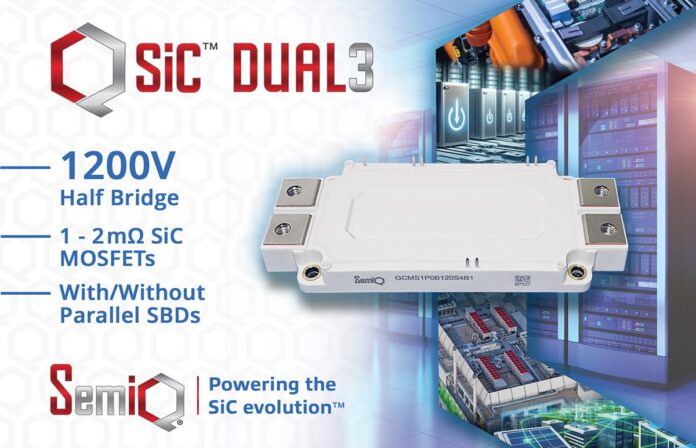
SemiQ has introduced its QSiC Dual3 family of 1200 V half-bridge SiC MOSFET modules for applications including motor drives in data center cooling systems, grid converters in energy storage systems and industrial drives.
The new lineup includes six modules in a 62 mm x 152 mm S4B1 half-bridge package, with on-resistance options of 1 mΩ, 1.4 mΩ, and 2 mΩ. Three versions also add a parallel Schottky barrier diode, which SemiQ says can further reduce switching losses in high-temperature operation. The company says two of the new devices achieve a power density of 240 W/in³.
SemiQ is positioning the Dual3 family as a relatively easy SiC upgrade path for systems built around IGBT modules. The company says the parts were developed to enable IGBT replacement with minimal redesign, and that all MOSFET die undergo wafer-level gate-oxide burn-in screening above 1,450 V. SemiQ also says the modules have low junction-to-case thermal resistance, enabling smaller and lighter heatsinks and simpler overall system design.
“Rising AI-driven power and thermal demands in data centers are pushing the limits of traditional cooling and power systems,” said SemiQ President Timothy Han. He said the Dual3 series is aimed at 250 kW liquid chiller applications on both active front ends and compressor drives, with lower size and weight than comparable silicon IGBT solutions.
eVerged has partnered with World4Solar to offer an integrated package that combines EV charging, solar generation and battery storage into a single turnkey system for commercial and municipal sites.
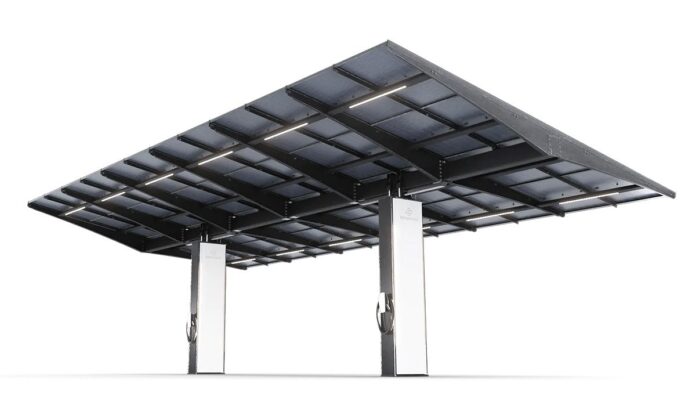
World4Solar’s canopy-based solar hardware and batteries are being paired with eVerged’s EV charging and project-delivery model to create what the companies describe as a full energy ecosystem—one that can reduce reliance on grid power, cut demand charges and, in some cases, support energy arbitrage with utilities.
The companies say the integrated system can work in space-constrained urban sites as well as larger commercial properties, and that the canopy format both generates energy and protects charging equipment from weather. eVerged is targeting locations such as hotels, retail centers, campuses, entertainment venues and public spaces.
eVerged says available incentive funding for EV charging, combined with the solar generation, can make projects eligible for power purchase agreements, allowing it to offer some customers a “zero cost” integrated deployment with no upfront spending and revenue-sharing from charging once the system is live.
“Creating a solution with material operational and financial advantages plus meaningful sustainability contributions means everyone wins,” said eVerged President James Dion.
EV charging network E-Plug (an Energy Plus NY brand), has named Nayax as its preferred payment platform provider.
Energy Plus will be among the first operators in the US to adopt the combined Nayax and Lynkwell end-to-end solution for EV charging. Nayax now combines its payment technology with Lynkwell’s charging operations and management platform, which Nayax acquired last December. The integrated solution covers hardware-embedded payment acceptance, cloud-based fleet monitoring and monetization tools, and unified financial reporting across card-present and app-based channels.
“We believe that when payments work seamlessly, the entire value chain benefits,” said Jason Zarillo, Head of Nayax Energy. “With Lynkwell now part of Nayax, we can offer a fully integrated solution that gives operators the tools to manage, monetize and grow their networks from a single platform, with a business model that scales with their business.”
“This partnership with Nayax represents a major step forward for Energy Plus,” said Michael Elhav, Head of EV at E-Plug. “Nayax’s end-to-end solution gives us the reliability and flexibility we need to scale our network across the US, while providing drivers with a seamless and consistent experience—whether they’re paying at the charger or through our app. Having payments, operations and management unified under one platform simplifies how we run our business and positions us to grow faster.”
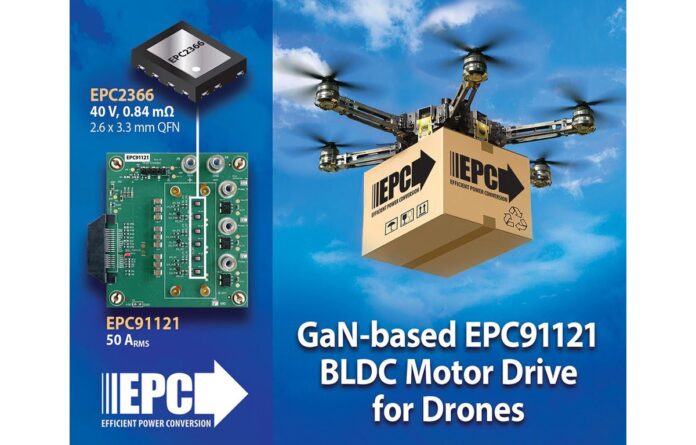
Efficient Power Conversion has introduced the EPC91121, a three-phase BLDC motor drive evaluation board built around its seventh-generation EPC2366 40 V eGaN power transistor, aimed at rapid prototyping for drones, robotics, industrial automation, power tools, and other compact electromechanical systems.
The board measures 79 mm x 80 mm and is designed for 24 V-class battery systems, with an input range of 18 V to 30 V. EPC says it can deliver up to 70 A peak, or 50 ARMS, and integrates the major building blocks needed for a motor inverter, including gate drivers, housekeeping power supplies, voltage and temperature monitoring, and current sensing.
On the measurement side, the board supports high-bandwidth current sensing on all three phases up to ±125 A, along with phase and DC-bus voltage sensing for motor-control techniques such as field-oriented control and space-vector PWM. It also includes shaft encoder and Hall-sensor interfaces, plus multiple test points for easier debugging and system integration.
At the heart of the platform is the EPC2366 Gen 7 eGaN FET, which EPC says has an on-resistance of 0.84 mΩ. The company says the EPC91121 supports PWM switching frequencies up to 150 kHz—well above typical silicon-based motor drives—helping reduce magnetic size and improve dynamic response. EPC also says the board’s layout keeps dv/dt below 10 V/ns to reduce distortion, acoustic noise, torque ripple, and EMC headaches.