Tuesday, April 21, 2026
9.8 C
London
Home Blog Page 12

Charged EVs | TI’s IsoShield isolated power modules deliver up to 3x higher power density, shrink designs by 70%

0


Texas Instruments has introduced two isolated power modules that use its new IsoShield packaging technology to raise power density in applications including EVs and data centers.

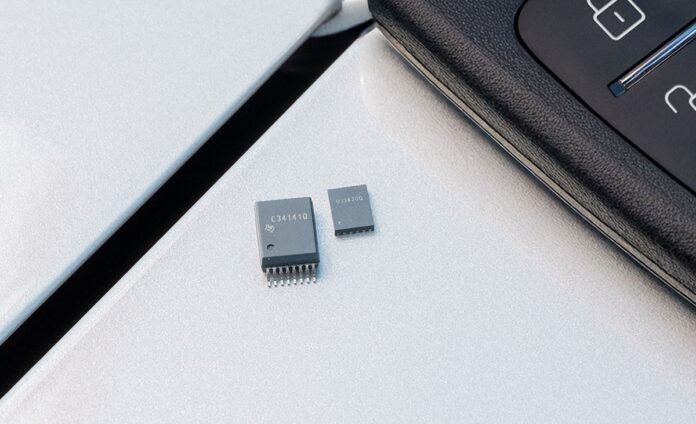
The new UCC34141-Q1 and UCC33420 modules combine a planar transformer and isolated power stage in a single multichip package. TI says the approach can deliver up to three times the power density of discrete isolated-power designs while shrinking solution size by as much as 70%. The modules can provide up to 2 W of power and support functional, basic and reinforced isolation.

TI is pitching the parts for distributed power architectures, where isolation and fault tolerance matter. In EVs, that can help engineers design lighter and more efficient systems; in data centers, it’s about cramming more power into smaller footprints without giving up safety or reliability. The company says the packaging approach can also help avoid single-point failures in functional-safety-oriented designs.

The UCC34141-Q1 is a mid-voltage device covering 6 V to 20 V in a 5.85 mm x 7.5 mm x 2.6 mm package, while the UCC33420 is a low-voltage 5 V module in a 4 mm x 5 mm x 1 mm package. Both are available now, with evaluation modules, reference designs, and simulation models.

Source: TI



Source link

Charged EVs | Geely becomes second Chinese automaker to unveil 1,500 kW EV chargers

0


Chinese EV maker BYD made big headlines a few days ago when it unveiled a new version of its Blade Battery and a Flash Charger to go with it. Using these technologies, which are slated to appear in production vehicles this year, an EV driver can charge up just as quickly as a legacy gas driver can fill up with dino juice. (By the way, the new battery is cheaper than the previous version, and boasts excellent cold-weather performance.)

But BYD isn’t the only game in China—in fact the company has been in a sales slump for the last couple of months, allowing rival (and Volvo owner) Geely to edge it out of the top spot for vehicle deliveries. And now Geely has unveiled its own 1,500 kW EV charger.

Geely says its super-duper charger, which it calls the Extreme Charge Megawatt Pile, has demonstrated peak power of over 1,500 kW, charging the updated Zeekr 001 luxury EV, which boasts a 12C charging rate.

The new 2026 Zeekr 001, launched in October, is based on a 900 V electric architecture, up from 800 V for the previous model. It sports a 95 kWh Golden Battery, and Geely says it can recharge from 10% to 80% in around 7 minutes—more or less matching the performance of BYD’s top vehicles.

Also like BYD, Geely has its own EV charging network. According to China’s Autohome (in Chinese), Geely operates over 2,103 stations in 215 cities.

Source: Electrek


Source link

Charged EVs | AMPECO launches new operations agent for EV charging networks

0


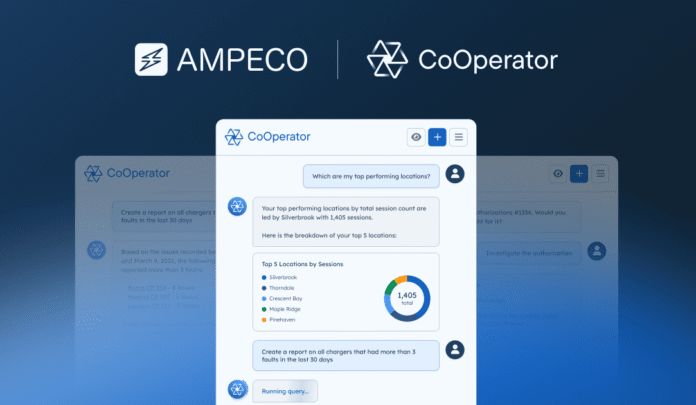
EV charging management software provider AMPECO has launched a new operations agent called CoOperator, which offers automated root cause diagnostics, a conversational interface, and the ability to execute operational actions in plain language. (Read our 2024 interview with AMPECO CEO Orlin Radev.)

CoOperator is designed to enable AMPECO’s customers to manage growing networks “with the same efficiency they have today.” It allows operators to diagnose session issues instantly, to change pricing across partner locations in a single conversation, and to receive a full root cause analysis the moment a charger goes offline.

CoOperator introduces what AMPECO calls Insights: structured, one-click root cause analyses for the operational problems that consume the most time. Three types are available at launch:

  • Session Insights analyze a charging session in full: metadata, charging periods, tariff snapshots, transaction records, OCPP message logs, and OCPI logs for roaming sessions. The output is a complete diagnosis, including session quality assessment, root cause, driver behavior analysis, and specific recommendations for both immediate resolution and future prevention.
  • Authorization Insights trace why a driver was unable to charge, whether the cause is an expired RFID token, a payment failure, a network error, a fraud trigger or a business rule conflict. The system explains the root cause with confidence levels and recommended actions, so the operator can answer the driver’s question on the spot.
  • Issue Insights are generated automatically the moment a hardware fault or connectivity loss is detected, with no manual trigger required. The analysis covers root cause with confidence level, scope assessment, supporting evidence from historical data, and a recommended resolution path. Scope assessment distinguishes between a problem isolated to one charger, one affecting an entire location, and a pattern across a specific hardware model fleet-wide.

“Growing a charging network should be exciting, not overwhelming. CoOperator takes the operational complexity off the table,” said Michael Greenberg, SVP of Growth at AMPECO. “CoOperator lets operators add locations, adjust pricing, and troubleshoot across their entire network through a single conversation.”

Source: AMPECO


Source link

Charged EVs | Renesas’ bidirectional 650 V GaN switch replaces back-to-back FETs with one 110 mΩ device

0


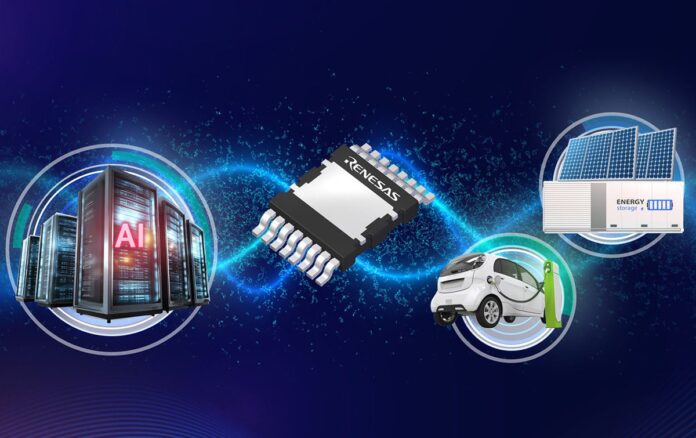
Renesas has introduced what it calls the industry’s first bidirectional 650 V-class GaN switch with integrated DC blocking, aimed at simplifying power-conversion topologies in applications such as solar microinverters, AI data centers and onboard EV chargers.

The new TP65B110HRU is designed to block both positive and negative current in a single device, eliminating the need for conventional back-to-back FET arrangements. Renesas says that in a single-stage solar microinverter, two of the new bidirectional SuperGaN devices can replace more complex multi-stage arrangements, cutting switch count in half and eliminating intermediate DC-link capacitors. The company says a real-world single-stage solar microinverter implementation achieved more than 97.5% efficiency.

Technically, the device combines a high-voltage bidirectional depletion-mode GaN die with two low-voltage silicon MOSFETs in a co-packaged structure. Renesas says the part supports ±650 V continuous AC/DC operation, ±800 V transient rating, 110 mΩ typical RSS,ON at 25 °C, 3 V typical threshold voltage, ±20 V maximum Vgs, and dv/dt immunity above 100 V/ns. It comes in a top-side-cooled TOLT package with an industry-standard pinout, and the company says it requires no negative gate drive, making it compatible with standard gate drivers.

Renesas says the device has a major practical advantage over enhancement-mode bidirectional GaN devices, which can require more complicated gate-drive schemes. “Customers can now achieve higher efficiency with fewer switching components, smaller PCB area and lower system cost,” said Rohan Samsi, Vice President of Renesas’s GaN Business Division.

Source: Renesas


Source link

Charged EVs | Uber and Rivian partner to deploy up to 50,000 autonomous robotaxis

0


Rivian and Uber have announced a partnership to deploy 10,000 fully autonomous R2 robotaxis in the first phase of R2 robotaxi deployment. Initial deployments are expected to begin in San Francisco and Miami in 2028.

Uber will invest up to $1.25 billion in Rivian through 2031, subject to the achievement of certain milestones. The goal is to build a fleet of autonomous Rivian R2 robotaxis, which will be available exclusively through the Uber platform. The companies hope to deploy thousands of unsupervised Rivian R2 robotaxis across 25 cities in the US, Canada, and Europe by the end of 2031.by the end of 2031.

In December 2025, Rivian announced its third-generation autonomy platform, which includes a multi-modal sensor suite including 11 cameras (65 megapixels), 5 radars and 1 LiDAR. The consumer platform is driven by two of Rivian’s in-house RAP1 chips, capable of 1600 TOPS of AI computing performance.

“This partnership with Uber will help accelerate our path to level 4 autonomy to create one of the safest and most convenient autonomous platforms in the world,” said RJ Scaringe, founder and CEO of Rivian. “The scale of Rivian’s growing data flywheel, coupled with RAP1, our state-of-the-art in-house inference platform, and our multimodal perception platform make us excited for the rapid advancement of Rivian autonomy over the next couple of years.”

“We’re big believers in Rivian’s approach—designing the vehicle, compute platform and software stack together, while maintaining end-to-end control of scaled manufacturing and supply in the US,” said Dara Khosrowshahi, CEO of Uber. “That vertical integration, combined with data from their growing consumer vehicle base and experience managing the complexities of commercial fleets, gives us conviction to set these ambitious but achievable targets.”

Source: Rivian


Source link

Charged EVs | ActionPower’s PRO20 power supply scales to 6 MVA, NEO-PRO battery cycler supports 1200 V EV packs

0


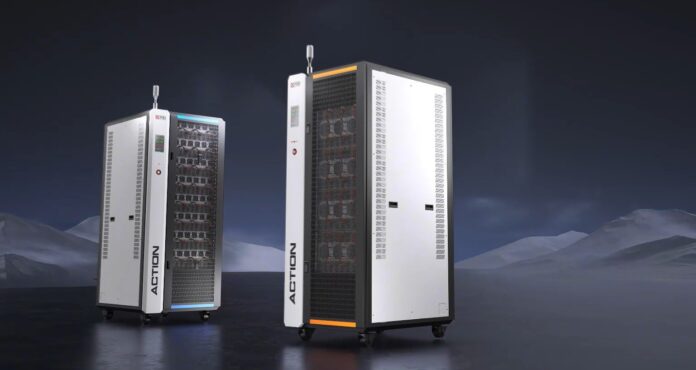
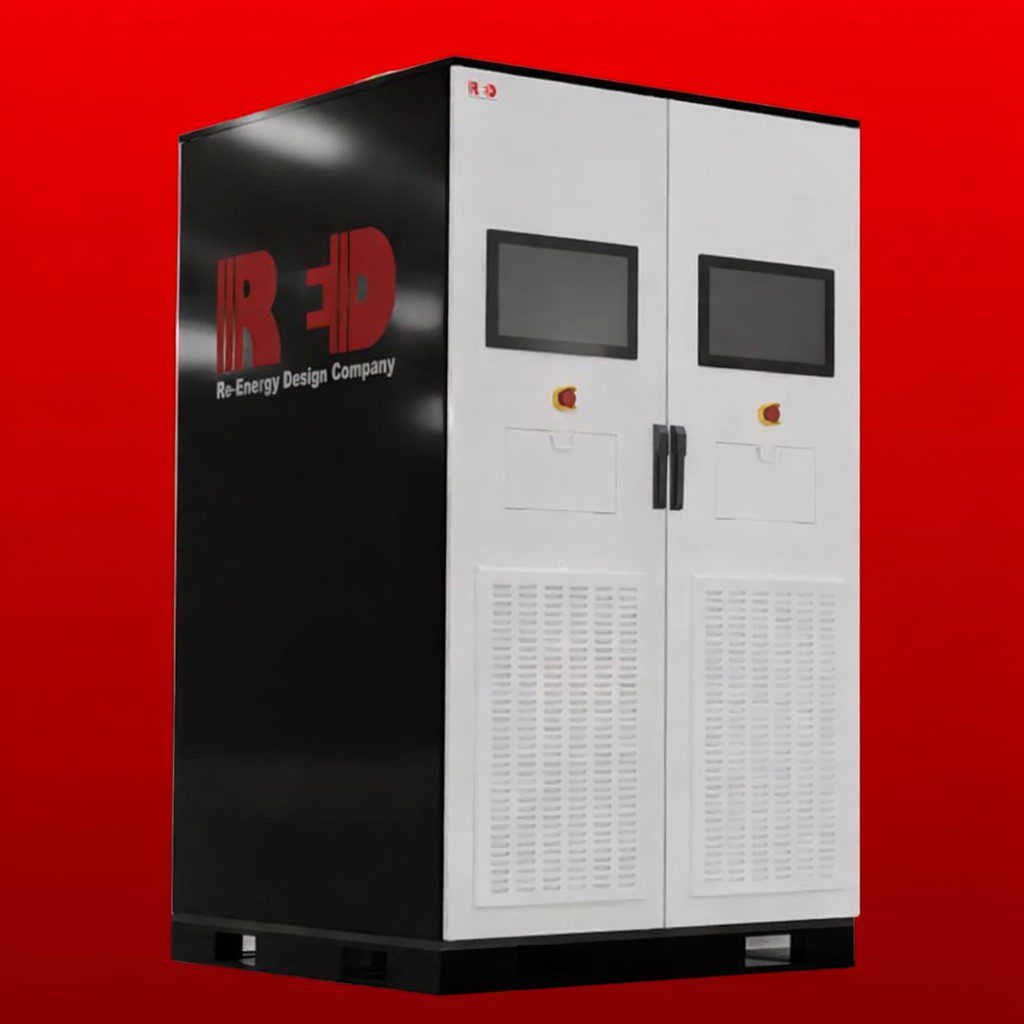
ActionPower and its South Korean distributor RED Solutions used InterBattery 2026 to introduce two test-system products aimed at EV battery and power electronics development: the PRO20 regenerative AC programmable power supply and the NEO-PRO battery testing and cycling system.

The headline product on the power side is the PRO20, a cabinet-based AC programmable supply built around a modular architecture. ActionPower says a single cabinet covers 50 kVA to 750 kVA, while eight cabinets in parallel can scale to 6 MVA. The system supports four-quadrant operation with integrated source and regenerative load capability, up to 94% energy recovery efficiency, AC/DC/AC+DC output modes, and configurable single-phase, split-phase, or three-phase output. The company also says it can reproduce voltage sags, swells, harmonics, and other grid disturbances, generate arbitrary waveforms up to the 100th harmonic, and run built-in IEC 61000 test profiles.

On the battery side, the NEO-PRO system is aimed at mid-range EV and stationary storage testing. According to the companies, it supports 150 kW to 500 kW scalable output, up to 1200 V operation, bidirectional power flow with more than 95% energy efficiency, and accuracy up to ±0.05% full scale. The system also offers switching times below 6 ms, a dual-channel option for simultaneous testing, and a modular design intended for production-line integration.

The NEO series combines ActionPower’s power hardware with RED Solutions’ battery testing software. The companies are targeting EV battery pack and ESS cycling applications where regenerative efficiency, high-voltage capability, and flexible scaling matter.

Source: ActionPower


Source link

Charged EVs | MATTER adds Iontra’s adaptive charging, real-time SOH sensing to AI-defined vehicle platform

0


Indian EV company MATTER is integrating Iontra’s battery intelligence technology into what it calls a core layer of its AI-Defined Vehicle platform, with the goal of making battery behavior more adaptive, health-aware, and predictive over the vehicle’s life.

The companies say Iontra’s contribution centers on real-time state-of-health sensing and adaptive charge control. In practical terms, MATTER says that means battery health is measured in real time rather than inferred, charging profiles can adapt to actual cell condition, thermal stress and degradation can be managed more actively, and safety margins can be expanded without sacrificing performance.

MATTER frames the move as a shift from software-defined battery protection to “AI-defined energy intelligence.” Its existing software-defined vehicle platform already handles battery monitoring, protection, and safety, but the company says Iontra’s technology adds a predictive layer that can influence how the battery charges, discharges, protects itself, and ages over time. MATTER also says the architecture could enable faster and safer charging without hardware changes, improve reliability under demanding Indian operating conditions, and lower lifetime ownership cost through better battery longevity.

“Integrating Iontra’s sensing and adaptive charging capabilities allows energy systems to sense their true condition, adapt in real time, and evolve across the vehicle lifecycle,” said MATTER founder and group CTO Kumar Prasad Tellikepalli. Iontra CEO Jeff Granato said the partnership is aimed at making e-mobility products “safer, more reliable, and deliver consistent performance over their entire life.”

Source: MATTER / Iontra


Source link

Charged EVs | UK government funds 484 new electric buses in 10 English regions

0


The UK may not be in the first ranks of EV hotspots with Norway and The Netherlands, but Albion is moving ahead with electrification far faster than some other countries we could name. On the streets of London, electric buses, taxis and rideshare vehicles are common sights, as are curbside EV charging stations.

The UK government, however, has sometimes been criticized for directing the lion’s share of support to London and the Southeast, to the detriment of other regions. So it’s refreshing to see that the latest round of funding for electric buses will be spread among several English districts.

The new funding, most of which is structured as extensions of existing Zero Emission Bus Regional Areas programs, includes £73.2 million from the UK government and £94 million from operators and local authorities, bringing total investment to over £167 million. The dosh will be used to procure some 484 zero-emission buses, as well as charging infrastructure.

The South Yorkshire Mayoral Combined Authority (SYMCA) will receive the largest share, £33.4 million, to support 186 battery-electric buses in Sheffield.

Funding allocations:

  • South Yorkshire—£33.4 million (186 buses)
  • Tees Valley—£11 million (82 buses)
  • Devon—£7.53 million (90 buses)
  • Liverpool—£7.3 million (36 buses)
  • Isle of Wight—£3.67 million (23 buses)
  • North East—£3.6 million (18 buses)
  • Reading—£3 million (17 buses)
  • West Northamptonshire—£2.2 million (17 buses)
  • Nottinghamshire—£1 million (11 buses)
  • Surrey—£0.5 million (4 buses)

“Buses are the backbone of our public transport system, and passengers deserve a network of well-connected, affordable routes, that they can rely on,” said Secretary of State for Transport Heidi Alexander. “This funding will replace polluting diesel buses with new electric vehicles…It’s about cleaner air for children walking to school and reliable connections for people getting about their daily lives.”

Sources: Route One, Sustainable Bus


Source link

Charged EVs | New silver plating busbar line adds 4,500 tons/year of UK capacity for EV systems

0


Karas Plating has brought a new £1.5-million automated busbar electroplating line online in the UK, adding what the company says is the country’s widest-capacity silver-plating operation for copper busbars—components used in EV battery packs, power electronics and charging stations.

The new 2.4-meter-wide line can process up to 200 kg of product every 20 minutes and adds capacity to plate an additional 4,500 tonnes of copper busbars per year, according to the company. Karas says it can handle components up to 4.2 meters long.

Busbars sit in a critical part of the powertrain and charging stack: moving high currents between cells, modules, inverters and charging hardware with minimal loss.

As Karas notes in a recent technical blog post, silver plating is widely used on EV busbars because it lowers contact resistance, improves current-carrying capability, stabilizes joints under vibration and thermal cycling and helps maintain low-resistance connections over repeated charge-discharge cycles. The company says silver plating can support both copper and aluminum busbars, the latter being increasingly attractive where weight reduction matters.

The new line is a reshoring move that reduces reliance on overseas electroplating while giving UK manufacturers tighter process control and shorter supply chains. Managing Director Alan Pennington said the automated line operates as an autonomous cell using LEAN principles and KPI-based process control to improve consistency and reduce silver consumption, and that Karas is achieving a defect rate of fewer than five parts per million.

Source: Karas Plating


Source link

Charged EVs | EV manufacturers say production is getting easier, cheaper and more predictable in ABB Robotics survey

0


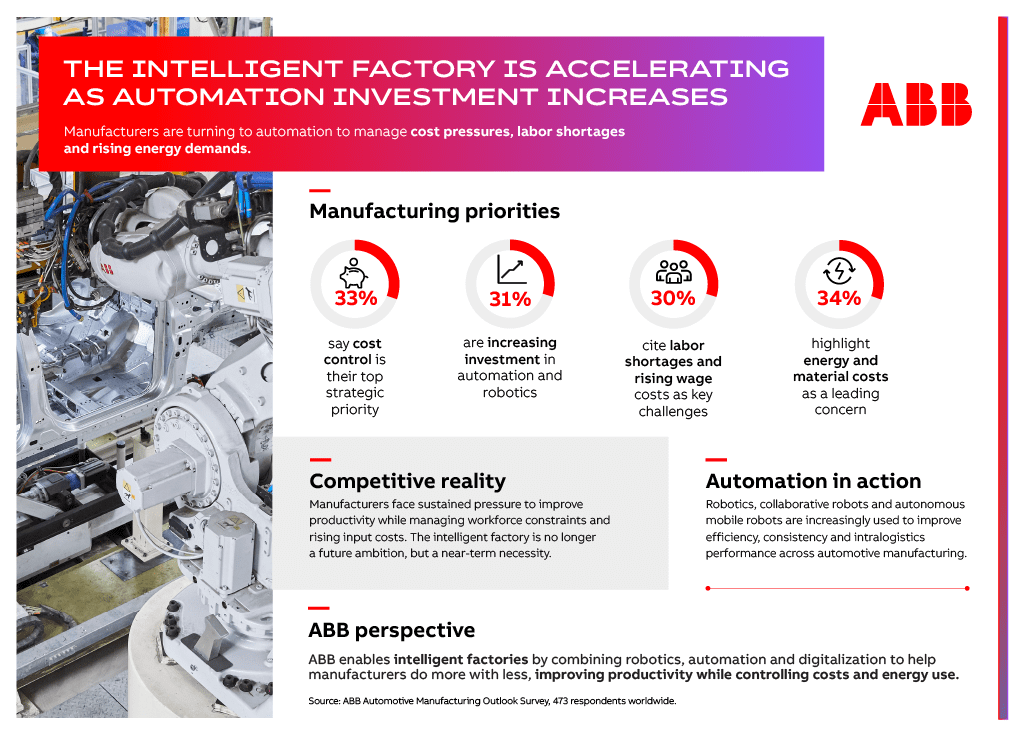
Automotive manufacturers are showing more confidence in EV production as it shifts from a disruptive new process to a more established manufacturing discipline, according to ABB Robotics’ latest Automotive Manufacturing Outlook Survey.

ABB says more than two-thirds of manufacturers expect EV production to increase in 2026 versus 2025. Just as notable, 51% of respondents said EVs and their key components are now easier to manufacture than they were a year ago, while only 8% said they have become harder to build. The survey also found that 41% of respondents saw EV manufacturing costs fall over the past 12 months, while 39% said costs were stable.

The results suggest that EV assembly is becoming faster, more stable and less disruptive as manufacturers gain experience and invest in automation. ABB is, unsurprisingly, leaning into that angle. “Key indicators such as manufacturing time, cost and integration show that EV production is increasingly becoming a known quantity,” said Joerg Reger, Managing Director of ABB Robotics Automotive Business Line.

Download the survey results here.

The survey also found that manufacturers expect hybrid powertrain production to grow even faster than EV production in the near term, suggesting many OEMs still see hybrids as a practical bridge technology. ABB said the findings were based on responses from 473 automotive decision-makers from vehicle manufacturers and suppliers worldwide.

Source: ABB Robotics


Source link