US and Japanese automakers have fallen far behind their Chinese rivals, as even Big Three CEOs freely acknowledge. Their ultimate fate, however, is far from certain. This tragedy will play out over several years, but one possible scenario includes the failure of one or several of the legacy OEMs. Could the Chinese someday add insult to injury by acquiring one of our iconic brands?
Electrek reports that BYD’s Executive Vice President Stella Li recently made some fairly aggressive remarks regarding North American production and the consolidation of the global auto industry.
This chapter of the story actually begins with the rupture between the US and Canadian arms of the North American auto industry. For a century, auto production has been a binational affair—manufacturing plants and suppliers are located on both sides of the border (and now in Mexico too). More recently, the current US government’s bellicose attitude towards our northern neighbor (and possibly its “back to the past” attitude towards automotive technology) has caused Canada to reverse years of industrial policy and slash tariffs in order to allow a limited number of Chinese EVs into its market.
The Chinese are wasting no time—three automakers aim to sell cars in the Canadian market by the end of 2026, Automotive News reports. Now the world’s largest EV maker has announced ambitions to go further. Ms. Li told Bloomberg that BYD is considering building a wholly owned manufacturing plant, and possibly even acquiring a struggling legacy automaker.
Canada has been courting Chinese automakers, encouraging them to invest in local production via joint ventures with Canadian companies, but Ms. Li told Bloomberg that BYD isn’t interested in a JV, but rather in owning and operating its own Canadian facility. This should be no surprise, considering that BYD is perhaps the most vertically-integrated automaker in the world. It manufactures its own batteries, motors, semiconductors—just about everything except tires and glass.
BYD’s international expansion is gathering speed—the company is now ramping up production at its vehicle factory in Hungary, and considering building a second facility in Turkey. Mexico is another region targeted for massive expansion—BYD already controls around 70% of Mexico’s plug-in vehicle market share, and is angling to buy a plant from a Nissan-Mercedes JV (they’re selling due to the tariff situation and Nissan’s financial troubles).
Thanks to a combination of US anti-industrial policy, corporate short-sightedness and our old friend the Innovator’s Dilemma, packs of electric Chinese dragons are now at our front and back doors.
Worse yet, one may soon force its way into the kitchen. Ms. Li raised some journalistic eyebrows with her assertion that BYD is evaluating potential acquisitions of existing automakers. She named no names, and acknowledged that there is no deal currently in the works, but said her company is “open to every opportunity.”
And opportunities are out there. As Electrek’s Fred Lambert sees it: “Several American, European, and Japanese manufacturers are struggling under the financial strain of maintaining both combustion and electric vehicle product lines simultaneously. Legacy automakers from Detroit to Tokyo are hemorrhaging cash…Some of them won’t survive the transition.”
Ford, GM, Stellantis and Honda all recently wrote off tens of billions after cancelling EV programs. The automakers (and most of the media) have blamed the debacle on declining demand for EVs. However, some suspect that it has more to do with declining political support for EVs—a problem that BYD does not have to deal with.
moviTHERM and Troman Industries have formed a partnership to offer an integrated thermal safety platform for transit fleets, combining automated infrared monitoring with onboard thermal detection, notification, and suppression hardware for buses, rail vehicles, and paratransit fleets.
The companies are pitching the system as a response to the rising thermal-management and fire-risk challenges that come with electrification and lithium-ion battery systems. According to the announcement, the combined offering is designed to cover vehicles, depots, charging infrastructure, and maintenance facilities through a single platform, rather than forcing agencies to stitch together multiple vendors’ systems.
moviTHERM brings its thermal imaging and cloud-based monitoring stack, including its iTL IoT platform for early fire detection and condition monitoring. Troman contributes transit-focused mobile detection hardware and suppression products, including assets it acquired in 2025 from Collins Aerospace’s former Kidde Fire Protection Systems commercial ground vehicle business, plus linear heat detection technology through a distribution agreement with Protectowire FireSystems.
The companies say the system is intended to provide early detection of lithium-ion thermal runaway, real-time alerts accessible from any device, and operational data that can help reduce downtime while improving passenger safety. “This is the first system of its kind designed specifically for the unique challenges of bus, rail, and paratransit environments,” said Troman CEO Tony Cunnane.
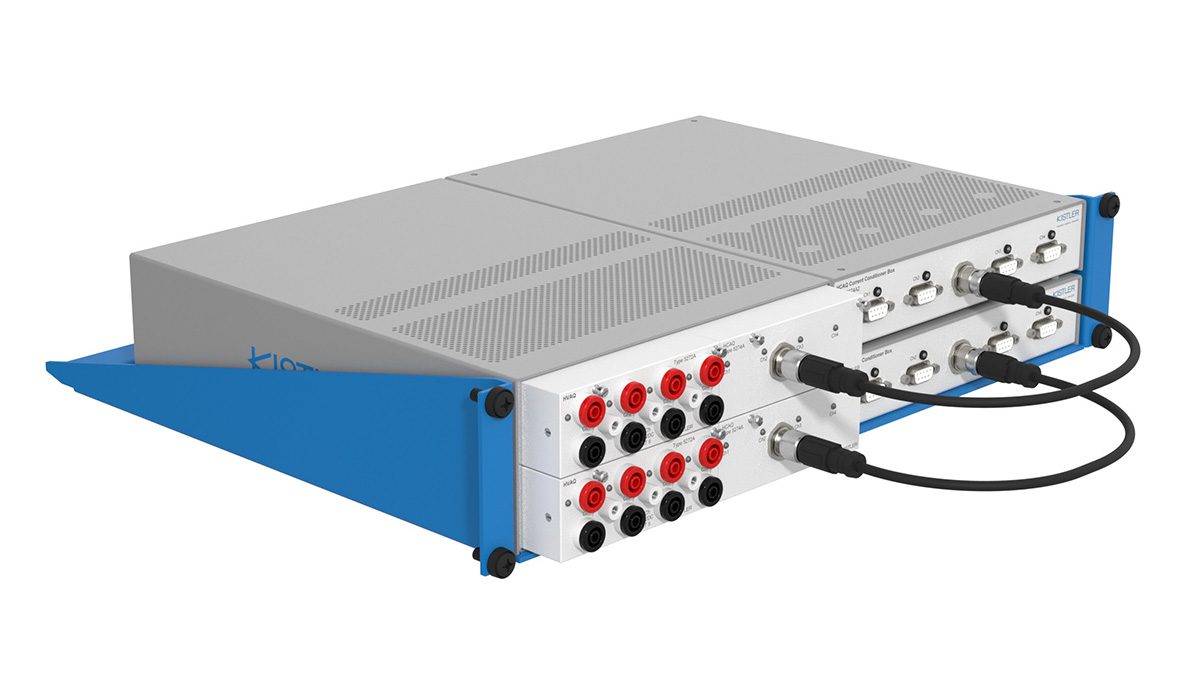
Kistler has launched KiBox2 E-Powertrain Analysis, an all-in-one measurement and analysis platform for electric, hybrid, and fuel-cell drives, aimed at everything from dyno testing to in-vehicle development work.
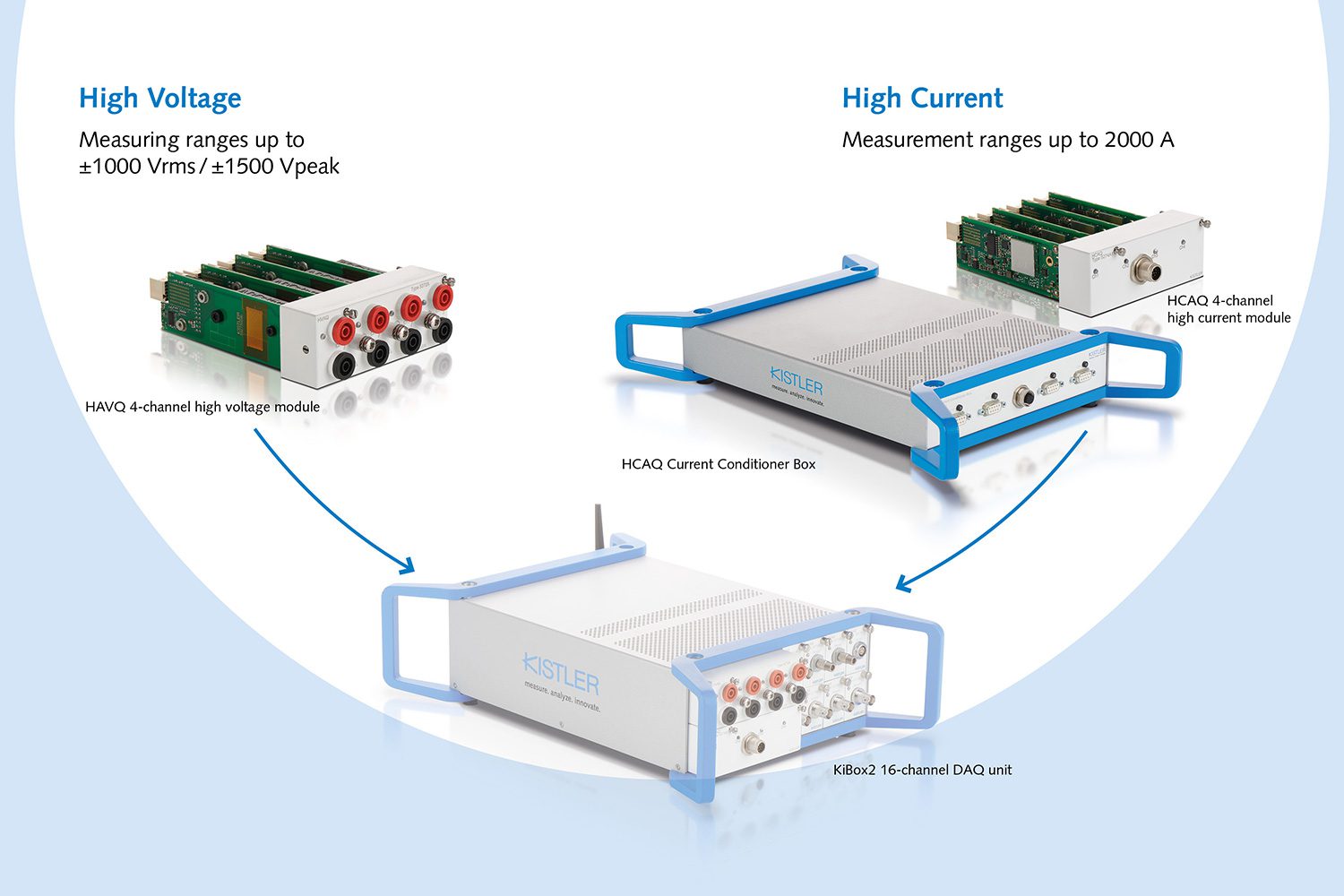
At the core is a 16-channel measuring unit that Kistler says performs real-time measurement, calculation, and visualization at 2.5 MS/s per channel. The overall system can scale to 64 measuring channels, and is designed to capture signals across the powertrain and process them immediately through dedicated software rather than treating them like generic DAQ data.
The platform also includes a 4-channel high-voltage module with electrical isolation and a measurement range up to ±1000 Vrms / ±1500 Vpeak, with safety ratings of 1000 V CAT II / 600 V CAT III. A separate 4-channel high-current module supports current measurements up to 2000 A via a Current Conditioner Box and works with external zero-flux current transducers. Kistler says the system can handle DC and AC measurement, high- and low-voltage analysis, energy-management-system testing, and synchronized electric-plus-mechanical power analysis using speed and torque inputs.
KiBox2 is rugged enough for on-track and in-vehicle testing, with vibration tolerance, vehicle power-supply compatibility, ASAM-compatible MDF data output, and real-time cycle detection configurable down to one-quarter of an electrical cycle. “With real-time power analysis, ultra-fast calculation windows even for highly dynamic and precise testing procedures, and a modular design that scales to virtually any application, the KiBox2 E-Powertrain Analysis sets a new standard for e-drive testing,” Kistler said.
The reliability of public EV charging stations is a critical issue, and industry experts agree that establishing a standard set of error codes would be a big step in the right direction.
For some years now, CharIN’s Error Codes Working Group has been on the case, working to standardize error codes and diagnostics across EVs, charging infrastructure and backend systems. Now the group has taken an important step toward greater transparency and collaboration by launching a public GitHub repository for the development of Unified Error Codes across the EV charging ecosystem.
While the working group meetings remain open to CharIN members only, the new repository allows anyone from the e-mobility community to contribute to the specification development.
As CharIN explains, this move brings several important advantages for the EV ecosystem:
Transparency: The specification development process is visible from the beginning, enabling stakeholders to follow discussions and contribute ideas.
Collaboration: Industry participants can directly support the initiative by reporting issues or submitting proposals for new or improved error code definitions.
Continuity: Error codes require ongoing refinement as technologies evolve. The GitHub-based workflow enables continuous development alongside the growth of the EV charging industry.
To further strengthen the effort, CharIN has established a collaboration with the Unified Error Codes (UEC) Initiative. CharIN’s Error Codes Subgroup will work with the UEC open-source framework to develop a protocol-agnostic unified error code list for EV charging, building on references such as DIN DKE SPEC 99003, MREC and other industry initiatives.
The working group is currently developing the hardware error code definitions, which form the first layer of the unified specification. The next phase will focus on defining software-related error codes—this is expected to be completed by October 2026.
CharIN actively welcomes e-mobility experts and companies to contribute to the initiative. Broad industry participation is essential to ensure that future error codes reflect real-world use cases across OEMs, EVSE manufacturers, charging operators and software providers. Contributors are encouraged to share input on the error codes they plan to implement, associated telemetry requirements and diagnostic workflows.
Microchip Technology has introduced its BZPACK mSiC power modules, a new silicon carbide module family aimed at industrial and renewable-energy systems that have to survive heat, humidity, and high voltage over long operating lives.
The key selling point is environmental robustness. Microchip says the modules are tested to meet High Humidity High Voltage High Temperature Reverse Bias (HV-H3TRB) requirements beyond the standard 1,000-hour threshold. The company also points to a CTI 600 case rating, stable Rds(on) across temperature, and substrate options in aluminum oxide or aluminum nitride for insulation and thermal management.
The BZPACK family is available in half-bridge, full-bridge, three-phase, and PIM/CIB topologies. Microchip says the modules use its MB and MC SiC MOSFET families and are designed with a compact baseplate-less structure, Press-Fit solderless terminals, and optional pre-applied thermal interface material to simplify assembly and improve manufacturing consistency. The company also says the modules use industry-standard footprints and are pin-compatible to make multisourcing easier.
MC-family devices also integrate a gate resistor for improved switching control and stability in multi-die module configurations, while some devices in the broader mSiC portfolio are available with AEC-Q101 qualification.
“By leveraging our advanced mSiC technology, we’re giving customers a simpler path to building efficient, long-lasting systems across industrial and sustainability markets,” said Clayton Pillion, vice president of Microchip’s high-power solutions business unit.
The US charging network 2.0—The evolution of a revolution: Part 1
The US public charging “network” didn’t emerge from a single master plan. It grew out of grants, bankruptcies, corporate settlements, acquisitions—and one automaker that decided it couldn’t wait.
Since the current generation of EVs emerged more than 15 years ago, the “network” of EV charging stations in the United States has been a patchwork of sites run by a constantly changing landscape of players. The recent rollback of federal support for EVs and charging infrastructure has cast the industry into even greater turmoil that could further erode driver and investor confidence. After all this time, how can an industry seeking to disrupt transportation still be circling through the revolving door of market expansion, contraction and participants? And what does the future hold for the charging network’s ability to meet EV driver needs? These articles provide an overview of how the network has morphed, the challenges therein, and insights on how to keep it growing.
A patchwork that somehow became an industry
According to the US Department of Energy’s Alternative Fuels Data Center, as of November, 2025 there were more than 80 companies listed as charging network operators, and 77,000+ public charging locations. Only seven companies operate more than 1,000 locations, and fewer than half manage 100 locations or more.
Those big seven got there via a surprisingly small set of origin paths:
Federal stimulus and early grants (ChargePoint and the roots of Blink)
Court settlements and penalties (Electrify America and EVgo)
Startup-to-acquisition pipelines (EV Connect; Shell’s charging buildout via Greenlots and others)
A vertically integrated OEM network (Tesla)
Here’s how each of them came to be—and why they survived while countless others faded out.
ChargePoint: the ARRA boost plus a platform play
ChargePoint of Campbell, California began as Coulomb Technologies in 2007, and now boasts the largest US charging network, with nearly 43,000 locations. The company was one of two awardees of the federal American Recovery and Reinvestment Act (ARRA) funds in 2009 to develop charging stations. The $15-million ChargePoint America project was launched in 2010 and required the company to provide matching funds. The project resulted in the deployment of 4,600 residential and public chargers in 10 metropolitan areas, which coincided with funding for 2,000 EVs that would have their performance and their charging habits studied by the DOE. Also in 2010, the California Energy Commission provided an award of $3.4 million to Coulomb to install chargers across the state. The company adopted the ChargePoint name in 2012.
ChargePoint shows how early federal funding helped seed network scale—and how scale doesn’t automatically translate into profits.
ChargePoint’s diversified business model has included the manufacture of its own equipment, the licensing of its software platform for managing charging stations manufactured by other companies, the sale of equipment to site host charging operators, and recurring revenue from site hosts who use the company’s software platform to manage revenue and performance.
ChargePoint continued to grow as a privately-held company and raised several rounds of funding, including an early investment from infrastructure giant and hardware partner Siemens. In February 2021, ChargePoint went public through a special purpose acquisition company (SPAC). In June 2021, ChargePoint’ (CHPT) reached a market cap of more than $8 billion. Since going public, ChargePoint has never produced an annual profit, and in November of 2023 the company replaced longtime CEO Pat Romano with current CEO Rick Wilmer. ChargePoint notably had two significant rounds of layoffs in 2024, and in its fiscal year ending in January of 2025 had total revenue of $417 million and a net loss of $277 million. As of February 19, 2026, the market cap had fallen to $146 million.
Why this origin matters: ChargePoint shows how early federal funding helped seed network scale—and how scale doesn’t automatically translate into profits.
Blink Charging: born from a boom and bust (and an asset auction)
Blink Charging’s roots can be traced to Ecotality, a transportation and energy storage company founded in San Francisco in 1999. In 2007 Ecotality acquired eTec, an alternative fuel infrastructure company. In 2009 Ecotality was awarded a $99.8-million grant to install chargers under the ARRA’s EV Project. During the program, which ended in December 2013, more than 12,000 AC and DC EV chargers were installed in 20 metropolitan areas. The program captured data from more than four million charging events, which was the most comprehensive analysis of EV charging at the time.
Blink’s story shows how early “boom” buildouts didn’t vanish when the first wave collapsed—they were bought, rebranded, and folded into today’s market.
The company’s initial public offering was on May 19, 2010, and by June 2011, the stock was trading at $2.80 per share. An October 2013 report from the DOE’s Office of Inspector General Office of Audits and Inspections cited concerns that were highlighted in reports during 2013, including that “the cost for some commercial EV chargers was about 200 percent higher than the original budgeted cost per unit,” and doubted that Ecotality would be able to complete charger installation and data collection deadlines. In September of 2013, Ecotality filed for Chapter 11 bankruptcy, and the company’s assets were auctioned off the following month.
Those assets were purchased by Car Charging Group, a competing EV charging company that was founded in 2009. Earlier in 2013, Car Charging Group had scooped up the assets of networks Beam Charging and 350Green, an EV charging startup that had been shuttered after its founder had been convicted of fraud and sent to prison. Car Charging Group, which was publicly traded, changed its name to Blink Network in 2017. (It now calls itself Blink Charging.) The company continued to grow, and in June of 2022, Blink acquired SemaConnect, an East Coast operator of charging stations, for $200 million. Since that time, Blink has never reported an annual profit. As of November 2025, it had a stock price of less than $2 per share.
Why this origin matters: Blink’s story shows how early “boom” buildouts didn’t vanish when the first wave collapsed—they were bought, rebranded, and folded into today’s market.
Electrify America: the charging network created by a penalty
Electrify America is a privately-held subsidiary of the Volkswagen Group. In 2016 Volkswagen agreed to settle multiple criminal and civil claims with the US Department of Justice, the EPA and the California Air Resources Board in response to claims that the company altered diesel vehicles sold in the US market so that during emissions testing they would register far lower pollutant emissions than were allowable.
Electrify America is the clearest example of “forced market creation”—a network built because a settlement required it, not because the business case was already proven.
As part of the settlement of the cases (which eventually climbed to nearly $20 billion in penalties), VW was required to invest $2 billion in “ZEV charging infrastructure and in the promotion of ZEVs.” Some $800 million of this was to be spent in California, and $1.2 billion across the rest of the United States. In February of 2017, VW announced the formation of Electrify America as a subsidiary to manage the funds, which were designated as the Mitigation Trust.” The rollout of charging stations was to take place in four 30-month cycles (10 years), and the settlement agreement enabled Electrify America to own, operate and collect revenue from the stations.
Despite the challenges of establishing a business unit, designing charging hardware, integrating a new software platform and then acquiring and equipping a site, the first Electrify America location opened less than a year and a half later. The original Cycle 1 plan called for 450 chargers to be installed by Q2 2019, but by the end of 2020, just 323 stations were open. In the following years, progress in building out the network significantly accelerated—by the end of 2024, Electrify America had installed 4,800 DC fast charging stations in 47 states. For the current Cycle 4 Investment Plan, between January 2024 and December 2026 the company will spend $412 million on infrastructure, of which $130 million will be spent on upgrades and repairs, even though the oldest equipment was installed in 2018. Commercial charging equipment is widely expected to last up to 10 years, but technology advances have made some of the older, slower stations obsolete.
Why this origin matters: Electrify America is the clearest example of “forced market creation”—a network built because a settlement required it, not because the business case was already proven.
EVgo: another network launched via settlement money
Based in El Segundo, California, EVgo was founded in 2010, and like Electrify America, has its roots in a legal dispute. On April 26, 2004, the California Public Utilities Commission approved a settlement with energy conglomerate NRG and frequent partner Dynegy to settle claims that the companies had set electricity prices at “unjust and unreasonable rates” during California’s energy crisis in 1999-2000. The settlement between the parties was initially approved by the Federal Energy Regulatory Commission on April 27, 2012, and required NRG to invest $102.5 million in EV charging station projects, including $50.5 million to build “Freedom Station” fast chargers in four metropolitan areas of California. While the agreement was in the midst of final regulatory approval, NRG created EVgo in 2010 to develop charging stations.
EVgo highlights how regulation can create the conditions for a network—and how ownership and strategy can change hands as the market shifts.
In an interview with the author in May of 2012, Arun Banskota, then President of NRG Energy’s EV Services, said that consumers benefitted from the settlement because “NRG’s investment and innovation in DC fast chargers will break open the EV market by addressing the number-one challenge facing the industry—range anxiety. This settlement puts the state on the path to creating a backbone of fast charging stations.”
After several parties, including ChargePoint, objected to EVgo being permitted to generate revenue from the stations and have the exclusive right to temporarily sell equipment to the selected site hosts, the settlement was amended and finalized on February 24, 2016. The final agreement modified how some of the funds for charging station “make-ready” and demonstration programs were to be spent.
EVgo continued to build its network in other states, while parent NRG saw its stock fall by more than 60 percent between 2014 and 2016. In May of 2016 NRG sold its majority stake of EVgo to Vision Ridge Partners for about $50 million. In December of 2016, EVgo announced the selection of the Driivz software platform to manage its network of chargers.
In January of 2020, infrastructure company LS Power acquired EVgo. In July of 2020, EVgo and GM reached an agreement to build charging stations that would result in tripling the size of EVgo’s network. Then, in July of 2021, EVgo combined with Climate Change Crisis Real Impact Acquisition Corporation, forming a SPAC (as ChargePoint also did) to go public. Also in July of 2021, EVgo acquired Recargo (the author is a former employee), the parent company of PlugShare, a popular application the helps EV drivers to find charging stations. EVgo’s stock peaked at $18.90 per share in November of 2021, and as of November 2025, traded at under $3.
For both Electrify America and EVgo, being legally bound to spend tens of millions of dollars seems a curious way to launch charging networks. Dave Packard, a former charging industry executive who held roles at ChargePoint and charging equipment company ClipperCreek, was initially skeptical of the settlement agreements. But in a recent interview he said he doesn’t believe that the nascent industry was ultimately harmed. “I don’t think they necessarily stole market share. I think they created market share,” Packard said.
Why this origin matters: EVgo highlights how regulation can create the conditions for a network—and how ownership and strategy can change hands as the market shifts.
EV Connect: the quieter software-first path (and a strategic acquisition)
In contrast to the more complicated histories of some of its competitors, EV Connect has been inconspicuous. The company was founded in 2009 and like EVgo, it’s based in El Segundo, California. The company has focused on developing charging management software and partnering with hardware makers, OEMs and utilities. It has developed an open platform (similar to that of Greenlots) that will operate on a wide variety of hardware, including charging stations from ABB, BTC Power, Efacec, Siemens and Tellus Power.
EV Connect represents the software platform layer—less visible to drivers, but critical to making multi-hardware networks work at scale, especially inside utility programs.
In 2011, EV Connect and hardware manufacturer ClipperCreek won an award from the California Energy Commission of $2.3 million to upgrade chargers. In 2016, EV Connect was invited to participate in Southern California Edison’s (SCE) Charge Ready pilot. By 2018, more than 1,000 charging stations using the company’s software were in operation in SCE’s program. In 2021 the company was again selected by SCE and received part of the $436-million program rollout.
In 2019, EV Connect received $12 million in funding, including an investment from Japanese electronics company Mitsui. In July of 2020, competitors EV Connect and Greenlots integrated their software platforms to allow customers of either network to “roam” (a term borrowed from the mobile phone industry) and pay for charging at each other’s stations, one of the first such competitor agreements in the industry. In March of 2022, EV Connect was named one of Time magazine’s 100 most influential companies. Then, in June of 2022, global infrastructure company Schneider Electric acquired EV Connect. In September of 2023, founder Jordan Kramer left the company.
Why this origin matters: EV Connect represents the software platform layer—less visible to drivers, but critical to making multi-hardware networks work at scale, especially inside utility programs.
Shell Recharge: built by acquisitions (Greenlots and more)
Shell Recharge Solutions is owned by Shell USA, a subsidiary of Shell, the Dutch/British oil giant that owns thousands of refueling and convenience store locations. The Shell Recharge network was largely built through acquisitions. In 2017, Shell made its entrée into EV charging when it acquired Dutch charging station operator NewMotion. Shell first entered the US EV charging market with the acquisition of software platform company Greenlots in January of 2019. Greenlots was founded in Singapore in 2008 and operated its US headquarters in Los Angeles. Like EV Connect, the company focused on licensing software with its SKY charging platform and partnered with hardware companies such as ABB and Eaton to create charging solutions. Greenlots was a strong supporter of enabling networks and equipment to share data, and in 2014 became a founding member of the Open Charge Alliance, which supports the Open Charge Point Protocol (OCPP) standard that is in widespread use by networks globally.
Shell’s charging arc follows the energy major playbook: scale quickly through acquisitions, then refocus on the sites and customers you control.
In July of 2017, Energy Impact Partners, a coalition of utility companies, invested in Greenlots. The company earned a significant win to grow its network of chargers when in January 2018, Electrify America selected Greenlots’ platform for its initial rollout of EV chargers. In November of 2021, Shell dispensed with the Greenlots name and took up the Shell Recharge Solutions moniker.
In March of 2023, Shell purchased Volta, a network of ad-supported EV chargers that had been in operation since 2010, for $169 million. Just two and half years later, in August of 2025, Shell announced that it was closing the Volta network as the first step in exiting the third-party charging market. In December of 2024 Shell announced it would no longer support the use of its software on third-party stations, and would instead focus on operating chargers at convenience locations owned by the company. In November of 2025, Shell sold the Volta network to JOLT, an international network of ad-supported charging stations, as its first entry into the US market.
Why this origin matters: Shell’s charging arc follows the energy major playbook: scale quickly through acquisitions, then refocus on the sites and customers you control.
Tesla: the OEM that built the network it wished existed
Tesla Motors was founded in July 2003 and rapidly grew into the leading EV manufacturer in the US The company didn’t want its customers to be frustrated by an EV charging industry that was not keeping pace with rising EV sales. Therefore, in September of 2012, the company launched the Supercharger network of DC fast chargers in California. Tesla boldly developed its own technology for charging stations and connectors, a strategy that proved to be highly prescient and rewarding. By the end of 2013, the Supercharger network ran the length of the US West Coast along the two largest highways. It rapidly expanded across the entire US.
Tesla’s charging strategy is the opposite of the one most networks have followed—vertical integration first, standardization later, and a customer-experience motive that reshaped the market.
Tesla provided charging at the Supercharger network to its customers without fees, instead bundling the cost of the network and electricity into the purchase price of the vehicles. Tesla uniquely had capital to help finance its network because the company was collecting fees from its automotive competitors. Starting in 1990, California and other states required automotive OEMs to manufacture a certain number of EVs or other fuel-efficient vehicles. Companies that failed to meet the targets could purchase automotive regulatory credits from OEMs who exceeded the targets. Many OEMS chose to purchase hundreds of millions of dollars’ worth of these credits from Tesla rather than produce electric vehicles. Bolstered by these annual windfalls, after a decade of operation Tesla first achieved profitability in the first quarter of 2013. The market for regulatory credits continued to grow—between 2022 and 2024, OEMs handed Tesla more than $6.3 billion in credit revenue.
During the 2010s, Tesla was diversifying by adding solar and battery storage products to its offerings. It dropped the word “Motors” from its name in 2017. Tesla continues to leverage these technologies at many of its charging locations to reduce operating costs and increase their energy efficiency. Tesla continued to upgrade its charging technology to more quickly charge vehicles and stay ahead of competitors. In addition to the fast Supercharger network, Tesla began paying to install Level 2 Destination chargers at retail and dining locations. By 2017, Tesla had added more than 5,000 AC chargers.
While the rest of the industry was utilizing two international standards for connecting vehicles and chargers (CCS and CHAdeMO), Tesla continued to use its proprietary technology. A major change came to the charging market in November of 2022, when Tesla opened its technology to competitors as the North American Charging Standard (NACS), which was subsequently adopted as an industry standard (SAE J3400). By summer of 2023, many of the largest OEMs, including Ford, Volvo, GM and Rivian, agreed to implement NACS in their vehicles. By all accounts, this has since accelerated demand for charging and increased revenue at Tesla’s locations, and prompted further expansion of the Supercharger Network.
The Supercharger Network had a hiccup in April of 2024 when Tesla CEO Elon Musk abruptly fired the entire team after a spat with lead Rebecca Tinucci. Within two weeks, however, many of the staff were rehired.
Why this origin matters: Tesla’s charging strategy is the opposite of the one most networks have followed—vertical integration first, standardization later, and a customer-experience motive that reshaped the market.
The common thread: resilience (and weird starting lines)
These seven companies have endured while many others have come and gone. A myriad of long-forgotten startups, and several failed attempts by European energy companies to replicate their successes in the US (e.g. Enel and Engie), have proven that operating a successful charging network requires tremendous resiliency and ingenuity.
Next in the series: Now that we know where the big networks came from, the next question is obvious—how much of charging demand has been market-driven, and how much has been policy-driven?
The most common EV some Americans will see over the next few years may be the one that delivers their mail.
A new electric vehicle has now quietly launched onto US roads. As of now, you can’t buy one for your own use, but you’re going to see a lot of them in coming years, and they will offer a very public demonstration of the benefits—or pitfalls—of mass EV adoption into daily delivery fleets.
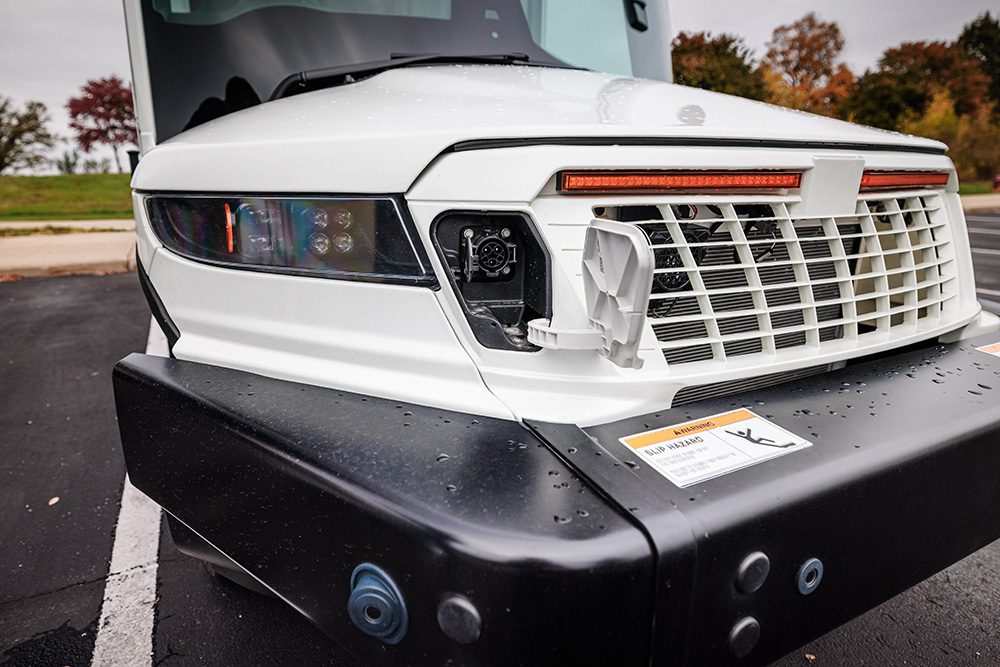
The new EV is the Oshkosh Next Generation Delivery Van (NGDV) now being delivered to US Postal Service locations in many states. NGDVs actually come with two powertrain options. The EV uses a 94 kWh lithium-ion battery pack that powers a 150 kW (201 hp) motor driving the front wheels. EPA documents suggest the combination will give a range of about 120 miles. Even in very cold or very hot weather, that offers a comfortable safety margin over a delivery vehicle’s average daily mileage of 18 to 24 miles: a whopping 96 percent of the vehicles the NGDVs will replace cover fewer than 40 miles a day.
The other powertrain is a turbocharged 2.0-liter inline-4 gasoline engine, driving the front or all four wheels. These will be used for routes that cover longer distances, most of them rural, or over challenging terrain. Roughly 5,000 NGDVs, with both powertrains, have been delivered to date, part of 29,000 new USPS vehicles this year. Of 106,500 new vehicles of all types now under contract, the Postal Service says 66,000 will be zero-emission, including NGDVs. The current contract with Oshkosh calls for 51,500 vans, though ultimately a further 110,000 may be needed.
70 percent EV, 30 percent gasoline
USPS proposals originally requested bids on a fleet of EVs, and then bids on a separate set of gasoline-powered vehicles. According to its CEO John C. Pfeifer, Oshkosh was the sole bidder to suggest a single vehicle that could meet the requirements of both requisitions. The Postal Service liked the idea, which meant drivers could get familiar with just a single vehicle, regardless of powertrain. In the end, Pfeifer told Charged, roughly 90 percent of the parts are common to both versions of the vehicle.
Once a contract was signed, it specified that 90 percent of NGDVs purchased would be gasoline, with only 10 percent running on battery power. Over the course of development, as the Postal Service tested and validated prototypes and analyzed the performance and lifetime operating costs, it became clear that the EV models could cover a majority of today’s delivery cycles.
The final contract specified 70 percent EVs and 30 percent ICE models, and that ratio is what’s being delivered today.
The final contract specified 70 percent EVs and 30 percent ICE models, and that ratio is what’s being delivered today—despite an attempt to slash the EV percentage inserted as a last-minute provision into a major, must-pass Congressional bill by anti-EV elected officials.
Oshkosh and its lobbyists laid out the enormous added operating costs that reducing the number of EVs would impose on the USPS. In due course this provision was removed from the bill, and the percentage remains at 70-30.
Form following function
The Postal Service’s NGDV is instantly identifiable by its duck-billed appearance, with a low and rounded nose in front of a very tall windshield. The NGDV’s looks have garnered a great deal of criticism, but they’re a prime example of form that follows function.
The low nose, with edges that slope down on either side of the centerline, maximizes visibility from the driver’s seat during neighborhood deliveries. Mail-delivery drivers may encounter small children, mailboxes, driveway posts, cats and dogs, and a host of other hazards along their daily routes. From the firewall forward, that specific front-end design belongs to the USPS alone. While Oshkosh can sell NGDVs to other customers, they will have to have a different front-end design.
The tall cargo body—much taller than that of the decrepit Long-Life Vehicles that these will replace—reflects the Postal Service’s very different mission in the 2020s compared to that of the late 1980s, when the LLVs started rolling out. As First Class mail volume is only a tiny fraction of what it used to be, today’s Postal Service has a much higher volume of parcels to deliver, including last-mile deliveries for huge e-commerce vendors like Amazon.
The load bay is tall enough for a 95th-percentile adult to stand up in: 78.5 inches, or more than six and a half feet, even with the roller door open.
As a result, the load bay is tall enough for a 95th-percentile adult to stand up in: 78.5 inches, or more than six and a half feet, even with the roller door open. That’s very different from the LLVs, which required drivers to stoop and/or walk to the rear doors. Cargo volume has expanded from 120 to 330 cubic feet, and rated payload has doubled: 2,000 pounds rather than 1,000 pounds.
LLVs: living long beyond the plan
The NGDVs will replace the Long Life Vehicles built by defense contractor Grumman, which an aluminum van body on a Chevrolet S-10 light-truck chassis, powered by GM’s pushrod 2.5-liter “Iron Duke” 4-cylinder engine. In 1984, the USPS issued a set of requirements for a standardized vehicle to replace the motley collection of production vehicles it used. The vehicles had to have right-hand drive, be easy to get in and out of, use standardized powertrains that could run 12 hours a day every single day, and be capable of surviving harsh climates and hard use. They were tested for tens of thousands of miles over pavement, gravel and dirt roads, potholes, and even cobblestone surfaces. Finally, they had to be simple to maintain and easy to repair.
The NGDVs will replace the Long Life Vehicles built by defense contractor Grumman, with an aluminum van body on a Chevrolet S-10 light-truck chassis.
Ultimately 140,000 were built from 1986 to 1994—all designed for a 24-year lifespan—of which 130,000 remain on the roads today. They lacked amenities new-car buyers take for granted today: airbags, air conditioning, even anti-lock brakes. And in stop-and-start low-speed use, they returned all of 8 miles per gallon of gasoline.
The LLVs were followed by similar Ford UtiliMaster vans, put into service starting in August 1999, though just 21,000 were delivered through 2001. Using a Ford Explorer chassis, they were capable of running on alternative fuels to comply with a government fleet-vehicle mandate. Their engine was a 4.0-liter Ford V6 engine that could run on either gasoline or E85 ethanol. Many remain in service as well, with fuel economy even worse than that of the 8 mpg Grummans.
Terrible duty cycles for gas, ideal for EV
Every one of these vans has now outlived its design life—the first LLVs are now almost four decades old. As they aged, the Postal Service came up against a core problem: gasoline engines are a terrible powertrain for the duty cycles of postal-route delivery, with perpetual stops and starts, low speeds and low daily mileages.
Gasoline engines are a terrible powertrain for the duty cycles of postal-route delivery, with perpetual stops and starts, low speeds and low daily mileages.
The average curbside delivery route has 500 stops over just 20.8 miles, covered in roughly 6 hours. Only one quarter of that time is spent in motion, while 64% is spent stopped during deliveries. The average drive between stops is just 11 seconds. As one mechanic commented, the engine (switched off at stops) never runs long enough to warm up properly, and the continual on/off cycles produce a high proportion of under-lubricated running time before the oil pressure builds back up. Exhausts often don’t warm up enough to dry the moisture that rots them from the inside. And some USPS rules allow work on the vehicles only if they break, meaning there’s no room for necessary preventative maintenance. Today, each LLV costs the USPS roughly $10,000 a year in maintenance—and more than 100,000 of them are still on the roads.
Under that particularly challenging duty cycle, EVs turn out to be perfect. No oil pressure to build up, no combustion engine to warm up, no exhaust, no need to switch on and off at each stop…and far, far lower cost per mile on electricity than the gasoline burned by an 8 mpg vehicle.
The USPS contract specifies a 20-year lifespan for the NGDVs, slightly shorter than that of the LLVs. The simplicity of their powertrain, however, suggests that they too may last far beyond their design life—and with considerably less powertrain maintenance. Moreover, should the Postal Service see significant battery degradation in some NGDVs, they might conceivably be retrofitted with a higher-capacity, less costly battery pack before the end of their lives.
Tears of joy
A brief drive in an early prototype electric NGDV showed us that this EV is no Cadillac or Lucid or Tesla. It’s a basic, purpose-built commercial vehicle with rubber mats, vinyl seats, a manually winding window, and large, industrial knobs and switches. It does, however, bring postal workers decisively into the 21st century of vehicle tech: it has modern safety systems like automatic emergency braking, a backup camera (rear visibility is nonexistent), and the feature that will likely matter most to USPS workers: air conditioning. One mail delivery worker is said to have burst into tears after her first drive, owing to that feature alone.
It’s not quick, but the power-delivery software is predictable, especially at low speeds—while creeping along residential roads from mailbox to mailbox.
On the road, the electric NGDV proved easy to maneuver despite its size (236 inches long) and heft (more than 3 tons). It’s not quick, but the power-delivery software is predictable, especially at low speeds—while creeping along residential roads from mailbox to mailbox. The regenerative braking pauses for a fraction of a second before taking effect, but it’s smooth and linear. And there’s no idle creep, a significant safety factor for a vehicle that stops hundreds of times a day in residential areas.
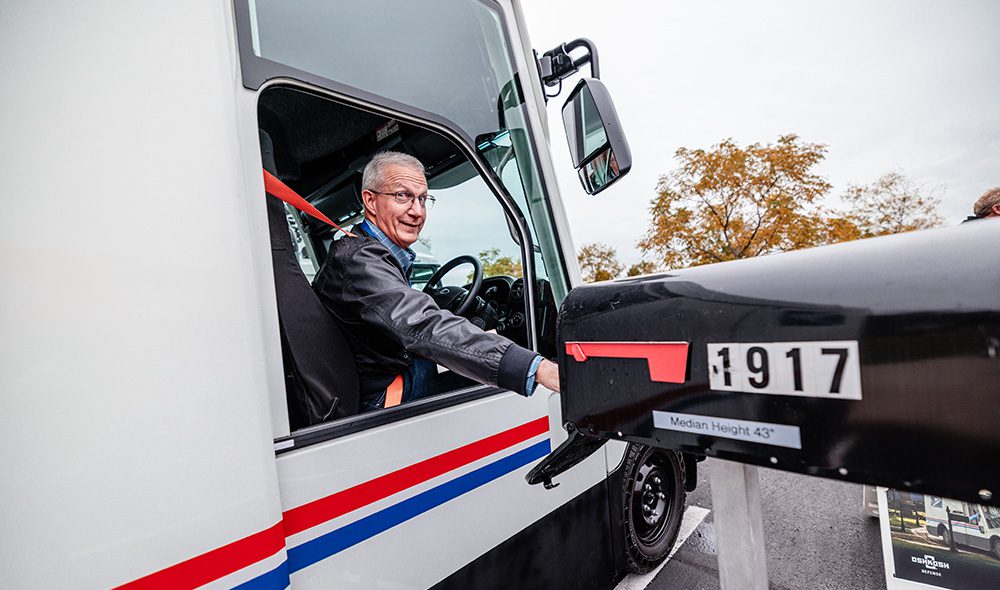
We were surprised to find that it doesn’t provide full one-pedal driving—the left pedal is required to come to a full stop. This makes the driving behavior of the electric and gasoline versions more similar—meaning less potential for driver confusion if they move from one type to another. In our brief test drive, we pulled alongside a regulation-height mailbox, reached out the open window, stuffed envelopes and flyers into it, and purred on…just as a USPS employee would.
We were surprised to find that it doesn’t provide full one-pedal driving—the left pedal is required to come to a full stop.
If any use is well suited for EVs, it’s daily mail delivery. Watch for NGDVs in your neighborhood—and ask the postal workers what they think of them. After all, they may be around for decades.
Oshkosh Corporation provided airfare, lodging and meals to allow Charged to bring you this first-person drive report. The company also let us drive its electric fire truck, garbage truck and airport emergency vehicles. It was great.
A key to the advancement of high energy-density, lithium-ion, battery packs is effective management of heat generated during charge and discharge cycles. Heat is often managed by connecting battery cells and/or modules to a cooling plate or pack via thermally conductive materials (gap fillers or adhesives). Typically, they are two-component polymeric resins with ceramic fillers. These promote heat conduction by displacing air from not only microscopic surfaces but large gaps as well.
Electric Vehicle (EV) battery pack architecture is driven by cell form factor: Pouch, Cylindrical, and Prismatic. The cell type is the main guiding influence module/pack design and thermal management material needs.
Pouch and cylindrical cells are typically constructed into modules, and modules are linked together in the pack. Pouch cells require this type of construction due to their lack of structural rigidity, whilst cylindrical cells need this due to the high piece count (>1000). Previously, prismatic cells were handled in the same manner, but with the advent of cell to pack/plate architecture, there is no longer a need for modules.
Generally, pouch cells stacks are formed into modules in three ways, typically using a thermal adhesive or gap filler and then either ambiently cooled or put in contact with a cooling system:
Inserted into a can with no adhesives or thermal management
Inserted into a can with thermal adhesives
Stacked with an aluminum heat spreader between each cell with and without thermal material
Cylindrical cell module designs fall into three categories prior to being inserted into the pack and connected to the cooling loop:
Inserted into plastic carriers using interference fit or structural adhesives
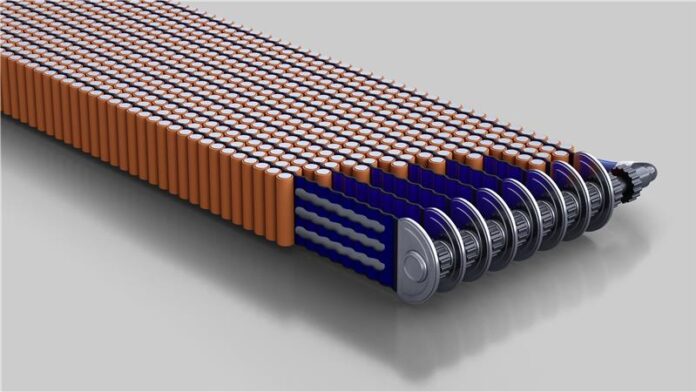
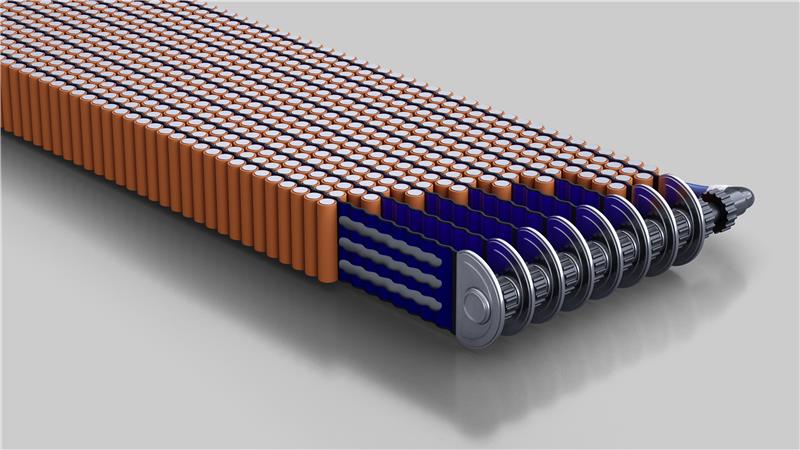
Fixtured into an array and then the cell bottoms are bonded to a housing or cooling plate using a thermal adhesive
Prismatic cells are used to form modules or packs (modules are inserted into the pack) typically using a thermal adhesive or gap filler:
Modules are formed by grouping the cells into a stack and then either inserted into a module housing or onto a cooling plate, both using thermal adhesives or gap fillers
Packs are directly formed by bonding large format cells (~1m length) directly to the bottom plate using thermal adhesives or gap fillers
Opportunities and Challenges
Many design and manufacturing opportunities and challenges exist for each form factor.
Use of low surface energy polyethylene films as the outermost layer of the foil pouch, which limits the ultimate strength of adhesive-based stack-ups
Marginal surface area for heat removal when stacked without heat spreaders (i.e., edge cooling)
Cylindrical cell challenges include:
Smaller cell size, requiring many cells to achieve vehicle range
High cell count necessitating exact positioning to ensure proper locating for downstream processes
Significant mechanical fixturing requirements
Nickel-plated steel surfaces that can be difficult to bond
A cell can live when PVC shrink-wrap sleeves are not used
Prismatic cell challenges include:
Higher individual cell surface area compared to cylindrical or pouch cells, leading to tolerance issues for both the cell and the cooling plate/pack
Use of low surface energy shrink-wrap films or tapes for dielectric protection, which limits the ultimate strength of adhesive-based stack-ups
Greater need for flexibility due to larger areas resulting in more tolerance stacking and larger stress from thermal expansion.
Many of these challenges can be mitigated using thermal gap fillers or thermal adhesives.
Early EV battery pack applications relied on a small number of highly specialized formulations. Today, EV battery systems benefit from a broader portfolio of thermally conductive materials that are still engineered specifically for battery pack requirements but offer a wider range of performance and processing options.
At Parker Lord, the distinction between gap fillers and adhesives is based on strength. Gap fillers typically exhibit lap shear strengths below 7 MPa (10015psi), while adhesives are generally well above this threshold.
Thermal adhesives formulated for electric vehicle battery manufacturing
Two-component acrylic structural adhesives have been used for the last 50 years to bond automotive panels. Their ability to bond directly to various metals and finishes, along with room-temperature curing, has dramatically reduced the amount of mechanical fixturing and/or welding required. Likewise, two-component, thermally conductive potting and encapsulation materials have been used for the last 60 years to protect electronic components and remove heat.
As an industry leader in both categories, scientists at Parker Lord were able to combine these two technologies, creating a new class of adhesives: thermally conductive structural adhesives.
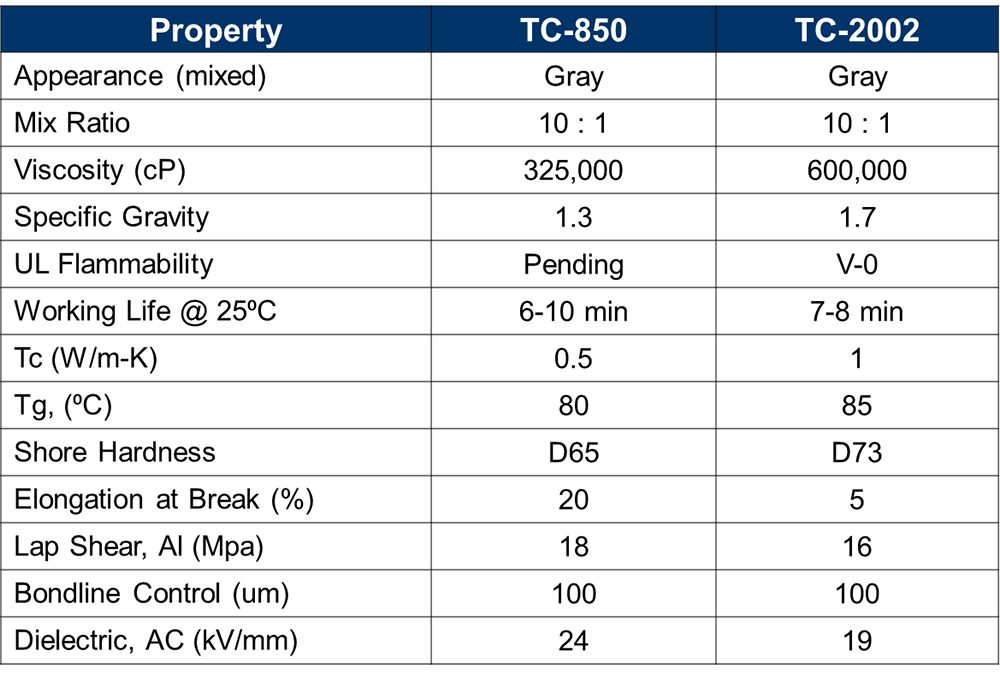
Parker Lord’s CoolTherm TC-2002 Thermally Conductive Structural Adhesive was the first commercial product in this category. Its high strength and thermal conductivity, combined with the ability to bond nickel-plated steel to powder-coated aluminum and cure at room temperature with a relatively short fixture time, enabled significant design freedom for cylindrical battery modules.
As new cell-to-pack and cell-to-plate designs are commercialized in electric vehicle (EV) powertrains, the role of thermal adhesives has become increasingly critical. There is a growing need for innovative thermal adhesives that effectively bond battery cells to pack components while addressing performance and manufacturing challenges.
Key improvements in acrylic and urethane thermal adhesives include:
Tailorable bond strength for structural or reworkable pack designs
Increased elongation for enhanced durability
Adapted cure speeds
Methods to facilitate high-throughput manufacturing.
The latest release from Parker Lord is CoolTherm TC-850 Thermally Conductive Acrylic Adhesive, which builds on the capabilities of CoolTherm TC-2002. Leveraging recent structural adhesive innovations has enabled four times higher elongation, as well as increased adhesion to plastics and coatings.
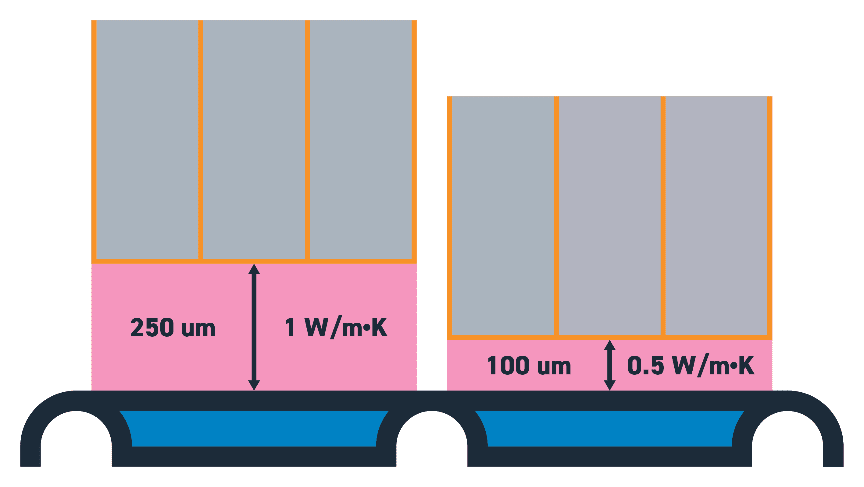
One note regarding bondline – in general, adhesives provide higher levels of strength with thinner bondlines. A standard bondline is 250 µm, but when reducing thermal resistance is critical, thinner bondlines are always better. For these products, 100 µm was determined to be ideal. This thickness allows for sufficient breakdown strength, reduces material usage, and lowers the required thermal conductivity.
See below for an illustration demonstrating that a 0.5 W/m∙K with a 100um bondline achieves lower thermal resistance compared to a 1 W/m∙K material with a 250um bondline.
Wrapping it up
In conclusion, selecting a thermal adhesive that aligns with specific cell-to-pack designs and needs will equip battery pack designers and material engineers with the knowledge to optimize pack performance, reliability, and cost-effectiveness.
Parker Lord has a wealth of expertise and knowledge to help you with your EV battery design. If you want to connect with one of their application engineers to get started, then reach out today.
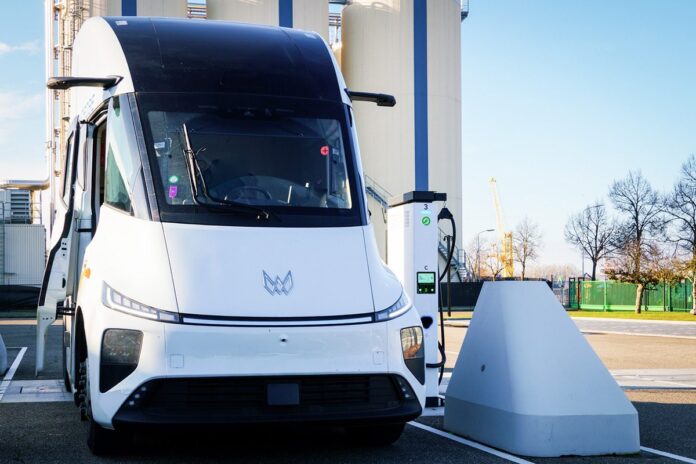
Chinese electric truck OEM Windrose and EVSE manufacturer Autel Europe have announced the successful completion of a real-world Megawatt Charging System (MCS) charging session at a customer site in the Dutch city of Roosendaal.
The Megawatt Charging System, which enables charging of heavy-duty EVs at power levels up to 3.75 megawatts, is rapidly making the transition from pilots to commercial deployments. The latest Windrose/Autel project demonstrated reliable interoperability between Autel’s charging infrastructure and the Windrose electric truck platform, using the MCS standard in live site conditions.
The installation in Roosendaal features a modular megawatt configuration combining three Autel MaxiCharger DS480 charging cabinets connected in parallel to form a 1,440 kW system, paired with a MaxiCharger DT1500 dispenser capable of delivering up to 1.2 MW through the MCS interface with a maximum current of 1,500 A. The dispenser also supports CCS charging with up to 650 A continuous output.
The system integrates liquid-cooled cable technology, coordinated power conversion and stable communication architecture.
“Megawatt charging is not defined solely by higher power levels,” said Andreas Lastei, Vice President of Autel Smart Energy Europe. “It requires coordinated system design across power conversion, thermal management, communication stability and site integration. Collaborating with vehicle manufacturers such as Windrose allows us to validate interoperability under real operating conditions and align infrastructure architecture with actual heavy-duty vehicle requirements. This type of technical collaboration is essential to ensuring that megawatt infrastructure can be deployed reliably and scaled sustainably across Europe.”
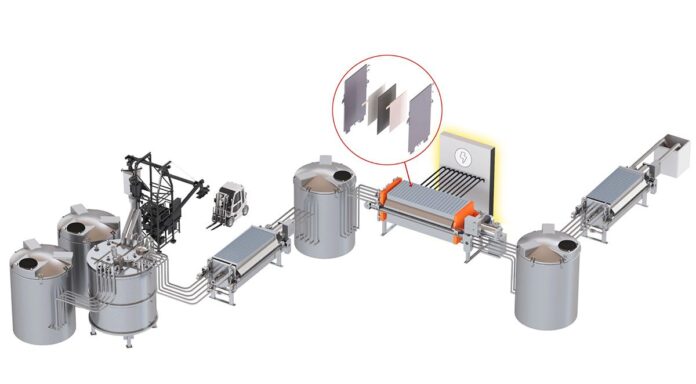
Back in 2021, we published an in-depth interview with Megan O’Connor, the founder and CEO of Nth Cycle, a company that developed a way to recover production-grade critical minerals from separated electronic waste and low-grade mine tailings. Five years later, the company’s electroextraction technology seems to be working out, as the company has signed a binding 10-year offtake agreement with commodities group Trafigura valued at approximately $1.1 billion.
Under the agreement, Trafigura will purchase 2,000 tonnes of contained nickel in mixed hydroxide precipitate (MHP) and 1,500 tonnes of lithium carbonate, which will be refined from 12,000 tonnes of black mass.
Building on its successful 2024 commercialization in Fairfield, Ohio, Nth Cycle plans to establish new operations in South Carolina and the Netherlands to support production, installing its Oyster system at existing facilities in both locations. Site selection will be completed this year, and operations are scheduled to begin in 2028.
Nth Cycle’s business model is based on local refining. “Traditional metal refineries assume the risk of large, fixed volumes, [face] lengthy permitting timelines, and require billions in upfront investment and full capacity utilization to operate profitably,” the company explains. “In comparison, the Oyster’s modular, compact design deploys virtually anywhere, reduces build time from five or more years to under two, [reduces] capital intensity by up to 70%, and produces competitive margins at 5-10 times smaller scale.”
“There is an urgent need to build capacity for black mass refining and develop more diversified and robust supply chains—particularly in the US, where securing domestic critical mineral processing capabilities is increasingly central to energy and industrial policy,” said Megan O’Connor.
“The combination of Nth Cycle’s innovative refining technology and our global reach, scale and logistics network positions us to connect these vital resources with customers around the world,” said Daniel von Arx, Global Head of Battery Metals at Trafigura.