Sunday, April 26, 2026
7.7 C
London
Home Blog Page 47

Charged EVs | XCharge to deploy EV charging stations at Soriana Supermarkets in Mexico

0


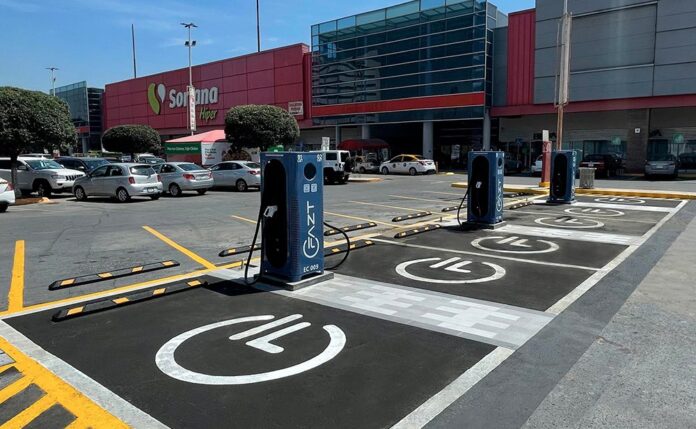
EV charging provider XCharge will collaborate with FAZT Charging to deploy EV charging stations at multiple locations across Mexico.

FAZT is a fast EV charging specialist backed by FactorEnergia, a Spanish energy company that’s been operating in Mexico since 2017. Supermarket chain Soriana operates more than 780 stores across the country.

The companies plan to bring the first 30 stations into service by the first quarter of 2026. More than 80 additional stations will be added by the end of 2026, bringing the total to 440 operational charging points. The long-term goal is to offer 1,000 charging points by 2030.

The first operational station, called SuperFAZT, is located in front of Soriana’s corporate offices in Monterrey. Other stations in Monterrey and nearby communities are also open. Upcoming openings will be strategically located in Mexico City, Guadalajara, Querétaro and Puebla.

XCharge’s C6EU chargers feature a compact format designed to make them easy to integrate into small spaces. They offer charging power capacities from 60 kW to 200 kW. The companies plan to deploy chargers in the 150-200 kW range along highway corridors or at high-traffic public stations, and chargers with 60-120 kW capacities at shopping centers and other sites with longer dwell times.​

The XCharge C6EU range incorporates three different connectors: NACS (used by Tesla and other US OEMs); GBT (common among Chinese brands such as BYD and JAC, which are increasingly common in Latin America); and CCS1, thus ensuring compatibility with virtually any EV.

The FAZT app facilitates station location, payment management, and real-time charging monitoring. A monitoring and management platform enables real-time supervision of the chargers, and automated maintenance logs are designed to ensure reliability and preventive attention.

“FAZT chose to partner with XCharge and Soriana for this rollout because we were looking for strategic allies capable of supporting a fast, scalable, and highly reliable expansion in Mexico,” explains Javier Cuartas Villalobos, CEO of FAZT. “We see XCharge as a long-term technology partner who will help us on the modernization of the country’s energy model to advance towards a cleaner and more sustainable future.”

“We are proud to be the first Mexican retailer to offer our customers fast-charging electric stations,” said Gerardo Díaz Canales, Soriana’s Director of Real Estate Development. “This step not only expands our range of products and services but also reaffirms our commitment to the environment and to the development of an electric mobility ecosystem in Mexico.”

Source: XCharge


Source link

Charged EVs | BorgWarner battery system to power HOLON’s autonomous shuttle

0


US-based automotive and e-mobility supplier BorgWarner has secured a contract to supply its battery system to the HOLON urban, a 15-person, Level 4 autonomous electric shuttle.

The contract marks BorgWarner’s first contract to supply battery tech for autonomous vehicles produced in North America.

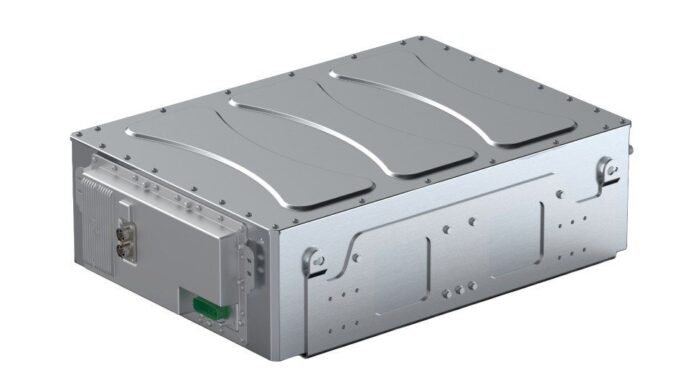
BorgWarner will supply its lithium nickel manganese cobalt oxide (NMC) 5AKM 157 cylindrical cell battery system. Each vehicle will contain two battery packs, each equipped with an integrated, replaceable contactor box and a multi-pack controller.

The 57 kWh battery packs incorporate a modular design containing cylindrical NMC cells. BorgWarner’s NMC battery system is protected by a stainless steel battery case and uses a compact, active liquid cooling system.

BorgWarner designed a pack that fits the space and performance needs of the HOLON urban vehicle. It features BorgWarner-developed software and multi-pack controller. Manufacturing is scheduled to start during the second quarter of 2027 in Seneca, South Carolina. 

“BorgWarner is a strong fit for HOLON—their battery platform combines benchmark energy density with robust safety, cybersecurity and serviceability,” said Flavio Friesen, VP Engineering at HOLON. “The modular, liquid-cooled two-pack system integrates perfectly with our shuttle’s packaging and uptime requirements, supporting not only our North American rollout, but also the demands in Europe and the Middle East regions.”

Source: BorgWarner


Source link

Charged EVs | Molabo’s new 48 V serial hybrid system for boats features Fischer Panda generators 

0


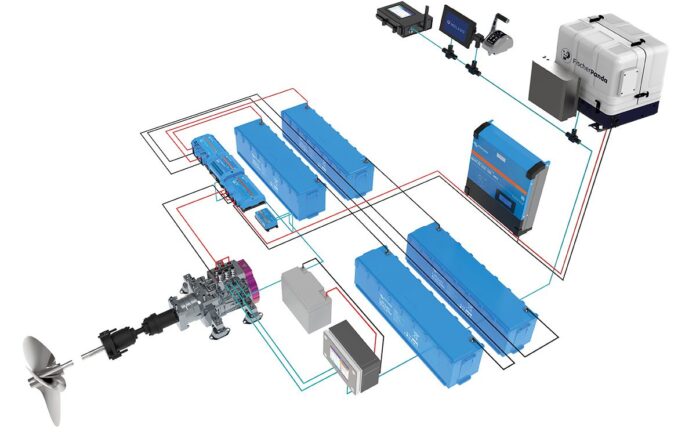
Molabo, a German manufacturer of high-performance 48 V electric propulsion systems, has unveiled a new serial hybrid system that integrates its low-voltage ARIES drive with Fischer Panda’s lightweight and compact AGT-series generators.

Developed for Team Malizia’s IMOCA racing yacht, the new hybrid system allows boatbuilders to combine electric operation and generator-assisted cruising, offering flexible and ultra-efficient energy management for long-range or high-demand applications. All components operate at 48 VDC to ensure safety and ease of installation without specialized high-voltage certification or equipment.

By combining Molabo’s safe-to-touch propulsion technology with Fischer Panda’s generator expertise, the hybrid platform is designed to offer a scalable, future-ready solution for OEMs and shipyards seeking to deliver low-emission electric and hybrid vessels without the complexity of high-voltage systems. 

Because the entire system operates at low voltage, it can be installed by trained shipyard staff without slowing production lines. Owners retain access to Fischer Panda’s worldwide service network for the gensets, while most marine electricians can safely maintain Molabo’s 48 V ARIES drive. The 6-22 kW integrated DC generators are compatible with hydrotreated vegetable oil.

“This new system builds on everything that makes the 48 V platform so effective,” said Tommi Salonen, Head of Global Marine Sales for Molabo. “It delivers extended range and performance for larger vessels or bluewater cruising yet remains simple to install and maintain. The integration with Fischer Panda provides a ready-to-implement hybrid solution that fits seamlessly into existing production workflows.”

Molabo has also developed a new ARIES 50 kW jet-drive in partnership with Kaiser Bootsmanufaktur, demonstrating the adaptability and performance of the electric propulsion platform in compact, high-efficiency applications.

Source: Molabo


Source link

Charged EVs | Samsung SDI and BMW to collaborate on solid-state battery validation project

0


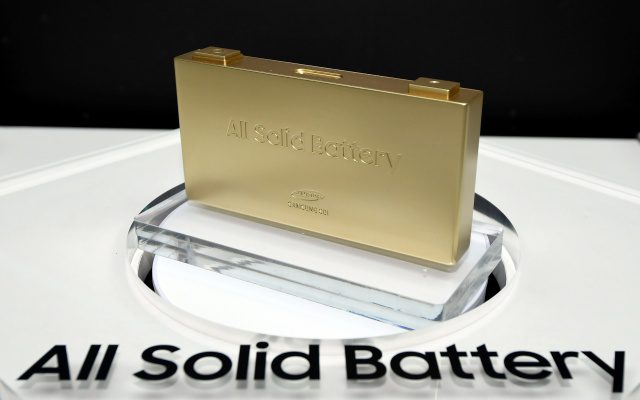
Samsung SDI, BMW and US battery technology company Solid Power have signed an agreement to work together on establishing global value chains for all-solid-state batteries across materials, cells and EVs.

The collaboration aims to pave the way for the commercialization of all-solid-state battery cells by bringing together their complementary expertise in cell manufacturing, automaking and materials development.

Under the partnership, Samsung SDI will supply battery cells using the solid electrolyte developed by Solid Power. BMW will develop modules and packs for the cells. The three companies aim to evaluate the performance of the cells based on the agreed parameters and requirements and to integrate them into BMW’s next-generation evaluation vehicles.

Samsung SDI and BMW have collaborated since 2009, when the German automotive group chose the South Korean firm as a battery supplier. In March 2023, Samsung SDI established a pilot line at the Suwon R&D Center in South Korea, and it began producing prototypes at the end of 2023. Sample tests are currently underway in collaboration with multiple customers. The battery developer outlined its roadmap for mass production of all-solid-state batteries last year. It plans to mass-produce 900 Wh/L solid-state batteries using its solid electrolyte and anode-less technologies.

“Our solid electrolyte technology is designed for stability and conductivity, and by working closely with global leaders in automotive and battery innovation, we strive to bring ASSB technology closer to widespread adoption,” said John Van Scoter, President and CEO of Solid Power.

Source: Samsung SDI


Source link

Charged EVs | CATL’s Ship-Shore-Cloud zero-carbon shipping and smart port integrated solution

0


Contemporary Amperex Electric Vessel (CAEV), a subsidiary of Chinese battery giant CATL, has launched a “zero-carbon shipping and integrated smart port solution,” called Ship-Shore-Cloud.

CATL has delivered nearly 900 electric ships, setting multiple records, and has learned that electric ships are not simply adaptation of land-based technologies. “Their development needs to face the challenges of harsh operating environments such as high humidity, high salt spray, long-duration voyages, and high power requirements,” the company explains.

In traditional ship operations, power supply, energy replenishment and maintenance services are often provided by separate suppliers. The resulting coordination challenges and ambiguous accountability represent “the core bottleneck restricting the large-scale development of zero-carbon shipping,” according to CATL.

To address these challenges, CATL has launched its Ship-Shore-Cloud solution, which integrates everything from the ship’s on-board power system and shore-based energy replenishment network to cloud-based intelligent management.

On the ship side, the system integrates battery systems, power systems and intelligent navigation systems to ensure the stable long-distance operation of ships. On the shore side, it separates the management of ships and batteries through a charging and battery-swapping network. In the cloud, enabled by the intelligent management platform Yunfan and the intelligent navigation system Beichen, ships can be remotely monitored, scheduled and optimized.

Source: CATL


Source link

Charged EVs | Operando X-ray tomography reveals silicon-electrolyte interface dynamics in solid-state batteries

0


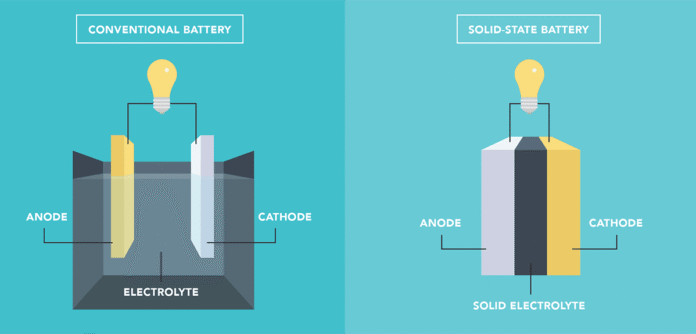
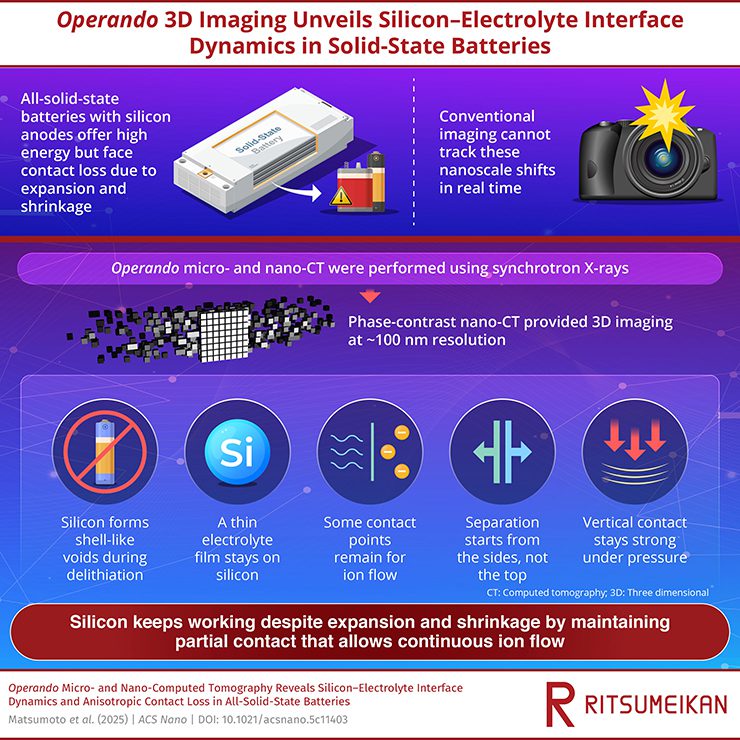
Silicon anodes can greatly boost the energy density of all-solid-state batteries, but their large volume changes often cause contact loss with solid electrolytes. Si can store more lithium than graphite, but its volume can expand by as much as 410% during charging, generating mechanical stress that cracks particles and weakens their contact with the solid electrolyte.

Using operando synchrotron X-ray micro- and nano-computed tomography, researchers at Japan’s Ritsumeikan University directly visualized the 3D evolution of the silicon-electrolyte interface during charge and discharge cycling. They found that even as silicon expands and shrinks, the thin, solid-electrolyte layers remain adhered, preserving partial ion pathways and enabling stable operation.

The research group, led by Professor Yuki Orikasa from the College of Life Sciences at Ritsumeikan University, reported its findings in “Operando Micro- and Nano-Computed Tomography Reveals Silicon-Electrolyte Interface Dynamics and Anisotropic Contact Loss in All-Solid-State Batteries,” published in the journal ACS Nano.

“The insights obtained in this study, including the identification of nanoscale interfacial separation phenomena and their effect on ionic transport, deepen our understanding of the chemomechanical interplay in Si-based ASSBs and provide guidance for the design of more robust, high-capacity composite electrodes,” said Professor Orikasa.

The team built a specially designed, all-solid-state cell using a sulfide-based solid electrolyte, Li6PS5Cl, and optimized imaging optics that allowed 3D visualization of the electrode’s microstructure during cycling. These operando images captured how Si particles expand and shrink, forming shell-like voids around their surfaces as they delithiate. Conventional wisdom would suggest that such voids completely isolate Si from the electrolyte, blocking ion conduction. However, the researchers observed that portions of the solid electrolyte remained attached to the Si even after contraction. These residual layers act as tiny bridges, maintaining partial ionic contact and keeping the battery functional despite significant structural changes.

At higher resolution, the nano-computed tomography data revealed that the detachment of Si from the solid electrolyte is not uniform. Instead, it follows an anisotropic pattern. The separation begins along the sides of the Si particles where the pressure is lowest, while the regions compressed vertically remain largely connected. This directional delamination creates zones of preserved contact, enabling lithium ions to continue flowing through parts of the interface. Such partial connectivity explains why the battery continues to operate efficiently after the first few cycles, even though the contact between Si and electrolyte is far from perfect.

“The findings suggest that not all interfacial separation is harmful,” the team concluded. “Partial and directionally constrained delamination can coexist with stable performance if the electrolyte retains limited but continuous pathways for ion transport.”

The researchers also point out that this study illustrates how advanced visualization tools can uncover the hidden dynamics that make next-generation energy storage systems more resilient and efficient, guiding future innovations in EV and grid-scale battery technologies.

Source: Ritsumeikan University


Source link

Charged EVs | Vulcan Energy secures €1 billion in financing for lithium production in Germany

0


The Export and Investment Fund of Denmark (EIFO) has granted an export loan of €100 million to Vulcan Energy for its Phase One Lionheart Project, bringing the total debt package for the project to approximately €1 billion.

Located in the Upper Rhine Valley Brine Field (URVBF) in southwestern Germany, the Lionheart Project aims to establish Europe’s first domestic supply of sustainable lithium.

China currently dominates global lithium refining. Vulcan’s Lionheart Project will manage every stage of the lithium value chain, from extraction to processing, reducing dependency on imports and strengthening European supply security.

“Lionheart is a strategically important project which strengthens Europe’s supply chain and reduces its dependence on imports from China,” said EIFO Chief Commercial Officer Peter Boeskov. “Lithium is essential for Europe’s energy and mobility transition, and the Lionheart Project provides Europe with a new sustainable source.”

“Lionheart is set to deliver Europe’s first fully domestic and sustainable lithium value chain, and with EIFO’s support, we now look forward to moving into the construction phase of the project,” said Vulcan Energy Managing Director and CEO Cris Moreno.

Vulcan’s integrated geothermal and lithium production process extracts lithium chloride (LiCl) directly from naturally heated subterranean brine while simultaneously producing renewable geothermal energy for local communities and industry.

Vulcan says its geothermal lithium extraction process significantly reduces the environmental impact of lithium production, as it uses recycled water and green energy. Lionheart will use both new and existing geothermal wells to maximize infrastructure efficiency. Vulcan will build a central processing plant at Industriepark Höchst near Frankfurt, where the extracted lithium will be converted into lithium hydroxide monohydrate (LHM) for direct use in battery production for the European automotive industry.

Vulcan’s Phase One Lionheart aims to produce 24,000 tonnes of LHM per year—enough to supply batteries for about 500,000 electric vehicles—while also generating 275 GWh of renewable power and 560 GWh of heat for local consumers.

Vulcan has already signed long-term supply agreements with customers including Stellantis, LG Energy Solution, Umicore and Glencore.

Source: Vulcan Energy


Source link

Charged EVs | Siemens’s Heliox brand launches new 44 kW V2G-capable DC charger

0


Heliox, a Siemens business, has launched a next-generation, all-in-one DC fast charging system with intelligent vehicle-to-grid (V2G) functionality.

The Heliox 44 kW V2G charger provides bidirectional charging and discharging capability, allowing vehicles to return energy to the grid. Programmability features enable time-of-use charging and scheduled energy transfers, enabling fleet operators to generate new revenue streams by selling surplus energy back to the grid. This technology also allows vehicle batteries to provide backup power during outages.

AC input settings are adjustable from 15 A to 56 A, making deployment possible even in locations with limited power supply.

The Heliox 44 kW V2G features a a compact, all-in-one design. It offers wall-mount and pedestal options, and 5-meter or 7-meter cable lengths. The NEMA 3R-rated enclosure makes it suitable for both indoor and outdoor locations. Operating temperature range is -22° F to 122° F. Communication features include OCPP (1.6J and 2.0.1, ready for 2.1), Ethernet and 4G cellular connectivity. An LED indicate real-time EV State of Charge, and a 7-inch LCD display shows charging session information.

The charger supports the ISO 15118-20 and SAE J2847 standards, and bears a comprehensive list of safety certifications, including UL 2202, UL 1741 SB and UL 9741. It comes with a 24-month warranty.

The system is designed, manufactured and tested in the USA, making it fully compliant with the Buy America Act and eligible for government projects.

Source: Heliox


Source link

Charged EVs | USPS finally gets some EVs on the road

0


How long does it take for a fleet to electrify? The answer depends on various factors, but it really shouldn’t take nine years—unless the fleet in question belongs to a quasi-governmental agency, and the transition is taking place against a background of unprecedented political turmoil.

Postal delivery vehicles are a picture-perfect use case for EVs—short, well-defined routes, returning to a central depot every day. And contrary to what some nihilists would like to believe, national postal services are still very relevant—personal letters and hand-written thank-you notes may be passé (alas), but home delivery of goods is more popular than ever.

Postal fleets in Norway, Germany, Switzerland, Austria and other countries are well on their way to full electrification. Now, after over a decade of debate, lawsuits, a corporate bankruptcy, allegations of corruption, a congressional investigation or two, political flipflops and public pokes in the eye (figurative only, as far as we know), the United States Postal Service (an independent agency of the federal government authorized by the Constitution) is finally beginning to replace its 30-plus-year-old delivery vans with newly-designed EVs.

I’ve been writing about this irritating issue since 2016, so I’ll cover only the latest developments here. However, please do follow our blow-by-blow account of the lengthy saga. You’ll also find a good explanation of the current situation in Car and Driver, written by John Voelcker, who actually drove one of the Next Generation Delivery Vehicles.

By 2016 (after years of debate and dithering), the USPS had decided to replace its Grumman delivery vehicles, some of which were already 30 years old, and which lack air conditioning and modern safety features. Even then, it was plain that replacing them with EVs was the most economical choice, but political considerations dictated that at least some of the new vehicles be fossil fuel-powered. The proportion of EVs to legacy powertrains became the main bone of contention.

Contractor Oshkosh is building the NGDV in a battery-electric version and a gas version (with a turbocharged 2.0-liter four-cylinder from Ford). In addition to deploying the custom-built NGDVs, the postal service is purchasing thousands of off-the-shelf EVs. Reuters reports that the agency has purchased 8,700 Ford E-Transits, and that at least 2,010 of these are now in service, alongside 612 electric NGDVs. USPS says more EVs are entering service every week. USPS has also commissioned 6,650 charging ports at 75 sites.

As it stands now, the USPS’s $2.98-billion initial order will consist of 70 percent EVs and 30 percent fossils, which will be deployed on longer and chillier routes which might prove more challenging for EVs (as is standard best practice for mixed fleet deployments).

In June, Senate Republicans made a last-ditch effort to stop electrification altogether—they wanted USPS to scrap the thousands of EVs and the charging equipment that had already been deployed. The agency pointed out that this would result in a loss of at least $1.5 billion, and it appears that cooler heads prevailed. For now.

Sources: Car and Driver, Reuters


Source link

Charged EVs | onsemi launches advanced cooling package for power MOSFETs to boost efficiency in EVs

0


onsemi has released its EliteSiC metal-oxide semiconductor field-effect transistors (MOSFETs) in the industry-standard T2PAK top-cool package, targeting improved thermal performance and design flexibility for EVs, solar infrastructure and energy storage systems. The new offering combines onsemi’s silicon carbide technology with top-cool packaging.

The initial lineup features 650-volt and 950-volt EliteSiC MOSFETs housed in T2PAK packaging. These devices prioritize thermal efficiency by channeling heat directly into the system’s heatsink, bypassing the printed circuit board’s thermal limitations. According to onsemi, this enables superior thermal performance, higher power density, compact system design, and reduced operating temperatures—all critical factors for engineers designing next-generation EV powertrains, on-board chargers and high-density inverters.

The T2PAK top-cool package is designed to directly couple the MOSFET to the application’s heatsink, minimizing junction-to-heatsink thermal resistance. The initial range supports Rds(on) options from 12 milliohms to 60 milliohms, offering flexibility for power electronics design. The approach also helps maintain low stray inductance, supporting fast switching speeds and reduced energy loss.

For EV applications, onsemi highlights benefits such as extended system lifetime due to lower component stress, simplified design for faster time to market, and improved performance for high-density systems.

“Thermal management is one of the most critical challenges facing power systems designers in automotive and industrial markets today,” said Auggie Djekic, Vice President and Head of SiC Division at onsemi. “With our EliteSiC technology and the innovative T2PAK top-cool package, customers can unlock superior thermal performance and design flexibility, empowering them to create next-generation products that stand out in today’s competitive landscape.”

Source: onsemi

Topics: onsemi, Power Electronics


Source link